AutoFlight, a Chinese aviation start-up backed by CATL, is emerging as a key force in China’s flying car push. The company sits at the center of Beijing’s plan to scale the low-altitude economy and commercial eVTOL operations.
AutoFlight Reveals Matrix eVTOL
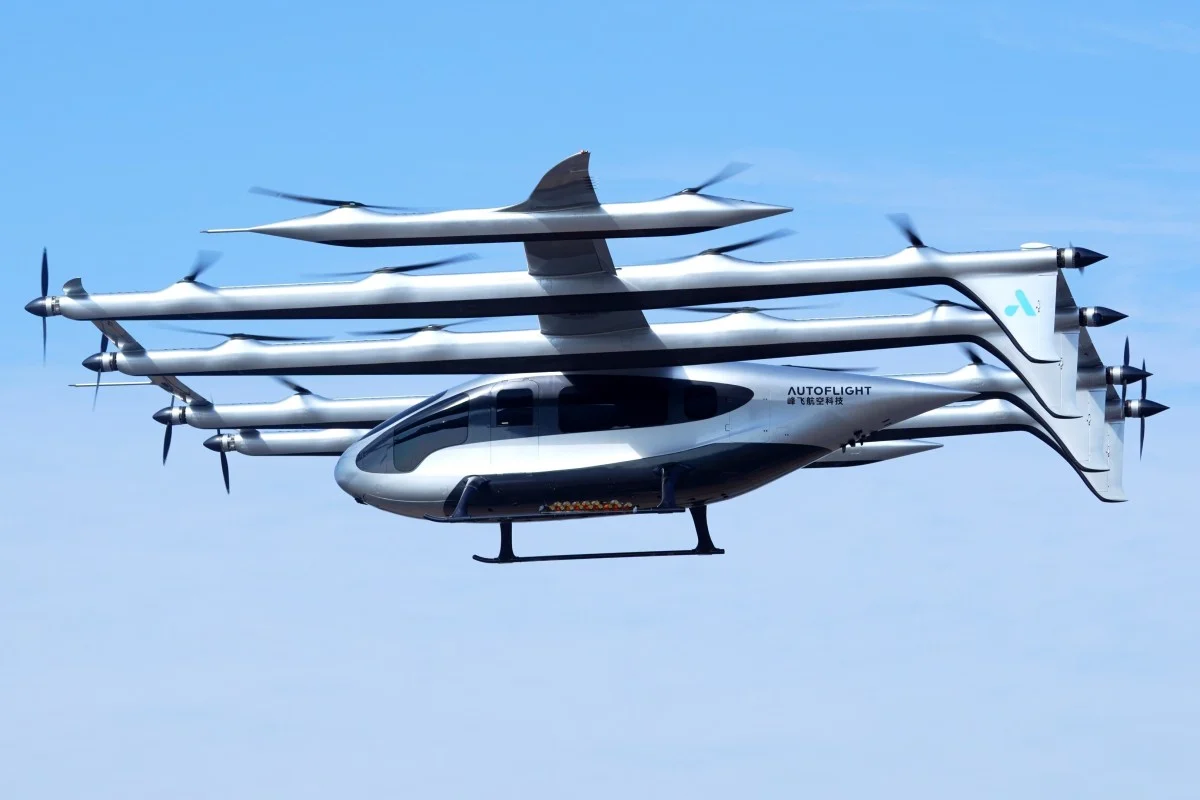
AutoFlight has unveiled Matrix, a five-tonne electric vertical take-off and landing aircraft. The company claims it is the largest eVTOL flown so far. The flight demonstration took place in Kunshan near Shanghai.
Matrix features a 20-metre wingspan. The aircraft measures 17.1 metres in length and 3.3 metres in height. AutoFlight offers two versions. One targets passenger transport. The other focuses on heavy logistics.
A Step Change in Passenger Capacity
Matrix carries up to 10 passengers. Most current eVTOLs support four to six seats and weigh under three tonnes. This puts Matrix in a higher payload class and positions it for regional air mobility, not short-hop demos.
China’s Expanding eVTOL Ecosystem
AutoFlight joins Ehang, Xpeng-backed Aridge, and Geely’s Aerofugia in China’s commercial eVTOL race. Regulators are moving fast. The goal is clear control of low-altitude airspace.
Last week, ten government agencies released a joint roadmap. China plans to set basic standards by 2027. More than 300 standards should follow by 2030. Coverage includes aircraft design, infrastructure, traffic management, safety oversight, and real-world use cases.
Certification and Commercial Timeline
Founded in 2017, AutoFlight started with cargo aircraft. Passenger flights are now the priority. According to senior vice-president Xie Jia, passenger models already account for 70 percent of orders, despite ongoing certification.
Passenger eVTOLs require three approvals. These include design certification, production approval, and airworthiness clearance. AutoFlight expects passenger certification within one to two years and is already taking advance orders.
Proven Cargo Operations
AutoFlight’s CarryAll cargo eVTOL has cleared all three certifications in China. It remains the only tonne-class eVTOL worldwide with full regulatory approval.
CarryAll recently completed the first cross-city cargo flight in its class. It flew 160 km from Anqing to Hefei in one hour, carrying blueberry juice and parcels. This flight moved eVTOLs closer to daily logistics use.
CATL Partnership and Scale Advantage
CATL owns a 38 percent stake in AutoFlight. The partnership supports battery research and supply security. This link gives AutoFlight an edge in energy density, cost control, and scaling.
Market Outlook and Global Plans
Industry analysts expect 2026 to mark China’s first paid passenger eVTOL flights. Seven manufacturers could begin deliveries before year-end, according to CCID Consulting.
AutoFlight also targets overseas markets. Cargo demand looks strongest in regions with limited road infrastructure. These include island nations and mountainous areas. Expansion priorities include Northeast Asia, Southeast Asia, and the Middle East.
Xie expects aerial travel prices to align with premium ride-hailing over time. Large-scale passenger adoption still sits three to five years out. The growth phase starts once passenger aircraft enter routine service.
Related EV News
- China Tests Modular eVTOL Flying Car With Road and Air Modes
- Lamborghini Flying Car Concept Imagines a Blade Runner Future
- Xpeng Aridge Begins Marketing Ahead of Flying Car Mass Production
- Vertical Aerospace Debuts Silent Electric Air Taxi in New York
- Alef Model A Enters Production as Flying Car Nears Reality