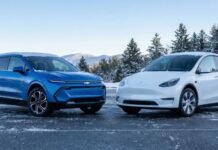
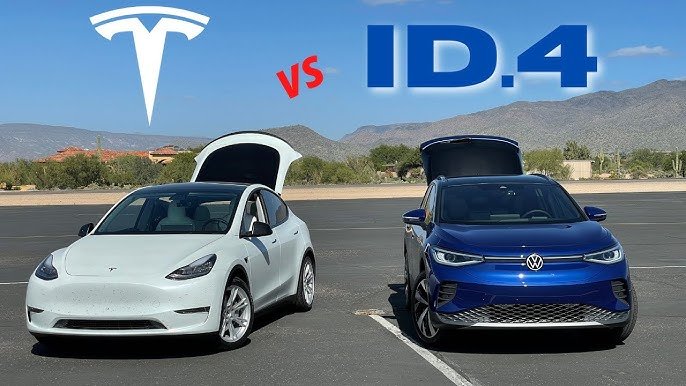
Between the two, the Volkswagen ID.4’s AWD (4MOTION) versions handle snow slightly more confidently than the Tesla Model Y, mainly because of marginally better ground clearance and a traction system tuned for predictable, gradual power delivery rather than instant torque. Neither vehicle is a dedicated winter machine — both share the low-slung, flat-bottomed EV chassis that struggles once snow gets deep and unplowed. The real difference shows up in the details: how each car’s AWD system reacts on ice, how much range they lose in the cold, and how their underbody geometry deals with packed snow. Below, we break down the specs, the driver reports, and the numbers so you can decide which one fits your winter.
Quick Summary
| Category | Verdict |
|---|---|
| Ground clearance | VW ID.4 AWD has a slight edge (~175mm vs ~168mm on Tesla Model Y AWD) |
| AWD traction feel | ID.4’s 4MOTION delivers smoother, more predictable power in slip conditions |
| Winter range loss | Both lose 20–30%+ in freezing temps; Tesla’s heat pump and preconditioning slightly reduce the hit |
| Deep, unplowed snow | Neither is confident past ~8 inches; both scrape/pack snow on their flat underbodies |
| Price-to-capability | Tesla Model Y AWD offers more range and tech per dollar; VW ID.4 AWD trades some range for calmer winter manners |
Ground Clearance: The First Line of Defense
Ground clearance is the single biggest factor separating a genuinely capable winter vehicle from one that merely “does okay” in light snow. Neither of these EVs was designed with deep snow in mind, but there’s a real, measurable gap between them.
Tesla Model Y
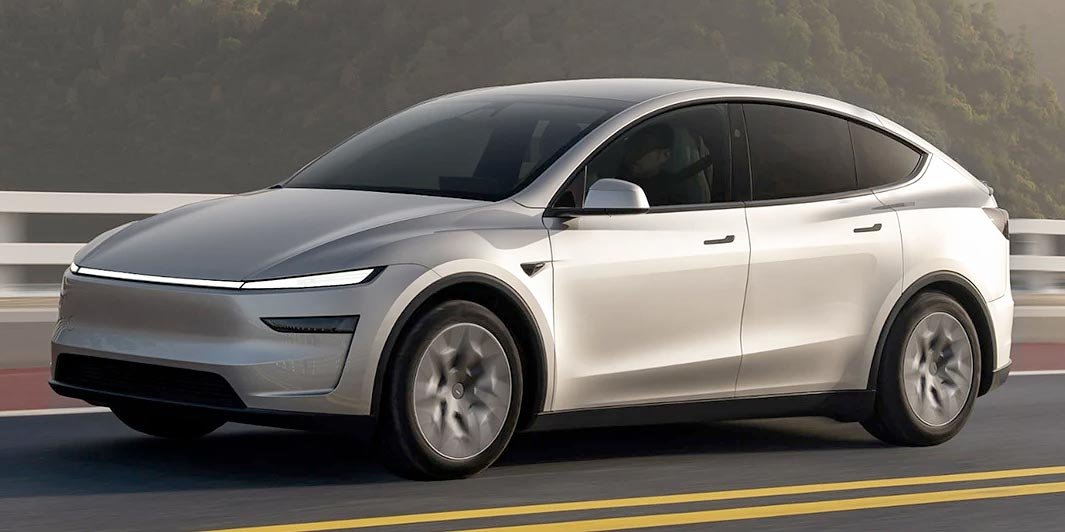
The standard Model Y AWD sits at roughly 168mm (6.6 in) of ground clearance. The Performance trim drops further, coming in around 151mm once its lowered sport suspension is factored in. That’s noticeably less than many traditional crossovers, and the Model Y’s front fascia is also shaped with a low, plastic-heavy nose that doesn’t hold up well against compressed snowbanks or icy ruts at the edge of a plowed road. Exact clearance can vary slightly by wheel size and model year trim — treat these as representative figures, not universal constants.
VW ID.4
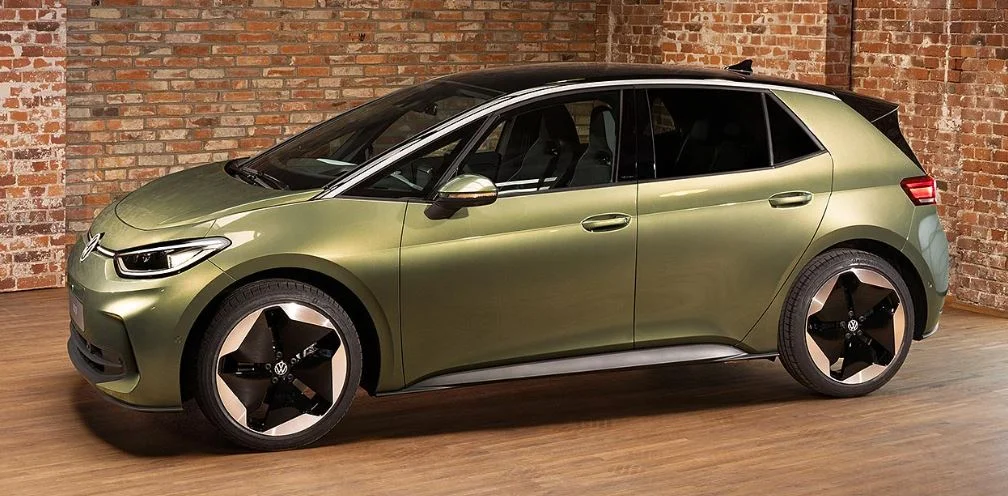
The ID.4 does a little better here. U.S. spec figures put rear-wheel-drive ID.4 models at 6.1 inches of clearance, while all-wheel-drive versions sit higher at 6.9 inches. The GTX 4MOTION performance trim, depending on suspension setup, lands somewhere between 163mm and 170mm. That extra half-inch to inch over the Tesla doesn’t sound like much, but in real-world driving — pulling out of an unplowed driveway or crossing a snow-packed intersection — it’s often the difference between clearing an obstacle and getting hung up on it.
Bottom line on clearance: the ID.4 AWD has a modest but real advantage. Neither car should be mistaken for a vehicle built for genuine off-road winter conditions.
How Each AWD System Behaves in Snow and Ice
Ground clearance only tells half the story. What actually happens when a wheel starts to slip matters just as much — and this is where driving feel diverges more than the spec sheets suggest.
Tesla’s Approach
Model Y AWD versions use two independently controlled motors (front and rear), with Tesla’s software handling torque distribution in real time. This system reacts fast and can be aggressive — great for dry-pavement performance, but on ice, instant torque can occasionally translate into a sharper, less progressive feel when traction breaks. Tesla includes a dedicated slip-start / snow mode in its traction settings that intentionally allows a bit more wheel spin at launch to help “dig in” through loose snow, and preconditions the battery and cabin when a charging stop or scheduled departure is set, which helps cold-weather efficiency.
Volkswagen’s Approach
The ID.4’s AWD versions are generally described as offering predictable, secure traction in snow with smooth power delivery and fast-reacting traction control. VW’s 4MOTION system leans toward gradual, well-modulated power delivery rather than outright quickness, which tends to feel more reassuring to average drivers in genuinely slick conditions — even if it’s less thrilling in ideal weather.
The Shared Weakness: Flat Underbodies
Because both cars use a flat battery pack across the floor, dense snow can pack up underneath and effectively lift weight off the tires — undermining even a well-tuned AWD system. In roughly 8 or more inches of unplowed powder, both vehicles will start pushing snow with their front bumper and belly pan, at which point the AWD system becomes secondary to basic physics. This is a structural EV crossover limitation, not something either brand has solved better than the other.
Winter Range and Efficiency
Cold weather hits every EV’s range, and both of these cars are no exception.
The rear-wheel-drive ID.4 is EPA-rated at 291 miles, while the AWD version drops to 263 miles — a gap that widens further in sub-freezing temperatures, since AWD adds a second motor’s worth of parasitic and heating losses. Independent testing has generally found the ID.4 loses a somewhat larger percentage of its range in cold weather compared to some competitors, partly tied to its heat pump implementation and battery thermal management on earlier model years. Confirm current model-year heat pump availability before publishing, as VW has revised this across trims.
Tesla’s Model Y AWD (Long Range) carries an EPA-rated range in the mid-300-mile range depending on wheel size and trim, with the Performance variant rated lower due to its wider, stickier tires. Tesla’s over-the-air preconditioning and its now-mature heat pump system (standard across current Model Y trims) generally produce a smaller cold-weather range penalty than earlier EV generations, though real-world winter loss of 20–30% is still typical for both cars in freezing conditions.
Tires Matter More Than Either Badge
It’s worth stating plainly: for both vehicles, the single biggest lever for snow performance isn’t the AWD system or the clearance — it’s the tires. Both the Model Y and ID.4 ship with all-season or performance-summer rubber depending on trim, and owners of both cars who drive regularly in snow consistently report that swapping to a dedicated winter tire set transforms braking distance, cornering grip, and hill-start confidence far more than any software difference between the two brands. If snow country is a regular reality rather than an occasional inconvenience, a winter tire set (often on a second set of wheels) should be considered a near-mandatory purchase for either vehicle.
Verdict by Scenario
- Light-to-moderate snow, plowed roads, occasional storms: Both cars handle this comfortably with winter tires fitted. Tesla’s quicker acceleration can help merge and pass more confidently; VW’s calmer power delivery may feel less nerve-wracking for cautious drivers.
- Steep or unplowed driveways, rural roads: The ID.4 AWD’s extra clearance gives it a slight practical edge.
- Cold-climate daily commuting with charging access: Tesla’s charging network density (in most regions) and preconditioning features make daily winter driving logistically easier, even if the raw snow-handling gap is narrow.
- Deep, unplowed powder (8+ inches): Neither vehicle is recommended. Both will scrape, pack snow underneath, and lose meaningful traction regardless of drivetrain.
Comparison Table
| Spec | Tesla Model Y AWD (2026) | VW ID.4 AWD / GTX 4MOTION (2026) |
|---|---|---|
| Drivetrain | Dual-motor AWD | Dual-motor 4MOTION AWD |
| Ground clearance | ~168mm (6.6 in); Performance ~151mm | ~175mm (6.9 in) AWD; GTX 163–170mm |
| EPA range (AWD) | Mid-300s miles (trim-dependent) | 263 miles |
| EPA range (RWD equivalent) | N/A (RWD Model Y availability varies by market) | 291 miles |
| Starting price (USD, approx.) | From ~$48,000 (Long Range AWD) | From ~$45,000 (RWD) / ~$49,000 (AWD) |
| Snow-specific feature | Slip-start / snow traction mode | 4MOTION torque distribution tuned for smooth traction |
| Underbody design | Flat battery pack, low front fascia | Flat battery pack, moderate front overhang |
| Best suited for | Plowed roads, daily cold-climate commuting | Rural roads, steeper driveways, unplowed patches |
Prices are approximate USD MSRP figures and vary by region, trim, and incentives.
Bottom Line
If your winter driving is mostly plowed highways and city streets, either EV will get you through with a proper set of winter tires — the gap between them is smaller than either brand’s marketing suggests. But if you regularly deal with unplowed driveways, rural roads, or steep inclines after a storm, the VW ID.4 AWD’s slightly higher ground clearance and smoother torque delivery make it the marginally safer bet, while the Tesla Model Y remains the stronger all-rounder for range, charging access, and daily cold-weather convenience.