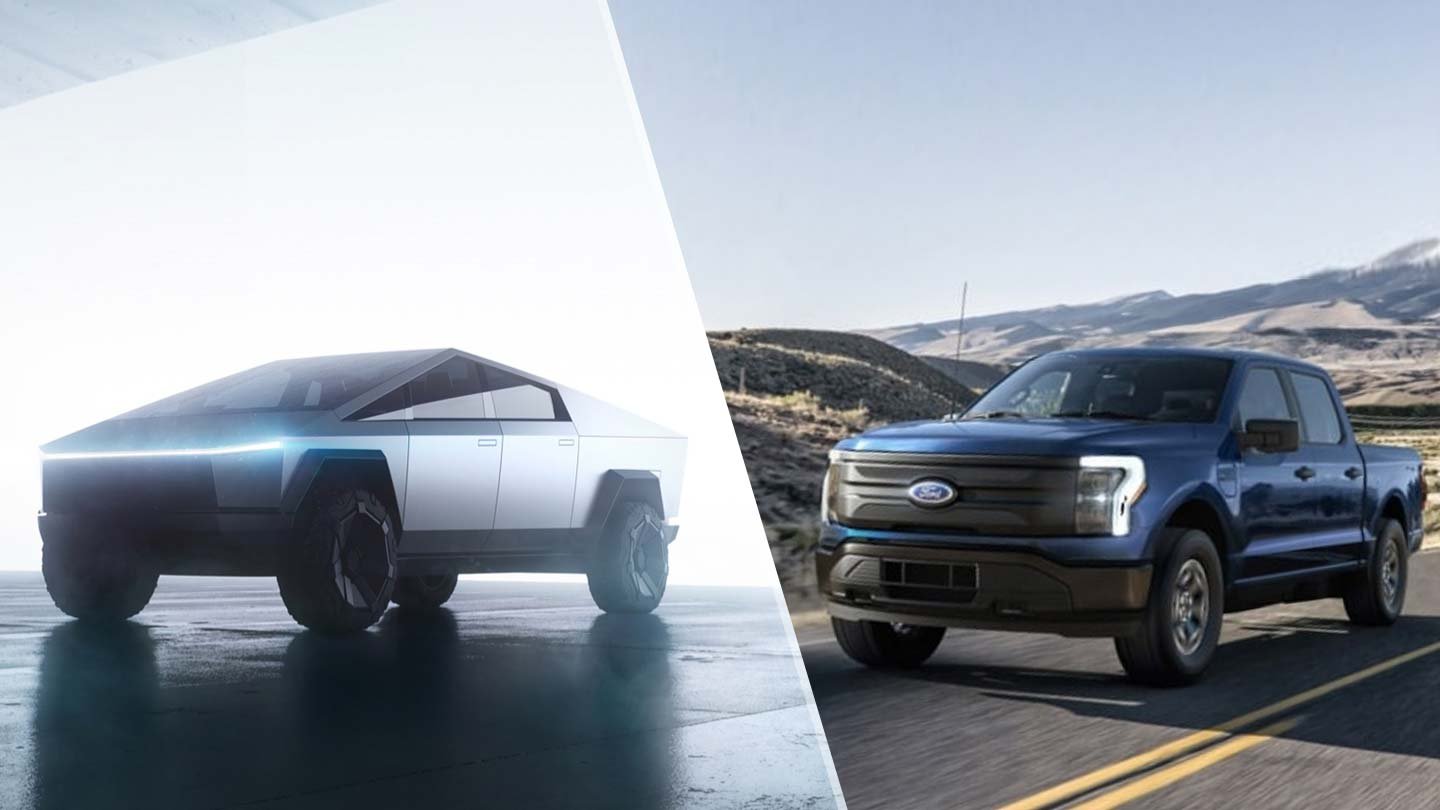
For most American families, the Ford F-150 Lightning is the better all-around pick, and the Tesla Cybertruck wins on raw range and towing tech — the right answer really depends on whether you want a familiar truck that happens to be electric, or a radically different vehicle built around Tesla’s software-first approach. The Lightning starts thousands of dollars lower, drives and looks like the F-150 you already know, and has a nationwide dealer network for service. The Cybertruck counters with a longer EPA range on its base trim, faster charging thanks to its 800-volt architecture, and standout torque numbers on the Cyberbeast trim. Below, we break down pricing, range, towing capacity, interior space, charging speed, and real-world family fit — plus a side-by-side spec table and a clear bottom-line verdict.
Quick Summary Box
- Starting price: F-150 Lightning from roughly $57,000; Cybertruck from roughly $60,000–$70,000 depending on trim availability
- Range: Cybertruck’s base AWD trim edges out the Lightning, at 325 EPA miles vs. 300 EPA miles
- Towing: Cybertruck’s higher trims claim up to 11,000 lbs; Lightning tops out at 10,000 lbs with the Max Trailer Tow package
- Charging: Cybertruck’s 800-volt system charges faster on compatible DC fast chargers than the Lightning’s setup
- Family practicality: Lightning offers a more conventional cabin, a massive front trunk, and easier in-and-out access; Cybertruck offers a more futuristic interior with a bigger overall footprint
Ford F-150 Lightning: The Familiar Choice
Pricing and Trims
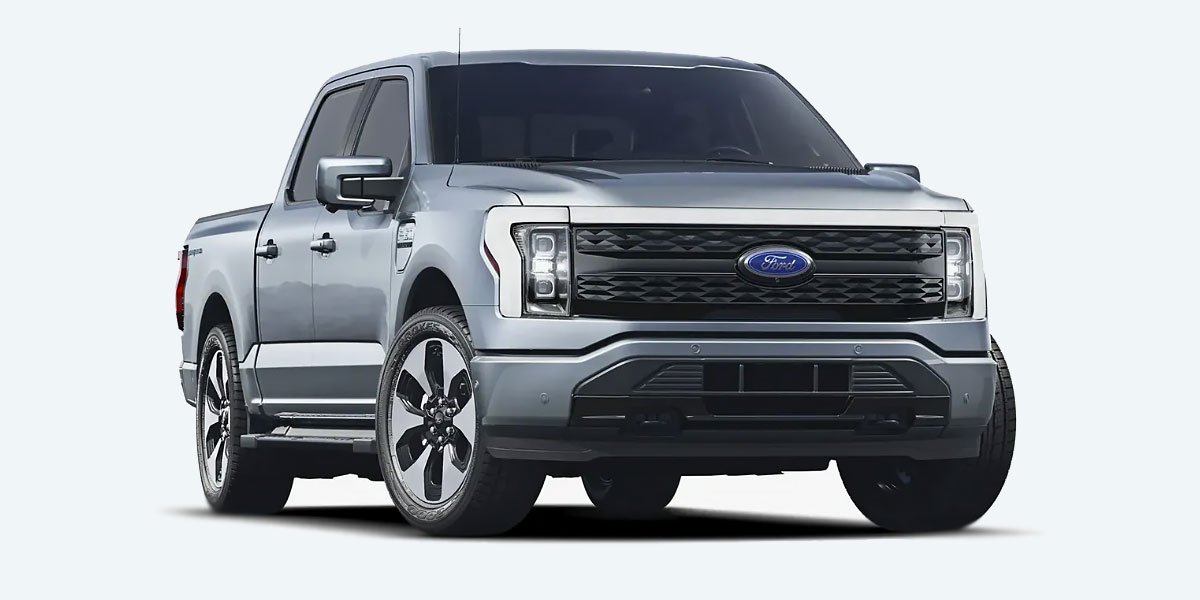
The 2026 F-150 Lightning lineup starts at around $57,000 for the Pro trim and climbs to roughly $85,000 for the range-topping Platinum. Ford has signaled the Lightning is transitioning toward a next-generation, range-extended EV powertrain, and production has seen interruptions tied to supplier issues — families cross-shopping this truck should confirm current availability and trim lineup with a local dealer before assuming any specific configuration is in stock.
Every 2026 retail trim now ships with the 123 kWh Extended Range battery as standard, since the smaller battery option has been discontinued for this model year. That simplifies the buying decision: there’s no “budget range” trade-off to weigh anymore.
Range and Performance
EPA-estimated range lands around 300 miles across trims, dipping slightly on higher trims with larger wheels. Standard output is 536 horsepower and 775 lb-ft of torque, with an available 580-horsepower configuration on upper trims. Ford quotes 0-60 mph times in the high 3-second to low 4-second range depending on configuration — quick for a full-size pickup, though not class-leading against the Cybertruck’s fastest variant.
Towing and Payload
With the Max Trailer Tow package, the Lightning is rated for up to 10,000 lbs of towing capacity, which is standard on the Platinum trim and optional elsewhere. That’s enough for most boats, campers, and utility trailers a family would realistically pull.
Family-Friendly Features
This is where the Lightning tends to win over households making the switch from a gas F-150. The cabin layout, seating position, and controls are close to the standard F-150, which shortens the learning curve for parents who’ve driven trucks before. The Mega Power Frunk offers roughly 14 cubic feet of secure, weatherproof storage — useful for strollers, sports gear, or groceries. Pro Power Onboard turns the truck into a mobile generator, which matters for families who camp, tailgate, or want backup power during outages.
Tesla Cybertruck: The Tech-Forward Choice
Pricing and Trims
The 2026 Cybertruck lineup has been restructured more than once this year. As of the most recent update, a dual-motor AWD trim starts near $60,000, a Premium AWD trim sits around $80,000, and the tri-motor Cyberbeast tops the range near $100,000. Tesla has adjusted Cybertruck pricing and trim structure multiple times in 2026, so families should verify current configurations directly on Tesla’s site before budgeting around a specific number.
Range and Performance
EPA-estimated range reaches up to 325 miles on the AWD trims and around 320 miles on the Cyberbeast, all from the same 123 kWh structural battery pack. The Cyberbeast’s tri-motor setup produces more than 800 horsepower and a 0-60 mph time of roughly 2.6 seconds — sports-car territory in a full-size truck body. The dual-motor trims are considerably more modest but still quick, in the low-4-second range.
Towing and Payload
Towing capacity varies noticeably by trim. Higher Cybertruck trims are rated up to 11,000 lbs, but the newer, lower-cost AWD trim carries a reduced rating around 7,500 lbs — a meaningful difference for families who tow regularly, so matching the trim to your actual towing needs matters more with the Cybertruck than it does with the Lightning.
Family-Friendly Features
The Cybertruck’s 800-volt architecture allows for notably fast DC charging, which can matter on road trips with kids in the back seat and limited patience for long charging stops. The composite bed doesn’t need a liner and is built to shrug off scratches from bikes, coolers, and gear. The cabin leans heavily into touchscreen controls, which some families love and others find distracting compared to physical buttons. The exterior design is polarizing — some parents appreciate the head-turning novelty, others prefer a truck that doesn’t draw constant attention in a school pickup line.
Charging and Ownership Considerations
Both trucks use the NACS charging standard, giving access to Tesla’s Supercharger network, which remains one of the most reliable fast-charging networks in the U.S. — a real advantage for road-tripping families in either truck. Home charging setup costs and timelines are similar for both vehicles, since both benefit from a Level 2 home charger for overnight charging.
Service and parts availability still favor the Lightning in most parts of the country, simply because Ford’s dealer network is far larger and more established than Tesla’s service center footprint. Families in smaller towns or rural areas may find this a bigger practical factor than any spec sheet number.
Comparison Table
| Spec | Ford F-150 Lightning | Tesla Cybertruck |
|---|---|---|
| Starting price | ~$57,000 | ~$60,000 |
| Top trim price | ~$85,000 | ~$100,000 |
| EPA range | ~300 miles | Up to 325 miles |
| Horsepower | 536–580 hp | ~600 hp (AWD) / 800+ hp (Cyberbeast) |
| 0–60 mph | ~3.8–4.2 sec | ~4.1 sec (AWD) / ~2.6 sec (Cyberbeast) |
| Max towing | 10,000 lbs | 7,500–11,000 lbs (varies by trim) |
| Battery | 123 kWh | 123 kWh |
| Charging architecture | 400-volt | 800-volt |
| Seating | 5 | 5 |
| Frunk storage | ~14 cu ft | Smaller front storage |
Note: Both automakers have adjusted pricing and trim lineups multiple times in 2026. Always confirm current figures with Ford or Tesla directly before purchasing.
Bottom Line Verdict
For most American families, the Ford F-150 Lightning is the more practical, lower-risk choice — it’s more affordable at every trim level, easier to service nationwide, and built around a cabin and driving experience families already know. The Tesla Cybertruck makes more sense for families prioritizing range, charging speed, and a genuinely different ownership experience, especially if the Cyberbeast’s performance or the brand’s tech ecosystem is a real draw. Neither truck is a wrong choice — the right one comes down to whether your family values familiarity or novelty more.