Charging an EV could soon take about as long as filling a tank. BYD plans to roll out its BYD Flash Charging system across Europe, with chargers that deliver up to 1,500 kW, far more than most public chargers manage today.
The company laid out the plan at the 2026 Paris Motor Show, where it also debuted the Atto 8, its first BYD-badged model in Europe built to use the system. You need a compatible car to get the advertised speeds.
BYD’s European rollout plan
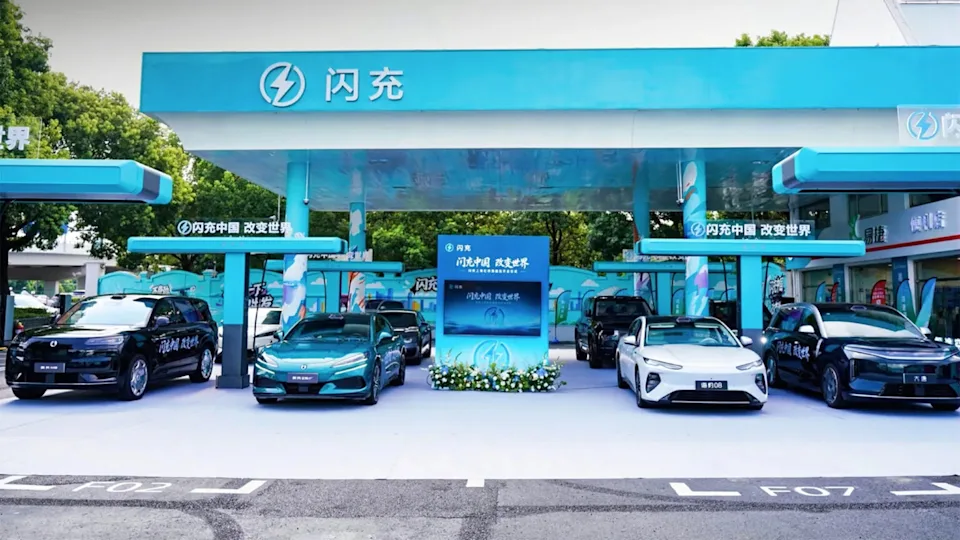
According to CarNewsChina, BYD wants 100 Flash Chargers in Europe by the end of 2026 and 3,000 by the end of 2027. Going from 100 to 3,000 in twelve months is a big ask.
- The first European charger went up in Germany in June 2026. Others have appeared since, including in the UK.
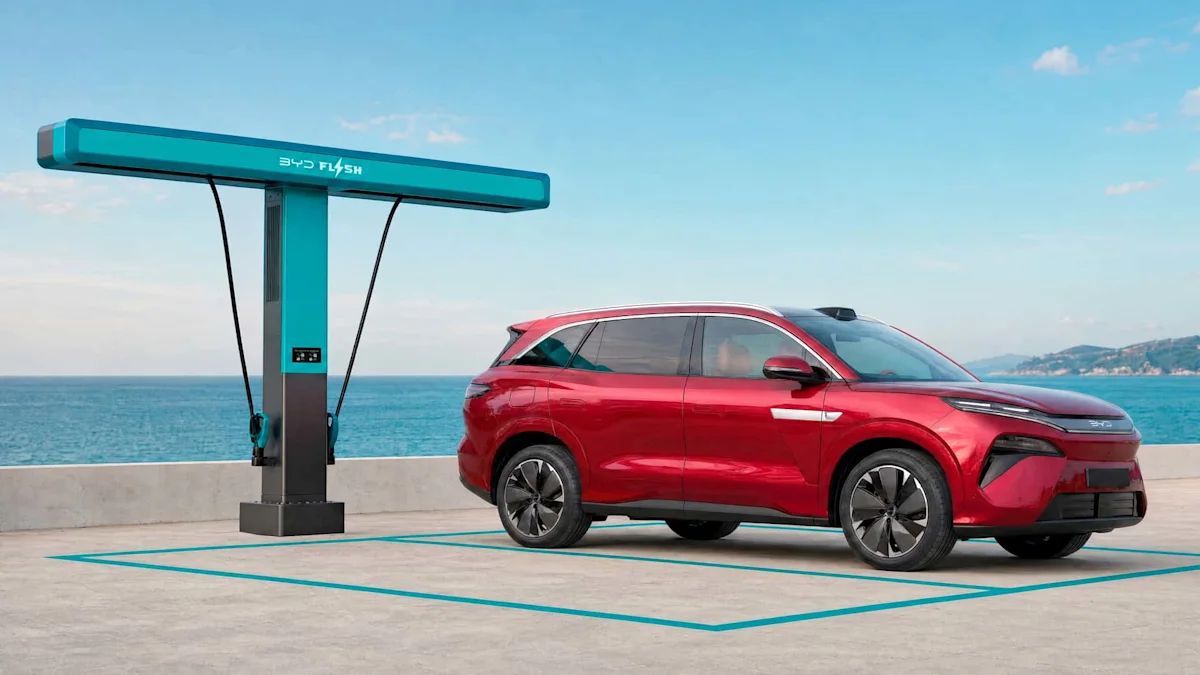
- Each charger delivers up to 1,500 kW through a single gun.
- BYD already runs more than 12,000 Flash Chargers in China and wants 20,000 worldwide by the end of 2026.
- Europe’s 3,000 would be half of the 6,000 overseas stations BYD targets by the end of 2027.
How fast is BYD Flash Charging?
With the second-generation Blade Battery, BYD says a car can go from 10% to 70% in about five minutes and from 10% to 97% in about nine. In extreme cold it adds roughly three minutes. BYD’s slogan for this is “ready in 5, full in 9, cold add 3.”
Those are BYD’s own figures. They assume good conditions, a compatible car and a Flash Charger, so expect real-world results to vary.
BYD Atto 8: the first Flash Charging BYD in Europe
The Atto 8 is the European version of the Chinese Tang L. It’s a seven-seat SUV that goes on sale in Q1 2027, and both versions share a 115 kWh battery:
| Version | Output | 0–100 km/h | WLTP range |
|---|---|---|---|
| Design RWD | 456 hp (340 kW) | 8.0 s | 653 km (about 405 miles) |
| Excellence AWD | 764 hp (570 kW) | 4.6 s | 602 km (374 miles) |
For now, the only BYD-group car in Europe that supports Flash Charging is the premium Denza Z9 GT. BYD says more compatible models will follow the Atto 8 in 2027.
Can BYD pull it off?
Megawatt charging needs a lot of grid capacity, and the chargers are proprietary, so they only help people who drive compatible cars. That leaves two open questions: how fast BYD can build the stations, and how fast it can get compatible models onto European roads. If it keeps to the schedule, long-distance drivers get a real reason to consider the brand.