Incat Tasmania Hull 096 has just powered up, and it isn’t merely a vessel. It is the largest battery-electric ship ever built, and Incat claims it’s the largest electric vehicle of any kind on the planet. Move over, Cybertruck; this 427-foot-long giant is rewriting the rules.
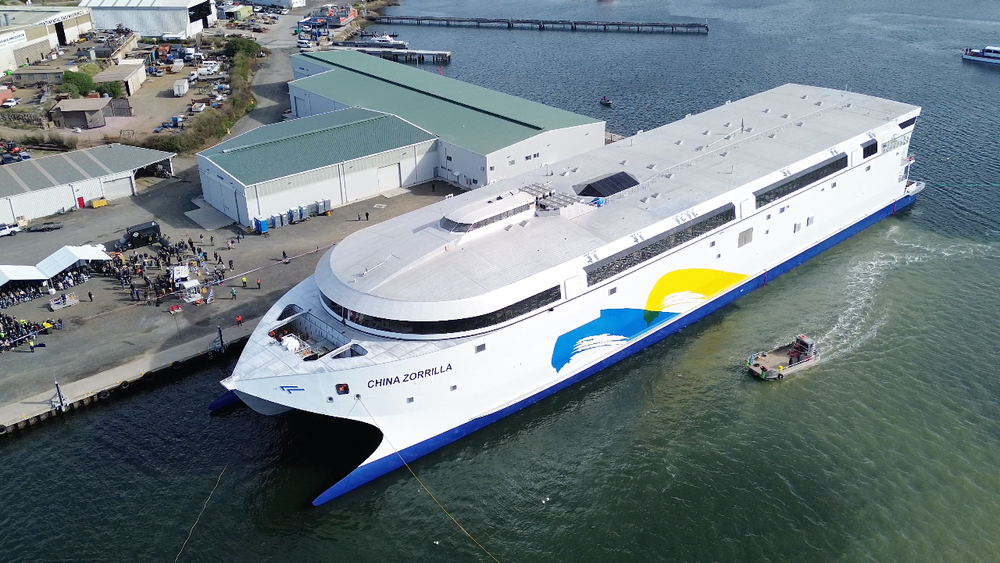
My first thought about a “giant battery ferry” was that it would be personality-free, like a toaster. But the specs tell a different story. Built for Buquebus, a South American operator, this ferry will transport 2,100 passengers and over 220 cars. It’s a floating metropolis.
Inside Incat Tasmania Hull 096
The propulsion system alone would make a power plant blush. The ferry carries 275 tons of batteries, equivalent to 150 Ford F-150 trucks in “fuel.” Its installed capacity exceeds 40 megawatt-hours, four times larger than any maritime battery setup attempted before. This massive battery array powers a vessel that moves like a giant, silent iPhone across the water.
On a recent Sunday in Hobart, Tasmania, dignitaries gathered as Chairman Robert Clifford pressed the ignition. The waterjets hummed, and Incat Tasmania Hull 096 glided silently along the River Derwent. No smoke, no roar, just aluminum floating effortlessly.
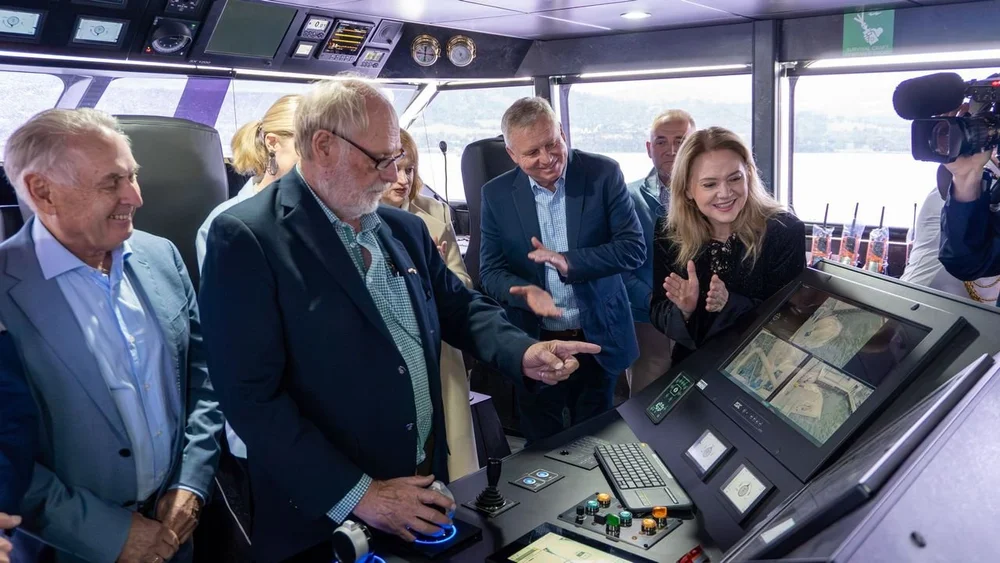
Originally intended to run on Liquefied Natural Gas (LNG) as the China Zorrilla, the ferry was converted to full battery-electric power during the pandemic. The engineering challenge of pivoting a 427-foot ship to 100% electric is immense, yet it succeeded.
The cost isn’t public, but comparable high-speed ferries from Incat can exceed $100 million. Factor in the massive battery system, and you have an expensive, yet gas-free, transport solution.
Acceleration isn’t “Ludicrous Mode,” but for its size, it’s surprisingly agile. Similar ships being built for Denmark will reach over 46 mph. Standing on deck of a 427-foot ferry moving that fast is an experience in itself.
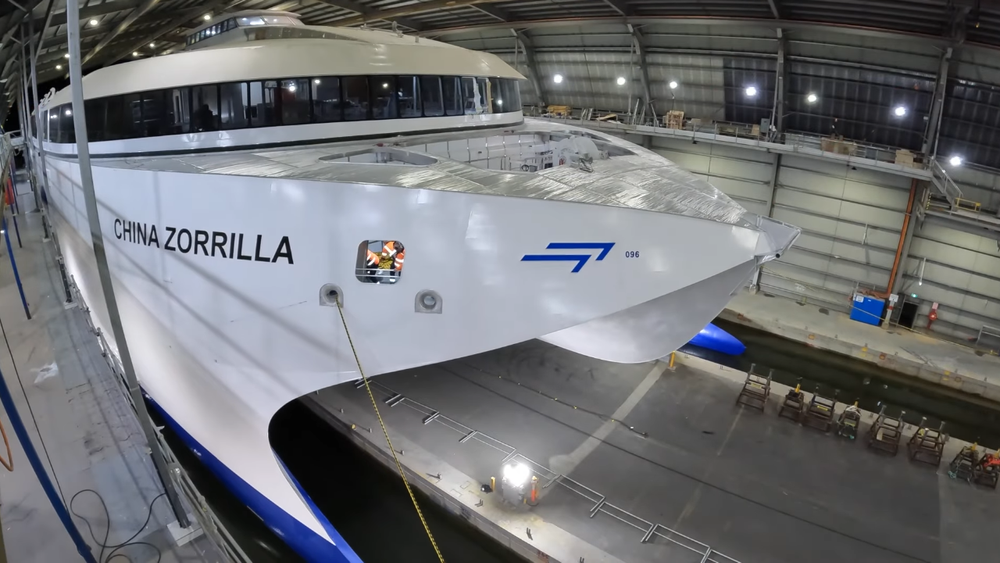
Skeptics ask what happens if it runs out of charge mid-ocean. The design is simple and efficient: the ferry shuttles between fixed ports, plugs in, offloads passengers, and repeats. It’s practical, quiet, and impressively green.
Tasmania leads in aluminum shipbuilding, and the future of electric ferries is underway. Incat has secured three more contracts for Danish operators, with even larger 45-megawatt-hour batteries. Range anxiety is entering maritime transport, and the Australians are handling it with style.
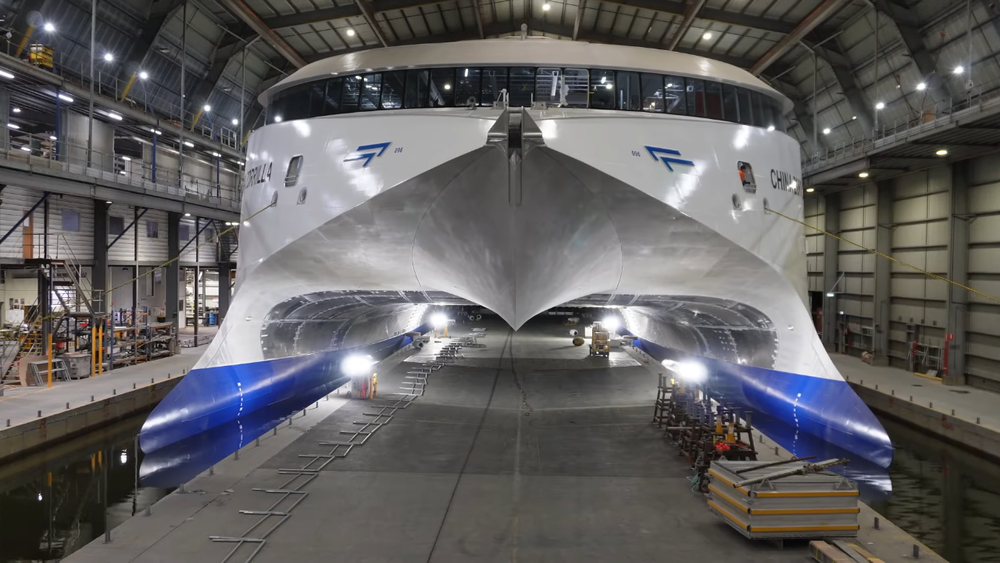
The era of roaring marine engines isn’t gone, but when a 400-foot-long aluminum vessel carries thousands silently without emissions, respect is due. Incat Tasmania Hull 096 is proof that large-scale electric transportation is not only possible but remarkable.
Related
- 2025 Most Expensive Electric Boats
- 2025 Cheapest Electric Boats You Can Buy Today
- Candela P-12 Electric Hydrofoil Transforms Commuting in Norway
- 5 Reasons the Vessev VS–9 Electric Hydrofoil Stands Out
- Vessev VS-9: Revolutionary Hydrofoiling Electric Boat Redefines Marine Travel