- Home
- Electric Vehicles
- Compare
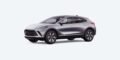
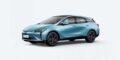
- NIO ES6 Performance vs AITO M8
NIO ES6 Performance vs AITO M8
|
| |
|
|


|
|
Price
|
$55,995.00
$53,132.00
|
|
Our Rating
|
5.8
5.8
|
|
Brand
|
NIO
Aito
|
|
Category
|
Cars
Cars
|
MODEL
|
Models
|
ES6 (Performance)
5-seat and 6-seat versions; trims include “Max+”, “Ultra”, single-motor and dual-motor AWD options. |
LAUNCH
|
Announced
|
December 15, 2018
BEV variants announced July 2025 |
|
Status
|
In production / available
Pre-order open, market launch tentatively set for August 2025. |
|
Country of origin
|
China
|
|
Base Price
|
RMB 398,000 (pre-subsidy) for Performance version
~ ¥378,000 (China) for entry-level BEV version. |
PERFORMANCE
|
Power
|
544 hp (544 PS), 400 kW total (dual-motor AWD) — 160 kW permanent magnet motor (front) + 240 kW induction motor (rear)
Single-motor version: up to ~227 kW.
Dual-motor AWD version: combined ~387 kW |
|
Torque
|
725 Nm
Not all sources give full torque; dual-motor likely ~598 Nm. |
|
Acceleration
The acceleration numbers are an easy way to compare car performance. We list either time from 0 to 100 km/h or time from 0 to 60mph, depending on which number(s) the manufacturers provide. The lower the acceleration time, the higher performance the car is. |
4.7 seconds
~ 4.8-5.2 seconds depending on version. |
|
Max Speed
|
200 km/h
~ 200 km/h. |
BATTERY
|
Capacity
|
Variants include 84 kWh (original) and 100 kWh (long-range)
100 kWh CATL battery pack for all BEV variants. |
|
Tech
|
Lithium-ion (NCM)
800-volt architecture; likely NMC chemistry. |
|
Range
|
84 kWh: ~510 km (NEDC)
100 kWh: up to ~610 km (NEDC)
Up to ~ 705 km (CLTC). |
|
Consumption
|
16.1 kWh/100 km (CLTC)
~ 23.7 kWh / 100 km (when measured under some standard). |
|
Heat Pump
|
|
|
AC Charging
|
7 kW AC charging for 100 kWh version
|
|
DC Charging
|
0–80% in ~60 minutes (for 100 kWh)
|
|
Others
|
Supports NIO battery swap (common for NIO vehicles) — helps with “charging” via swapping.
Battery protection system ≈ 15-layer; many sensors for safety |
BODY
|
Type
|
5-seat SUV (5-door)
Full-size luxury SUV, 5-door; offered in 5-seat and 6-seat layouts. |
|
Platform
|
Uses NIO’s hybrid body construction (aluminum + carbon fiber) for strength and lightness.
Huawei’s “Giant Whale” 800V high-voltage platform / upgraded Tuling platform. |
|
Dimensions
|
Length: ~4,850 mm
Width: ~1,965 mm
Height: ~1,731 mm (for 100 kWh version)
5,190×1,999×1,795 mm |
|
Drag Co-Efficient
|
0.25 Cd (newer versions)
~ 0.255–0.259 Cd depending on source. |
|
Wheelbase
|
2,900 mm
3,105 mm |
|
Clearance
|
~18° / ~20° |
|
Weight
|
For 2025 100 kWh model, curb weight ~2,336 kg
~2,670 kg in some versions. |
|
Suspension
|
Five-link front and rear, with Continuous Damping Control (CDC) and optional active air suspension.
Independent; double wishbone front, independent rear. |
|
Wheels
|
255/55 R19
Options include 20- or 21-inch wheels; tires around 255/50 R20 front, 275/50 R20 rear or 265/45-285/45 R21. |
|
Trunk/Boot
|
584 L
Rear trunk volume ~ 392-1323 L depending on seat configuration. |
|
Frunk/Bonnet
|
Has a powered front-trunk (“extra-large frunk”). |
|
Others
|
Very stiff body (torsional stiffness ~44,930 Nm/degree) thanks to aluminum-carbon construction
|
DISPLAYS
|
Centre
|
Large central touchscreen (multitouch) — NIO uses its own digital cockpit
Multiple displays integrated into dashboard (three displays in front); large infotainment screens. |
|
Driver's Display
|
Digital instrument cluster (fully digital)
AR-HUD, reportedly ~68-inch augmented reality head-up display. |
|
Head-Up
|
Yes, AR-HUD. Same as above |
|
Others
|
NIO’s NOMI AI assistant is integrated in the cockpit (voice-based interaction)
Rear seat screens; projector display for rear seats; floating window mode etc. |
COMFORT
|
Seats
|
5 seats; rear seats fold in a 40/20/40 layout for cargo flexibility
5 or 6 seats; in 6-seat version, second row includes captain / “zero-gravity” style seats with recline; front passenger seat folds for leg-rest when unoccupied. Heating, ventilation etc |
|
Roof
|
Standard hard roof
Panoramic cabin; likely panoramic roof option. — |
|
Parking Aids
|
Likely includes parking sensors, but exact spec not broadly published in early press; NIO Pilot (driver assistance) is present
Multiple sensors; LiDAR; 4D millimeter-wave radars; intelligent parking assistance. |
|
Connectivity
|
NIO digital cockpit, voice assistant “NOMI”, over-the-air updates (FOTA)
HarmonyOS version; likely strong integration with Huawei tech. |
|
Others
|
Intelligent Chassis Controller (ICC) works with CDC for ride comfort.
Many customization interior colours; sound system; frunk; flexible seating layouts. |
SAFETY
|
Driving Aids
|
NIO Pilot (ADAS) hardware (with sensors)
Huawei ADS 4 advanced driver-assistance; many sensors (LiDAR, cameras, radars, ultrasonics) for active safety. |
|
Self Driving
|
Level-2 capabilities (driver must remain engaged) — NIO Pilot system
Level 2+ autonomous driving; supervised autonomous features. |
|
Crash Tests
|
Five-star safety rating (C-NCAP & Euro NCAP) claimed by NIO
|
Note
|
Others
|
The ES6 Performance version uses both a permanent magnet motor and induction motor — this gives a good mix of efficiency and performance.
Strong body stiffness due to hybrid structure (aluminum + carbon fiber)
The Performance trim is more “sporty” with faster acceleration vs base/standard versions.
NIO offers a “battery as a service” (BaaS) model (optional), though exact cost depends on region (mostly China).
The BEV variant adds an extra-large frunk, quieter operation, and lower running costs vs the EREV versions.
Pre-orders include special colour / design packages (e.g. Night Purple, Black Obsidian). |
Disclaimer Note
We can not guarantee that the information on this page is 100% correct