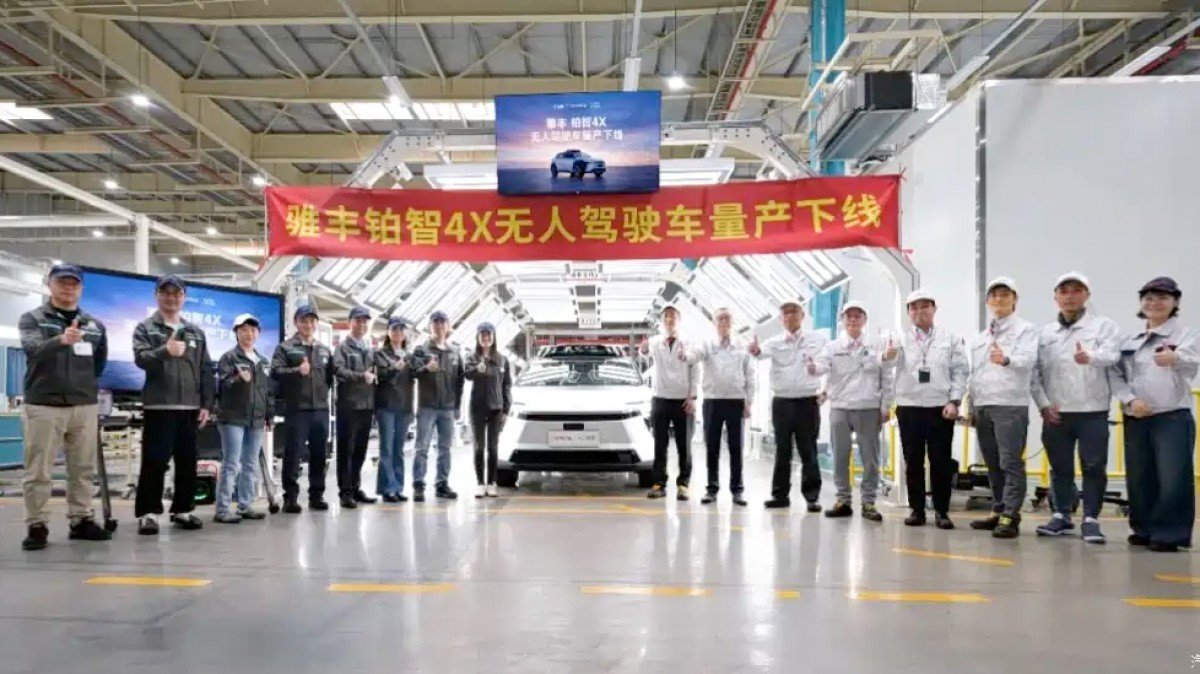
Self-driving taxis are moving from concept to daily transport. In China, GAC Toyota and Pony.ai have unveiled a mass-produced robotaxi designed for real-world traffic. The project signals a shift from pilot testing to large-scale deployment.
What the robotaxi is
The new robotaxi uses the Toyota bZ4X electric SUV as its base. There is no human driver. A dedicated onboard computing system controls steering, braking, and navigation. From the outside, it looks close to a standard production bZ4X, following Toyota’s current design language.
Autonomous technology
This vehicle runs Pony.ai’s seventh-generation self-driving system. The company has tested earlier versions for years in major cities such as Beijing, Shanghai, Guangzhou, and Shenzhen. The latest software improves performance in poor weather and complex traffic scenarios. Pony.ai states the system matches the consistency of an experienced driver without fatigue or distraction.
Toyota and Pony.ai partnership
Toyota invested $400 million in Pony.ai in early 2020. Before adopting the bZ4X platform, Pony.ai operated robotaxis based on the Lexus RX450h and Toyota Sienna. The new model marks the first mass-produced robotaxi from this partnership.
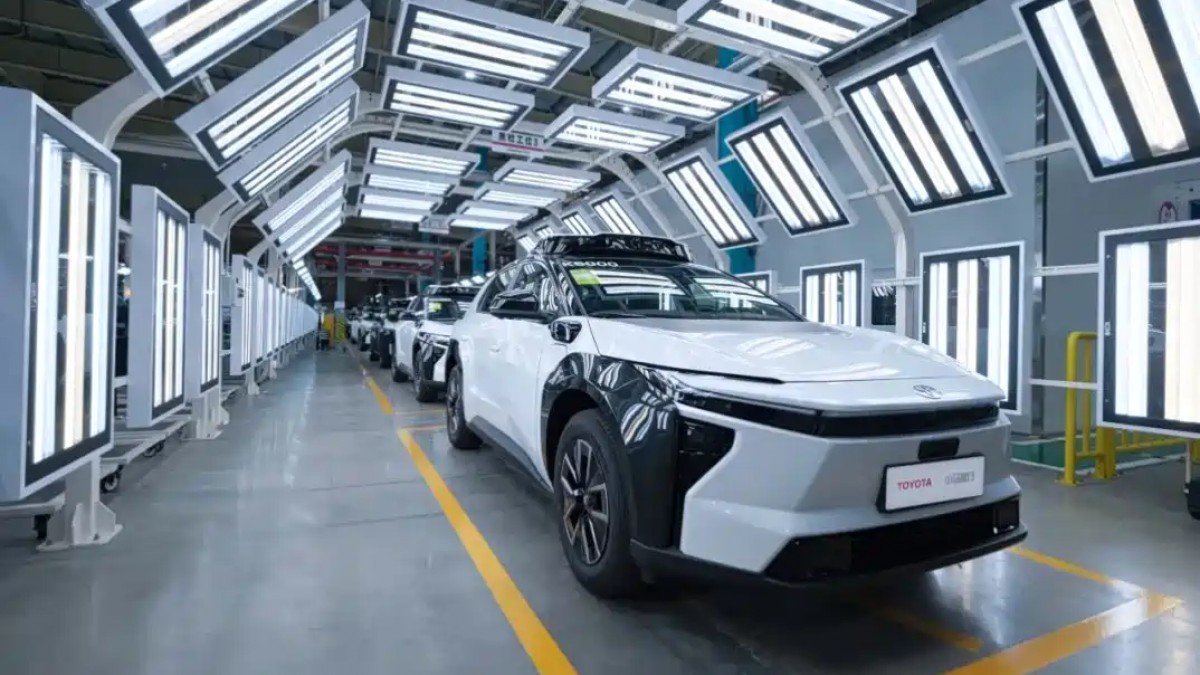 Toyota bZ4X Robotaxi Debuts in China With Pony.ai Self-Driving Tech
Deployment plans in China
GAC Toyota and Pony.ai have created a joint venture to scale operations. Their goal targets thousands of bZ4X robotaxis on Chinese roads by the end of 2026. Initial rollout will focus on large metropolitan areas where demand for autonomous ride services is highest.
Fleet growth targets
Pony.ai operated around 200 vehicles in 2024. The fleet grew to nearly 1,000 units by the end of 2025. The company projects about 3,000 vehicles by late 2026. CEO Wang Haojun has set a longer-term target of 100,000 autonomous vehicles by 2030, with profitability expected after reaching that scale. Current priorities center on safety validation and system reliability.
Related EV News
- Ferrari Luce Electric GT Revealed: Specs, Interior, Range
- Electric Land Rover Velar Likely Coming in 2026
- Maextro S800 2026: Huawei’s Updated Luxury EREV Unveiled
- Updated Denza D9 EV Gets 340 kW Motor and AWD Option
- Zeekr 007 and 007 GT Refresh Brings 784 HP and Faster Charging