- Electric Vehicles
- TESLA
- Tesla Semi
Tesla Semi


- Drive Type: RWD
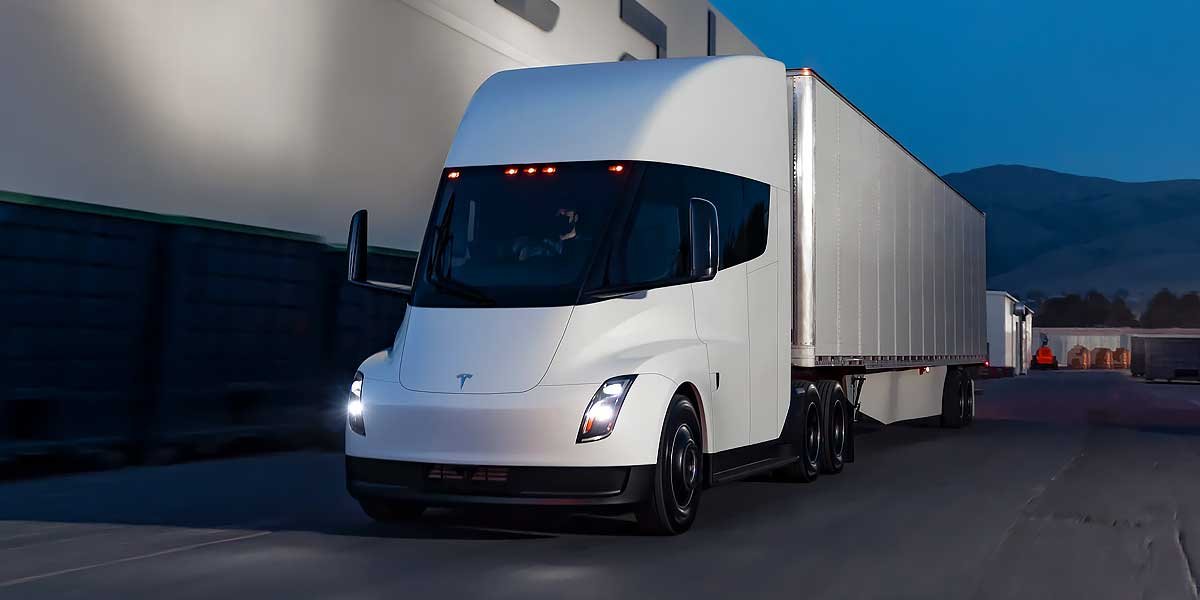
- Body Type: Class 8 semi-truck (tractor unit)
- Self Driving: Full Self-Driving (FSD)
- Airbags: Yes
PROS
- 0–60 mph in 20 seconds while loaded
- Impressive 800 km (497 mi) range per charge
- Ultra-fast 30-min Megacharging
- Lower operating cost than diesel rigs
- Zero tailpipe emissions
CONS
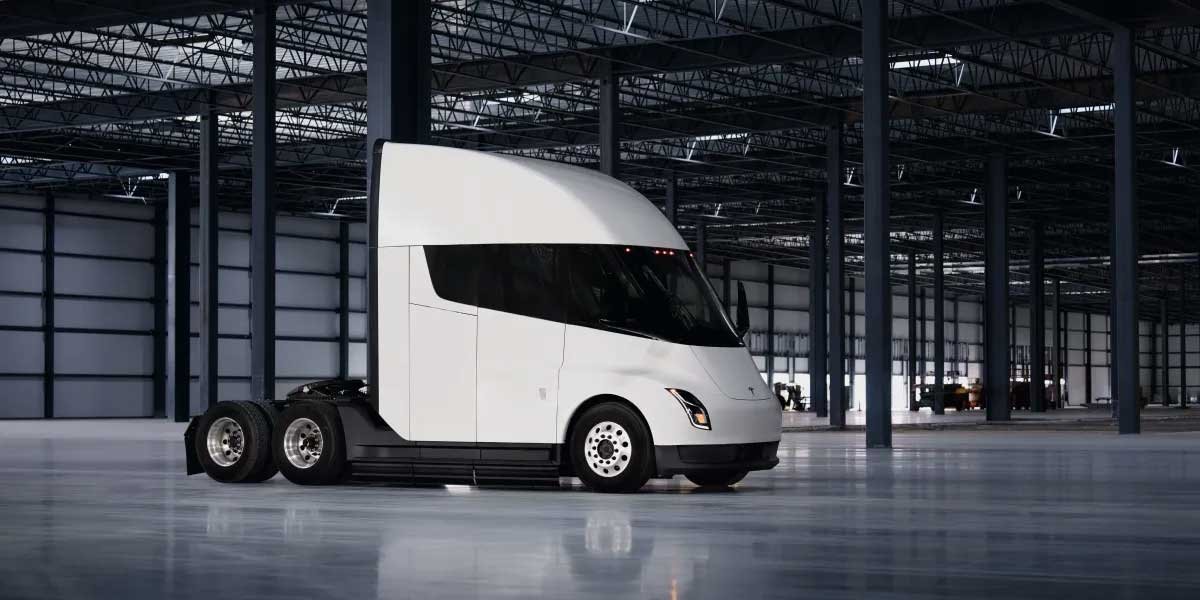
- No sleeper cab—limits long-haul routes
- Price tag steep for smaller operators
- Charging limited to Tesla’s Megacharger network
- Battery size reduces available payload slightly
The Tesla Semi is a Class 8 battery-electric semi-trailer truck built by Tesla, Inc. at a dedicated facility next to Gigafactory Nevada. It comes in two variants — Standard Range and Long Range — and uses a tri-motor rear-wheel-drive powertrain rated at 800 kW. Volume production started April 29, 2026. The Nevada plant is designed for up to 50,000 units annually.
It is Tesla’s only commercial vehicle. It is also the first battery-electric Class 8 truck from a major OEM to reach high-volume production in North America.
Tesla Semi Range and Battery Size
The battery capacities are confirmed by a California Air Resources Board regulatory filing — one of the more reliable sources for production specs, since CARB certification requires manufacturers to submit verified powertrain data.
Standard Range: 548 kWh usable battery, 325-mile EPA range at 82,000 lbs gross combination weight. Long Range: 822 kWh usable battery, 500-mile EPA range at the same loaded weight.
Both figures apply to a fully loaded truck. Running empty, range is higher — DHL’s 2025 trials recorded over 800 km (497 miles) under load at 1.06 kWh/km efficiency. Tesla’s published consumption figure is 1.7 kWh/mile loaded for both variants.
Tesla Semi Charging Speed
Both variants support up to 1.2 MW peak DC charging via Tesla’s Megacharger network using an MCS 3.2 charge port. Tesla states that a 60% recharge takes approximately 30 minutes — timed to align with federally mandated driver rest breaks in the US.
A standalone 10–80% charge time has not been published by Tesla. AC depot charging rate is also unconfirmed at time of writing.
The Long Range model’s 1.2 MW peak charge speed was demonstrated in a Tesla engineering video late in 2025 before volume production launched.
Tesla Semi Price
Tesla has not published official pricing for the production Semi. The original 2017 figures — $150,000 for the 300-mile variant and $180,000 for the 500-mile — are no longer reliable references. At least one fleet customer has described the current pricing as a “dramatic increase” from those numbers. One industry source pegs current pricing at approximately $260,000 (Standard Range) and $290,000 (Long Range), but Tesla has not confirmed either figure publicly.
Treat any pricing you see right now as an estimate. Official numbers should come once Tesla begins broader customer deliveries.
For African buyers: the Tesla Semi has no confirmed distribution in Nigeria, Kenya, South Africa, or any other African market. No grey-market import path exists for a Class 8 truck at this price point.
Who Should Buy the Tesla Semi?
The Semi is built for mid-to-large fleet operators running regional or long-haul routes in the US, with access to Megacharger infrastructure. It suits companies with sustainability compliance requirements, in-house fleet management, and the capital to absorb an acquisition cost that is substantially higher than a comparable diesel truck — even if the total cost of ownership math eventually works in the electric truck’s favor.
It is not a truck for small owner-operators, markets without charging infrastructure, or buyers looking for a sleeper cab option. There is no sleeper configuration.
How Does the Tesla Semi Compare to Rivals?
Within Tesla’s lineup, there is no direct internal equivalent — the Semi is its own category. The Cybertruck is the closest thing Tesla makes in a work/utility context, but it targets the light-duty pickup segment at a fraction of the Semi’s weight class and price.
In the Class 8 BEV segment, the main external competitors are:
- Freightliner eCascadia — Daimler Truck’s Class 8 BEV, commercially available in volume with an established US dealer and service network. It is the most direct comparison on segment and customer profile, though its range figures fall short of the Tesla Semi Long Range.
- Volvo FH Electric — well-established in Europe, with roughly 3,000 units sold there by early 2026. Less prominent in the North American market but relevant as a global benchmark.
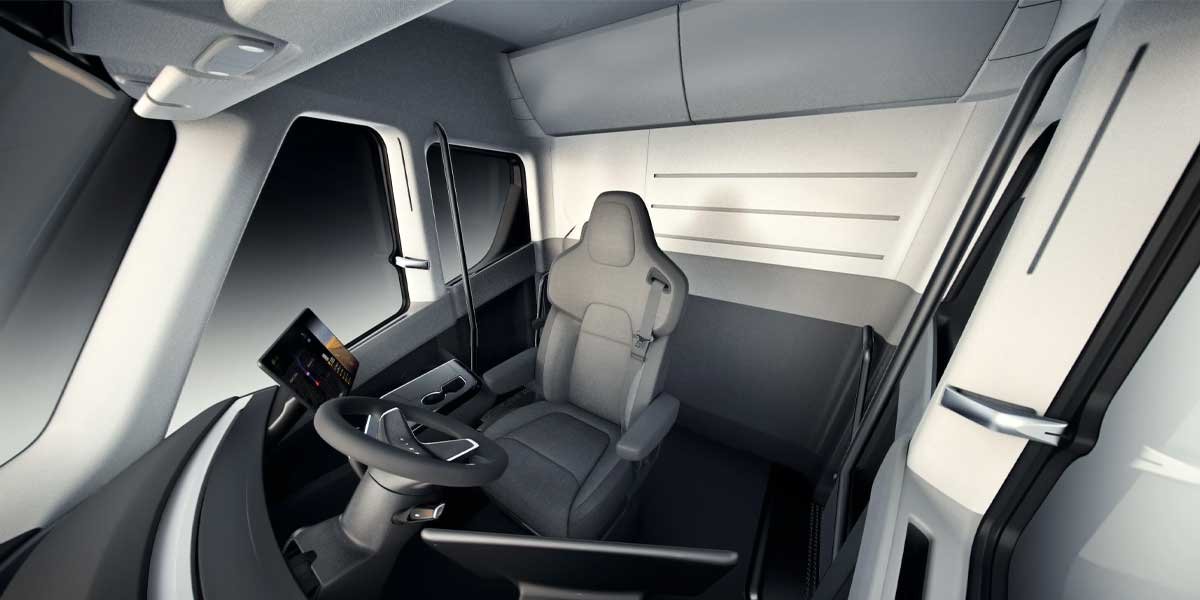
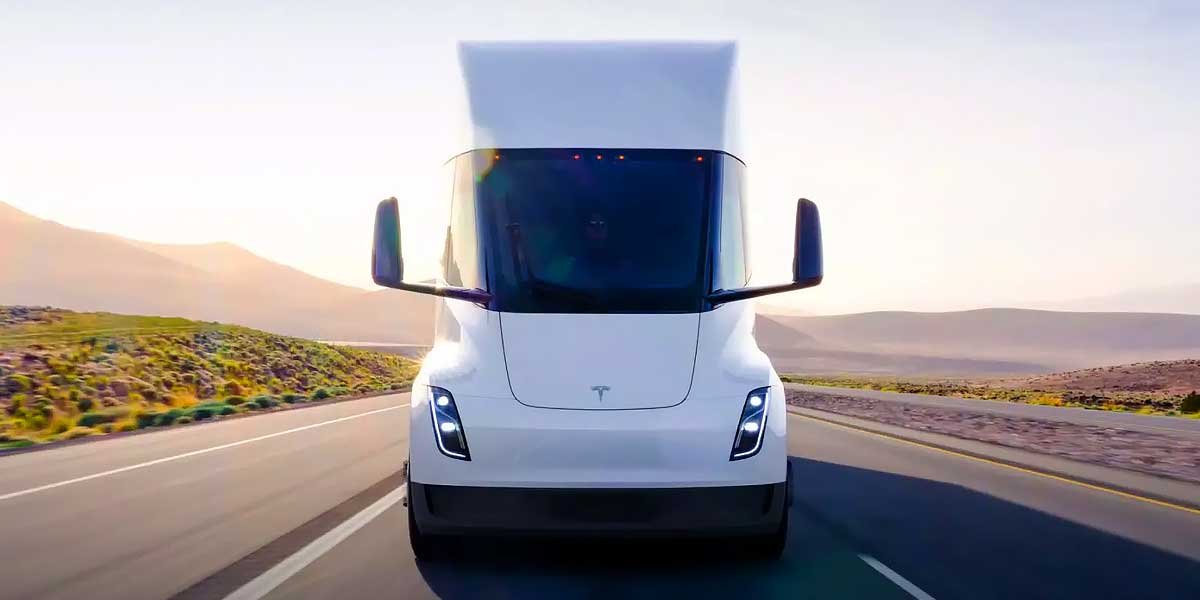
Tesla Semi Images


Full Electric Vehicle Specifications
MODEL
| Available Trims / Variants | Tesla Semi (300-mile version, 500-mile version) |
LAUNCH
| Reveal Date | November 2017 |
| Availability Status | In limited production (since Dec 2022) |
| Base Price (USD) | ~$150,000 (300-mile), ~$180,000 (500-mile) |
BATTERY
| Battery Capacity | ~850–900 kWh (est.) |
| Battery Chemistry | Lithium-ion, Tesla proprietary cells |
| Range (WLTP/CLTC/EPA) | 300 or 500 miles |
| Energy Consumption | <2 kWh per mile |
| Regen Braking (Max kW) | Regenerative braking |
| Heat Pump | |
| DC Charging (Max kW) | Tesla Megacharger – up to 70% in ~30 min |
| Additional Notes | Optimized thermal management for heavy-duty use |
PERFORMANCE
| Power Output (kW / hp) | ~1,000+ HP, 4 independent rear electric motors |
| Torque (Nm) | Very high |
| 0–100 km/h / 0-60 mph (seconds) The acceleration numbers are an easy way to compare car performance. We list either time from 0 to 100 km/h or time from 0 to 60mph, depending on which number(s) the manufacturers provide. The lower the acceleration time, the higher performance the car is. | 0–60 mph in ~20s (fully loaded, 80,000 lbs) |
| Top Speed (km/h / mph) | ~65 mph uphill at full load |
BODY
| Body Style | Class 8 semi-truck (tractor unit) |
| Platform / Architecture | Tesla proprietary truck platform |
| Dimensions (L×W×H mm) | ~20.8 ft length, ~8.2 ft width, ~13.6 ft height |
| Drag Coefficient (Cd) | ~0.36 Cd (very low for a truck) |
| Wheelbase (mm) | ~11 ft |
| Ground Clearance (mm) | Adjustable air suspension |
| Kerb Weight (kg) | ~26,000 lbs |
| Suspension (Front / Rear) | Adaptive air suspension |
| Wheel Size (inches) | 6 wheels, low-resistance truck tires |
| Frunk/Bonnet Capacity (L) | Small storage front |
| Towing Capacity (kg) | Up to 80,000 lbs gross combined weight |
| Additional Notes | Streamlined cab design with central seating position |
SAFETY
| Airbags (count) | Yes, multiple |
| Driver Assistance (ADAS) | Autopilot, lane-keeping, adaptive cruise, automatic emergency braking |
| Autonomous Driving Level | Hardware-ready for Full Self-Driving (FSD) |
COMFORT
| Seating Capacity | 1 driver seat (center) + 1 passenger seat (rear/side) |
| Roof Type | Solid |
| Bluetooth / Wi-Fi | Full Tesla connectivity, OTA updates |
| Parking Aids | Cameras, sensors, Autopilot-assisted parking |
| Additional Notes | Central driving position for visibility and safety |
DISPLAYS
| Centre Screen (inches) | Dual 15" touchscreens (one on each side of driver) |
| Driver's Display (inches) | Integrated into central position |
| Head-Up Display (HUD) | No |
| Additional Notes | Side displays act as mirrors (cameras instead of side mirrors in some markets) |
LIGHTING
INFOTAINMENT & AUDIO
TECHNOLOGY
OWNERSHIP
Note
| Additional Notes |
Designed to cut operating costs by up to 50% compared to diesel trucks Focus on long-haul freight with sustainability Uses Tesla Megacharger network for fleet operations |
Disclaimer Note
Specifications sourced from manufacturer data and may reflect WLTP, CLTC, or EPA test conditions. Import prices in your local are estimates based on grey-market landing costs and exclude duties, clearing fees, and local taxes. Figures are subject to change without notice. Always verify with your local importer before purchase. We can not guarantee that the information on this page is 100% correct