Tesla Supercharger is the best overall fast charging network in 2026, thanks to its size, reliability, and the lowest average per-kWh rate for members. Electrify America has the highest peak power (up to 350 kW) but the highest prices. EVgo wins on urban density and rideshare-friendly pricing, while ChargePoint remains the largest network by station count but leans on Level 2 charging with inconsistent DC fast pricing set by individual site hosts.
That’s the short answer. Below, we break down real 2026 pricing, charging speeds, connector types, membership plans, and network size for all four — plus a side-by-side comparison table so you can pick the right network for your route, your car, and your budget.
Quick Summary Box
- Fastest peak charging speed: Electrify America (350 kW) and Tesla Supercharger V4 (500 kW capable, though most vehicles cap lower)
- Cheapest for members: Tesla Supercharger, roughly $0.30–$0.45/kWh member rate in most US states
- Largest network by station count: Tesla Supercharger, with roughly 25,000+ US stations
- Best for city/rideshare driving: EVgo, with dense urban coverage and Uber/Lyft-friendly pricing
- Most variable pricing: ChargePoint, since individual site hosts set their own DC fast rates
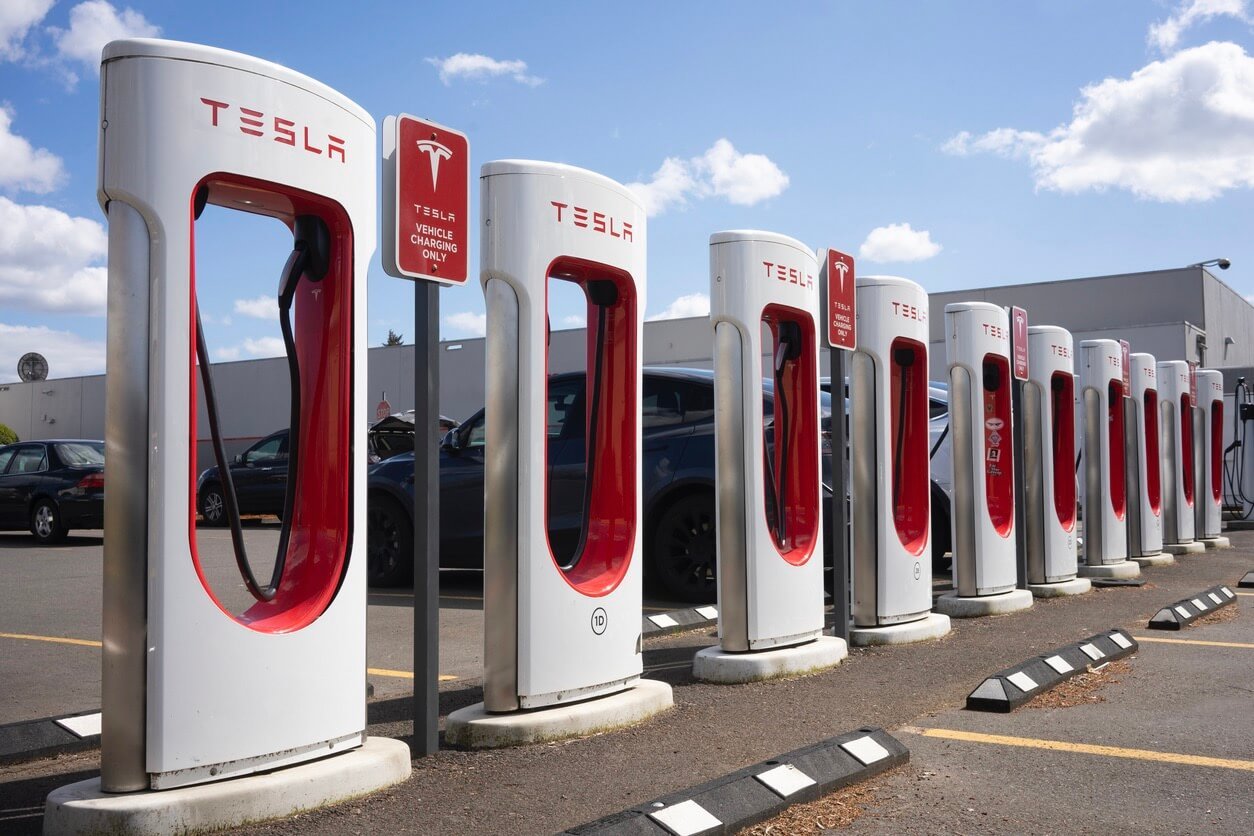
Tesla Supercharger
Network Size and Coverage
Tesla operates the largest fast charging network in North America, with roughly 25,000 US stations and connectors placed along major highway corridors, near restaurants, and at retail centers. Globally, the network has passed 7,900–8,500 stations and tens of thousands of individual stalls, spanning North America, Europe, and Asia-Pacific.
Charging Speed
Tesla’s V4 Supercharger posts can output up to 500 kW, though most current-generation vehicles (including non-Tesla EVs) cap out well below that ceiling in practice. Tesla’s own newer models typically peak between 250–325 kW.
Pricing
Tesla uses dynamic, site-by-site pricing that shifts by time of day and local demand. In 2026, most US Superchargers land in the $0.30–$0.45/kWh range for members, with high-demand states like California and New York sometimes pushing peak rates to $0.50–$0.60+/kWh. Non-members (drivers of other EV brands without a membership) typically pay a few cents more per kWh, though Tesla’s $12.99/month membership brings non-Tesla drivers down to the same rate as Tesla owners.
Compatibility
Tesla vehicles use the NACS connector natively. Since the NACS standard (SAE J3400) was finalized industry-wide, most non-Tesla EVs launched from 2025 onward ship with a native NACS port, and older CCS1 vehicles can charge using an adapter.
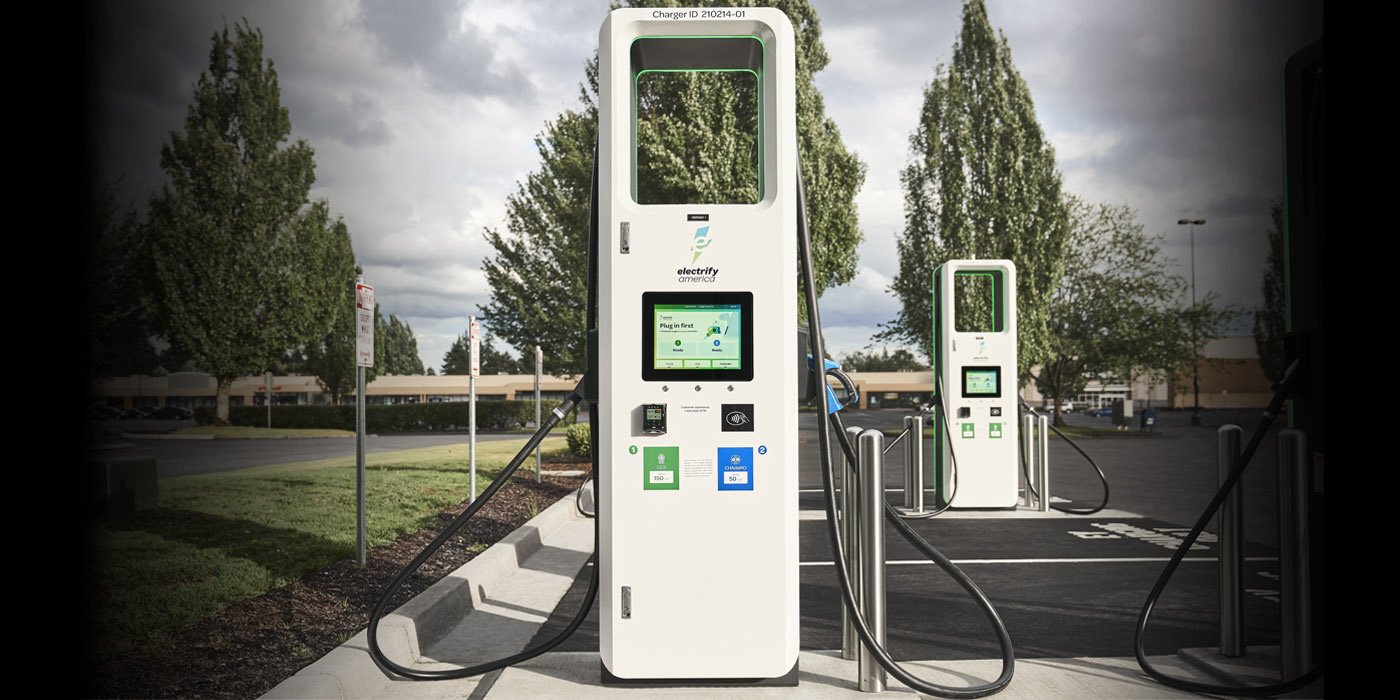
Electrify America
Network Size and Coverage
Electrify America positions itself as the largest open Hyper-Fast charging network in the US, with a strong presence along interstate corridors. It does not use a proprietary connector — all stations serve CCS-equipped vehicles.
Charging Speed
Electrify America’s flagship stations deliver up to 350 kW, among the highest available power ratings of any public network, letting compatible high-power EVs add significant range in as little as 20–30 minutes.
Pricing
Electrify America runs two main tiers: the free “Pass” plan and the paid “Pass+” membership. Pass+ typically costs a few dollars per month and cuts the per-kWh energy rate by roughly 25%. In 2026, non-member Pass pricing generally runs $0.43–$0.85/kWh depending on state and charger tier, with Pass+ bringing that down toward the low $0.30s–$0.40s/kWh in many markets. Some states still bill per minute rather than per kWh due to local regulations, which can penalize slower-charging vehicles.
Compatibility
CCS only — no proprietary connector and no Tesla-specific hardware at most stations, though Tesla drivers can use an adapter.
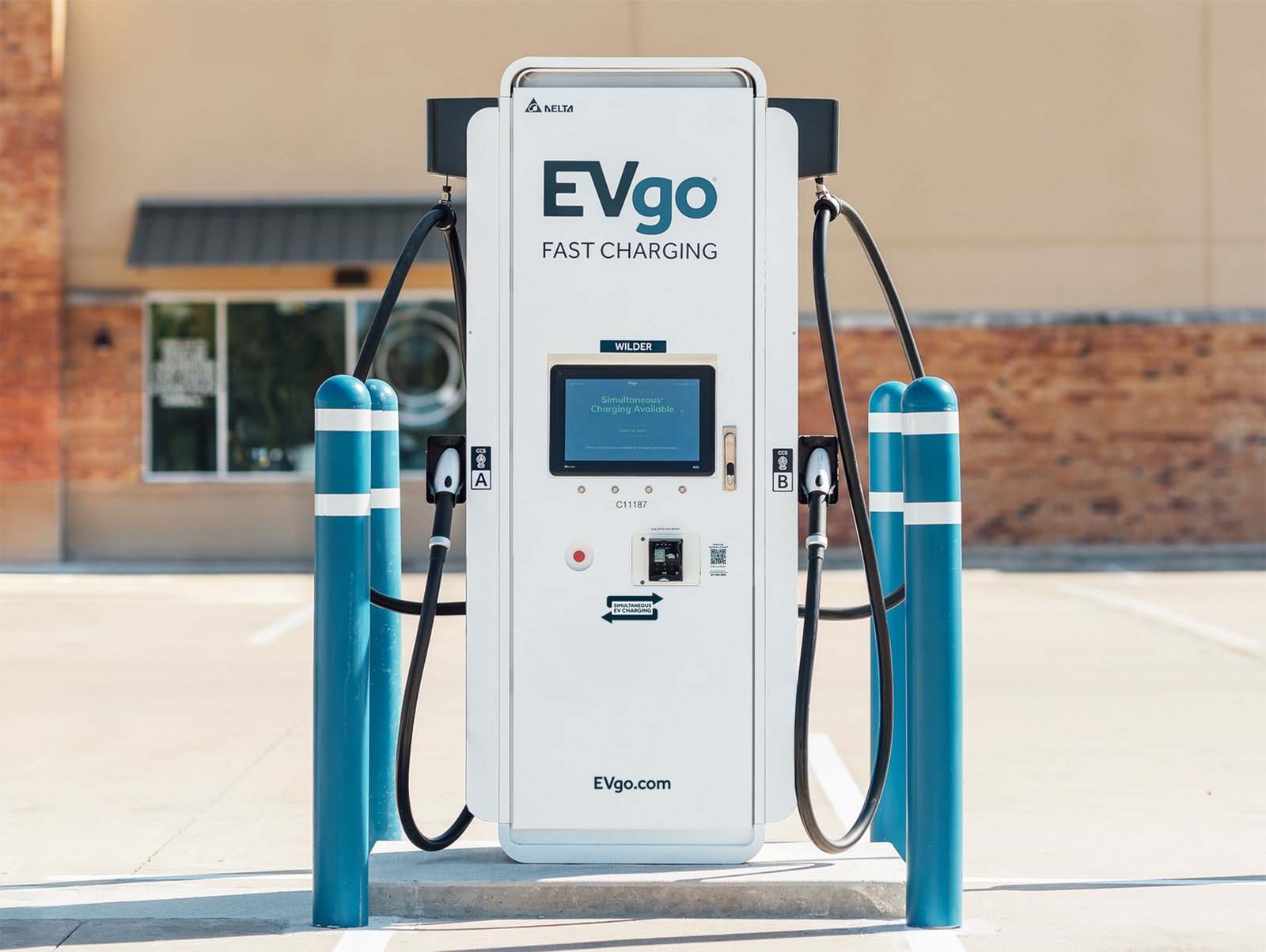
EVgo
Network Size and Coverage
EVgo operates roughly 1,000–1,200 DC fast charging stations (around 3,500+ counting all EVgo-branded and partner locations), concentrated heavily in urban and suburban areas rather than long highway corridors. California alone accounts for several hundred stations, followed by Texas and Virginia.
Charging Speed
EVgo’s power levels range from 50 kW at older stations up to 350 kW at newer high-power installations, so speed varies significantly by site age.
Pricing
EVgo’s DC fast charging costs roughly $0.31–$0.46/kWh in states that bill by the kWh, or a per-minute rate in states where regulations require it. The EVgo Plus membership (around $6.99/month) shaves a few cents off the per-kWh rate, and EVgo offers bundled charging credits through partnerships with GM’s Ultium Charge 360, Nissan, and Subaru.
Compatibility
EVgo primarily uses CCS and CHAdeMO connectors, with NACS (Tesla-compatible) hardware rolling out at a growing number of stations.
Best Fit
EVgo is particularly strong for rideshare drivers (Uber/Lyft-linked discounts) and daily urban charging, but less useful for long highway road trips compared to Tesla or Electrify America.
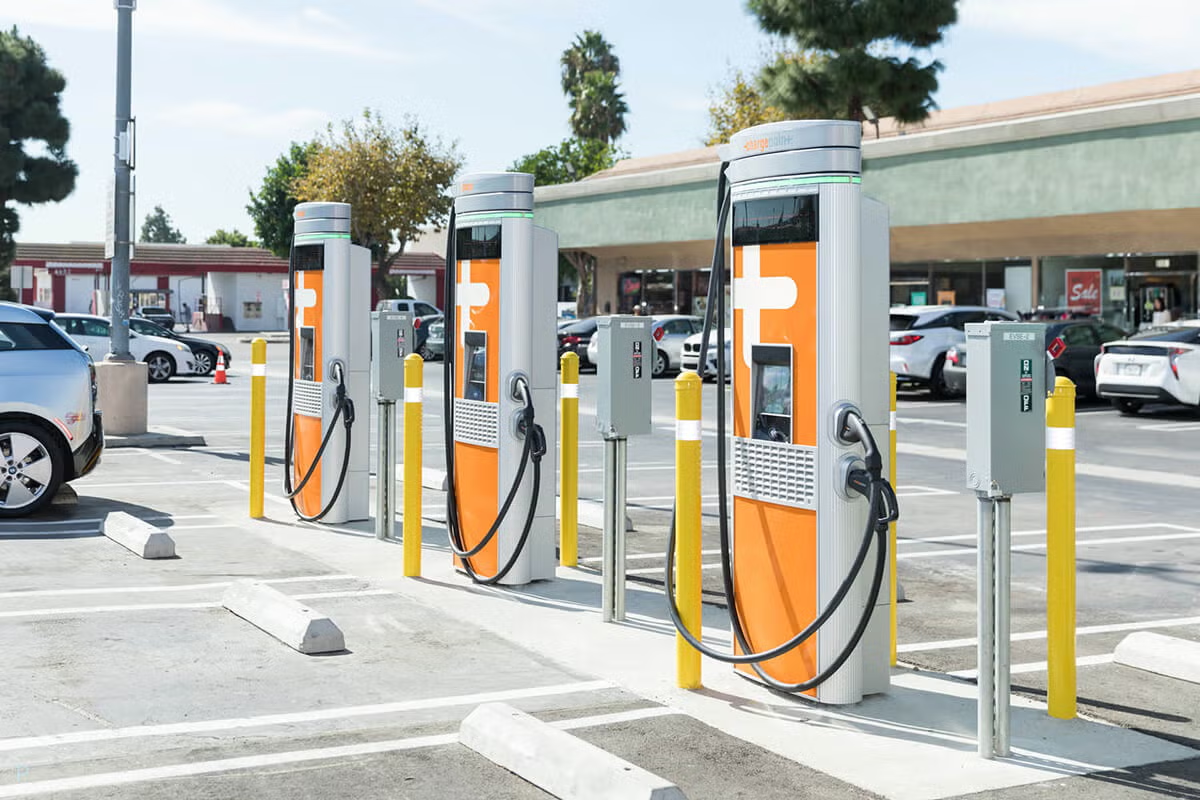
ChargePoint
Network Size and Coverage
ChargePoint operates the largest overall charging network in the US by station count, but the bulk of its footprint is Level 2 (AC) charging rather than DC fast charging. Its DC fast stations are less standardized because ChargePoint sells hardware to third-party site hosts — retailers, workplaces, municipalities — who then set their own pricing.
Charging Speed
ChargePoint DC fast stations vary widely, generally ranging from 50 kW up to 400 kW at select newer installations, though Level 2 remains the network’s core offering at roughly 6–19 kW.
Pricing
Because individual site hosts control pricing, ChargePoint rates are the least predictable of the four networks — anywhere from around $0.10/kWh at subsidized workplace stations to $0.55+/kWh at commercial sites maximizing revenue. There’s no unified ChargePoint membership discount tier the way Tesla or Electrify America offer.
Compatibility
ChargePoint supports J1772 (Level 2) and CCS (DC fast) connectors, with NACS adapters and native NACS hardware appearing at newer stations.
Comparison Table: Tesla vs Electrify America vs EVgo vs ChargePoint
| Network | Max Speed | Typical DC Fast Rate (Member) | Typical DC Fast Rate (Non-Member) | US Stations (approx.) | Best For |
|---|---|---|---|---|---|
| Tesla Supercharger | Up to 500 kW | $0.30–$0.45/kWh | $0.31–$0.58/kWh | ~25,000 | Overall reliability, highway road trips |
| Electrify America | Up to 350 kW | ~$0.30–$0.40/kWh (Pass+) | $0.43–$0.85/kWh | ~800+ high-power sites | Highest peak power, highway corridors |
| EVgo | 50–350 kW | ~$0.27–$0.42/kWh | $0.31–$0.46/kWh | ~1,000–1,200 | Urban charging, rideshare drivers |
| ChargePoint | 50–400 kW (DC), 6–19 kW (L2) | No unified plan | $0.10–$0.55+/kWh (host-set) | Largest overall (mostly L2) | Level 2 charging, workplaces, malls |
Pricing varies by state, time of day, and site — always confirm current rates in-app before charging.
Bottom Line: Verdict
For most drivers, Tesla Supercharger is the strongest all-around choice in 2026 — it’s the largest network, generally the cheapest for members, and the most reliable for highway travel, now that NACS compatibility has opened it up to non-Tesla EVs. Electrify America is worth pairing with Tesla for drivers who need the highest peak power on long highway stretches, while EVgo is the better pick for daily urban and rideshare charging. ChargePoint remains essential for everyday Level 2 charging at work or around town, but its inconsistent DC fast pricing makes it a secondary option for serious road trips.
Related EV Updates
- EV Home Charging Cost by State: 2026 Price Breakdown
- How Long Does It Really Take to Charge an Electric Car?
- NACS vs CCS vs CHAdeMO: The Ultimate EV Plug Guide for 2025