Yes — but not for everyone, and not under every condition. If you have access to home charging, drive predictable routes, and can afford an upfront cost above ₦15 million (roughly $9,000–$10,000 at current parallel rates), an EV will almost certainly save you money over three to five years. If you depend on public infrastructure, live in a city with grid problems, or rely on grey-market import financing, the math gets harder. This post breaks down exactly where the line sits — for drivers in Nigeria, Kenya, South Africa, and the broader African market — so you can make a call based on facts, not marketing.
Quick Summary
| Question | Short Answer |
|---|---|
| Will you save money long-term? | Yes, if you charge at home |
| Is African charging infrastructure ready? | Patchy — improving in SA and Kenya, still thin in Nigeria |
| Are EVs reliable enough? | Generally yes, especially Chinese and European brands with 5+ years of data |
| What’s the cheapest realistic option in 2026? | BYD Seagull (where available) or BYD Atto 3 via grey import |
| Should you buy in 2026 or wait? | Buy now if your use case fits; don’t wait for “better” unless infrastructure is your blocker |
Why 2026 Is Different From 2023
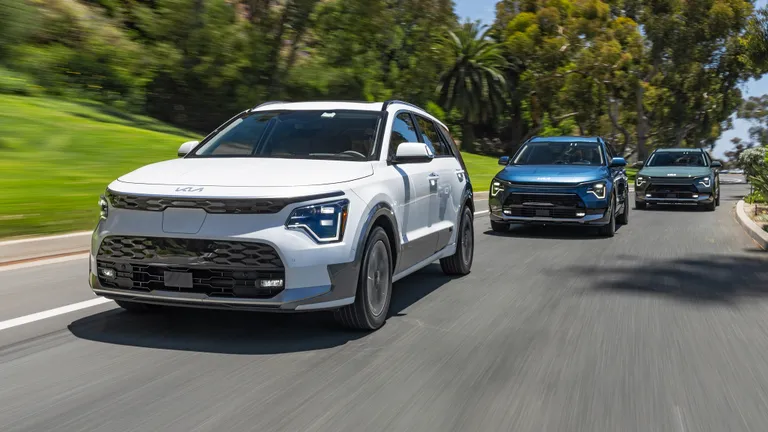
Three years ago, the honest answer to this question was “probably not yet, unless you’re in South Africa.” That’s no longer accurate.
Battery prices have dropped sharply. CATL and BYD both report cell costs below $60/kWh in 2025, down from roughly $140/kWh in 2021. That reduction flows into vehicle pricing, which is why entry-level EVs from Chinese brands — BYD, Chery, Leapmotor — now start under $15,000 USD in most export markets.
Range has also improved. The 2026 BYD Atto 3 carries a claimed 420 km WLTP range (note: WLTP, not the inflated CLTC figure used in Chinese domestic specs). The 2026 BYD Seal achieves up to 570 km WLTP. These aren’t edge cases. They’re the mainstream.
Charging networks in Africa are expanding, slowly but consistently. Kenya’s Roam and BasiGo have helped normalize EV infrastructure conversations, and South Africa now has several credible DC fast-charge corridors. Nigeria remains the hardest market, though home charging setups paired with solar are changing the equation for middle-class buyers in Lagos and Abuja.
The Cost Comparison: EV vs Petrol in 2026
This is where most articles go vague. Here are actual numbers.
Purchase Price
| Model | Estimated Nigeria Grey Import Price (2026) | Official Market |
|---|---|---|
| BYD Atto 3 (2026) | ₦22–₦28 million | South Africa (ZAR 699,900) |
| BYD Seal (2026) | ₦30–₦38 million | South Africa (ZAR 849,900) |
| BYD Seagull (2026) | ₦14–₦17 million (unconfirmed availability) | Not yet officially exported |
| Toyota Corolla 2.0 Petrol (2024) | ₦22–₦26 million | Widely available |
| Honda HR-V Petrol (2024) | ₦28–₦33 million | Widely available |
Nigerian import prices are estimates based on current clearing costs and parallel exchange rate (approx. ₦1,600–₦1,700/USD as of Q2 2026). Actual prices vary by dealer and clearing costs.
Running Costs: 24,000 km/Year
Petrol vehicle (e.g. Toyota Corolla, 8L/100km):
- Fuel cost at ₦1,200/litre: approx. ₦2.3 million/year
- Servicing (oil, filters, etc.): ₦150,000–₦250,000/year
- Total: roughly ₦2.5 million/year
Electric vehicle (e.g. BYD Atto 3, 17 kWh/100km):
- Home charging at ₦200/kWh (grid): approx. ₦816,000/year
- Home charging via solar (amortised): ₦300,000–₦500,000/year estimated
- Servicing (minimal): ₦50,000–₦100,000/year
- Total: ₦900,000–₦1.2 million/year
On running costs alone, an EV saves ₦1.3–₦1.6 million per year in the Nigerian context. That covers a meaningful chunk of the price premium within three years.
The Kenya comparison is comparable. Electricity at KES 25–30/kWh (home rate, 2026) makes the BYD Atto 3 cheaper to run than any petrol sedan beyond 20,000 km/year. South Africa’s ZAR electricity costs are higher, but ZAR petrol prices (above R24/litre in 2026) keep EVs competitive.
Where It Gets Complicated for African Buyers
Charging Infrastructure
South Africa has the most developed EV charging network on the continent — ChargeAfrica, GridCars, and Greenlec operate across Gauteng, Cape Town, and along the N1/N2 corridors. Superchargers (Tesla) and multi-brand DC fast chargers are available in major retail hubs.
Kenya is growing fast, driven partly by BasiGo’s bus network and Roam’s e-mobility infrastructure, which has spilled over into passenger EV awareness. Public chargers exist in Nairobi, though coverage outside the CBD is thin.
Nigeria is the hardest case. EKEDC and grid reliability in Lagos make public charging unreliable for most buyers. The practical solution most Nigerian EV owners use is a home solar + battery setup — which adds upfront cost (₦3–₦7 million for a basic system) but eliminates fuel cost entirely. For buyers already investing in solar, adding an EV makes strong financial sense. For buyers without solar, the calculation requires more honesty about load-shedding risk.
Grey Market Imports and Warranty Coverage
Most EVs entering Nigeria and Kenya do so through grey-market imports, not authorised distributor channels. That means no manufacturer warranty from day one. Battery health is the main risk: a used BYD Atto 3 imported at 3 years old with 60,000 km may have 85–90% battery capacity, but there’s no easy way to verify this before purchase without professional diagnostics.
BYD has an official distributor in South Africa (Milin Motors). Kenya and Nigeria have brand representatives but no formal manufacturer-backed service networks as of mid-2026, though this is changing. Always ask for a battery health report — BYD’s diagnostic tools can generate one — before committing to any used import.
Battery Life and Resale Value
Battery degradation data now exists for EVs with 5+ years on the road. Studies tracking 2019–2021 Tesla Model 3 and Nissan Leaf fleets show average degradation of 2–3% per year under normal use. BYD’s LFP (lithium iron phosphate) batteries have shown slightly better longevity in high-temperature climates, which matters in Lagos, Nairobi, and Johannesburg.
Resale value for EVs in African markets is harder to predict — the market is newer and thinner. Petrol vehicles hold value more predictably in Nigeria simply because the buyer pool is larger. This is a real consideration for buyers who trade in every three to four years.
The Best EV Options for African Buyers in 2026
| Model | Range (WLTP) | Est. Nigeria Price | Est. South Africa Price | Best For |
|---|---|---|---|---|
| BYD Seagull (2026) | 305 km | ₦14–₦17M (unconfirmed avail.) | Not yet listed | Urban commuter, budget |
| BYD Atto 3 (2026) | 420 km | ₦22–₦28M | ZAR 699,900 | Family SUV, daily driver |
| BYD Seal (2026) | 570 km | ₦30–₦38M | ZAR 849,900 | Highway, long range |
| GWM Ora 03 (2026) | 380 km | ₦18–₦22M | ZAR 449,900 | City driving, value |
| Chery Omoda E5 (2026) | 420 km | ₦20–₦25M | ZAR 549,900 | Practical crossover |
| Volvo EX30 (2026) | 480 km | ₦35–₦45M | ZAR 949,000 | Premium, safety focus |
All Nigeria prices are grey-market estimates. BYD Seagull availability in Nigeria/Kenya is unconfirmed as of May 2026. Prices listed in ZAR are official RRP.
Who Should Buy an EV in 2026
Buy now if:
- You drive 15,000–30,000 km per year on predictable routes
- You can install a home charger or have reliable home solar
- You’re in South Africa, where charging infrastructure and official dealers exist
- You’re in Kenya and can manage with Nairobi-area charging
- You buy new or certified pre-owned with documented battery health
Wait or be cautious if:
- You depend on irregular routes with long intercity gaps (above 300 km) in Nigeria
- You have no home charging option
- You’re buying a used grey import without battery diagnostics
- Resale flexibility in three years matters more than running cost savings
Bottom Line Verdict
For most African drivers who charge at home — especially those already running a solar system — buying an EV in 2026 is not a gamble. Running costs are materially lower than petrol, battery reliability is proven, and Chinese brands have driven prices to a point where the premium over equivalent petrol vehicles is smaller than it’s been. The main risks are infrastructure gaps, grey-market warranty exposure, and unpredictable resale markets — all real, none of them deal-breakers for the right buyer. If your use case fits, waiting for a “better time” mostly means paying more in fuel while that time never quite arrives.
Related EV News