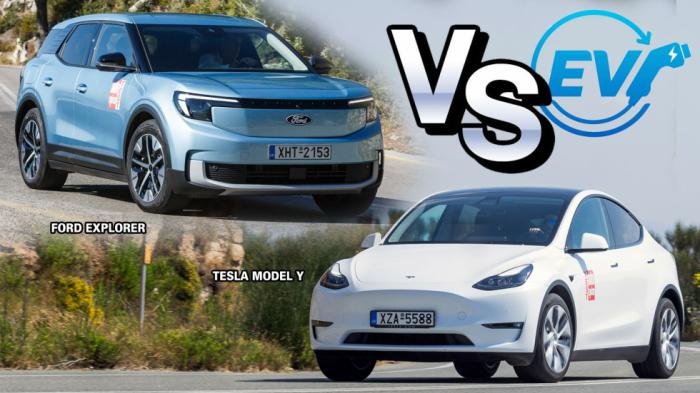
The Tesla Model Y wins on range, charging speed, and global availability, while the Ford Explorer EV counters with a lower European entry price and a roomier cabin — but there’s a catch that decides this “battle” before it even starts: the two SUVs don’t compete in the same market. The Explorer EV is built on Volkswagen’s MEB platform and sold only in Europe, while the Model Y is sold worldwide, including the US. Below, we break down the full spec sheet, pricing, and charging numbers so you can see exactly where each SUV pulls ahead — and where the comparison simply doesn’t apply.
Quick Summary
- Range: Tesla Model Y Premium RWD leads with 357 miles (574 km) EPA; Ford Explorer EV Extended Range tops out at 374 miles (602 km) WLTP — a different, more generous test cycle.
- Price: Tesla Model Y starts at $39,990 (Standard RWD, US); Ford Explorer EV Extended Range RWD starts at roughly €43,850 (~$47,300 est.) in the Netherlands.
- Charging: Tesla’s Supercharger network peaks at 250 kW DC; the Explorer EV maxes out at 183 kW DC.
- Market overlap: Zero. The Explorer EV is Europe-only; the Model Y is sold in the US, Europe, and China.
- Platform: Tesla uses its own in-house architecture; the Explorer EV rides on Volkswagen’s shared MEB platform.
Two SUVs, Two Different Markets
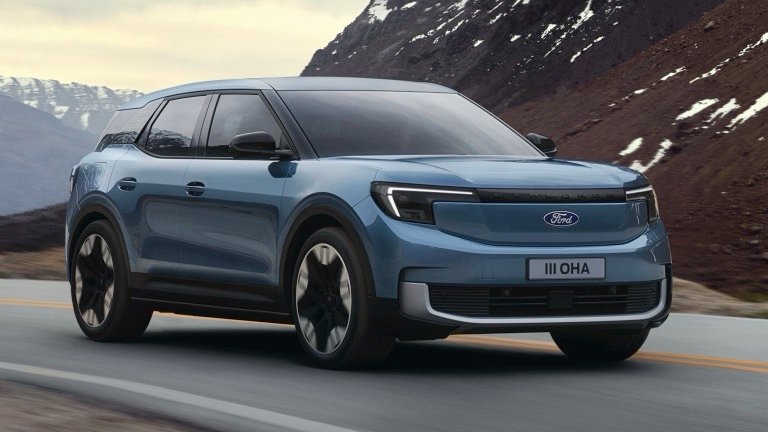
Before getting into specs, it’s worth being upfront about something most “Model Y vs. Explorer EV” content glosses over: these two SUVs are not cross-shopped in real life. Ford’s Explorer EV is a Europe-market model built at Ford’s Cologne plant on Volkswagen’s MEB architecture — the same underpinnings shared with the VW ID.4 and ID.5. It is not sold in the United States, and Ford has no confirmed plans to bring it there. The Tesla Model Y, meanwhile, is sold globally, including the US, Europe, and China.
So this comparison works best as a “what would you get for similar money in each region” exercise rather than a straight head-to-head for a single buyer. With that framing set, here’s how the two SUVs stack up on paper.
Pricing and Trims
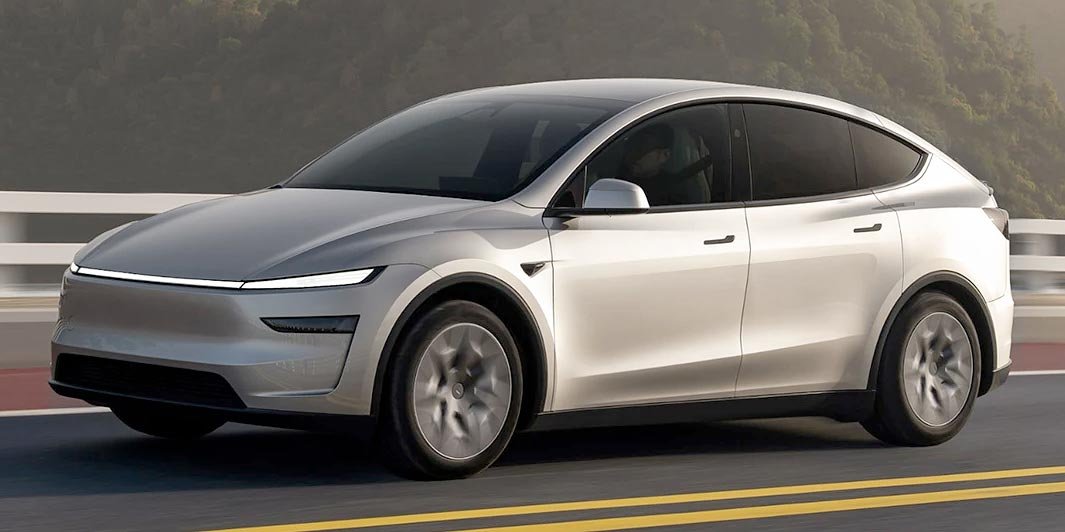
The 2026 Tesla Model Y lineup in the US starts with the Standard RWD at $39,990, moves up to the Premium RWD (formerly Long Range) at $45,990, and tops out with the Performance trim at $57,990. Tesla launched the redesigned Performance trim in Europe first, at €62,990, citing softer EU sales as a factor.
The Ford Explorer EV, sold only in Europe, starts with the Standard Range RWD and extends to the Extended Range RWD and AWD variants. Extended Range RWD pricing runs from about €43,850 in the Netherlands to £36,985 in the UK and €48,900 in Germany — regional pricing varies more than Tesla’s more uniform global list prices, and none of these figures include local incentives.
Range and Battery
Range is where test-cycle differences matter most. The Model Y Standard RWD is EPA-rated at 321 miles (516 km), while the Premium RWD stretches to 357 miles (574 km) — figures based on the stricter US EPA cycle. Tesla has not officially disclosed usable battery capacity for either trim. Not disclosed.
The Explorer EV Extended Range RWD uses an 84 kWh battery pack (79 kWh usable) and is WLTP-rated at 602 km, or roughly 374 miles. WLTP figures typically run 10–15% higher than EPA-equivalent numbers for a comparable real-world range, so the two figures aren’t directly interchangeable. Independent range estimators put the Explorer EV’s real-world combined range closer to 450 km (280 miles) in mild conditions.
Performance
The Explorer EV Extended Range RWD makes 210 kW (286 hp) and 545 Nm of torque, with a 0–100 km/h time of 6.4 seconds and a 180 km/h top speed. Ford has not published confirmed 0–60 mph or US-cycle performance figures, since the model isn’t sold stateside.
Tesla’s Model Y Performance figures for the redesigned 2026 trim haven’t been fully confirmed for the US market at publish time, though the model uses higher-density LG battery cells for a modest range gain over the Long Range AWD variant. Not disclosed for US-spec 0–60 time.
Charging
This is one of the clearer wins for Tesla. The Model Y taps into the Supercharger network, with DC fast-charging peaking around 250 kW. Combined with Tesla’s dense, reliable charging infrastructure across the US and Europe, road-trip charging stops tend to be faster and more predictable.
The Explorer EV’s CCS fast-charging tops out at 183 kW, with a 10–80% charge taking around 29–30 minutes under ideal conditions. Home AC charging on the Explorer EV runs at 11 kW, adding roughly 53 km of range per hour — a full overnight charge takes about 8.5 hours from empty.
Cargo Space and Practicality
Tesla’s Model Y offers a well-known 76 cubic feet (about 2,158 liters) of total cargo volume with the rear seats folded, including its front trunk. The Explorer EV counters with 532 liters of rear cargo space, expanding to 1,460 liters with seats folded — generous for its segment, though it lacks a front trunk since it isn’t purpose-built as a dedicated Tesla-style skateboard platform in the same way.
Dimensions
The Explorer EV measures 4,468 mm long, 1,872 mm wide, and 1,632 mm tall, with a 2,767 mm wheelbase — sitting in Europe’s “medium SUV” segment. It seats five, with a maximum payload of 660 kg and up to 1,200 kg braked towing capacity.
Safety
The Ford Explorer EV holds an 89% Euro NCAP adult occupant score and 86% child occupant score from its 2024 test rating. Tesla’s Model Y has historically scored well in both NHTSA and Euro NCAP testing in prior generations, though a fresh Euro NCAP/NHTSA rating for the redesigned 2026 model wasn’t confirmed at publish time.
Comparison Table
| Spec | Tesla Model Y (2026) | Ford Explorer EV (2026, Europe-only) |
|---|---|---|
| Starting price | $39,990 (Standard RWD, US) | ~€43,850 (Extended Range RWD, NL) |
| Range | 321–357 mi EPA | 374 mi WLTP (~280 mi real-world est.) |
| Battery (usable) | Not disclosed | 79 kWh |
| Max DC fast charge | ~250 kW | 183 kW |
| 10–80% charge time | Not disclosed (US-spec) | ~29–30 min |
| Home AC charge power | Not disclosed | 11 kW |
| Drive layout | RWD standard, AWD optional | RWD standard, AWD available |
| Cargo (seats folded) | ~76 cu ft (2,158 L) | 1,460 L (51.6 cu ft) |
| Platform | Tesla in-house | Volkswagen MEB |
| Market availability | US, Europe, China | Europe only |
Bottom Line
If range-per-dollar, charging network, and global availability matter most, the Tesla Model Y is the stronger buy on paper — and it’s the only one of the two you can actually buy in the US. The Ford Explorer EV is a genuinely competitive European SUV with solid cargo space and safety scores, but it’s simply not competing for the same customer, since Ford hasn’t brought it to the US market. Choose based on where you live and what you can actually order, not on spec-sheet bragging rights alone.
Range figures are shown on their native test cycles (EPA for Tesla US-market figures, WLTP for the Europe-only Ford Explorer EV) and are not directly interchangeable.