1. Home
  2. Electric Vehicles
  3. Compare
  4. Audi Q4 e-tron 2026 vs Hyundai Ioniq 5

Audi Q4 e-tron 2026 vs Hyundai Ioniq 5

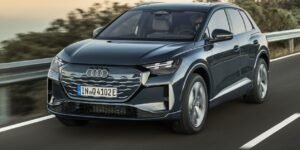
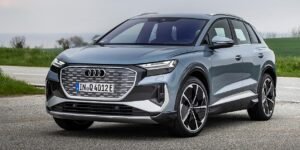
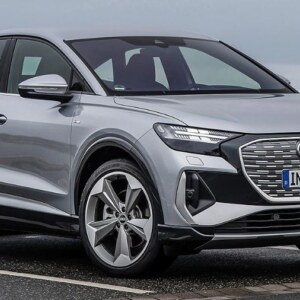
The 2026 Audi Q4 e-tron is a compact premium SUV built on Volkswagen Group’s MEB platform, aimed at buyers moving from combustion luxury into their first EV without giving up brand prestige. The Hyundai Ioniq 5 is a midsize crossover on Hyundai’s dedicated E-GMP platform, targeting tech-forward buyers who want fast charging and a practical interior at a more accessible price. Both compete in the same segment, and with Hyundai pushing harder into African markets and Audi grey-market units showing up in Lagos and Nairobi, this comparison matters now.

Audi Q4 e-tron 2026 vs Hyundai Ioniq 5

The Q4 e-tron 2026 offers up to 531 km WLTP range on the long-range rear-wheel-drive variant, with real-world figures closer to 420–460 km in mixed conditions. It charges at up to 135 kW DC, reaching 10–80% in roughly 38 minutes. AC charging tops out at 11 kW. The Ioniq 5 with its 77.4 kWh battery delivers up to 507 km WLTP, with real-world estimates around 400–430 km. Where it pulls ahead is charging speed — up to 233 kW DC on compatible hardware, hitting 10–80% in about 18 minutes. AC charging supports up to 11 kW as well. For anyone near a fast charger, the Ioniq 5’s charging advantage is real.

The Q4 e-tron starts around $44,000 USD (approx. ₦68 million NGN at parallel rates), with Sport and S Line variants pushing past $54,000. It’s available in Europe, parts of the Middle East, and South Africa through official Audi channels. In Nigeria and Kenya, units arrive via grey-market imports with no local warranty. The Ioniq 5 starts around $41,450 USD (approx. ₦64 million NGN), with the Standard Range at a lower entry point in some markets. Hyundai has stronger dealer presence in South Africa and is expanding in East Africa. If you need official after-sales support in Africa, the Ioniq 5 has a clearer path.

Audi buyers at this price should also look at the Q8 e-tron for a step up, or the Q4 Sportback e-tron for a coupe-style option. On the Hyundai side, the Ioniq 6 sedan offers more range at a similar price, and the Ioniq 5 N is the performance variant for driving enthusiasts. Outside both brands, the Tesla Model Y and BMW iX1 compete directly in this space. This comparison still wins because the Q4 and Ioniq 5 are the most direct substitutes in terms of size, use case, and price band.

The Q4 e-tron’s interior quality gives it an edge for buyers who spend long hours in the car — materials and fit feel a step above mass-market EVs. Its suspension tuning suits highway use, which matters on Nigeria’s longer inter-city routes. Audi’s brand recognition also makes resale easier in grey-import markets. On the downside, charging infrastructure support is limited outside Europe, and parts availability in West Africa is thin. The Ioniq 5’s 233 kW charging speed is a practical advantage anywhere fast chargers exist, reducing stop time on road trips. Its flat floor and flexible interior make it more usable day-to-day. Hyundai’s growing Africa presence means servicing is more straightforward. However, the Ioniq 5’s exterior styling divides opinion, and its rear headroom is tighter than the Q4’s for taller passengers.

Quick Verdict

Choose the Q4 e-tron if interior quality and brand prestige matter more to you than charging speed. Choose the Ioniq 5 if you prioritise faster charging, a more practical cabin, and easier access to official service in Africa. Both sit close in price, but the Ioniq 5 delivers more charging performance per dollar. If you’re buying through grey-market import channels, the Q4’s resale value holds better in most Nigerian cities.

FAQ

Is the Audi Q4 e-tron better than the Hyundai Ioniq 5 for long trips?

The Q4 e-tron has a slight range advantage in some configurations, but the Ioniq 5’s faster DC charging cuts stop time significantly where fast chargers exist. For most African long-distance drives where charging infrastructure is limited, both face similar real-world constraints.

Which is cheaper to maintain — the Q4 e-tron or the Ioniq 5?

The Ioniq 5 costs less to maintain. Hyundai parts are more accessible and cheaper than Audi components, especially outside Europe. In Nigeria and Kenya, Hyundai’s service network is more established.

Is the Hyundai Ioniq 5 available in Nigeria or Africa?

It is officially sold in South Africa and is expanding in East Africa. In Nigeria, units come through grey-market import. Hyundai’s dealer coverage across Africa is broader than Audi’s, which makes ownership more practical.

Which holds resale value better in Africa?

The Q4 e-tron tends to hold value better in cities like Lagos where European luxury branding drives used-car pricing. The Ioniq 5 performs better in South Africa where official Hyundai dealerships support the used market.

Related EV Comparisons

 
  Audi Q4 e-tron 2026 Hyundai Ioniq 5
Price $47,000.00 $44,000.00
Our Rating 5.8 6.2
Brand AUDI Hyundai
Category Cars Cars

MODEL

Models Audi Q4 e-tron e-tron
Audi Q4 e-tron performance
Audi Q4 e-tron quattro
Audi Q4 e-tron quattro performance
Hyundai Ioniq 5 63kWh RWD
Hyundai Ioniq 5 84kWh RWD
Hyundai Ioniq 5 84kWh AWD

LAUNCH

Announced 2026, April 27 2024, March 04
Status Available to order. Released 2026, May Available to order. Released 2024, July
Country of origin Germany South Korea
Base Price € 47,500 £ 46,300 - Audi Q4 e-tron e-tron
€ 53,900 £ 51,000 - Audi Q4 e-tron performance
€ 55,900 £ 53,000 - Audi Q4 e-tron quattro
€ 59,000 £ 56,000 - Audi Q4 e-tron quattro performance
€ 44,000 £ 40,000 - Hyundai Ioniq 5 63kWh RWD
€ 51,700 £ 43,400 - Hyundai Ioniq 5 84kWh RWD
€ 59,400 £ 50,900 - Hyundai Ioniq 5 84kWh AWD

PERFORMANCE

Power RWD 204 hp (150 kW) - Audi Q4 e-tron e-tron
RWD 286 hp (210 kW) - Audi Q4 e-tron performance
AWD 300 hp (220 kW) - Audi Q4 e-tron quattro
AWD 340 hp (250 kW) - Audi Q4 e-tron quattro performance
RWD 170 hp (125 kW) - Hyundai Ioniq 5 63kWh RWD
RWD 228 hp (168 kW) - Hyundai Ioniq 5 84kWh RWD
AWD 325 hp (239 kW) - Hyundai Ioniq 5 84kWh AWD
Torque 350 Nm (258 lb-ft) - Audi Q4 e-tron e-tron
545 Nm (402 lb-ft) - Audi Q4 e-tron performance
545 Nm (402 lb-ft) - Audi Q4 e-tron quattro
679 Nm (501 lb-ft) - Audi Q4 e-tron quattro performance
350 Nm (258 lb-ft) - Hyundai Ioniq 5 63kWh RWD
350 Nm (258 lb-ft) - Hyundai Ioniq 5 84kWh RWD
605 Nm (446 lb-ft) - Hyundai Ioniq 5 84kWh AWD
Acceleration The acceleration numbers are an easy way to compare car performance. We list either time from 0 to 100 km/h or time from 0 to 60mph, depending on which number(s) the manufacturers provide. The lower the acceleration time, the higher performance the car is. 8.1 sec 0-62 mph - Audi Q4 e-tron e-tron
6.6 sec 0-62 mph - Audi Q4 e-tron performance
6.2 sec 0-62 mph - Audi Q4 e-tron quattro
5.4 sec 0-62 mph - Audi Q4 e-tron quattro performance
8.5 sec 0-62 mph - Hyundai Ioniq 5 63kWh RWD
7.5 sec 0-62 mph - Hyundai Ioniq 5 84kWh RWD
5.3 sec 0-62 mph - Hyundai Ioniq 5 84kWh AWD
Max Speed 99 mph (160 km/h) - Audi Q4 e-tron e-tron
112 mph (180 km/h) - Audi Q4 e-tron performance
112 mph (180 km/h) - Audi Q4 e-tron quattro
112 mph (180 km/h) - Audi Q4 e-tron quattro performance
115 mph (185 km/h)
transmission Single-speed Single-speed

BATTERY

Capacity 59 kWh usable, 63 kWh total - Audi Q4 e-tron e-tron
77 kWh usable, 82 kWh total - Audi Q4 e-tron performance
77 kWh usable, 82 kWh total - Audi Q4 e-tron quattro
77 kWh usable, 82 kWh total - Audi Q4 e-tron quattro performance
63 kWh total - Hyundai Ioniq 5 63kWh RWD
84 kWh total - Hyundai Ioniq 5 84kWh RWD
84 kWh total - Hyundai Ioniq 5 84kWh AWD
Tech Liquid-cooled Li-ion (400V type) Liquid-cooled Li-Po (800V type)
Range 273 mi WLTP - Audi Q4 e-tron e-tron
359 mi WLTP - Audi Q4 e-tron performance
347 mi WLTP - Audi Q4 e-tron quattro
336 mi WLTP - Audi Q4 e-tron quattro performance
273 mi WLTP (240 mi EPA) - Hyundai Ioniq 5 63kWh RWD
320 mi WLTP (310 mi EPA) - Hyundai Ioniq 5 84kWh RWD
308 mi WLTP (280 mi EPA) - Hyundai Ioniq 5 84kWh AWD
Consumption 246 Wh/mi WLTP - Audi Q4 e-tron e-tron
251 Wh/mi WLTP - Audi Q4 e-tron performance
259 Wh/mi WLTP - Audi Q4 e-tron quattro
261 Wh/mi WLTP - Audi Q4 e-tron quattro performance
251 Wh/mi WLTP - Hyundai Ioniq 5 63kWh RWD
277 Wh/mi WLTP - Hyundai Ioniq 5 84kWh RWD
293 Wh/mi WLTP - Hyundai Ioniq 5 84kWh AWD
Recuperation 3 levels, via driving modes, optional steering wheel paddles 4 levels, with steering wheel paddles
Heat Pump
AC Charging Type 2 11 kW Type 2 11 kW
DC Charging CCS 160 kW max, 10-80% in 28 min - Audi Q4 e-tron e-tron
CCS 165 kW max, 10-80% in 28 min - Audi Q4 e-tron performance
CCS 165 kW max, 10-80% in 28 min - Audi Q4 e-tron quattro
CCS 185 kW max, 10-80% in 27 min - Audi Q4 e-tron quattro performance
CCS 180 kW, 10-80% in 18 min - Hyundai Ioniq 5 63kWh RWD
CCS 235 kW, 10-80% in 18 min - Hyundai Ioniq 5 84kWh RWD
CCS 235 kW, 10-80% in 18 min - Hyundai Ioniq 5 84kWh AWD
Others V2L (Vehicle to Load) 2.3 kW in trunk; 3.6 kW in charge port
V2H (Vehicle to Home)
Vehicle to load (V2L)
230V electrical outlet (3.6 KW max)

BODY

Type 5 door SUV, 5 seats 5 door crossover, 5 seats
Platform MEB E-GMP
Dimensions 4588 x 1865 x 1632 mm (180.6 x 73.4 x 64.3 in) 4655 x 1890 x 1605 mm (183.3 x 74.4 x 63.2 in)
Drag Co-Efficient 0.28 Cd 0.288 Cd
Wheelbase 2764 mm (108.8 in) 3000 mm (118.1 in)
Clearance 160 mm (6.3 in)
Weight EU: 1965 kg unladen, 2470 kg gross - Hyundai Ioniq 5 63kWh RWD
EU: 2070 kg unladen, 2590 kg gross - Hyundai Ioniq 5 84kWh RWD
EU: 2175 kg unladen, 2685 kg gross - Hyundai Ioniq 5 84kWh AWD
Suspension Front MacPherson struts, rear four-link Front MacPherson struts, rear multi-link
Wheels R19, R20, R21 R19, R20
Trunk/Boot EU: 515 l, 1487 l max EU: 527 l, 1587 l max
Frunk/Bonnet No 57 l
57 l
24 l
Towing EU: 750 kg unbraked, 1800 kg braked EU: 750 kg unbraked, 750 kg braked - Hyundai Ioniq 5 63kWh RWD
EU: 750 kg unbraked, 1600 kg braked - Hyundai Ioniq 5 84kWh RWD
EU: 750 kg unbraked, 1600 kg braked - Hyundai Ioniq 5 84kWh AWD
Others Battery thermal pre-conditioning
Smart Frequency Dampers
Digital Centre Mirror
Digital Side Mirrors

DISPLAYS

Centre 12.8" Full HD touchscreen 12.3" touchscreen
Driver's Display 11.9" 12.3"
Head-Up Yes, with augmented reality Yes, projector type
Others 12" optional passenger display

COMFORT

Seats Heated front seats Heated and ventilated front seats, heated rear seats
Roof Panoramic glass roof Panoramic glass roof, solar roof
Parking Aids Front and rear sensors, 360 camera, reversing camera Front and rear sensors, 360 camera, front and reversing camera, Remote Smart Parking Assist 2
Connectivity Wireless Android Auto and Apple CarPlay Wireless Android Auto and Apple CarPlay
Others 3-zone climatronic

SAFETY

Airbags Side airbags, front and rear, including head airbag system 8 airbags: side, front and rear, including head airbag system
Driving Aids Front radar, 5 cameras, 2 rear radars, 8 sensors. Night Vision Assist, Lane Keeping Assist, Traffic Sign Recognition, Warn and Brake Assist, Pedestrian/cyclists protection, Exit Warning, Rear and Front Cross Traffic Alert, High Beam Assist Front and corner radars, cameras. Forward/Side/Reverse Parking Collision-Avoidance Assist, Autonomous Emergency Braking with Pedestrian and Cyclist Recognition, Blind Spot Collision-Avoidance Assist, Rear Cross-Traffic Collision-Avoidance Assist, Lane Keeping Assist 2, Safe Exit Assist, High Beam Assist, Intelligent Speed Limit Assist, Driver Attention Warning, Hands-On Detection

Note

disclaimer We can not guarantee that the information on this page is 100% correct
  Audi Q4 e-tron 2026 Hyundai Ioniq 5

Disclaimer Note

We can not guarantee that the information on this page is 100% correct

Filter Electric Vehicles