- Electric Vehicles
- Compare Electric Cars
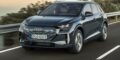
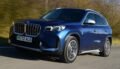
- Audi Q4 e-tron 2026 vs BMW iX1 2026
Audi Q4 e-tron 2026 vs BMW iX1 2026
The 2026 Audi Q4 e-tron and BMW iX1 are both compact premium electric SUVs from German manufacturers, positioned squarely in the entry-luxury EV segment. The Q4 targets tech-driven buyers who want Audi’s interior refinement at a relatively accessible price; the iX1 targets drivers who want a sportier feel without stepping into the larger, costlier iX3. Both are now available through grey-market channels in Nigeria and South Africa, making this comparison directly relevant to African buyers evaluating their first premium EV.
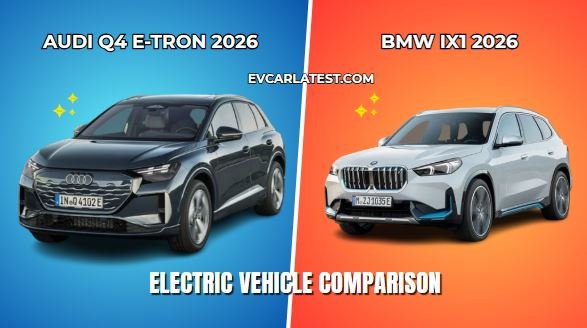
The Q4 e-tron long-range variant delivers up to 560 km on the WLTP cycle; real-world estimates sit around 430–470 km depending on load and terrain. The iX1 xDrive30 returns 440 km WLTP, with real-world figures around 340–380 km. On DC fast charging, the Q4 supports up to 135 kW, taking it from 10–80% in roughly 28 minutes. The iX1 peaks at 130 kW DC, achieving 10–80% in about 29 minutes. Both support 11 kW AC home charging — a full overnight top-up from near empty takes approximately 7–8 hours.
The Q4 e-tron starts around $45,000 USD (approximately ₦69 million NGN / ZAR 830,000 / KES 5.8 million at current rates), depending on trim. The iX1 xDrive30 opens at around $43,000 USD (roughly ₦66 million NGN). Both are officially sold in Europe, select Middle East markets, and South Africa through authorized BMW and Audi dealers. In Nigeria and Kenya, imports arrive via grey-market dealers. If range and cargo space are your top priorities, this page should steer you toward the Q4. If driving feel and a lower entry point matter more, the iX1 makes a stronger case.
Within Audi’s lineup, the Q4 buyer might also consider the Q8 e-tron for more range and size, though at a significantly higher price. BMW iX1 buyers stepping up could look at the iX3 for greater range and output. Outside both brands, the Mercedes-Benz EQA 250+ is worth comparing — it’s in the same segment with similar range and a competitive price. The Genesis GV60 is another genuine alternative at a similar price with stronger fast-charging speeds. That said, the Q4 vs iX1 matchup remains the most direct head-to-head in German premium EVs at this price point.
Audi Q4 e-tron 2026: The Q4’s interior quality is genuinely better than the iX1’s at this price, which matters for buyers who spend long hours in the car. Its longer WLTP range gives more buffer on routes with limited charging stations — relevant in Nigeria and Kenya where fast chargers are sparse. The larger battery option also means less frequent charging on a daily basis. On the downside, the Q4’s infotainment system has historically had software stability issues, which can be frustrating. Boot space is also tighter than you’d expect for an SUV of its footprint.
BMW iX1 2026: The iX1 drives noticeably better than the Q4 in urban conditions — it feels lighter and more responsive, which suits Lagos or Nairobi traffic. Its lower starting price creates real savings headroom for charging equipment or other accessories. BMW’s after-sales network in South Africa is also wider than Audi’s. However, the iX1’s real-world range falls short of its WLTP claim more than the Q4 does. Its cabin materials in base trim feel one step below what the Q4 offers at a similar specification.
QUICK VERDICT
Choose the Q4 e-tron if range and interior quality are your main concerns, especially if you’re planning longer inter-city drives or have limited access to fast chargers. Choose the iX1 if you prefer a sharper driving experience, a slightly lower price, and access to BMW’s broader service network in Africa. The iX1 costs less upfront; the Q4 gives you more km per charge and a better cabin. Neither is the wrong choice — it depends on what you value once the car is on an African road.
FAQ SECTION
Is the Audi Q4 e-tron better than the BMW iX1 for long trips?
The Q4 e-tron has the range advantage — up to 560 km WLTP versus the iX1’s 440 km. On long drives through markets with limited charging infrastructure, that extra buffer matters. The iX1 is better suited to city use and shorter daily commutes.
Which is cheaper to maintain, the Q4 e-tron or the BMW iX1?
Both share typical EV cost advantages — no oil changes, reduced brake wear. The practical difference is service network access. BMW’s authorized dealer coverage in South Africa and Nigeria is wider than Audi’s, which can lower maintenance costs over time.
Is the BMW iX1 2026 available in Nigeria or Africa?
The iX1 is officially sold in South Africa through BMW dealers. In Nigeria and Kenya, it comes in through grey-market importers. Factor in import duties, local registration fees, and third-party warranty cover when going this route.
What is the difference between the Q4 e-tron and iX1 in charging speed?
The Q4 supports up to 135 kW DC; the iX1 peaks at 130 kW DC. Both hit 10–80% in under 30 minutes on a compatible fast charger. Both also handle 11 kW AC home charging for overnight use.
Related EV Comparisons
- Audi Q4 e-tron 2026 vs Tesla Model Y 2025
- Mercedes-Benz C-Class Electric vs BMW i3 2026
- Audi e-tron GT vs Porsche Taycan
- BMW iX vs Audi Q8 e-tron
- BMW i5 vs Mercedes-Benz EQE Sedan
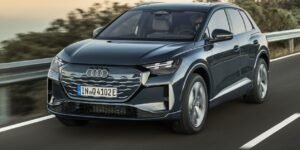
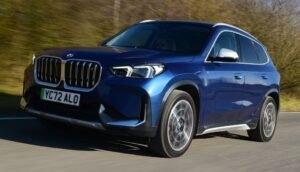
| |
| Price | $47,000.00 $60,000.00 |
| Our Rating | |
| Brand | AUDI BMW |
| Category | Electric Cars Electric Cars |
MODEL
| Available Trims / Variants |
Audi Q4 e-tron e-tron Audi Q4 e-tron performance Audi Q4 e-tron quattro Audi Q4 e-tron quattro performance eDrive20 (FWD) xDrive30 (AWD, dual motor) |
LAUNCH
| Reveal Date | 2026, April 27 2025/2026 model year |
| Availability Status | Available to order. Released 2026, May In production |
| Country of origin | Germany Germany (Regensburg plant) |
| Base Price (USD) |
€ 47,500 £ 46,300 - Audi Q4 e-tron e-tron € 53,900 £ 51,000 - Audi Q4 e-tron performance € 55,900 £ 53,000 - Audi Q4 e-tron quattro € 59,000 £ 56,000 - Audi Q4 e-tron quattro performance $ 60,000–96,000 depending on region and trim |
BATTERY
| Battery Capacity |
59 kWh usable, 63 kWh total - Audi Q4 e-tron e-tron 77 kWh usable, 82 kWh total - Audi Q4 e-tron performance 77 kWh usable, 82 kWh total - Audi Q4 e-tron quattro 77 kWh usable, 82 kWh total - Audi Q4 e-tron quattro performance Gross 68 kWh, usable 64–66.5 kWh |
| Battery Chemistry | Liquid-cooled Li-ion (400V type) Lithium-ion battery |
| Range (WLTP/CLTC/EPA) |
273 mi WLTP - Audi Q4 e-tron e-tron 359 mi WLTP - Audi Q4 e-tron performance 347 mi WLTP - Audi Q4 e-tron quattro 336 mi WLTP - Audi Q4 e-tron quattro performance (mi WLTP): ~259–322 miles (417–520 km WLTP) |
| Energy Consumption |
246 Wh/mi WLTP - Audi Q4 e-tron e-tron 251 Wh/mi WLTP - Audi Q4 e-tron performance 259 Wh/mi WLTP - Audi Q4 e-tron quattro 261 Wh/mi WLTP - Audi Q4 e-tron quattro performance 16.8–18.1 kWh/100 km WLTP |
| Regen Braking (Max kW) | 3 levels, via driving modes, optional steering wheel paddles 140 kW regen |
| Heat Pump | |
| AC Charging (Max kW) | Type 2 11 kW Up to 11–22 kW, ~3.5–7 hours AC full charge |
| DC Charging (Max kW) |
CCS 160 kW max, 10-80% in 28 min - Audi Q4 e-tron e-tron CCS 165 kW max, 10-80% in 28 min - Audi Q4 e-tron performance CCS 165 kW max, 10-80% in 28 min - Audi Q4 e-tron quattro CCS 185 kW max, 10-80% in 27 min - Audi Q4 e-tron quattro performance Up to 130 kW, ~10-80% in ~29–30 min |
| Additional Notes |
V2L (Vehicle to Load) 2.3 kW in trunk; 3.6 kW in charge port V2H (Vehicle to Home) |
PERFORMANCE
| Power Output (kW / hp) |
RWD 204 hp (150 kW) - Audi Q4 e-tron e-tron RWD 286 hp (210 kW) - Audi Q4 e-tron performance AWD 300 hp (220 kW) - Audi Q4 e-tron quattro AWD 340 hp (250 kW) - Audi Q4 e-tron quattro performance eDrive20: 204 hp FWD xDrive30: 313 hp AWD |
| Torque (Nm) |
350 Nm (258 lb-ft) - Audi Q4 e-tron e-tron 545 Nm (402 lb-ft) - Audi Q4 e-tron performance 545 Nm (402 lb-ft) - Audi Q4 e-tron quattro 679 Nm (501 lb-ft) - Audi Q4 e-tron quattro performance eDrive20: 250 Nm xDrive30: 494 Nm |
| 0–100 km/h / 0-60 mph (seconds) The acceleration numbers are an easy way to compare car performance. We list either time from 0 to 100 km/h or time from 0 to 60mph, depending on which number(s) the manufacturers provide. The lower the acceleration time, the higher performance the car is. |
8.1 sec 0-62 mph - Audi Q4 e-tron e-tron 6.6 sec 0-62 mph - Audi Q4 e-tron performance 6.2 sec 0-62 mph - Audi Q4 e-tron quattro 5.4 sec 0-62 mph - Audi Q4 e-tron quattro performance eDrive20: 0-100 km/h in 8.6 sec xDrive30: 0-100 km/h in 5.6 sec |
| Top Speed (km/h / mph) |
99 mph (160 km/h) - Audi Q4 e-tron e-tron 112 mph (180 km/h) - Audi Q4 e-tron performance 112 mph (180 km/h) - Audi Q4 e-tron quattro 112 mph (180 km/h) - Audi Q4 e-tron quattro performance eDrive20: 170 km/h xDrive30: 180 km/h |
| Transmission / Drive | Single-speed |
BODY
| Body Style | 5 door SUV, 5 seats 5-door SUV, 5 seats |
| Platform / Architecture | MEB BMW UKL2 |
| Dimensions (L×W×H mm) | 4588 x 1865 x 1632 mm (180.6 x 73.4 x 64.3 in) 4500–4616 mm L / 1845 mm W / ~1616–1641 mm H |
| Drag Coefficient (Cd) | 0.28 Cd |
| Wheelbase (mm) | 2764 mm (108.8 in) 2692–2802 mm |
| Ground Clearance (mm) | standard SUV ride height |
| Kerb Weight (kg) | 1940–2087 kg |
| Suspension (Front / Rear) | Front MacPherson struts, rear four-link standard BMW suspension (MacPherson front, multi-link rear) |
| Wheel Size (inches) | R19, R20, R21 alloy wheels with trim-dependent sizes |
| Trunk/Boot Capacity (L) | EU: 515 l, 1487 l max 490 L expandable ~1495 L |
| Frunk/Bonnet Capacity (L) | No varies by market |
| Towing Capacity (kg) | EU: 750 kg unbraked, 1800 kg braked |
| Additional Notes | roof rails available |
SAFETY
| Airbags (count) | Side airbags, front and rear, including head airbag system multiple airbags standard |
| Driver Assistance (ADAS) | Front radar, 5 cameras, 2 rear radars, 8 sensors. Night Vision Assist, Lane Keeping Assist, Traffic Sign Recognition, Warn and Brake Assist, Pedestrian/cyclists protection, Exit Warning, Rear and Front Cross Traffic Alert, High Beam Assist lane assist, cruise control, collision mitigation |
| Autonomous Driving Level | Level 2 driver assist on some trims |
| Crash Test Ratings | 5-star ANCAP reported |
COMFORT
| Seating Capacity | Heated front seats 5 seats, option leather or synthetic leather |
| Roof Type | Panoramic glass roof optional panoramic roof |
| Bluetooth / Wi-Fi | Wireless Android Auto and Apple CarPlay BMW ConnectedDrive, wireless phone charging |
| Parking Aids | Front and rear sensors, 360 camera, reversing camera rear and front sensors, 360-camera optional |
| Additional Notes | 3-zone climatronic dual-zone climate, cruise control |
DISPLAYS
| Centre Screen (inches) | 12.8" Full HD touchscreen Large central infotainment screen (iDrive latest) |
| Driver's Display (inches) | 11.9" Digital cluster |
| Head-Up Display (HUD) | Yes, with augmented reality available on higher trims |
| Additional Notes | 12" optional passenger display voice control, wireless Apple CarPlay/Android Auto |
LIGHTING
INFOTAINMENT & AUDIO
TECHNOLOGY
OWNERSHIP
Note
| Additional Notes | Warranty typical 5 years / battery 8 years / 160,000 km |
|
Disclaimer Note
Specifications sourced from manufacturer data and may reflect WLTP, CLTC, or EPA test conditions. Import prices in your local are estimates based on grey-market landing costs and exclude duties, clearing fees, and local taxes. Figures are subject to change without notice. Always verify with your local importer before purchase. We can not guarantee that the information on this page is 100% correct