- Electric Vehicles
- Toyota
- Toyota Hilux BEV
Toyota Hilux BEV
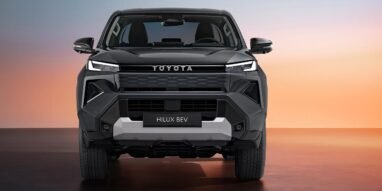
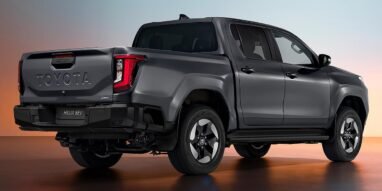
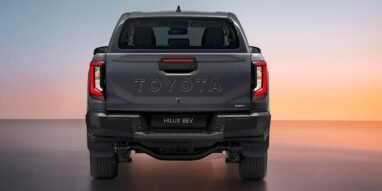
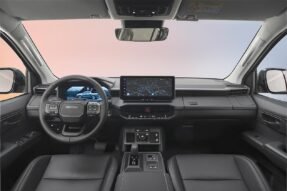
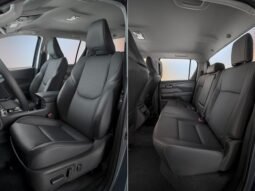
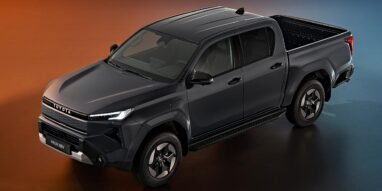
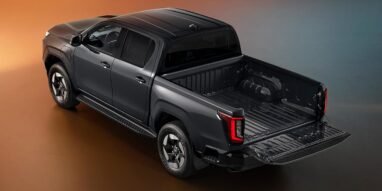
- Drive Type: AWD
- Body Type: Double Cab Pickup Truck
- Self Driving: Level 2
- Airbags: Yes
PROS
- Zero tailpipe emissions (environment-friendly)
- Dual-motor AWD for strong traction
- Maintains off-road capability (body-on-frame, wading depth, Multi-Terrain Select)
CONS
- Limited range (≈240–300 km depending on market)
- Lower towing capacity than diesel Hilux
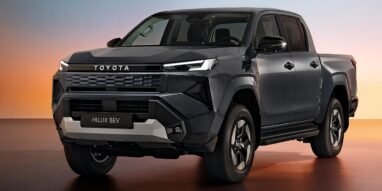
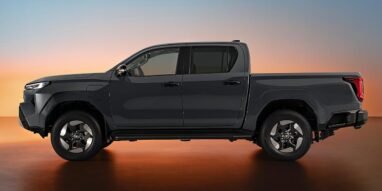
The 2026 Toyota Hilux BEV is the first battery-electric version of Toyota’s ninth-generation Hilux — and, by Toyota’s own description, the world’s first mass-produced electric midsize pickup truck. It sits in the mid-tier of the new Hilux lineup, below the upcoming hydrogen fuel cell variant (expected 2028) and above the 48V mild-hybrid diesel that anchors the range. The body style is double-cab only, the drivetrain is permanent all-wheel drive via dual electric motors, and the chassis remains the same body-on-frame ladder construction as the diesel models. Toyota has not repositioned the Hilux for a new audience with this variant — the BEV is aimed squarely at the same fleet and worksite buyers who already run diesel Hiluxes, just in operations where back-to-base charging is practical.
Battery, Range, and Charging
The Hilux BEV runs a 59.2 kWh NMC lithium-ion pack with 56.0 kWh of usable capacity on a 400-volt architecture. The front motor produces 82 kW and 205 Nm; the rear produces 129 kW and 269 Nm, for a combined output of 144 kW and 468 Nm. WLTP-rated range is 257 km (approximately 160 miles). Toyota also quotes 315 km under the NEDC cycle used in Australia — a less rigorous standard, so treat that figure with appropriate scepticism. Real-world range will vary with load, terrain, and ambient temperature, and off-road use reduces it further.
On charging: AC onboard rate is 10 kW (three-phase), taking the battery from 10–100% in approximately 6.5 hours. DC fast charging peaks at 150 kW and covers the 10–80% window in around 30 minutes. These specs are confirmed for the Australian market launch; final homologated figures for European markets were still pending full certification at time of writing, though pre-homologation data align closely with the above.
Pricing, Buyer Profile, and Competition
In Australia, the Hilux BEV starts from AUD $74,990 before on-road costs for the SR dual-cab chassis, with the SR pick-up at AUD $76,490 and the SR5 pick-up at AUD $82,990. In the UK, pricing opens at £57,845 on the road, with eligibility for the £5,000 plug-in van grant bringing the effective entry cost to £52,845. No pricing has been confirmed for Nigeria, Kenya, or South Africa. Grey-market import into Nigeria would push a unit well above ₦80–100 million depending on age and specification — limiting realistic buyers to institutional operators in oil, gas, mining, or government logistics rather than the private market.
Toyota has been explicit about the intended buyer: fleets and operators running predictable, depot-return routes where daily distance stays under 200 km and overnight charging is available on-site. Toyota Australia initially projected just 500 units sold in 2026. That number tells you more about the vehicle’s purpose than any spec sheet entry.
Within Toyota’s own range, the Hilux BEV sits between the Hilux 48V mild-hybrid diesel and the future Hilux FCEV. External rivals at a similar segment and price level include the Isuzu D-Max EV — which offers a slightly larger 66.9 kWh battery and 163 miles of WLTP range — and the Ford Ranger PHEV, which trades pure-electric operation for a much stronger 3,500 kg towing capacity. The closest direct comparison is the Isuzu D-Max EV: same fleet focus, similar range ceiling, similar commercial-use framing, and a near-identical target buyer profile.
Toyota Hilux BEV Gallery
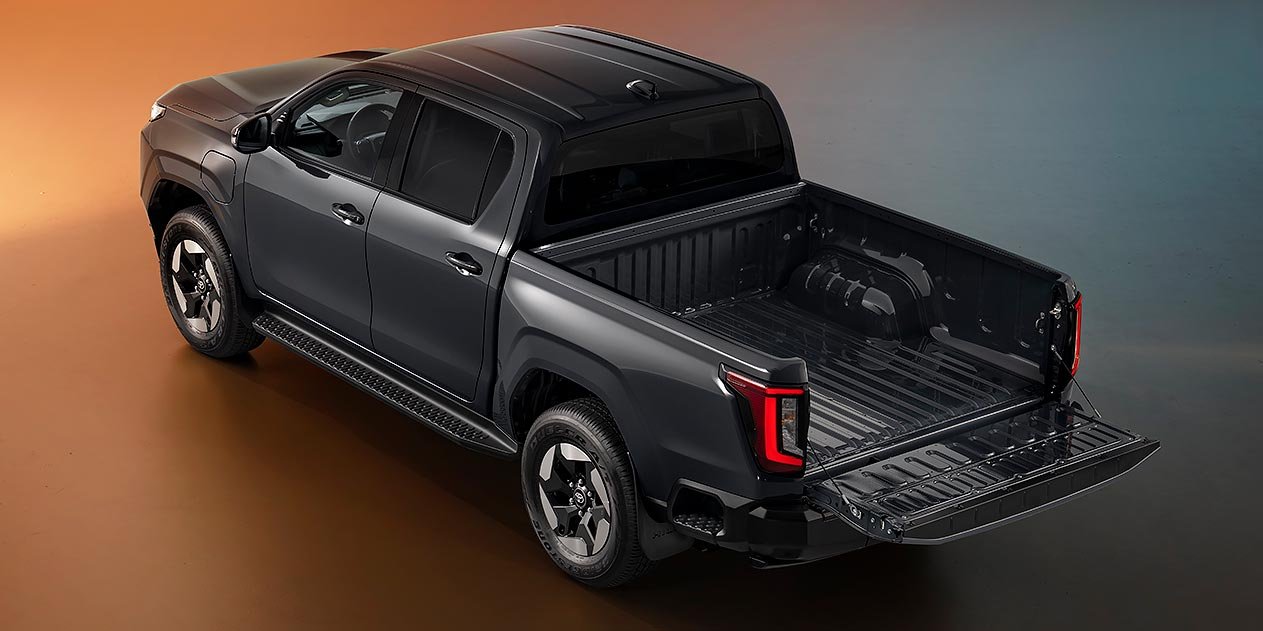
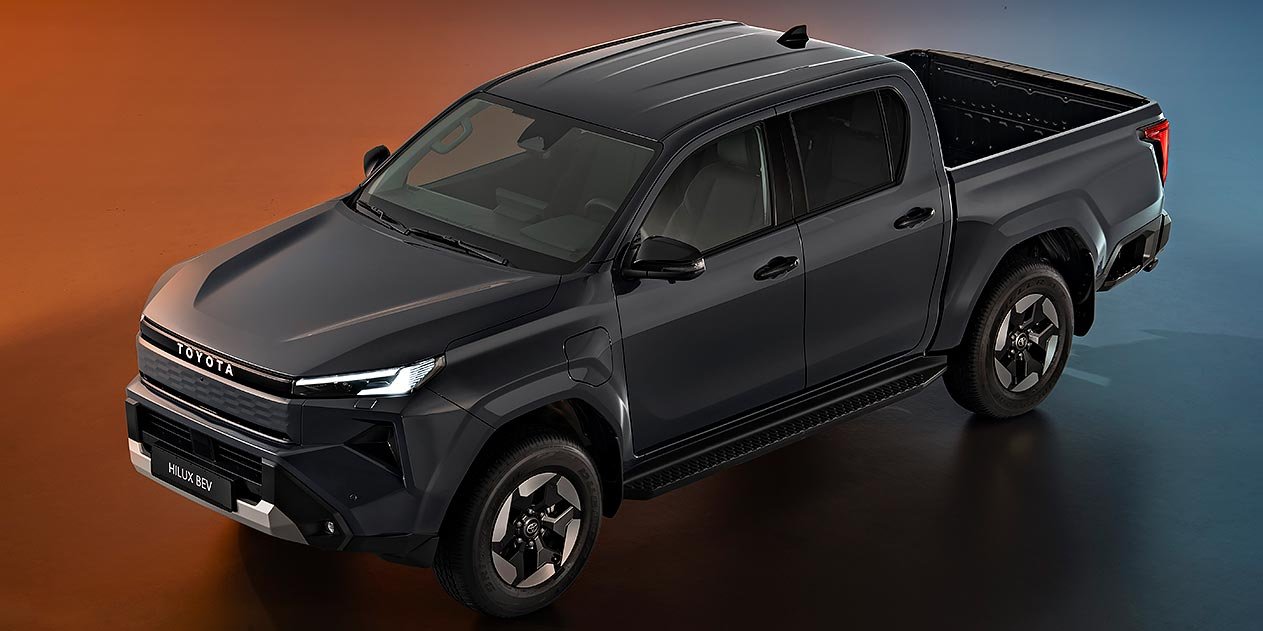
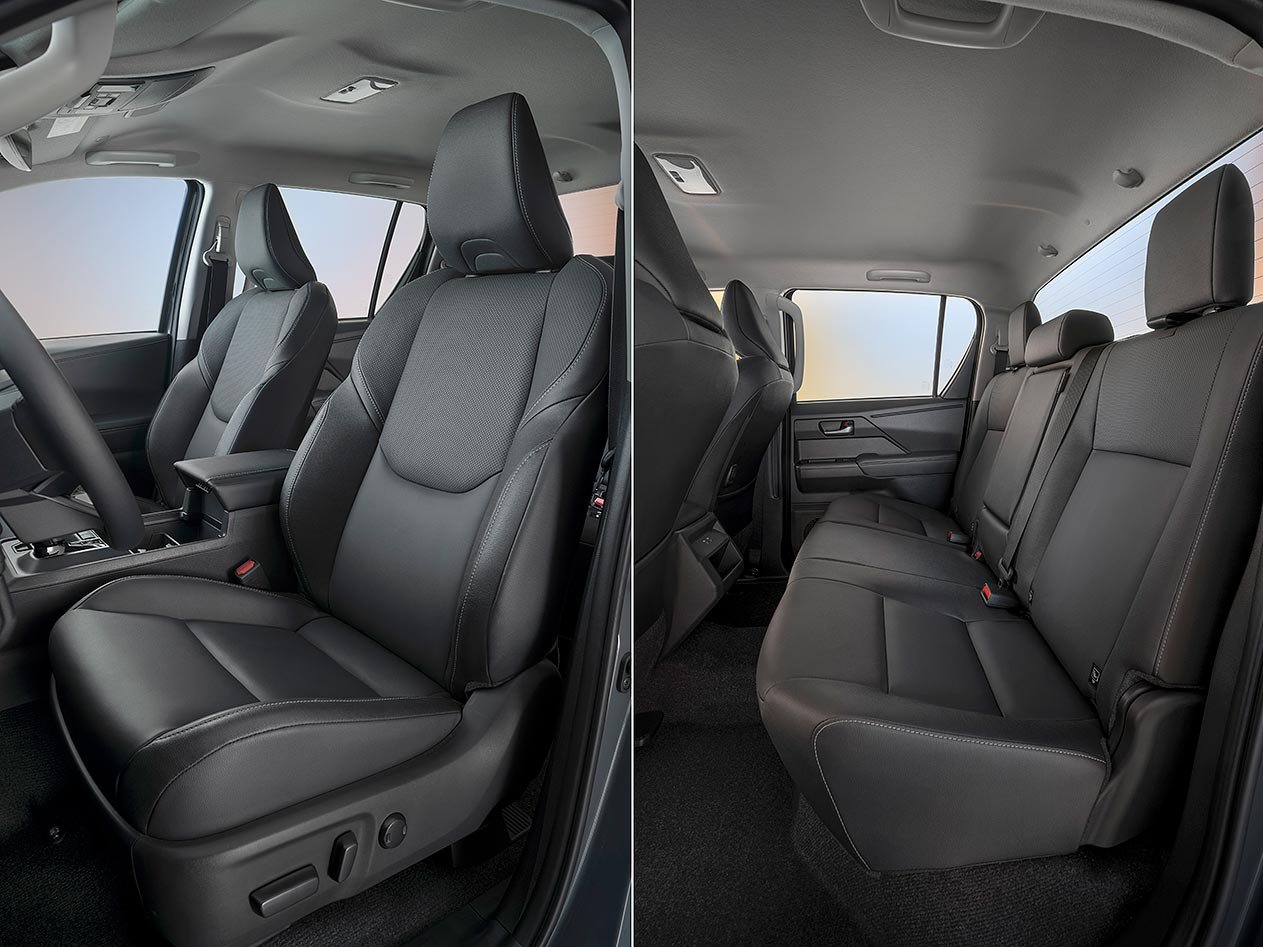
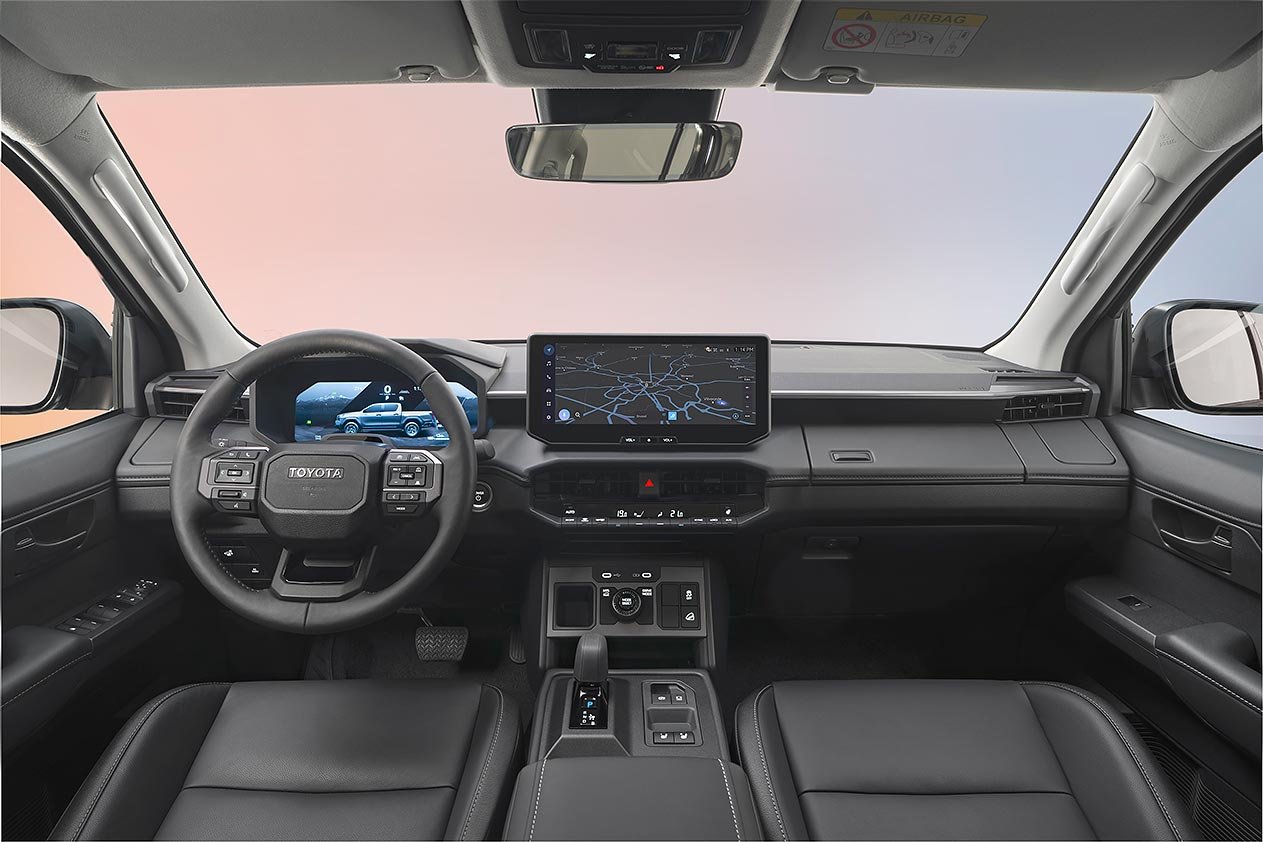
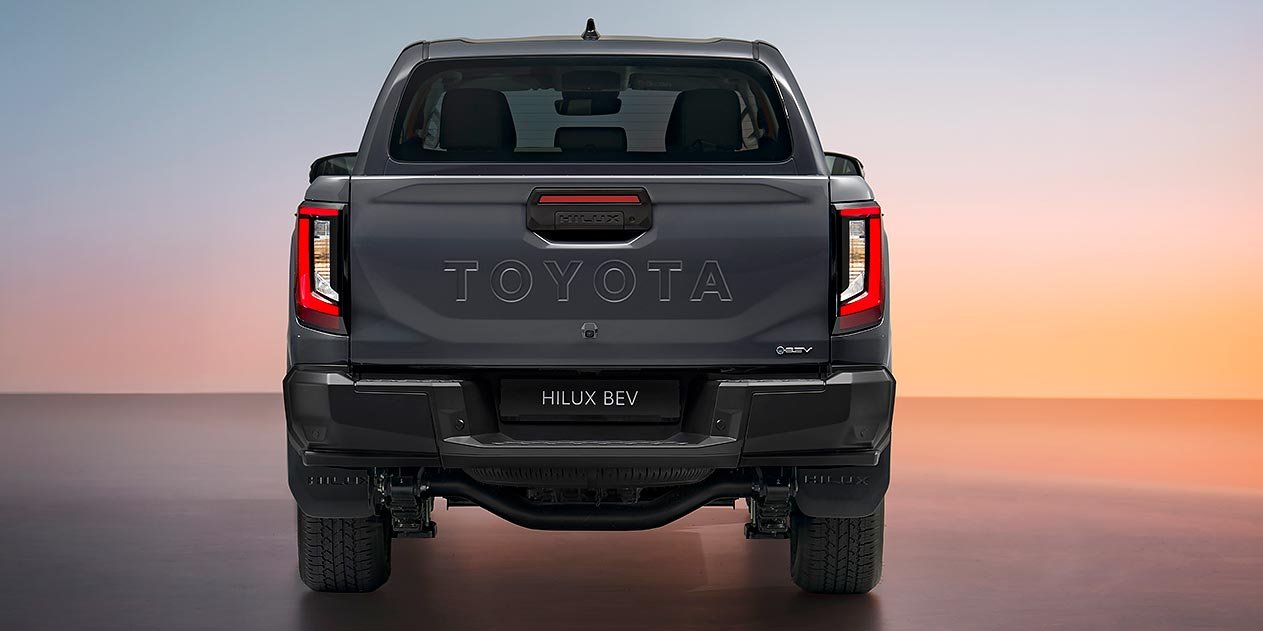
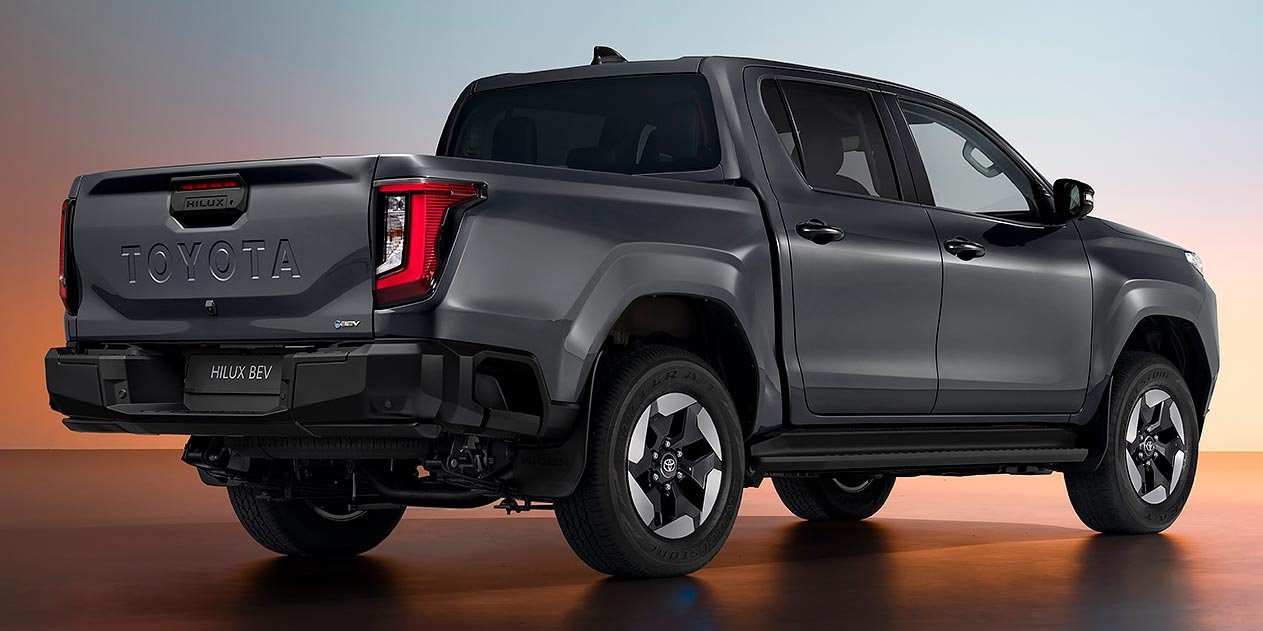
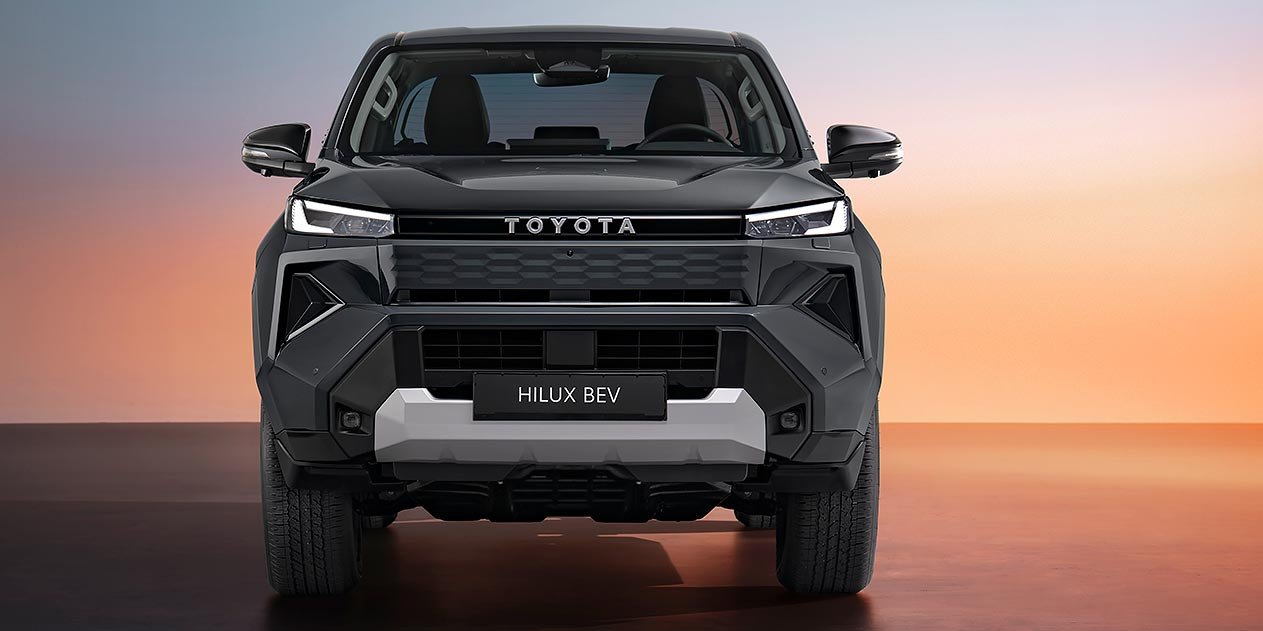
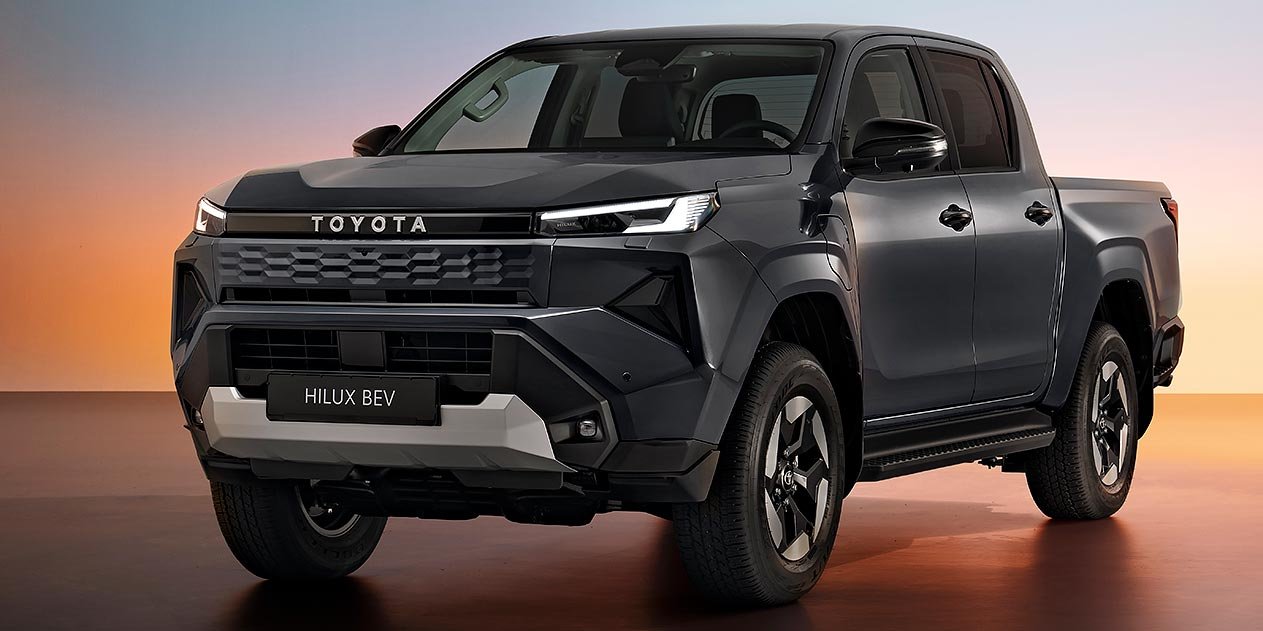
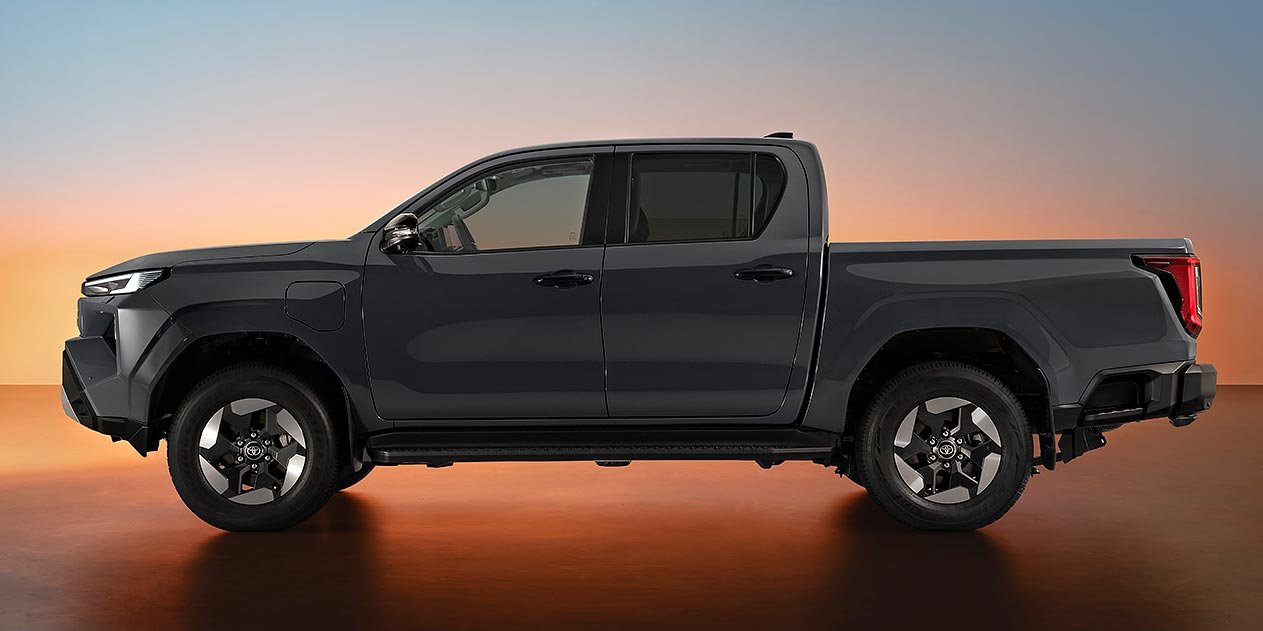
Full Electric Vehicle Specifications
MODEL
| Full Model Name | Toyota Hilux BEV |
| Generation | 9th Generation |
| Segment / Class | Midsize Pickup Truck |
| Available Trims / Variants | Double Cab (sole BEV body style at launch) |
| Powertrain Options | BEV (this sheet); 2.8D 48V mild-hybrid diesel; FCEV (2028) |
| Additional Notes | First-ever battery-electric Hilux. BEV spearheads the Gen 9 launch ahead of diesel/hybrid variants. |
LAUNCH
| Reveal Date | November 10, 2025 (Bangkok, Thailand) |
| Launch Year | 2026 |
| Availability Status | On sale — Europe from December 2025; Australia/Asia from H1 2026 |
| Brand / Manufacturer | Toyota Motor Corporation |
| Country of origin | Japan |
| Assembly Country | Thailand |
| Markets Available | Europe, Australia, select Asia-Pacific markets |
| Grey Market Import | Not positioned for African markets in its current rollout; grey market import theoretically possible but no official support exists. |
| Base Price (USD) | Not officially announced. Expected above AUD $65,990 equivalent (~USD $43,000+) |
| Additional Notes | Toyota Australia initially projected just 500 units sold in 2026, underscoring the vehicle's fleet-first, back-to-base positioning. |
BATTERY
| Battery Capacity | 59.2 kWh gross / 56 kWh usable |
| Battery Chemistry | NMC (Nickel Manganese Cobalt) Lithium-Ion |
| Battery Architecture | 5 modules, 80s1p configuration |
| Thermal Management | Liquid cooling |
| Range (WLTP/CLTC/EPA) | 257 km (160 miles) WLTP; 315 km NEDC; Toyota official pre-homologation figure is ~240 km WLTP |
| Energy Consumption | 21.8 kWh/100 km (WLTP) |
| Heat Pump | |
| DC Charging (Max kW) | 150 kW max DC |
| Charging Time (10–80%) | ~30 minutes (DC fast charge 10–80%); AC 10–100% approximately 6 hours |
| Additional Notes | Battery pack comprises five 16-cell modules. Charge port: CCS2 (Europe and Oceania). |
PERFORMANCE
| Motor Type | Permanent Magnet (eAxle) |
| Motor Configuration | Dual motor — front eAxle + rear eAxle |
| Front Motor Output (kW / HP) | 205 Nm (151 lb-ft) at front |
| Rear Motor Output (kW / HP) | 269 Nm (198 lb-ft) at rear |
| Power Output (kW / hp) | 144 kW / 196 hp (193 bhp) |
| Torque (Nm) | 468 Nm (345 lb-ft) combined |
| 0–100 km/h / 0-60 mph (seconds) The acceleration numbers are an easy way to compare car performance. We list either time from 0 to 100 km/h or time from 0 to 60mph, depending on which number(s) the manufacturers provide. The lower the acceleration time, the higher performance the car is. | 9.9 sec 0-62 mph |
| Top Speed (km/h / mph) | 87 mph (140 km/h) |
| Transmission / Drive | Permanent full-time electronically controlled AWD |
| Rear-Wheel Steering | Not fitted |
| Drive Mode | Multi-Terrain Select: Rock, Sand, Mud, Dirt, Moguls |
| Torque Vectoring | Electronic torque distribution via AWD system |
| Additional Notes | No 4WD Low confirmed for BEV variant. Off-road modes managed via brake and torque control. |
BODY
| Body Style | Double Cab Pickup Truck |
| Platform / Architecture | Body-on-frame ladder-frame construction |
| Dimensions (L×W×H mm) | 5,300 × 1,855 × 1,865 mm |
| Wheelbase (mm) | 3,085 mm |
| Front Track (mm) | 1,540 mm |
| Rear Track (mm) | 1,550 mm |
| Ground Clearance (mm) | 218 mm |
| Kerb Weight (kg) | 2,455 kg |
| Max Laden Weight (kg) | 3,170 kg |
| Suspension (Front / Rear) | Front double wishbone-type coil spring, rear leaf springs |
| Trunk/Boot Capacity (L) | ~1,600 kg braked (pre-homologation); up to 2,000 kg per Australian figures |
| Frunk/Bonnet Capacity (L) | No |
| Towing Capacity (kg) |
EU: 715 kg unbraked, 1600 kg braked |
| Payload Capacity (kg) | 715 kg (pre-homologation, tentative) |
| Wading Depth (mm) | 700 mm |
| Turning Circle (m) | 12.8 m |
| Approach / Departure Angle | 29° approach / 25° departure |
| Additional Notes | BEV front end is aero-optimised with minimal air intake openings, replacing the conventional grille. Body-on-frame retained from ICE Hilux. |
SAFETY
| Airbags (count) | Yes |
| Anti-lock Braking System (ABS) | Standard |
| Electronic Brakeforce Distribution (EBD) | Standard |
| Electronic Stability Control (ESC) | Standard |
| Traction Control System (TCS) | Standard |
| Tyre Pressure Monitoring (TPMS) | Standard |
| Child Seat Anchors (ISOFIX / LATCH) | Standard |
| Reversing Camera | Standard |
| Hill Start Assist | Standard |
| Driver Assistance (ADAS) | Toyota Safety Sense — SAE Level 2 |
| ADAS Features | Adaptive cruise control, lane trace assist, road sign assist, automatic emergency braking |
| Autonomous Driving Level | Level 2 |
| Additional Notes | Full ADAS suite carried over from Gen 9 Hilux platform. |
COMFORT
| Seating Capacity | 5 |
| Climate Control | Standard |
| Steering Wheel | Electric power steering (new for Gen 9) |
| Bluetooth / Wi-Fi | Wireless Android Auto and Apple CarPlay |
| Parking Aids | Reversing camera standard; sensors likely |
| Additional Notes | Interior design is shared with the broader Gen 9 Hilux platform. |
DISPLAYS
| Centre Screen (inches) | 12.3-inch touchscreen |
| Driver's Display (inches) | 12.3-inch digital instrument cluster |
| Operating System | Toyota multimedia system |
| Physical Controls | Extensive physical buttons retained for climate control and 4×4 hardware |
| Additional Notes | Toyota deliberately retains physical controls as a design priority for work-truck usability. |
LIGHTING
| Headlight Type (LED/Matrix/Laser) | LED |
| Daytime Running Lights (DRL) | Standard |
| Additional Notes | BEV front end redesigned with aero-optimised fascia; specific lighting details not published. |
INFOTAINMENT & AUDIO
| Additional Notes | Full infotainment spec not yet detailed for BEV variant specifically. |
TECHNOLOGY
| Additional Notes | Hydrogen FCEV variant of same platform confirmed for 2028. |
OWNERSHIP
| Official Dealer Network | Toyota global dealer network (Europe, Australia, Asia-Pacific) |
| Grey Market Support | No official support in Africa; potential via import agents |
| Roadside Assistance | Via Toyota dealer network in supported markets |
| Additional Notes | Designed primarily for fleet operators running depot-return duty cycles with predictable daily distances under 200 km and overnight charging available on-site. Grey market import to Nigeria, Kenya, or South Africa not practical in the short term given charging infrastructure requirements and premium pricing. |
Note
| Data Source | Toyota Global Newsroom, Toyota EU Newsroom, EVKX.net, Autocar UK, RACV Australia, Motor1, 4x4 Australia |
| Last Updated | June 2026 |
| Additional Notes | Several specs (AC charging speed, exact trim grades, full safety system count, infotainment details) remain unconfirmed as of this date. Final homologation figures may differ slightly from pre-launch data. |
| Editor's Note | Many attributes marked "not confirmed" are because Toyota has deliberately limited technical disclosures ahead of full market rollout. This sheet will need updating once official homologation specs are published, especially for towing capacity (varies between 1,600 kg and 2,000 kg depending on source and market). Range is modest by BEV standards — real-world figure likely 180–220 km under load, which limits appeal outside depot-return fleet use. Not a realistic grey market import candidate for African buyers in the near term. |
User Reviews
Disclaimer Note
Specifications sourced from manufacturer data and may reflect WLTP, CLTC, or EPA test conditions. Import prices in your local are estimates based on grey-market landing costs and exclude duties, clearing fees, and local taxes. Figures are subject to change without notice. Always verify with your local importer before purchase. We can not guarantee that the information on this page is 100% correct