

- Electric Vehicles
- SEAT
- Seat Mii Electric
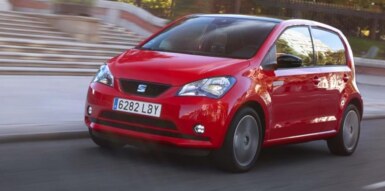
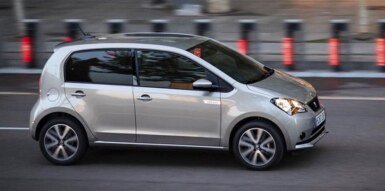
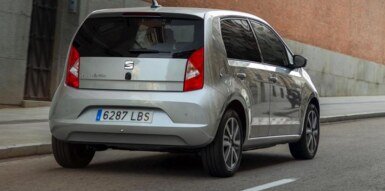
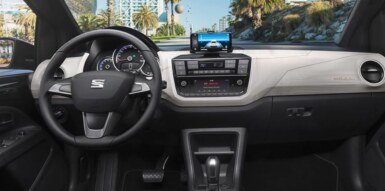
Seat Mii Electric
- Drive Type: FWD
- Type: 5 door hatchback, 5 seats
- Self Driving: No
- Airbags: 7 Airbags
The SEAT Mii Electric is a five-door A-segment city hatchback from SEAT, Volkswagen Group’s Spanish brand. It is the entry point of SEAT’s EV lineup — the smallest and most affordable battery-electric vehicle the brand has produced. SEAT offered one configuration: front-wheel drive, a 36.8 kWh gross battery (32.3 kWh usable), and a 61 kW motor. Official WLTP range is 260 km. The car was built on the same VW Group city-car platform as the Volkswagen e-up! and Škoda Citigo-e iV. Production ran from February 2020 to June 2021. No successor has been announced under the SEAT nameplate.
How Far Can the SEAT Mii Electric Go on a Full Charge?
The SEAT Mii Electric has a WLTP-rated range of 260 km on the European combined cycle. Independent real-world testing puts the figure closer to 200–210 km in mild conditions. In cold weather or at sustained motorway speeds, range drops further — highway testing at 110 km/h shows figures as low as 145–185 km. For buyers in Lagos, Nairobi, or Johannesburg using the car for urban stop-start driving in warm weather, the real-world ceiling is higher than those cold-weather figures suggest, though air conditioning load will reduce it. The 32.3 kWh usable capacity is modest by current standards but adequate for a city commuter covering under 80 km per day.
SEAT Mii Electric Charging: AC Only — No DC Rapid Charging
This is the most important spec on the sheet. The SEAT Mii Electric supports AC charging only. There is no DC fast charging port, no CCS rapid capability, and no option to add it. Maximum onboard charge rate is 7.2 kW. Charge times at that rate:
- 0–100% at 7.2 kW AC: approximately 5.5 hours
- 10–80% at 7.2 kW AC: approximately 4 hours
- 0–100% at 2.3 kW household socket: approximately 16 hours
For overnight home charging, this is workable. At public rapid chargers — the kind found at highway service stops — the Mii Electric cannot charge at all. This limits the car to urban and suburban use, full stop.
SEAT Mii Electric Price: What It Cost New and What to Expect Used
The Mii Electric launched in the UK at £20,300 and in Germany at €24,650. It was discontinued in June 2021. New stock no longer exists. Used examples in the UK — the most common grey-market source for West and East African importers — currently list between £8,000 and £14,000 depending on mileage, age, and condition.
For Nigerian buyers importing through Cotonou or Lagos, estimated landed cost ranges from approximately ₦13 million to ₦23 million, factoring in the current duty structure, clearing fees, and port charges (figures indicative; verify current rates with a licensed clearing agent). Kenyan buyers should expect a similar KES 1.3–1.8 million range at the port. No official distributor sells the Mii Electric in Nigeria, Kenya, or South Africa.
Who Is the SEAT Mii Electric Actually For?
The buyer profile is narrow and specific: a single-car household or second-car owner in a major African city, covering daily distances under 70 km, with reliable overnight home charging on a 7.2 kW wallbox or standard socket. It does not suit intercity driving, families needing rear-seat space beyond two adults, or buyers without guaranteed access to home charging. For fleet use in city delivery or last-mile logistics, the lack of DC charging makes it less competitive than newer alternatives.
SEAT Mii Electric vs the Competition
Within SEAT’s own range, the Mii Electric sits below the Leon eHybrid (PHEV, larger body) and well below the CUPRA Born (proper long-range BEV, significantly higher price). Outside the brand:
- Renault Zoe — longer WLTP range (395 km on the ZE50), supports DC charging (50 kW), available used across African markets, priced higher on the grey market
- Dacia Spring — newer, cheaper in European markets, designed explicitly for urban use, increasingly visible in South Africa
- Volkswagen e-up! — mechanically identical to the Mii Electric, same battery, same charging limits, often slightly cheaper used, and benefits from wider VW parts availability in some African markets
Direct comparison: The Volkswagen e-up! is the closest match on specs, platform, and price. The choice between the two usually comes down to whichever unit is cleaner and cheaper on a given day — there is no meaningful technical difference.
Seat Mii Electric Images
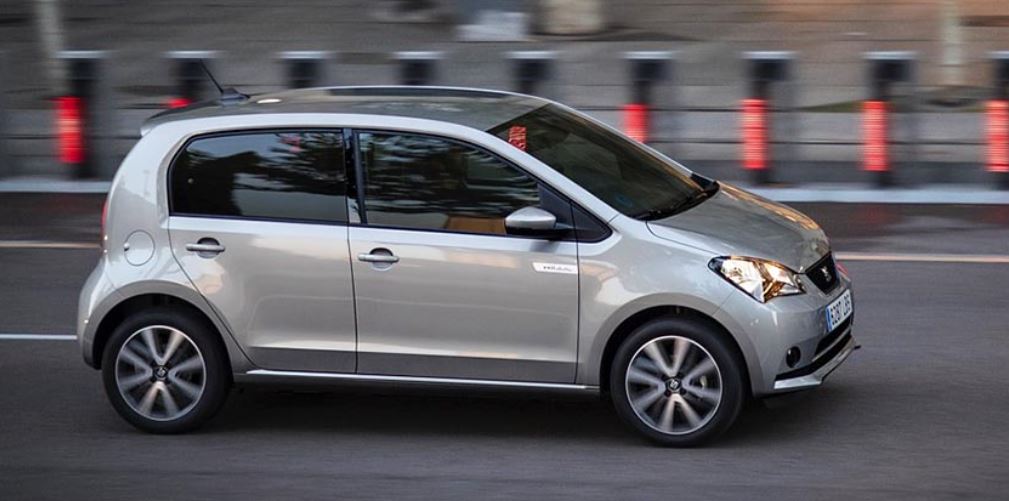
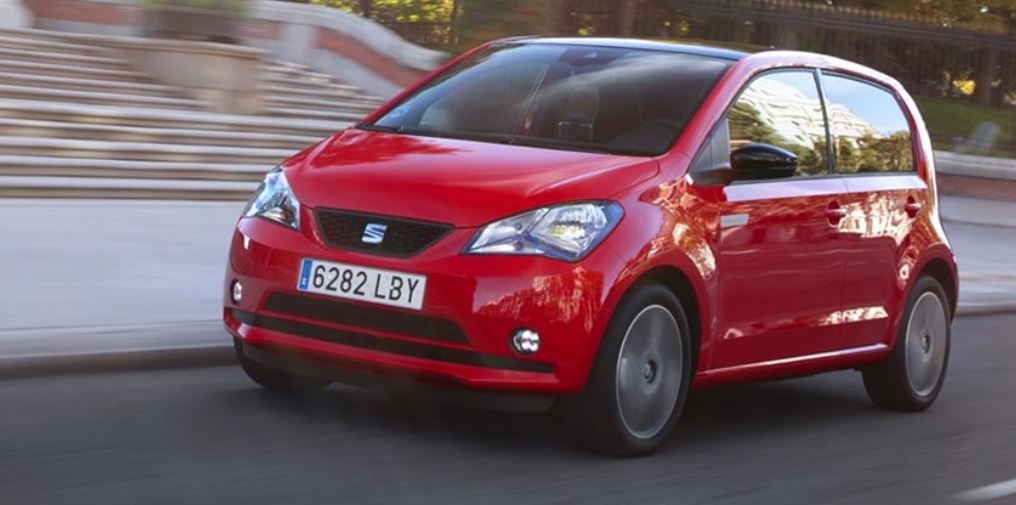
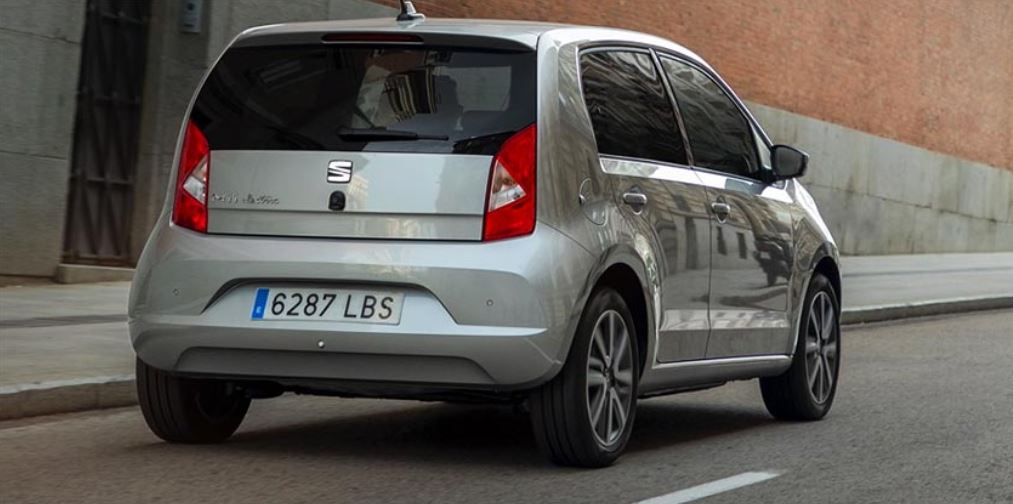
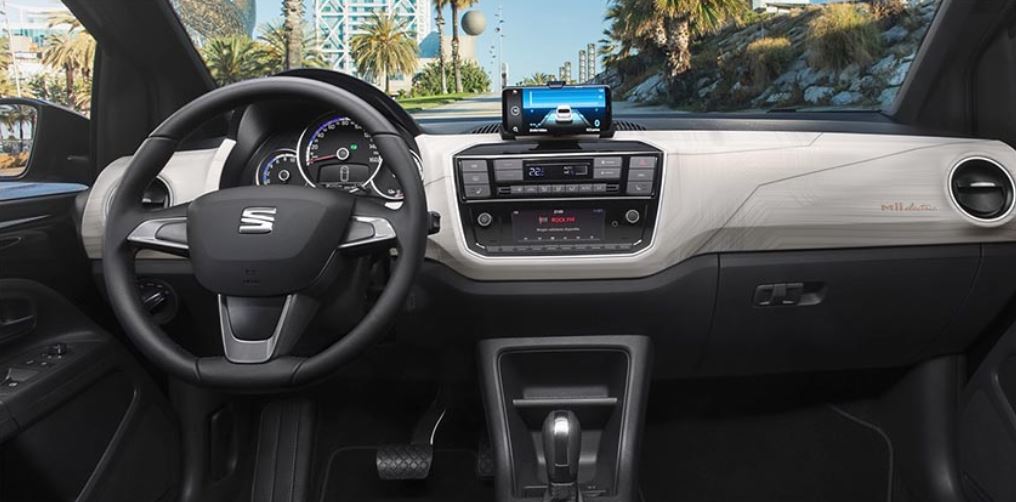
Full Electric Vehicle Specifications
MODEL
| Available Trims / Variants | Seat Mii Electric 32kWh |
LAUNCH
| Reveal Date | 2019 |
| Availability Status | Available to order. Released 2019 |
| Base Price (USD) | € 24,650 £ 22,800 |
BATTERY
| Battery Capacity |
32.3 kWh usable, 36.8 kWh total |
| Battery Chemistry |
Air-cooled Li-ion |
| Range (WLTP/CLTC/EPA) |
162 mi WLTP |
| Energy Consumption |
232 Wh/mi WLTP |
| Regen Braking (Max kW) | Yes, via driving modes |
| Heat Pump | |
| AC Charging (Max kW) | Type 2 7.2 kW, 0-80% in 4 hours |
| DC Charging (Max kW) | CCS 40 kW, 0-80% in 1 hour |
PERFORMANCE
| Power Output (kW / hp) | FWD 83 hp (61 kW) |
| Torque (Nm) | 212 Nm (156 lb-ft) |
| 0–100 km/h / 0-60 mph (seconds) The acceleration numbers are an easy way to compare car performance. We list either time from 0 to 100 km/h or time from 0 to 60mph, depending on which number(s) the manufacturers provide. The lower the acceleration time, the higher performance the car is. | 12.3 sec 0-62 mph |
| Top Speed (km/h / mph) |
81 mph (130 km/h) |
BODY
| Body Style | 5 door hatchback, 5 seats |
| Dimensions (L×W×H mm) | 3557 x 1645 x 1478 mm (140.0 x 64.8 x 58.2 in) |
| Drag Coefficient (Cd) | 0.308 Cd |
| Wheelbase (mm) | 2420 mm (95.3 in) |
| Ground Clearance (mm) | 135 mm (5.3 in) |
| Kerb Weight (kg) | EU: 1235 kg unladen, 1530 kg gross |
| Suspension (Front / Rear) | Front MacPherson struts, rear semi-independent torsion beam axle |
| Wheel Size (inches) |
R14, R16 |
| Trunk/Boot Capacity (L) | EU: 250 l, 923 l max |
| Frunk/Bonnet Capacity (L) | No |
| Towing Capacity (kg) | No |
SAFETY
| Airbags (count) | Front, side, including head airbag system |
| Driver Assistance (ADAS) | Front camera. Lane Assist, Traffic Sign Reminder |
| Crash Test Ratings | NCAP 2019: 3 stars |
COMFORT
| Seating Capacity | Heated front seats |
| Roof Type | No glass roof |
| Parking Aids | Rear sensors |
DISPLAYS
| Centre Screen (inches) | 5" |
| Driver's Display (inches) | Digital |
| Head-Up Display (HUD) | No |
LIGHTING
INFOTAINMENT & AUDIO
TECHNOLOGY
OWNERSHIP
Note
| Disclaimer | We can not guarantee that the information on this page is 100% correct |
Disclaimer Note
Specifications sourced from manufacturer data and may reflect WLTP, CLTC, or EPA test conditions. Import prices in your local are estimates based on grey-market landing costs and exclude duties, clearing fees, and local taxes. Figures are subject to change without notice. Always verify with your local importer before purchase. We can not guarantee that the information on this page is 100% correct