Cold weather can strip 30–45% off an EV’s advertised range, but not every model loses the same amount. Independent winter testing from Norway’s 2026 El Prix — the largest real-world cold-weather EV evaluation in the world — shows the MG6 S EV and Hyundai Inster tying for the smallest range loss at just 29%, while some flagship models shed nearly half their rated distance in the same conditions. Below, we break down the seven EVs that held onto the most range when temperatures dropped as low as -32°C (-25.6°F), what made the difference, and which models to avoid if you live somewhere the mercury regularly falls below zero.
Quick Summary Box
| Takeaway | Detail |
|---|---|
| 🏆 Best cold-weather retention | MG6 S EV & Hyundai Inster — both lost only 29% of WLTP range |
| ❄️ Test conditions | -21°C to -32°C, NAF/Motor.no El Prix 2026, Folldal, Norway |
| 📉 Average loss across 24 EVs tested | 38% below WLTP-rated range |
| 🔋 Longest absolute distance | Lucid Air Grand Touring — 519 km, despite a steeper 46% loss rate |
| ⚡ Key differentiator | Heat pump efficiency and battery preconditioning, not battery size |
Why Cold Weather Hits EV Range So Hard
Lithium-ion batteries slow down chemically in the cold, but that’s only part of the story. The bigger drain is cabin heating: without a combustion engine’s waste heat to recycle, EVs must generate warmth entirely from the battery. <cite index=”1-1″>A 2025–26 study of over 30,000 real-world EVs found an average 22% range loss at freezing (0°C), with cabin heating identified as the leading cause rather than cold-affected battery chemistry.</cite>
At more extreme temperatures, the losses compound. <cite index=”7-1″>NREL’s cold-weather study found that at 20°F (-6.7°C) with heating active, average EV range dropped 41% compared with a 75°F baseline, versus about 25% at 32°F (0°C).</cite> <cite index=”7-1″>Vehicles with heat pump systems suffered 20–25% less cold-weather range loss than models relying on resistance heaters alone.</cite>
Range-loss figures vary by test methodology, route, speed, and outside temperature — treat percentages as directional, not universal guarantees for every climate or driving style.
The 2026 El Prix Test, Explained
<cite index=”3-1″>Norway’s El Prix 2026 tested 24 electric vehicles in temperatures as low as -32°C, organized by the Norges Automobil-Forbund (NAF) in collaboration with Motor.no and backed by the FIA.</cite> <cite index=”13-1″>Every car started at 100% charge and was driven along the same route until it could no longer maintain the speed limit</cite> — a pass/fail-style endurance run rather than a lab simulation. <cite index=”10-1″>The 2026 edition also introduced a Co-Driver Programme, with FIA member clubs from Canada, Denmark, Iceland, Belgium, and Austria contributing to the testing process for the first time.</cite>
This makes El Prix one of the few large-scale, independently verified cold-weather range datasets available — which is why it anchors the rankings below.
The 7 Best EVs for Cold Weather (2026 Rankings)
1. MG6 S EV — Smallest Range Loss (Tied)
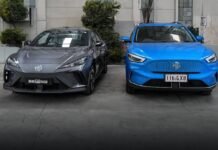
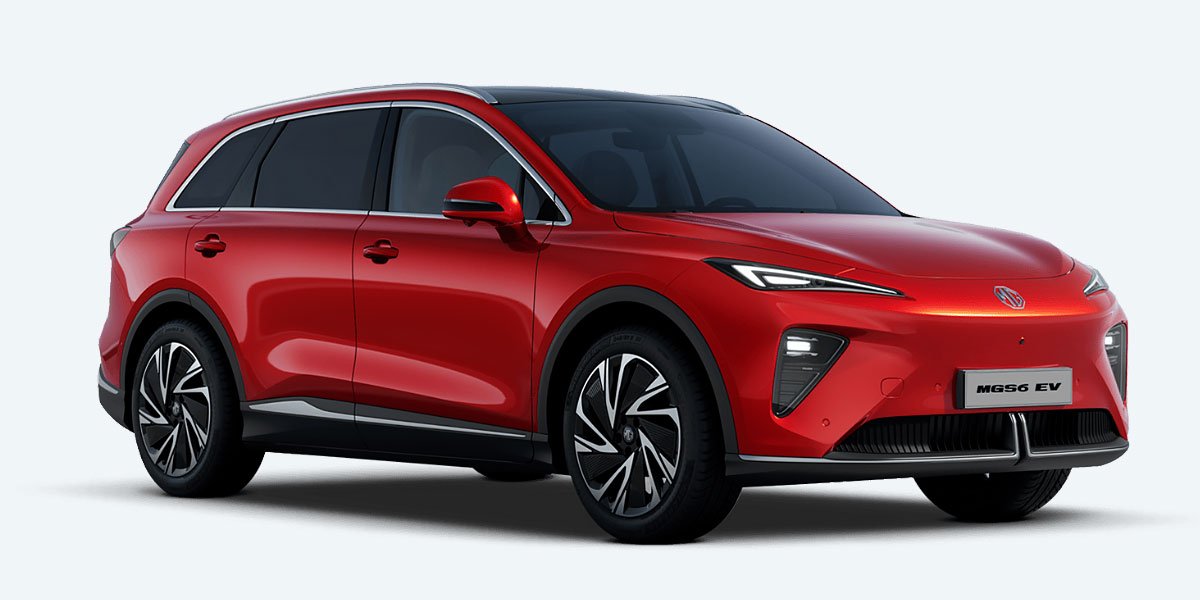
<cite index=”16-1″>The MG6 S EV carried a 485 km WLTP rating and covered 345 km in testing, a 29% loss</cite> — the best efficiency retention of any car in the field. Its result reinforces a broader trend: <cite index=”8-1″>Chinese EVs ranked among the top ten models for cold-weather efficiency and fast charging in the 2026 test, attributed to improved battery preconditioning and thermal management.</cite>
1. Hyundai Inster — Smallest Range Loss (Tied)
<cite index=”16-1″>The Inster’s WLTP rating of 360 km translated to 256 km in the cold, also a 29% loss</cite> — a strong showing for a compact city EV going up against far larger, pricier rivals. <cite index=”10-1″>Its result was widely flagged as a surprise, given its small footprint and budget positioning.</cite>
3. MG IM6
<cite index=”16-1″>The MG IM6 dropped from a 505 km WLTP rating to 352 km, a 30% loss</cite> — placing it third overall and reinforcing MG’s strong showing across both entries.
4. KGM Musso
<cite index=”16-1″>KGM’s Musso posted 379 km WLTP against 263 km actual, a 31% loss</cite>, notable as one of the only pickup-style entries to place inside the top five.
5. Voyah Courage
<cite index=”16-1″>The Voyah Courage recorded 440 km WLTP versus 300 km actual, a 32% loss</cite> — a solid result for a full-size SUV, a segment that typically suffers more from cold-weather HVAC load.
6. Kia EV4
<cite index=”16-1″>The Kia EV4 covered 390 km against a 594 km WLTP figure, a 34% loss</cite>. <cite index=”9-1″>Built on Kia’s Slovakia production line, the EV4 ranked among the top overall performers in the same test</cite>, and <cite index=”9-1″>its charging time stayed within a few minutes of factory specs despite the sub-zero environment.</cite>
7. Changan Deepal S05
<cite index=”16-1″>Changan’s Deepal S05 went from a 445 km WLTP rating to 293 km actual, also a 34% loss</cite>, tying Kia’s EV4 for sixth place. <cite index=”10-1″>The Deepal S05 also hit its official 10–80% charge time exactly at 23 minutes despite the cold</cite> — a detail that matters as much as range for road-trip usability.
Honorable Mention: Longest Absolute Distance — Lucid Air Grand Touring
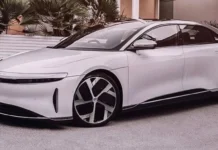
<cite index=”11-1″>The Lucid Air Grand Touring drove the farthest of any car in the 2026 field, covering 519 km (322 miles) before running out of charge</cite>, in <cite index=”11-1″>what was the coldest El Prix test to date, with temperatures reaching -31°C.</cite> It didn’t make the top 7 by percentage retained — <cite index=”13-1″>its huge 960 km WLTP rating means the absolute distance covered still represents one of the steeper deviations in the field</cite> — but for drivers who prioritize maximum range regardless of climate, it remains the segment’s outright distance leader. Treat this as a distance-leader callout, not a top-7 efficiency ranking.
Comparison Table: Top Cold-Weather Performers vs. WLTP Rating
| Model | WLTP Range | Actual Cold-Weather Range | Range Loss | Segment |
|---|---|---|---|---|
| MG6 S EV | 485 km | 345 km | 29% | Sedan |
| Hyundai Inster | 360 km | 256 km | 29% | City car |
| MG IM6 | 505 km | 352 km | 30% | Sedan |
| KGM Musso | 379 km | 263 km | 31% | Pickup |
| Voyah Courage | 440 km | 300 km | 32% | SUV |
| Kia EV4 | 594 km | 390 km | 34% | Hatchback |
| Changan Deepal S05 | 445 km | 293 km | 34% | Sedan |
| Lucid Air Grand Touring (reference) | 960 km | 519 km | ~46% | Luxury sedan |
Source: NAF/Motor.no El Prix Winter Test 2026, conducted in Folldal, Norway, at temperatures between -21°C and -32°C.
What Made the Difference
A few patterns separate the top performers from the rest of the field:
- Battery preconditioning. Cars that warm the battery pack before fast-charging or heavy load reach efficient operating temperature faster, cutting parasitic energy loss.
- Heat pumps over resistance heaters. <cite index=”7-1″>Heat pump-equipped EVs suffered meaningfully less cold-weather range loss than models depending solely on resistance heating.</cite>
- Compact size and lower frontal area. Smaller vehicles like the Hyundai Inster have less cabin volume to heat and lower aerodynamic drag, both of which help in freezing, high-drag winter conditions.
- Software-managed thermal strategy, rather than raw battery size — several of the largest-battery entries in the same test posted some of the steepest percentage losses, confirming that a bigger pack alone doesn’t guarantee better cold-weather retention.
Bottom Line Verdict
If minimizing cold-weather range anxiety is the priority, the MG6 S EV and Hyundai Inster are the standout picks from 2026’s independent testing, each retaining 71% of their rated range in genuinely brutal conditions. Buyers who need maximum absolute range regardless of climate should still consider the Lucid Air Grand Touring, which covered the longest real-world distance of any EV tested despite a steeper percentage loss. For most cold-climate drivers, though, the smarter buying signal isn’t battery size — it’s whether a model uses a heat pump and active preconditioning, since that consistently separated the winners from the rest of the field.
Sources: NAF (Norwegian Automobile Federation) / Motor.no El Prix Winter Test 2026; Recurrent Auto real-world EV fleet study 2025–26; National Renewable Energy Laboratory (NREL) cold-weather EV range study.
Data current as of testing conducted January–February 2026. Range figures reflect WLTP cycle ratings; regional EPA-rated figures may differ. indicates ranges or figures that may shift with software updates, regional battery variants, or future test cycles.