

- Electric Vehicles
- Compare Electric Cars
- Mini Aceman vs Smart #1
Mini Aceman vs Smart #1
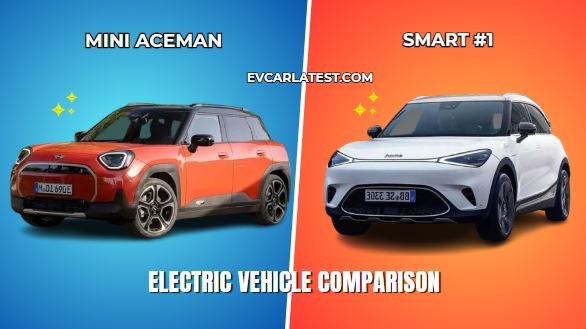
The Mini Aceman is a five-door compact crossover from BMW Group’s Mini brand, designed to sit between the Mini Cooper E hatchback and the larger Countryman in the lineup. The Smart #1 is a slightly larger compact SUV co-developed by Mercedes-Benz and Geely under the revived Smart brand. Both target urban professionals who want a premium badge, solid range, and a car that doesn’t look like everything else on the road. This comparison is timely because both models are now available through grey-market imports into Nigeria, Kenya, and South Africa, and buyers in these markets are increasingly choosing between them at similar landed price points.
Range & Charging
The Mini Aceman comes in two battery options: the Aceman E with a 42.5 kWh pack rated at 310 km WLTP, and the Aceman SE with a 54.2 kWh pack rated at 406 km WLTP. Real-world range on either trim runs roughly 15–20% below those figures in mixed conditions. DC fast charging peaks at 75 kW on the E and 95 kW on the SE, getting the smaller battery from 10–80% in around 30 minutes and the larger pack in about 38 minutes. AC charging tops out at 11 kW.
The Smart #1 carries a 66 kWh usable battery in its standard rear-wheel-drive form, with WLTP range of 440 km. The Brabus performance variant drops range slightly to around 400 km WLTP. DC fast charging peaks at 150 kW, which puts the 10–80% charge time at roughly 30 minutes despite the larger pack — a genuine advantage over the Aceman SE on road trips. AC charging is 22 kW, double what Mini offers, which matters when you’re relying on destination charging overnight.
Price, Availability & Market Fit
In Europe, the Mini Aceman E starts around €33,000 (~$36,000) and the SE around €38,000 (~$41,500). Grey-market landed cost in Nigeria runs roughly ₦45–55 million depending on spec and broker, with Kenya and South Africa seeing similar premiums over the European base price. The Smart #1 starts at around €37,000 (~$40,500) for the standard Pro+ trim, rising to €44,000+ for the Brabus. Nigerian grey-market pricing comes in at ₦50–60 million for standard variants. The Aceman gives you a lower entry point; the Smart #1 gives you more battery for the money at comparable spec levels. Neither has official dealer networks in sub-Saharan Africa, so after-sales support depends entirely on your importer. If you’re weighing these two, this page should help you decide whether paying less for a smaller, more characterful Mini makes sense versus paying a bit more for the Smart’s larger battery and faster AC charging.
Ecosystem & Rival Context
Within Mini’s lineup, the Cooper E and Cooper SE hatchbacks sit below the Aceman and share similar powertrains, while the larger Countryman Electric targets buyers who need more space. On Smart’s side, the #3 is a fastback coupe variant on the same platform as the #1, appealing to buyers who prioritize style over practicality. Outside both brands, the BYD Atto 3 and MG4 Electric are worth considering — both offer larger batteries at lower price points and have growing presence in African markets through formal or semi-formal distribution. The Aceman and Smart #1 still win this comparison on brand appeal and interior quality, which remain real factors for buyers in this segment.
Pros & Cons
Mini Aceman
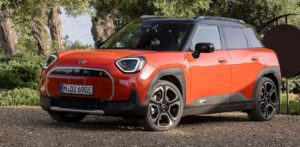
The Aceman’s interior is genuinely distinctive — the circular OLED display and retro-modern design language give it a character that most EVs in this segment lack, and that matters to buyers who care about what they’re sitting in every day. The smaller body makes urban parking and navigation noticeably easier, a practical advantage in congested cities like Lagos or Nairobi. Entry pricing is lower than the Smart #1 at equivalent trim levels, which leaves budget room for import costs and potential maintenance.
On the downside, the 42.5 kWh base battery’s real-world range of roughly 250–260 km is limiting for buyers who use their car for longer intercity runs, not just urban commuting. AC charging at 11 kW is slow by current standards, meaning overnight top-ups on a standard charger take longer than competing options.
Smart #1
The 150 kW DC fast charging is the Smart #1’s clearest practical advantage — matching the charge speed of some larger EVs despite its compact size, which reduces range anxiety on longer routes. The 22 kW AC charging also means faster overnight recovery on a wallbox or three-phase supply. The 440 km WLTP range on the standard variant is genuinely competitive for the segment, and real-world figures of 360–380 km are realistic in moderate conditions.
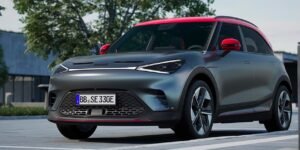
The Smart #1’s styling is more conventional than the Aceman’s, which may be a selling point or a drawback depending on the buyer — it blends in where the Mini stands out. At higher trim levels, the price premium over the Aceman grows without always delivering proportionally more features, which weakens its value case at the top end.
Quick Verdict
Choose the Mini Aceman if you prioritize interior character, lower entry cost, and urban-focused driving where the range is enough for your daily needs. Choose the Smart #1 if longer range, faster AC charging, and DC charging speed matter more — particularly if you do regular intercity trips. The Aceman trades range and charging speed for personality and price; the Smart #1 trades uniqueness for practicality. Neither has official African dealer support, so importer reliability should factor into both decisions.
Related EV Comparisons
- Zeekr X vs Smart #1
- Renault 5 E-Tech vs Mini Cooper Electric
- Volvo EX30 vs Smart #1
- Volvo EX30 vs Mini Countryman
- Volkswagen ID. 2all vs Mini Cooper SE
| |
| Price | $31,000.00 $37,000.00 |
| Our Rating | |
| Brand | Mini SMART |
| Category | Electric Cars Electric Cars |
MODEL
| Available Trims / Variants |
Mini Aceman E Mini Aceman SE Smart #1 Pure / Pro Smart #1 Pro+ / Premium - Also known as Smart +1 Premium, Smart #1 Pure+ Smart #1 Pulse Smart #1 Brabus |
LAUNCH
| Reveal Date |
2024, April 24
2024, January 26 - Smart #1 Pure / Pro 2022, April 07 - Smart #1 Pro+ / Premium 2023, June - Smart #1 Pulse 2023, March - Smart #1 Brabus |
| Availability Status |
Available to order. Released 2024, June
Available to order. Released 2024, February - Smart #1 Pure / Pro Available to order. Released 2023, July - Smart #1 Pro+ / Premium Available to order. Released 2023, June - Smart #1 Pulse Available to order. Released 2023, March - Smart #1 Brabus |
| Country of origin | Britain China |
| Base Price (USD) |
€ 34,900 £ 31,800 - Mini Aceman E € 39,550 £ 36,300 - Mini Aceman SE € 37,500 £ 31,950 - Smart #1 Pure / Pro € 42,500 £ 39,500 - Smart #1 Pro+ / Premium € 46,500 - Smart #1 Pulse € 49,000 £ 43,450 - Smart #1 Brabus |
BATTERY
| Battery Capacity |
38.5 kWh usable, 42.5 kWh total - Mini Aceman E 49.8 kWh usable, 54.2 kWh total - Mini Aceman SE 47 kWh usable, 49 kWh total - Smart #1 Pure / Pro 62 kWh usable, 66 kWh total - Smart #1 Pro+ / Premium 62 kWh usable, 66 kWh total - Smart #1 Pulse 62 kWh usable, 66 kWh total - Smart #1 Brabus |
| Battery Chemistry |
Liquid-cooled Li-ion NCM (400V type) Li-ion LFP battery (400V type) - Smart #1 Pure / Pro Li-ion NCM (400V type) - Smart #1 Pro+ / Premium Li-ion NCM (400V type) - Smart #1 Pulse Li-ion NCM (400V type) - Smart #1 Brabus |
| Range (WLTP/CLTC/EPA) |
193 mi WLTP - Mini Aceman E 252 mi WLTP - Mini Aceman SE 193 mi WLTP - Smart #1 Pure / Pro 261 mi WLTP - Smart #1 Pro+ / Premium 249 mi WLTP - Smart #1 Pulse 249 mi WLTP - Smart #1 Brabus |
| Energy Consumption |
227 Wh/mi WLTP - Mini Aceman E 224 Wh/mi WLTP - Mini Aceman SE 291 Wh/mi WLTP - Smart #1 Pure / Pro 270 Wh/mi WLTP - Smart #1 Pro+ / Premium 288 Wh/mi WLTP - Smart #1 Pulse 288 Wh/mi WLTP - Smart #1 Brabus |
| Regen Braking (Max kW) |
Yes Yes |
| Heat Pump | |
| AC Charging (Max kW) |
Type 2 11 kW, 100% in 4.25 h - Mini Aceman E Type 2 11 kW, 100% in 5.75 h - Mini Aceman SE Type 2 7.4 kW (Pro+ version) Type 2 22 kW, 10-80% in 3 hours (Premium version) |
| DC Charging (Max kW) |
CCS 75 kW, 10-80% in 28 min - Mini Aceman E CCS 95 kW, 10-80% in 30 min - Mini Aceman SE CCS 130 kW, 10-80% in 30 min - Smart #1 Pure / Pro CCS 150 kW, 10-80% in 30 min - Smart #1 Pro+ / Premium CCS 150 kW, 10-80% in 30 min - Smart #1 Pulse CCS 150 kW, 10-80% in 30 min - Smart #1 Brabus |
PERFORMANCE
| Power Output (kW / hp) |
FWD 184 hp (135 kW) - Mini Aceman E FWD 218 hp (160 kW) - Mini Aceman SE RWD 272 hp (200 kW) - Smart #1 Pure / Pro RWD 272 hp (200 kW) - Smart #1 Pro+ / Premium AWD 428 hp (315 kW) - Smart #1 Pulse AWD 428 hp (315 kW) - Smart #1 Brabus |
| Torque (Nm) |
290 Nm (214 lb-ft) - Mini Aceman E 330 Nm (243 lb-ft) - Mini Aceman SE 343 Nm (253 lb-ft) - Smart #1 Pure / Pro 384 Nm (283 lb-ft) - Smart #1 Pro+ / Premium 584 Nm (431 lb-ft) - Smart #1 Pulse 584 Nm (431 lb-ft) - Smart #1 Brabus |
| 0–100 km/h / 0-60 mph (seconds) The acceleration numbers are an easy way to compare car performance. We list either time from 0 to 100 km/h or time from 0 to 60mph, depending on which number(s) the manufacturers provide. The lower the acceleration time, the higher performance the car is. |
7.9 sec 0-62 mph - Mini Aceman E 7.1 sec 0-62 mph - Mini Aceman SE 6.7 sec 0-62 mph - Smart #1 Pure / Pro 6.7 sec 0-62 mph - Smart #1 Pro+ / Premium 4.5 sec 0-62 mph - Smart #1 Pulse 3.9 sec 0-62 mph -Smart #1 Brabus |
| Top Speed (km/h / mph) |
99 mph (160 km/h) - Mini Aceman E 106 mph (170 km/h) - Mini Aceman SE 112 mph (180 km/h) |
| Transmission / Drive | Single-speed Single-speed |
BODY
| Body Style |
5 door crossover, 5 seats
5 door Hatchback, 5 seats |
| Platform / Architecture | FAAR SEA |
| Dimensions (L×W×H mm) | 4079 x 1754 x 1514 mm (160.6 x 69.1 x 59.6 in) 4270 x 1822 x 1636 mm (168.1 x 71.7 x 64.4 in) |
| Drag Coefficient (Cd) |
0.29 Cd |
| Wheelbase (mm) |
2606 mm (102.6 in)
2750 mm (108.3 in) |
| Ground Clearance (mm) |
182 mm (7.2 in) |
| Kerb Weight (kg) |
EU: 1720 kg unladen, 2170 kg gross - Mini Aceman E EU: 1785 kg unladen, 2235 kg gross - Mini Aceman SE EU: 1788 kg unladen, 2205 kg gross - Smart #1 Pure / Pro EU: 1788 kg unladen, 2213 kg gross - Smart #1 Pro+ / Premium EU: 1900 kg unladen, 2325 kg gross - Smart #1 Pulse EU: 1900 kg unladen, 2325 kg gross - Smart #1 Brabus |
| Suspension (Front / Rear) |
Front MacPherson struts, rear multi-link |
| Wheel Size (inches) | R17, R18, R19 R19 |
| Trunk/Boot Capacity (L) |
EU: 300 l, 1005 l max
EU: 323 l, 986 l max - Smart #1 Pure / Pro EU: 323 l, 986 l max - Smart #1 Pro+ / Premium EU: 313 l, 976 l max - Smart #1 Pulse EU: 313 l, 976 l max - Smart #1 Brabus |
| Frunk/Bonnet Capacity (L) |
No
15 l |
| Towing Capacity (kg) |
EU: 750 kg unbraked, 750 kg braked
No - Smart #1 Pure / Pro No - Smart #1 Pro+ / Premium EU: 750 kg unbraked, 1600 kg braked - Smart #1 Pulse EU: 750 kg unbraked, 1600 kg braked - Smart #1 Brabus |
SAFETY
| Airbags (count) |
Front, side, head airbag system, knee airbag 7 airbags: front, side, rear, head airbag system |
| Driver Assistance (ADAS) |
Front radar, 4 cameras, 12 sensors. Collision detection and braking, Pedestrian collision mitigation, Fatigue alert, PostCrash iBrake, Brake assistant, High-beam Assistant, Lane Assistant Front radar, front/reversing cameras, 12 front/rear sensors. Active lane keeping system, blind spot assist, traffic jam assist, adaptive high beam assist |
| Crash Test Ratings |
NCAP 2022: 5 stars |
COMFORT
| Seating Capacity |
Heated front seats, massage Heated front seats |
| Roof Type |
Glass sunroof, tilt & slide Panoramic glass sunroof, fixed |
| Bluetooth / Wi-Fi |
Wireless Apple CarPlay Android Auto and Apple CarPlay |
| Parking Aids |
Front and rear sensors, 360 camera, reversing camera, remote parking Front and rear sensors, 360 camera, reversing camera, auto parking assist |
DISPLAYS
| Centre Screen (inches) |
9.5" touchscreen 12.8" touchscreen |
| Driver's Display (inches) |
No
9.2" |
| Head-Up Display (HUD) |
No
10" (retractable) |
LIGHTING
INFOTAINMENT & AUDIO
TECHNOLOGY
OWNERSHIP
Note
| Disclaimer | We can not guarantee that the information on this page is 100% correct We can not guarantee that the information on this page is 100% correct |

|
Disclaimer Note
Specifications sourced from manufacturer data and may reflect WLTP, CLTC, or EPA test conditions. Import prices in your local are estimates based on grey-market landing costs and exclude duties, clearing fees, and local taxes. Figures are subject to change without notice. Always verify with your local importer before purchase. We can not guarantee that the information on this page is 100% correct