- Electric Vehicles
- Compare Electric Cars
- Tesla Model 3 vs Hyundai Ioniq 6
Tesla Model 3 vs Hyundai Ioniq 6
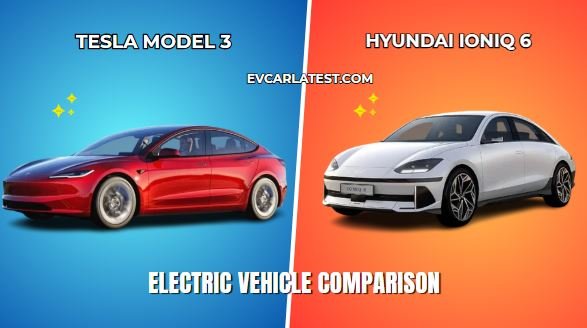
The Tesla Model 3 is a four-door electric sedan from the US, aimed at tech-forward buyers who want a minimalist cabin, strong performance, and access to one of the best charging networks in the world. The Hyundai Ioniq 6 is a streamlined electric fastback from South Korea, built for range-conscious buyers who prefer a more conventional car interface and dealer-backed purchase experience. Both sit in the premium electric sedan space under $50,000 USD, and with grey-market units of both models now reaching Nigerian, Kenyan, and South African buyers, the choice between them has become genuinely relevant for African EV buyers in 2025–2026.
Range & Charging
The Tesla Model 3 Long Range AWD delivers up to 629 km WLTP (around 550 km in real-world conditions). The Hyundai Ioniq 6 Long Range AWD hits 614 km WLTP, with real-world figures typically landing between 520–560 km depending on conditions. On DC fast charging, the Ioniq 6 edges ahead with up to 800V / 350 kW peak charge capability — 10–80% in roughly 18 minutes under ideal conditions. The Model 3 tops out at 250 kW DC, with a 10–80% charge taking around 25–27 minutes. For AC home charging, both support 11 kW onboard. In markets with limited fast-charging infrastructure like Nigeria, the Ioniq 6’s faster peak charging matters less day-to-day; home overnight charging covers most use cases.
Price, Availability & Market Fit
In the US, the Tesla Model 3 Long Range starts around $42,990 USD; grey-market import estimates for Nigeria land around ₦65–75 million depending on trim, duties, and agent fees. The Hyundai Ioniq 6 Standard Range starts at approximately $38,615 USD, with Long Range AWD pushing closer to $46,000 USD — grey-market NGN pricing runs roughly ₦58–72 million. In South Africa, the Ioniq 6 has an official Hyundai dealer presence, starting at approximately ZAR 899,000. Tesla has no official Sub-Saharan Africa presence yet. If you want warranty support and an established service network, the Ioniq 6 wins outright for South African buyers. For Nigerian and Kenyan buyers purchasing grey-market, both require the same import process — the decision then becomes about which car better fits your driving habits and charging setup.
Ecosystem & Rival Context
Within the Tesla lineup, buyers considering the Model 3 may also want to look at the Model Y for more cargo space at a similar price point. On Hyundai’s side, the Ioniq 5 offers a taller, more practical crossover body using the same E-GMP platform as the Ioniq 6. Outside both brands, the BMW i4 eDrive40 and BYD Seal deserve consideration in this segment — the BYD Seal in particular undercuts both on price while offering comparable range figures. That said, the Tesla vs. Ioniq 6 comparison remains the most relevant head-to-head because both offer top-tier real-world range, fast charging, and are the two most widely discussed long-range sedans among African grey-market EV buyers right now.
Pros & Cons
Tesla Model 3
Pros: The Model 3’s Supercharger network is the most reliable fast-charging infrastructure globally — relevant for any buyer who travels between cities and needs predictable charging stops. Its over-the-air software updates mean the car improves after purchase, which matters in markets where dealership support is thin. Performance in the Long Range AWD trim (0–100 km/h in 4.4 seconds) is hard to match at this price.
Cons: Tesla’s absence from African dealer networks means any hardware fault or body repair becomes a complicated, expensive problem — there are no authorised service centres in Nigeria or Kenya. The interior, while functional, feels sparse compared to what Korean and European rivals offer at similar prices; buyers used to physical controls may find the all-touchscreen approach frustrating.
Hyundai Ioniq 6
Pros: The 800V charging architecture genuinely delivers among the fastest charge times of any EV on the market, which benefits buyers who do occasionally access high-speed chargers in South Africa or Kenya. Hyundai’s official dealer presence in South Africa means warranty claims, parts, and servicing are straightforward — a real advantage over grey-market Tesla ownership. The interior offers a more familiar layout with physical buttons and a more premium feel than the Model 3’s minimalist approach.
Cons: Outside South Africa, the Ioniq 6 has no official African market support, putting Nigerian and Kenyan buyers in the same grey-market situation as Tesla — which removes much of the dealer network advantage. The fastback roofline, while aerodynamic, cuts into rear headroom, making it less practical for taller passengers than the Model 3’s more upright saloon profile.
Quick Verdict
Choose the Tesla Model 3 if access to a global fast-charging network and long-term software support matter more to you than dealer service. Choose the Hyundai Ioniq 6 if you’re buying in South Africa where official support exists, or if faster DC charging speeds and a more conventional interior experience are your priorities. For Nigerian and Kenyan grey-market buyers, the gap between them narrows considerably — both require the same import process, so the decision comes down to whether you prefer Tesla’s software ecosystem or Hyundai’s interior quality and charging speed. Neither is a wrong call at this price point.
Related EV Comparisons
- Volkswagen ID.4 vs Tesla Model Y
- YangWang U7 vs Tesla Model S
- BYD Seal 08 vs Tesla Model S
- Ferrari Luce vs Tesla Model S
- Mercedes EQS 2026 vs Tesla Model S 2025

| |
| Price | $43,000.00 $41,000.00 |
| Our Rating | |
| Brand | TESLA Hyundai |
| Category | Electric Cars Electric Cars |
MODEL
| Available Trims / Variants |
Tesla Model 3 Standard Range Tesla Model 3 Long Range RWD Tesla Model 3 Long Range Tesla Model 3 Performance Hyundai Ioniq 6 53kWh RWD Hyundai Ioniq 6 77.4kWh RWD Hyundai Ioniq 6 77.4kWh AWD |
LAUNCH
| Reveal Date |
2023, September 01 - Tesla Model 3 Standard Range 2024, July 11 - Tesla Model 3 Long Range RWD 2023, September 01 - Tesla Model 3 Long Range 2024, April 23 - Tesla Model 3 Performance 2022, June 28 |
| Availability Status |
Available to order. Released 2023, October - Tesla Model 3 Standard Range Available to order. Released 2024, July - Tesla Model 3 Long Range RWD Available to order. Released 2023, October - Tesla Model 3 Long Range Available to order. Released 2024, April - Tesla Model 3 Performance Available to order. Released 2022, November 15 |
| Country of origin | United States South Korea |
| Base Price (USD) |
€ 43,000 - Tesla Model 3 Standard Range $ 42,500 - Tesla Model 3 Long Range RWD $ 47,500 € 52,000 - Tesla Model 3 Long Range $ 53,000 € 58,500 £ 60,000 - Tesla Model 3 Performance € 43,900 $ 41,600 - Hyundai Ioniq 6 53kWh RWD $ 45,500 € 54,000 £ 46,750 - Hyundai Ioniq 6 77.4kWh RWD $ 49,000 € 61,100 £ 55,000 - Hyundai Ioniq 6 77.4kWh AWD |
BATTERY
| Battery Capacity |
57.3 kWh usable, 60 kWh total -Tesla Model 3 Standard Range 78 kWh total - Tesla Model 3 Long Range RWD 78 kWh total - Tesla Model 3 Long Range 78 kWh total - Tesla Model 3 Performance 53 kWh total - Hyundai Ioniq 6 53kWh RWD 77.4 kWh total - Hyundai Ioniq 6 77.4kWh RWD 77.4 kWh total - Hyundai Ioniq 6 77.4kWh AWD |
| Battery Chemistry |
Liquid-cooled Li-ion 360V LFP battery - Tesla Model 3 Standard Range Liquid-cooled Li-Ion NCM (400V type) - Tesla Model 3 Long Range RWD Liquid-cooled Li-Ion NCM (400V type) - Tesla Model 3 Long Range Liquid-cooled Li-ion NCM (400V type) - Tesla Model 3 Performance Liquid-cooled Li-Po 697V (800V type) |
| Range (WLTP/CLTC/EPA) |
272 mi EPA (319 mi WLTP) - Tesla Model 3 Standard Range 436 mi WLTP (363 mi EPA) - Tesla Model 3 Long Range RWD 421 mi WLTP (342 mi EPA) - Tesla Model 3 Long Range 328 mi WLTP (296 mi EPA) - Tesla Model 3 Performance 267 mi WLTP (240 mi EPA) - Hyundai Ioniq 6 53kWh RWD 382 mi WLTP (361 mi EPA) - Hyundai Ioniq 6 77.4kWh RWD 362 mi WLTP (316 mi EPA) - Hyundai Ioniq 6 77.4kWh AWD |
| Energy Consumption |
212 Wh/mi WLTP - Tesla Model 3 Standard Range 225 Wh/mi WLTP (260 Wh/mi EPA) - Tesla Model 3 Long Range 269 Wh/mi WLTP - Tesla Model 3 Performance 224 Wh/mi WLTP - Hyundai Ioniq 6 53kWh RWD 230 Wh/mi WLTP - Hyundai Ioniq 6 77.4kWh RWD 243 Wh/mi WLTP - Hyundai Ioniq 6 77.4kWh AWD |
| Regen Braking (Max kW) | 1 level, no coasting, no regen when pedal braking 4 levels, with steering wheel paddles |
| Heat Pump | |
| AC Charging (Max kW) |
Type 2 11 kW, 0-100% in 7 hours 33 min - Tesla Model 3 Standard Range Type 2 11 kW, 0-100% in 8 hours 15 min - Tesla Model 3 Long Range RWD Type 2 11 kW, 0-100% in 8 hours 15 min - Tesla Model 3 Long Range Type 2 11 kW - Tesla Model 3 Performance Type 2 11 kW, 10-100% in 5 hours 40 min - Hyundai Ioniq 6 53kWh RWD Type 2 11 kW, 10-100% in 7 hours 16 min - Hyundai Ioniq 6 77.4kWh RWD Type 2 11 kW, 10-100% in 7 hours 16 min - Hyundai Ioniq 6 77.4kWh AWD |
| DC Charging (Max kW) |
Supercharger V3 170 kW max -Tesla Model 3 Standard Range CCS 170 kW max Supercharger V3 250 kW max - Tesla Model 3 Long Range RWD CCS 250 kW max Supercharger V3 250 kW max - Tesla Model 3 Long Range CCS 250 kW max Supercharger V3 250 kW max - Tesla Model 3 Performance CCS 250 kW max CCS 235 kW, 10-80% in 18 min |
| Additional Notes |
Vehicle to load (V2L) 230V electrical outlet (3.6 KW max) |
PERFORMANCE
| Power Output (kW / hp) |
RWD 283 hp (208 kW) - Tesla Model 3 Standard Range RWD -Tesla Model 3 Long Range RWD AWD 498 hp (366 kW) - Tesla Model 3 Long Range AWD 625 hp (460 kW) - Tesla Model 3 Performance RWD 151 hp (111 kW) - Hyundai Ioniq 6 53kWh RWD RWD 229 hp (168 kW) - Hyundai Ioniq 6 77.4kWh RWD AWD 325 hp (239 kW) - Hyundai Ioniq 6 77.4kWh AWD |
| Torque (Nm) |
450 Nm (332 lb-ft) - Tesla Model 3 Standard Range 493 Nm (364 lb-ft) - Tesla Model 3 Long Range 741 Nm (547 lb-ft) - Tesla Model 3 Performance 350 Nm (258 lb-ft) - Hyundai Ioniq 6 53kWh RWD 350 Nm (258 lb-ft) - Hyundai Ioniq 6 77.4kWh RWD 605 Nm (446 lb-ft) - Hyundai Ioniq 6 77.4kWh AWD |
| 0–100 km/h / 0-60 mph (seconds) The acceleration numbers are an easy way to compare car performance. We list either time from 0 to 100 km/h or time from 0 to 60mph, depending on which number(s) the manufacturers provide. The lower the acceleration time, the higher performance the car is. |
5.8 sec 0-60 mph (6.1 sec 0-62 mph) - Tesla Model 3 Standard Range 4.9 sec 0-60 mph - Tesla Model 3 Long Range RWD 4.2 sec 0-60 mph (4.4 sec 0-62 mph) - Tesla Model 3 Long Range 2.9 sec 0-60 mph (3.1 sec 0-62 mph) - Tesla Model 3 Performance 8.8 sec 0-62 mph - Hyundai Ioniq 6 53kWh RWD 7.4 sec 0-62 mph - Hyundai Ioniq 6 77.4kWh RWD 5.1 sec 0-62 mph - Hyundai Ioniq 6 77.4kWh AWD |
| Top Speed (km/h / mph) |
125 mph (201 km/h) - Tesla Model 3 Standard Range 125 mph (201 km/h) - Tesla Model 3 Long Range RWD 125 mph (201 km/h) - Tesla Model 3 Long Range 163 mph (262 km/h) - Tesla Model 3 Performance 115 mph (185 km/h) |
| Transmission / Drive | Single-speed Single-speed |
BODY
| Body Style | 4 door sedan, 5 seats 4 door sedan, 5 seats |
| Platform / Architecture | E-GMP |
| Dimensions (L×W×H mm) | 4720 x 1933 x 1441 mm (185.8 x 76.1 x 56.7 in) 4855 x 1880 x 1495 mm (191.1 x 74.0 x 58.9 in) |
| Drag Coefficient (Cd) | 0.219 Cd 0.21 Cd |
| Wheelbase (mm) | 2875 mm (113.2 in) 2950 mm (116.1 in) |
| Ground Clearance (mm) | 138 mm (5.4 in) 141 mm (5.6 in) |
| Kerb Weight (kg) |
EU: 1765 kg unladen -Tesla Model 3 Standard Range EU: 1822 kg unladen - Tesla Model 3 Long Range RWD EU: 1828 kg unladen, 2263 kg gross - Tesla Model 3 Long Range EU: 1929 kg unladen, 2271 kg gross - Tesla Model 3 Performance EU: 1833 kg unladen - Hyundai Ioniq 6 53kWh RWD EU: 1986 kg unladen - Hyundai Ioniq 6 77.4kWh RWD EU: 2096 kg unladen - Hyundai Ioniq 6 77.4kWh AWD |
| Suspension (Front / Rear) | Front double wishbone-type coil spring, rear multi-link Front MacPherson struts, rear multi-link |
| Wheel Size (inches) | R18, R19 R18, R20 |
| Trunk/Boot Capacity (L) |
EU: 682 l - Tesla Model 3 Standard Range EU: 594 l - Tesla Model 3 Long Range RWD EU: 594 l - Tesla Model 3 Long Range EU: 594 l - Tesla Model 3 Performance EU: 401 l |
| Frunk/Bonnet Capacity (L) |
88 l
45 l 45 l 14 l |
| Towing Capacity (kg) |
EU: 1000 kg unbraked
EU: 750 kg unbraked, 750 kg braked - Hyundai Ioniq 6 53kWh RWD EU: 750 kg unbraked, 1500 kg braked - Hyundai Ioniq 6 77.4kWh RWD EU: 750 kg unbraked, 1500 kg braked -Hyundai Ioniq 6 77.4kWh AWD |
| Additional Notes |
Battery thermal pre-conditioning Smart Frequency Dampers Digital Centre Mirror Digital Side Mirrors Charge indicator on the front bumper |
SAFETY
| Airbags (count) | 8 airbags: front, side, rear, head airbag system, front seats knee airbags 7 airbags: side, front and rear, including head airbag system |
| Driver Assistance (ADAS) | 3 front, 2 side and 3 rear cameras (up to 250m object detection). Automatic Emergency Braking, Dynamic Brake Lights, Lane Assist, Collision Avoidance Assist, Speed Assist, Lane Departure Avoidance, Traffic Light and Stop Sign Control Front and corner radars, cameras. Highway Driving Assist II, Forward Collision Warning, Autonomous Emergency Braking with Pedestrian and Cyclist Recognition, Blind Spot Collision-Avoidance Assist, Rear Cross-Traffic Collision-Avoidance Assist, Lane Keeping Assist, Safe Exit Assist, High Beam Assist, Intelligent Speed Limit Assist, Driver Attention Warning |
| Autonomous Driving Level | Autopilot with full Self-Driving capability |
| Crash Test Ratings | NCAP 2022: 5 stars |
COMFORT
| Seating Capacity | Heated and ventilated/cooled front seats, heated rear seats Heated and ventilated front seats, heated rear seats |
| Roof Type | All-glass roof Panoramic glass roof |
| Bluetooth / Wi-Fi | Android Auto and Apple CarPlay |
| Parking Aids | Front, side, rear cameras, Parking Assist Front and rear sensors, 360 camera, front and reversing camera, Remote Smart Parking Assist 2 |
| Additional Notes | 360˚ acoustic glass |
DISPLAYS
| Centre Screen (inches) | 15.4" touchscreen 12.3" touchscreen |
| Driver's Display (inches) | No 12.3" |
| Head-Up Display (HUD) | No Yes, projector type |
| Additional Notes |
8" rear passengers touchscreen display |
LIGHTING
INFOTAINMENT & AUDIO
TECHNOLOGY
OWNERSHIP
Note
| Additional Notes |
02 October 2024: Model 3 Standard Range is discontinued in USA 10 January 2024: Initial release price 38,990 USD 01 September 2023: Initial release price 42,990 EUR |
| Disclaimer | We can not guarantee that the information on this page is 100% correct. |

|
Disclaimer Note
Specifications sourced from manufacturer data and may reflect WLTP, CLTC, or EPA test conditions. Import prices in your local are estimates based on grey-market landing costs and exclude duties, clearing fees, and local taxes. Figures are subject to change without notice. Always verify with your local importer before purchase. We can not guarantee that the information on this page is 100% correct