- Home
- Electric Vehicles
- Compare Electric Cars
- Mercedes EQS 2026 vs Tesla Model S 2025
Mercedes EQS 2026 vs Tesla Model S 2025
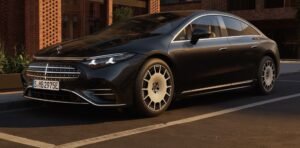
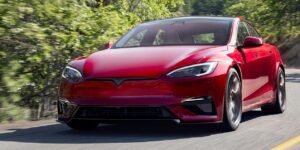
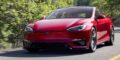
Both Mercedes EQS 2026 vs Tesla Model S 2025 are premium electric sedans, The 2026 Mercedes EQS is a four-door aerodynamic sedan from Stuttgart, positioned as Mercedes-Benz’s fully electric S-Class equivalent, targeting executives and luxury buyers who want refinement above all. The 2025 Tesla Model S is a five-door liftback sedan from California, built for performance-minded buyers who want range leadership and a tech-first interior.
Both sit in the ultra-luxury EV segment above $79,000, making this comparison directly relevant as grey-market imports of both models continue arriving in Nigeria, Kenya, and South Africa in growing numbers.
Mercedes EQS 2026 vs Tesla Model S 2025 Range & Charging
The EQS 450+ achieved 422 miles in Edmunds’ real-world range test, exceeding its EPA estimate. The standard Tesla Model S achieves an EPA-estimated 405 miles of range on a single charge and can recharge at 250 kW — good for approximately 200 miles added in 15 minutes. The EQS supports up to 200 kW DC fast charging, with a 10–80% charge taking approximately 31 minutes. The Model S hits 10–80% in roughly 22 minutes at a V3 Supercharger. On AC, both support 11 kW onboard charging. For African buyers with home charging setups, real-world range difference is minimal day-to-day.
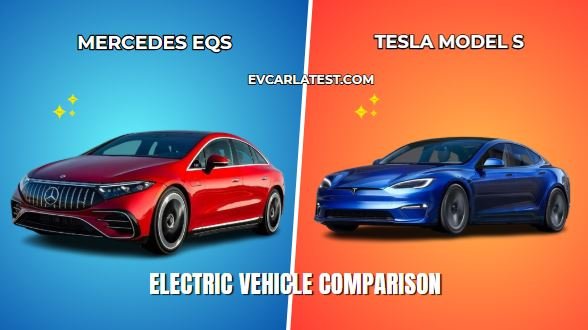
Mercedes EQS 2026 vs Tesla Model S 2025 Price, Availability & Market Fit
The 2026 EQS sedan starts at around $106,000 for the 450 4MATIC and rises to $123,900 for the 580 4MATIC — approximately ₦167M–₦195M NGN at current grey-market rates. The 2025 Tesla Model S starts at $79,990 for the AWD and $94,990 for the Plaid — roughly ₦126M–₦150M NGN. Neither is officially sold in Nigeria or most African markets, so buyers rely on grey importers with duty-inclusive pricing adding 30–60% on top. This page helps answer one question: if you can afford either, which one actually makes more sense for your needs and your roads?
Mercedes EQS 2026 vs Tesla Model S 2025 Ecosystem & Rival Context
Mercedes EQS buyers should also consider the EQC and EQE sedan, which offer lower entry points in the same electric lineup. Tesla Model S buyers may also weigh the Model X for family flexibility or the Model 3 for a more affordable entry. Outside both brands, the BMW i7 and Lucid Air sit in this same price tier — the i7 offers a more traditional luxury cabin, while the Lucid Air leads on range at 512 miles. However, the EQS vs Model S comparison remains the most direct because both prioritize long-distance capability alongside premium interiors, unlike performance-focused rivals such as the Porsche Taycan.
Pros & Cons
Mercedes EQS 2026: Its cabin comfort rivals the S-Class and matters most to buyers who spend long hours as passengers. The MBUX Hyperscreen on the 580 is one of the most immersive infotainment systems available in any EV today. Real-world range tested above EPA estimates, reducing charge anxiety on long intercity drives. However, the exterior design divides opinion and lacks the visual authority some buyers expect at this price. Service and parts access in Africa remains very limited, which raises long-term ownership risk.
Tesla Model S 2025: The Plaid trim delivers 1,020 horsepower and reaches 60 mph in under two seconds, making it the faster car by a wide margin for buyers who value that. The Supercharger network is the most reliable fast-charging infrastructure available globally. Over-the-air software updates keep the car current without a dealer visit. On the downside, the interior has aged — the yoke steering wheel is polarising and not suited to all driving conditions. There is no official service centre presence in most African markets, matching the EQS on that weakness.
Quick Verdict
Choose the EQS 2026 if your priority is ride comfort, cabin refinement, and the prestige of a traditional luxury marque. Choose the Model S 2025 if performance, charging speed, and long-term software support matter more to you. The Model S undercuts the EQS on price by roughly $26,000 at entry — a meaningful gap at grey-market import rates in Africa. Neither is a practical daily driver for buyers without home charging already in place.
| |
| Price | $94,000.00 $85,000.00 |
| Our Rating | |
| Brand | MERCEDES TESLA |
| Category | Electric Cars Electric Cars |
MODEL
| Available Trims / Variants |
Mercedes EQS 400 Mercedes EQS 450+ Mercedes EQS 500 4MATIC Mercedes EQS 580 4MATIC Tesla Model S Long Range Tesla Model S Plaid |
PRICE & AVAILABILITY
| Base Price (USD) |
€ 94,400 - Mercedes EQS 400 € 108,600 - Mercedes EQS 450+ € 123,300 - Mercedes EQS 500 4MATIC € 134,700 - Mercedes EQS 580 4MATIC $ 85,000 - Tesla Model S Long Range $ 100,000 - Tesla Model S Plaid |
| Availability Status | Coming soon. Expected release 2026, Q3 Available to order. Released 2025, June |
BATTERY & CHARGING
| Battery Capacity |
112 kWh usable - Mercedes EQS 400 122 kWh usable - Mercedes EQS 450+ 122 kWh usable - Mercedes EQS 500 4MATIC 122 kWh usable - Mercedes EQS 580 4MATIC 92.6 kWh usable, 100 kWh total - Tesla Model S Long Range 92.3 kWh usable, 100 kWh total - Tesla Model S Plaid |
| Range (WLTP/CLTC/EPA) |
508 mi WLTP - Mercedes EQS 400 575 mi WLTP - Mercedes EQS 450+ 544 mi WLTP - Mercedes EQS 500 4MATIC 544 mi WLTP - Mercedes EQS 580 4MATIC 410 mi EPA - Tesla Model S Long Range 368 mi EPA - Tesla Model S Plaid |
| DC Charging (Max kW) |
CCS 175 kW max at 400V CCS 350 kW max at 800V Supercharger V3 250 kW max, 10-80% in 30 min CCS |
| AC Charging (Max kW) | Type 2 11 kW (22 kW optional) Type 2 11 kW, 0-100% in 10 hours |
| Energy Consumption |
253 Wh/mi WLTP - Mercedes EQS 400 248 Wh/mi WLTP - Mercedes EQS 450+ 261 Wh/mi WLTP - Mercedes EQS 500 4MATIC 261 Wh/mi WLTP - Mercedes EQS 580 4MATIC 301 Wh/mi WLTP - Tesla Model S Plaid |
PERFORMANCE
| Power Output (kW / hp) |
RWD 367 hp (270 kW) - Mercedes EQS 400 RWD 408 hp (300 kW) - Mercedes EQS 450+ AWD 476 hp (350 kW) - Mercedes EQS 500 4MATIC AWD 585 hp (430 kW) - Mercedes EQS 580 4MATIC AWD 670 hp (415 kW) - Tesla Model S Long Range AWD 1020 hp (760 kW) - Tesla Model S Plaid |
| 0–100 km/h / 0-60 mph (seconds) The acceleration numbers are an easy way to compare car performance. We list either time from 0 to 100 km/h or time from 0 to 60mph, depending on which number(s) the manufacturers provide. The lower the acceleration time, the higher performance the car is. |
6.2 sec 0-62 mph - Mercedes EQS 400 5.9 sec 0-62 mph - Mercedes EQS 450+ 4.5 sec 0-62 mph - Mercedes EQS 500 4MATIC 4.1 sec 0-62 mph - Mercedes EQS 580 4MATIC 3.1 sec 0-60 mph (3.2 sec 0-62 mph) - Tesla Model S Long Range 2 sec 0-60 mph (2.1 sec 0-62 mph) - Tesla Model S Plaid |
| Torque (Nm) |
505 Nm (372 lb-ft) - Mercedes EQS 400 505 Nm (372 lb-ft) - Mercedes EQS 450+ 750 Nm (553 lb-ft) - Mercedes EQS 500 4MATIC 800 Nm (590 lb-ft) - Mercedes EQS 580 4MATIC 557 lb-ft (755 Nm) - Tesla Model S Long Range 1420 Nm (1047 lb-ft) - Tesla Model S Plaid |
| Top Speed (km/h / mph) |
130 mph (210 km/h)
130 mph (209 km/h) - Tesla Model S Long Range 200 mph (322 km/h) - Tesla Model S Plaid |
BODY & DIMENSIONS
| Dimensions (L×W×H mm) | 5216 x 1926 x 1512 mm (205.4 x 75.8 x 59.5 in) 197.7 x 86.2 x 56.3 in (5022 x 2190 x 1430 mm) |
| Trunk/Boot Capacity (L) | EU: 520 l, 1770 l max US: 28 ft³ |
| Body Style | 5 door liftback, 5 seats 5 door Liftback, 5 seats |
| Kerb Weight (kg) | US: 4561 lb curb |
| Ground Clearance (mm) | 134 mm (5.3 in) 4.6 - 6.2 in (117 - 158 mm) |
| Frunk/Bonnet Capacity (L) | No 3.1 ft³ |
SAFETY & DRIVER ASSISTANCE
| Autonomous Driving Level |
Level 3 autonomous driving (Drive Pilot – market dependent) Level 4 automated valet parking (Intelligent Park Pilot) Autopilot with full Self-Driving capability |
| Crash Test Ratings | NCAP 2021: 5 stars |
COMFORT & SEATING
| Seating Capacity | Heated and cooled front seats, heated and cooled outer rear seats, hot-stone massaging seats front and rear Heated and ventilated front seats, heated rear seats, heated third row seats |
DISPLAYS & CONNECTIVITY
| Centre Screen (inches) | 17.7" touchscreen 17.4" swivel touchscreen |
| Driver's Display (inches) | 12.3" 12.3" |
| Head-Up Display (HUD) | Yes, with augmented reality No |
TECHNOLOGY
ADDITIONAL SPECS
Note
| Additional Notes | Car wight is with mirrors unfolded |

|
Disclaimer Note
Specifications sourced from manufacturer data and may reflect WLTP, CLTC, or EPA test conditions. Import prices in your local are estimates based on grey-market landing costs and exclude duties, clearing fees, and local taxes. Figures are subject to change without notice. Always verify with your local importer before purchase. We can not guarantee that the information on this page is 100% correct