- Home
- Electric Vehicles
- Compare Electric Cars
- BYD Seal U vs Xiaomi SU7
BYD Seal U vs Xiaomi SU7
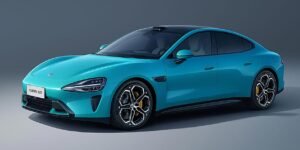
The BYD Seal U vs Xiaomi SU7 target different segments within the EV market. The BYD model is a mid size electric SUV designed for families who want space, higher seating position, and practical cargo capacity. The Xiaomi model is a large electric sedan focused on performance, technology integration, and long highway travel. Buyers usually choose the Seal U for practicality and choose the SU7 for performance and technology driven driving experience.
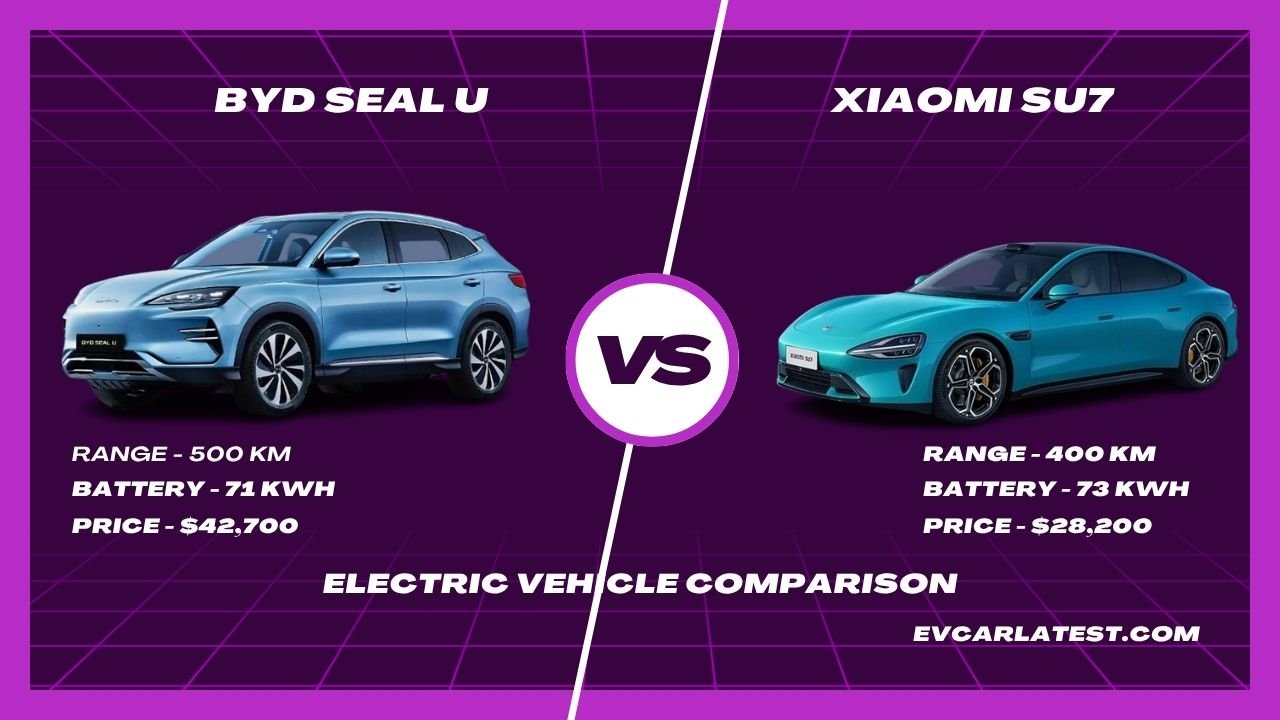
Range figures show a difference in efficiency and platform design. The BYD Seal U delivers around 420 km to 500 km WLTP depending on battery size. It uses battery packs between 71.8 kWh and 87 kWh. DC charging reaches up to about 140 kW with a 30 to 80 percent charge time near 27 to 28 minutes. The Xiaomi SU7 uses larger battery options from about 73.6 kWh up to about 101 kWh and real world mixed range around 480 to 600 km depending on version. DC charging reaches roughly 220 to 300 kW on higher trims due to its high voltage platform.
BYD Seal U vs Xiaomi SU7 Price
Price positioning differs by market strategy. The Seal U sits in the mid priced electric SUV category and launched in Europe around the low forty thousand euro range. The SU7 targets aggressive pricing in China with entry models around 215,900 yuan, placing it near the price level of many mid size EV sedans. Market availability also differs. BYD sells the Seal U across Europe and multiple global regions, while the SU7 remains mainly available in China with gradual expansion plans. This page helps readers decide between a practical electric SUV and a high tech electric sedan with stronger performance figures.
BYD Seal U offers spacious cabin layout for families, comfortable ride quality for daily driving, and practical SUV cargo capacity, though DC charging speed trails newer high voltage EV platforms and acceleration feels modest for the segment. Xiaomi SU7 delivers strong performance and acceleration figures, long driving range on higher trims, and advanced software integration with connected devices, though sedan body style reduces cargo flexibility and global availability remains limited.
QUICK VERDICT; Before Choosing for the BYD Seal U vs Xiaomi SU7, the BYD Seal U if your priority involves SUV practicality, family space, and global market support. Choose the Xiaomi SU7 if you prefer sedan driving dynamics, higher performance, and faster charging architecture.

| |
| Price | $42,000.00 $28,000.00 |
| Our Rating | |
| Brand | BYD Xiaomi |
| Category | Electric Cars Electric Cars |
MODEL
| Full Model Name | BYD Seal U EV |
| Segment / Class | Midsize/Compact SUV (C-SUV) |
| Available Trims / Variants |
BYD Seal U Comfort BYD Seal U Design Xiaomi SU7 Xiaomi SU7 Pro Xiaomi SU7 Max |
| Powertrain Options | Single front motor, RWD/FWD BEV (no AWD variant for the EV) |
PRICE & AVAILABILITY
| Base Price (USD) |
€ 42,000 -BYD Seal U Comfort € 47,000 - BYD Seal U Design € 28,500 - Xiaomi SU7 € 32,450 - Xiaomi SU7 Pro € 39,600 - Xiaomi SU7 Max |
| Availability Status |
On sale in select markets (Italy, Southeast Asia); not sold in UK (PHEV only there) Available to order. Released 2024, March |
| Markets Available | Europe (select countries), Southeast Asia, China |
| Brand / Manufacturer | BYD Auto |
BATTERY & CHARGING
| Battery Capacity |
71.8 kWh total - BYD Seal U Comfort 87 kWh total - BYD Seal U Design 73.6 kWh total - Xiaomi SU7 94.3 kWh total - Xiaomi SU7 Pro 101 kWh total - Xiaomi SU7 Max |
| Range (WLTP/CLTC/EPA) |
(WLTP): 420 km (Comfort) / 500 km (Design)
435 mi CLTC - Xiaomi SU7 516 mi CLTC - Xiaomi SU7 Pro 497 mi CLTC - Xiaomi SU7 Max |
| DC Charging (Max kW) |
CCS 115 kW, 30-80% in 27 min, 10-80% in 42 min -BYD Seal U Comfort CCS 140 kW, 30-80% in 28 min, 10-80% in 43 min - BYD Seal U Design CCS, 10-80% in 25 min - Xiaomi SU7 CCS, 10-80% in 30 min - Xiaomi SU7 Pro CCS, 10-80% in 19 min - Xiaomi SU7 Max |
| Charging Time (10–80%) | ~28 minutes (DC fast charge) |
| AC Charging (Max kW) |
Type 2 11 kW, 0-100% in 7.5 hours - BYD Seal U Comfort Type 2 11 kW, 0-100% in 9.3 hours - BYD Seal U Design Type 2 |
| Battery Warranty | Not officially confirmed for this market variant |
| Energy Consumption | Not officially confirmed |
PERFORMANCE
| Power Output (kW / hp) |
FWD 218 hp (160 kW) RWD 299 hp (220 kW) - Xiaomi SU7 RWD 299 hp (220 kW) - Xiaomi SU7 Pro AWD 673 hp (495 kW) - Xiaomi SU7 Max |
| 0–100 km/h / 0-60 mph (seconds) The acceleration numbers are an easy way to compare car performance. We list either time from 0 to 100 km/h or time from 0 to 60mph, depending on which number(s) the manufacturers provide. The lower the acceleration time, the higher performance the car is. |
9.3 sec 0-62 mph - BYD Seal U Comfort 9.6 sec 0-62 mph - BYD Seal U Design 5.3 sec 0-62 mph - Xiaomi SU7 5.7 sec 0-62 mph - Xiaomi SU7 Pro 2.8 sec 0-62 mph - Xiaomi SU7 Max |
| Motor Configuration | Single motor, front-mounted, PMSM |
| Torque (Nm) |
310 Nm (229 lb-ft) - BYD Seal U Comfort 330 Nm (243 lb-ft) - BYD Seal U Design 400 Nm (295 lb-ft) - Xiaomi SU7 400 Nm (295 lb-ft) - Xiaomi SU7 Pro 838 Nm (618 lb-ft) - Xiaomi SU7 Max |
| Top Speed (km/h / mph) |
109 mph (175 km/h) 130 mph (210 km/h) - Xiaomi SU7 130 mph (210 km/h) - Xiaomi SU7 Pro 165 mph (265 km/h) - Xiaomi SU7 Max |
BODY & DIMENSIONS
| Dimensions (L×W×H mm) | 4785 x 1890 x 1668 mm (188.4 x 74.4 x 65.7 in) 4997 x 1963 x 1455 mm (196.7 x 77.3 x 57.3 in) |
| Trunk/Boot Capacity (L) |
EU: 552 l, 1440 l max EU: 517 l - Xiaomi SU7 EU: 517 l - Xiaomi SU7 Pro EU: 493 l - Xiaomi SU7 Max |
| Body Style | 5 door SUV, 5 seats 4 door sedan, 5 seats |
| Kerb Weight (kg) |
EU: 2020 kg unladen, 2430 kg gross - BYD Seal U Comfort EU: 2147 kg unladen, 2557 kg gross - BYD Seal U Design EU: 1980 kg unladen - Xiaomi SU7 EU: 2205 kg unladen - Xiaomi SU7 Max |
| Ground Clearance (mm) | Not officially confirmed |
| Frunk/Bonnet Capacity (L) | Not applicable/not confirmed 105 l |
| Sunroof | Panoramic sunroof (standard) |
SAFETY & DRIVER ASSISTANCE
| ADAS Features | Adaptive cruise control, lane-keeping assist, rear cross-traffic alert, 360° camera |
| Autonomous Driving Level | Level 2 Autonomous driving system |
| Crash Test Ratings |
NCAP 2023: 5 stars |
| Over-the-Air (OTA) Safety Updates | Yes |
COMFORT & SEATING
| Seating Capacity | 5 Heated and ventilated front seats |
| Seat Material | Vegan (synthetic) leather |
| Wireless Charging | Yes, dual pad |
DISPLAYS & CONNECTIVITY
| Centre Screen (inches) |
15.6-inch rotating touchscreen 16.1" touchscreen |
| Mirror Link / Apple CarPlay / Android Auto | Both supported |
| Driver's Display (inches) | 12.3-inch digital cluster 7.1" |
| Head-Up Display (HUD) | Yes Yes |
TECHNOLOGY
| Vehicle-to-Load (V2L) | Yes |
| Vehicle-to-Grid (V2G) | Not confirmed |
| Over-the-Air Map Updates | Yes (via DiLink system) |
ADDITIONAL SPECS
| Headlight Type (LED/Matrix/Laser) | Full LED with adaptive high-beam |
| Adaptive Headlights | Not Confirmed |
| Sound System Brand | Infinity, 10 speakers |
| Speaker Count | Built-in (no automatic charging-stop route planning) |
| Navigation System | Not officially confirmed |
| Face Recognition | Not officially confirmed |
| Fingerprint Sensor | Not officially confirmed |
| Remote Parking | Not officially confirmed |
| Official Dealer Network | Not officially confirmed |
| Service Interval | Not officially confirmed |
| Roadside Assistance | Not officially confirmed |
Note
| Data Source | BYD press materials, EV Database, Motor1, Carwow, paultan.org |
| Last Updated | September 2026 |
| Additional Notes | Some tech specs (screen, HUD, sound system) are shared across Seal U trims including the PHEV, so may carry over 1:1 to the EV. Steel-Aluminum Alloy body (51000 Nm/degree torsional stiffness) |
| Editor's Note | Specs vary by market |
|
Disclaimer Note
Specifications sourced from manufacturer data and may reflect WLTP, CLTC, or EPA test conditions. Import prices in your local are estimates based on grey-market landing costs and exclude duties, clearing fees, and local taxes. Figures are subject to change without notice. Always verify with your local importer before purchase. We can not guarantee that the information on this page is 100% correct