There were more than 7 million public EV charging points worldwide at the end of 2025, and the network is on track to cross 9 million by the close of 2026. That’s roughly 1.8 million new public chargers added in a single year — a 33% jump — with China alone responsible for about two-thirds of the global total. Below, we break down the country-by-country numbers, the shift toward ultra-fast DC charging, market value projections, and what the infrastructure buildout looks like heading into 2027.
Quick Summary Box
| Metric | 2025 Actual | 2026 Projection |
|---|---|---|
| Global public charging points | 7.11 million | ~9.01 million |
| China’s share of global total | ~65–67% | ~68% (6.1M+ points) |
| Europe public charging points | ~1.25 million | ~1.47 million |
| US public charging points | ~238,000 | ~275,000 |
| Global market value | ~$50.7B | ~$46–65B (est. range across sources) |
- China dominates deployment, adding over 1.3 million new public chargers in 2026 alone — more than the rest of the world combined.
- Fast and ultra-fast DC charging is scaling up fast, with 350 kW+ stations becoming standard on new highway corridors and pilot projects testing 1.5 MW systems.
- US growth has slowed relative to China and Europe, linked to the phase-out of federal EV incentives and a NEVI funding pause that ran from February 2025 to January 2026.
- Private home charging still outnumbers public charging by a wide margin — over 43 million home charge points were in service globally by the end of 2025.
- Market value figures vary significantly by research firm depending on methodology (hardware-only vs. hardware + services), so treat dollar projections as directional rather than exact.
Global Charging Infrastructure: The 2026 Numbers
How Many EV Charging Stations Exist Worldwide?
By the end of 2025, the global public charging network had passed 7.11 million charging points across more than 30 countries, according to IEA and DIGITIMES Research tracking. That represented annual growth of roughly 33%, matching the pace of global electric light-duty vehicle (LDV) fleet expansion. Industry forecasts put the 2026 year-end total at approximately 9.01 million public charging points, with roughly 1.9 million new installations added over the course of the year.
For context: the number of chargers added in a single recent year is close to matching the entire global installed base as it stood in 2020 — a sign of how compressed the buildout timeline has become.
Regional Breakdown
China remains the dominant force in public charging infrastructure, accounting for approximately 65–67% of the global public charging stock. China’s total is projected to reach 6.1 million public charging points by the end of 2026, up from 4.76 million in 2025 — an addition of more than 1.3 million points in a single year. This is supported by continued national EV sales volume and government policy, even as China reinstates a 5% purchase tax on new energy vehicles in 2026.
Europe is projected to add over 219,000 public charging points in 2026, bringing its regional total to roughly 1.47 million. Growth is being driven by stricter carbon emission limits on new vehicles and national purchase subsidy programs. Under the EU’s Alternative Fuels Infrastructure Regulation (AFIR), coverage requirements along major road corridors continue to push deployment, particularly for fast and ultra-fast chargers.
The United States added a record number of public charging points in 2025 — 20% more than the prior year — but its overall base remains comparatively small: about 3% of the global public charging total against roughly 10% of global electric LDV stock. The US ended 2025 with close to 238,000 public charging points and is projected to add only around 37,000 more in 2026, reaching approximately 275,000. Growth momentum has cooled following the expiration of federal EV tax credits and a pause in the National EV Infrastructure (NEVI) Formula Program, which halted new obligations from February 2025 through January 2026. As of April 2026, roughly 550 NEVI-funded fast chargers were operational across 19 states, with about 1,000 more chargers fully funded and in the pipeline.
India saw public charging points grow 15% in 2025, reaching around 88,000 — still a fraction of China’s or Europe’s totals, but growing off government-backed funding programs targeting more than 22,000 additional fast chargers through 2028.
Southeast Asia is seeing some of the fastest relative growth rates for fast chargers specifically. Malaysia’s public fast-charger count, for example, grew more than 70% year-on-year in 2025.
The Shift Toward Fast and Ultra-Fast DC Charging
The composition of the global charging network is changing as much as its size. AC (Level 2) charging still holds the largest installed base worldwide — largely due to residential, workplace, and destination charging use cases — but the fastest-growing segment by share is DC fast charging.
- Fast chargers are projected to account for roughly 51.7% of the global charging station market by share in 2026, up sharply from a minority position just three years earlier.
- In the EU, about 20% of ultra-fast chargers already operate at 350 kW or higher.
- Several manufacturers are piloting Megawatt Charging Systems (MCS) rated up to 1.5 MW, aimed primarily at heavy-duty commercial EVs but with longer-term relevance for passenger vehicles too.
- In Europe specifically, ultra-fast chargers (150 kW+) grew roughly 50% in a recent year and now represent close to 10% of all public fast chargers on the continent.
Note: Megawatt-class deployment remains early-stage and largely limited to pilot corridors rather than widespread commercial rollout as of mid-2026.
Public vs. Private Charging
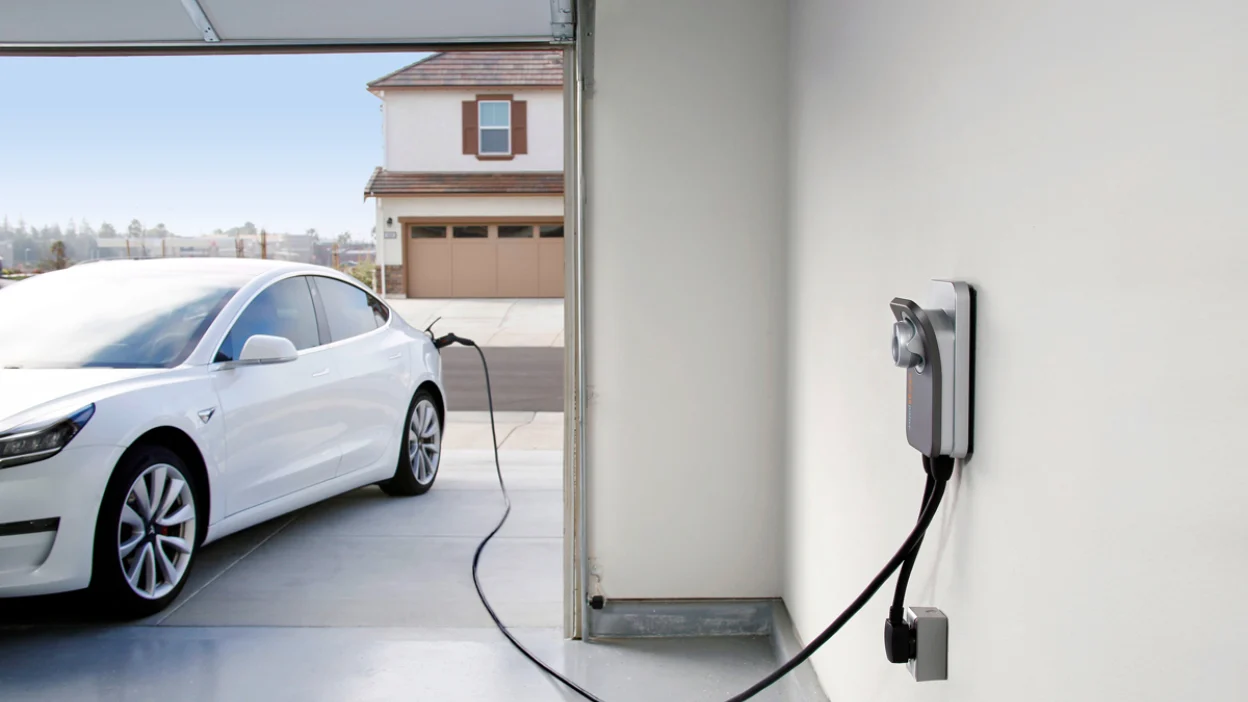
Public charging infrastructure gets most of the headlines, but private and home charging still dominates by volume. The IEA estimates more than 43 million private light-duty vehicle charging points were in service globally by the end of 2025, supporting roughly 76 million electric cars on the road. Public charging remains critical for drivers without home charging access, apartment dwellers, and long-distance travel — which is why fast-charging corridor buildout is drawing disproportionate investment relative to its share of total charger count.
Market Value Projections for 2026
Market sizing estimates vary considerably depending on scope (hardware only vs. hardware, software, and installation services combined) and forecasting methodology:
- One estimate places the global EV charging station market at $46.80 billion in 2026, growing toward $503.69 billion by 2033.
- Another puts 2026 value at $38.55 billion, reaching $120.85 billion by 2033.
- A separate 2025-based estimate values the market at $50.7 billion, projecting growth to $65.7 billion in 2026 and $405.6 billion by 2035.
These figures differ by tens of billions of dollars depending on the research firm, so they should be read as directional indicators of strong double-digit growth rather than a single authoritative number.
What’s Next: The Road to 2030 and 2035
Under the IEA’s Current Policies Scenario, the global public charging network needs to grow roughly sixfold by 2035 to keep pace with projected EV fleet expansion, which is expected to exceed 450 million vehicles across all categories (excluding two/three-wheelers) by that year. Some forecasts put the 2030 public charge point total as high as 40 million worldwide — nearly eightfold today’s stock — with Europe’s public network alone potentially doubling from roughly 1 million to more than 2 million points.
Country Comparison Table: Public Charging Points
| Country/Region | 2025 Total | 2026 Projected Total | YoY Growth | Global Share (2026) |
|---|---|---|---|---|
| China | 4.76 million | ~6.1 million | +28% | ~68% |
| Europe (total) | ~1.25 million | ~1.47 million | +18% | ~16% |
| United States | ~238,000 | ~275,000 | +16% | ~3% |
| India | 88,000 | Not disclosed (2026 figure) | +15% (2025) | <1% |
| Rest of world | ~780,000 | Not disclosed (2026 figure) | Varies by market | ~12% (est.) |
Figures compiled from IEA Global EV Outlook 2026 and DIGITIMES Research; regional totals are rounded and may not sum exactly due to differing reporting methodologies across sources.
Bottom Line
Global EV charging infrastructure is expanding faster than at any point since public networks began scaling, with China alone responsible for the majority of new stations added in 2026. For drivers and investors, the clear signal is that fast and ultra-fast DC charging is where the growth is concentrated — not just raw station counts. The US remains the market to watch for a possible rebound once NEVI funding fully resumes, but for now, China and Europe are setting the pace.