Yes — you can own and charge an EV in 2026 without a driveway or garage, but it takes more planning than owning a home charger. Roughly a third of U.S. households live in multifamily housing, and surveys show about one-third of current EV-owning renters have no on-site charging at all. That gap hasn’t stopped adoption: interest in EV charging among apartment residents has climbed from the high-20% range to close to a third of all renters in the past two years. The real question isn’t “can renters own an EV” — it’s “which charging setup fits your building, your lease, and your daily mileage.” Below, we break down the costs, the laws, and the realistic options, ranked by how practical they actually are.
Quick Summary Box
| Takeaway | Why It Matters |
|---|---|
| ~33% of EV-owning renters have zero on-site charging | Public charging and workplace charging are filling the gap, but unevenly |
| Home charging still costs 3–4x less than DC fast charging | ~$0.16–$0.18/kWh at home vs. $0.34–$0.60/kWh at a fast charger |
| “Right-to-charge” laws mostly protect owners, not renters | Tenants still need written landlord approval in nearly every state |
| A NEMA 14-50 outlet install runs $150–$400 | Cheaper and less disruptive than a hardwired wall charger |
| New multifamily construction rules are tightening in 2026 | California’s CALGreen code now requires EV-ready wiring at every assigned space in new builds |
The Real State of Apartment EV Charging in 2026
Multifamily EV charging is no longer a fringe issue — it’s becoming a leasing and retention factor. Property operators are starting to treat charger access the way they treated in-unit Wi-Fi a decade ago: a baseline expectation, not a luxury amenity. On the ground, this is already showing up in adoption behavior. Some properties have reported that installing even a small number of Level 2 chargers is enough to convert previously EV-hesitant residents into buyers, simply because the access removed the biggest psychological barrier to ownership.
At the same time, the underlying gap is real. Nearly half of renter households already spend over 30% of their income on housing, and many simply don’t know what charging options exist at their building. In parts of California, close to a fifth of low-income renters surveyed didn’t even know whether their building offered charging, and roughly a third weren’t sure whether they were allowed to install their own.
The infrastructure side is catching up, just not evenly. Private-sector partnerships are rolling out thousands of new charging ports at multifamily properties this year, and utilities in several states are beginning to fund make-ready electrical work for apartment buildings rather than leaving the full cost to owners or tenants.
What Changed Going Into 2026
New construction rules are the biggest structural shift. California’s updated CALGreen code, effective January 1, 2026, requires a low-power Level 2 EV charging receptacle at every assigned parking space in new multifamily developments — a significant jump from the roughly 40% EV-ready coverage required under the prior code. That only applies to new buildings, though. If you’re renting in an existing building, you’re still working within older electrical infrastructure and older lease terms.
The Three Realistic Charging Tiers for Renters
1. Level 1 (standard 120V outlet). Requires no electrical work and no landlord sign-off if you’re just using an existing outlet, but it only adds a few miles of range per hour — workable for low-mileage drivers, impractical as a sole solution for most others.
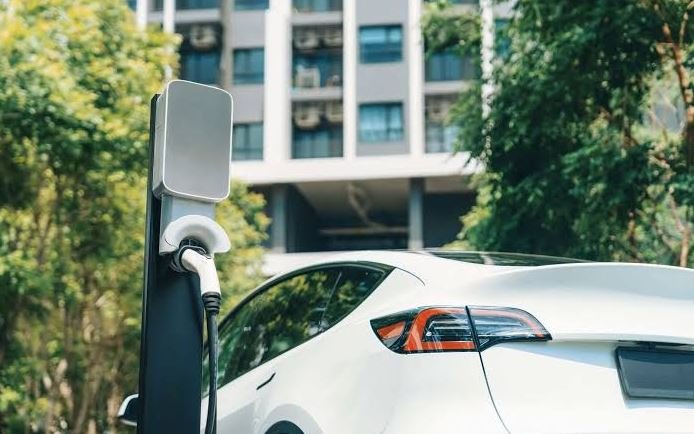
2. Level 2 (240V, portable or hardwired). This is the sweet spot for renters. If your parking space already has a 240V outlet — even a dryer-style NEMA 14-50 — a portable Level 2 charger plugs in with no installation and no landlord approval needed, and you take it with you when you move. If there’s no outlet, requesting one installed is a much smaller ask than requesting a full hardwired charging station.
3. Public and workplace charging. Public Level 2 stations and DC fast chargers fill the gaps, but they cost meaningfully more per mile than charging at home, and reliability still varies by network and location.
Right-to-Charge Laws: What They Actually Cover
“Right-to-charge” has become a common phrase in EV coverage, but it’s frequently misunderstood — especially by renters. These laws generally limit how much an HOA or condo association can block a charger installation. States including California, Colorado, Florida, New York, Oregon, Texas, and Virginia have some version of this protection, and more states have bills pending.
The catch: most of these laws were written for condo and single-family HOA owners, not apartment tenants. Renters typically still need written landlord approval before installing any equipment, even in a strong right-to-charge state. California is the most tenant-specific example — under Civil Code Section 1947.6 (originally AB 2565, 2014), landlords must approve a written tenant request to install a charging station at the tenant’s own expense, provided the tenant meets specific conditions. A 2022 update (AB 2557) also requires landlords with five or more units to respond to a request within 30 days.
In every version of these laws, one thing stays consistent: the tenant pays. Equipment, installation, permits, ongoing electricity, and often removal at move-out are the renter’s responsibility, not the landlord’s, even where the law guarantees the right to install.
How to Actually Get Landlord Approval
- Request a simple 240V outlet (NEMA 14-50 or 6-50) instead of a hardwired charging station — it’s a smaller ask and works for any future tenant
- Offer to cover installation cost using a licensed electrician of your choice
- Propose a flat monthly electricity surcharge ($30–$50/month is a common range) instead of submetering disputes
- Put the request in writing and reference your state’s right-to-charge law if one applies, framed collaboratively rather than as a legal threat
- Frame the upgrade as a property improvement that increases the unit’s appeal to future EV-driving tenants
What Charging Actually Costs, By Location
This is where renters either save money or quietly overspend. The gap between home charging and public fast charging is large enough to change the entire economics of EV ownership if you’re relying on public infrastructure full-time.
| Charging Type | Typical Cost | Cost per 100 Miles* | Speed |
|---|---|---|---|
| Home / Level 1 (120V outlet) | ~$0.16–$0.18/kWh (US avg. residential rate) | $4–$6 | 3–5 miles of range/hour |
| Home / Level 2 (240V, dedicated circuit) | Same per-kWh rate as home electricity | $4–$6 | 25–40 miles of range/hour |
| Public Level 2 | $0.20–$0.45/kWh, or $1–$5/hour flat | $8–$12 | 10–30 miles of range/hour |
| Public DC Fast Charging | $0.34–$0.60/kWh (national average ~$0.47–$0.53/kWh) | $13–$20 | 150–250 miles added in 20–40 minutes |
*Estimates based on average 2026 U.S. electricity and network pricing; your actual cost depends on your state’s electricity rate, your vehicle’s efficiency, and which network you use. ⚠️ Regional and time-of-use pricing can shift these numbers significantly.
The practical takeaway: a renter who can secure even occasional access to a 240V outlet — through a landlord-approved install, a workplace charger, or a nearby public Level 2 station — will spend a fraction of what a renter relying entirely on DC fast charging pays over a year.
Bottom Line
Renting doesn’t rule out EV ownership in 2026, but it does change the strategy: the goal isn’t finding a perfect charging setup, it’s building one dependable primary option — ideally a landlord-approved 240V outlet or a portable Level 2 charger — plus a backup like workplace or public Level 2 charging for the rest. Skip the assumption that “no garage” means “no EV,” but also skip the assumption that public fast charging alone will be cheap or convenient enough for daily use. For most apartment dwellers, the smartest first move is a written, cost-covered request to the landlord for a simple 240V outlet — not a request for a full charging station.
⚠️ Note: Cost figures and legal references above are general U.S. averages and statutory summaries for 2026. Rates, laws, and program details vary by state, utility, and building — verify locally