- Home
- Electric Vehicles
- Compare Electric Cars
- Hyundai Ioniq 5 vs Kia EV5
Hyundai Ioniq 5 vs Kia EV5
Hyundai Ioniq 5 and Kia EV5 sit in the compact to midsize electric crossover class. Both target drivers moving from petrol SUVs toward battery vehicles with modern tech and daily usability. The Ioniq 5 focuses on fast charging and performance-leaning trims. The EV5 targets family SUV buyers who want simple design, practical space, and lower entry pricing.
Range figures sit close. The Hyundai model reaches about 507 km WLTP in long-range rear-drive form. The Kia model reports about 500 km WLTP-equivalent depending on battery pack. Charging tech shows a clear difference. The Ioniq 5 uses an 800-volt platform which supports ultra-fast DC charging up to about 350 kW with 10–80 percent refill near 18 minutes. The EV5 runs a 400-volt system with DC speeds near 140 kW. A 10–80 percent refill usually lands near 30 minutes.
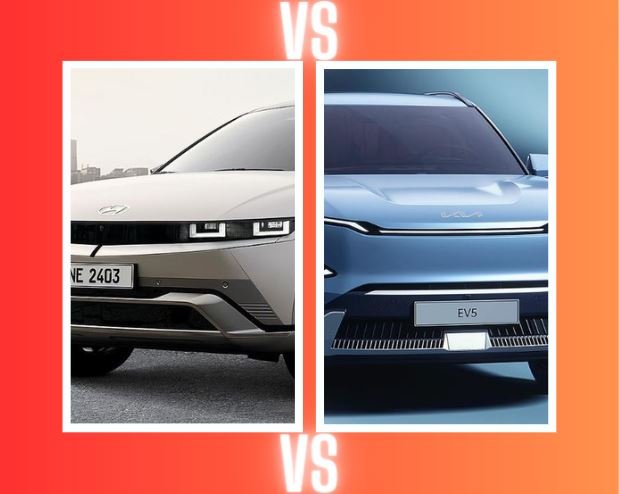
Price structure separates the two. The Ioniq 5 sits in a higher bracket across Europe, Korea, and North America. The EV5 enters the market as a lower priced compact electric SUV. Market reach also differs. The Hyundai model sells globally across major EV markets. The Kia EV5 started in China and Australia with gradual expansion. This comparison guides buyers choosing between faster charging performance and a lower priced family EV.
Within the same brands, each model sits beside other electric vehicles. Hyundai builds a wider Ioniq line which includes the sedan-focused Hyundai Ioniq 6 and the smaller Hyundai Kona Electric. Kia places the EV5 between the sporty Kia EV6 and the large three-row Kia EV9 in its EV lineup.
Ioniq 5 pros include ultra-fast charging capability, strong acceleration in dual-motor trims, and a spacious flat-floor interior. Ioniq 5 cons include higher purchase price and range drop in AWD trims. EV5 pros include lower entry cost, practical SUV cabin layout, and competitive driving range for daily use. EV5 cons include slower charging speeds and fewer global trim options.
QUICK VERDICT; Choose the Ioniq 5 for faster charging, stronger performance trims, and wider global support. Choose the EV5 for lower price positioning and straightforward family SUV practicality.
Related EV comparisons
- Kia EV4 sedan vs Kia EV3
- Kia EV4 sedan vs Kia EV6
- Kia EV4 hatchback vs Kia EV3
- Kia EV4 hatchback vs Kia EV6
- Hyundai Ioniq 9 vs Hyundai Ioniq 5
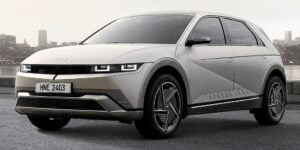
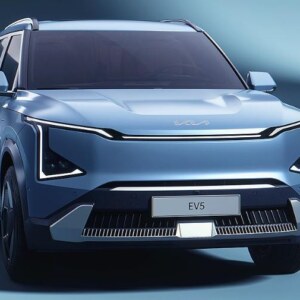
| |
| Price | $44,000.00 $40,000.00 |
| Our Rating | |
| Brand | Hyundai KIA |
| Category | Electric Cars Electric Cars |
MODEL
| Full Model Name | Kia EV5 |
| Segment / Class | C-Segment Compact Electric SUV |
| Available Trims / Variants |
Hyundai Ioniq 5 63kWh RWD Hyundai Ioniq 5 84kWh RWD Hyundai Ioniq 5 84kWh AWD Kia EV5 Standard Range FWD Kia EV5 Long Range FWD Kia EV5 Long Range AWD Kia EV5 GT |
| Powertrain Options | Single Motor FWD · Dual Motor AWD |
PRICE & AVAILABILITY
| Base Price (USD) |
€ 44,000 £ 40,000 - Hyundai Ioniq 5 63kWh RWD € 51,700 £ 43,400 - Hyundai Ioniq 5 84kWh RWD € 59,400 £ 50,900 - Hyundai Ioniq 5 84kWh AWD ~$40,000 est. (Standard Range); GT from €59,990 Germany |
| Availability Status | Available to order. Released 2024, July On sale — GT available Germany from May 2026; base trims limited markets |
| Markets Available | South Korea · Germany (GT confirmed) · select European markets |
| Brand / Manufacturer | Kia (Hyundai Motor Group) |
BATTERY & CHARGING
| Battery Capacity |
63 kWh total - Hyundai Ioniq 5 63kWh RWD 84 kWh total - Hyundai Ioniq 5 84kWh RWD 84 kWh total - Hyundai Ioniq 5 84kWh AWD 60.3 kWh total - Kia EV5 Standard Range FWD 81.4 kWh total - Kia EV5 Long Range FWD 81.4 kWh total - Kia EV5 Long Range FWD 81.4 kWh total - Kia EV5 GT |
| Range (WLTP/CLTC/EPA) |
273 mi WLTP (240 mi EPA) - Hyundai Ioniq 5 63kWh RWD 320 mi WLTP (310 mi EPA) - Hyundai Ioniq 5 84kWh RWD 308 mi WLTP (280 mi EPA) - Hyundai Ioniq 5 84kWh AWD 336 mi (541 km) — Long Range AWD · 476 km — GT (WLTP official) |
| DC Charging (Max kW) |
CCS 180 kW, 10-80% in 18 min - Hyundai Ioniq 5 63kWh RWD CCS 235 kW, 10-80% in 18 min - Hyundai Ioniq 5 84kWh RWD CCS 235 kW, 10-80% in 18 min - Hyundai Ioniq 5 84kWh AWD CCS, 30-80% in 27 min - Kia EV5 Standard Range FWD CCS, 30-80% in 27 min - Kia EV5 Long Range FWD CCS, 140 kW max, 30-80% in 27 min - Kia EV5 Long Range FWD CCS, 140 kW max, 10-80% in 30 min - Kia EV5 GT |
| Charging Time (10–80%) | 30 min (GT & Long Range at 150 kW) |
| AC Charging (Max kW) |
Type 2 11 kW
Type 2 7 kW Type 2 11 kW |
| Battery Warranty | 7 years / 150,000 km |
| Energy Consumption |
251 Wh/mi WLTP - Hyundai Ioniq 5 63kWh RWD 277 Wh/mi WLTP - Hyundai Ioniq 5 84kWh RWD 293 Wh/mi WLTP - Hyundai Ioniq 5 84kWh AWD 186 Wh/km rated · 208 Wh/km real-world est. (GT) |
PERFORMANCE
| Power Output (kW / hp) |
RWD 170 hp (125 kW) - Hyundai Ioniq 5 63kWh RWD RWD 228 hp (168 kW) - Hyundai Ioniq 5 84kWh RWD AWD 325 hp (239 kW) - Hyundai Ioniq 5 84kWh AWD FWD 218 hp (160 kW) - Kia EV5 Standard Range FWD FWD 218 hp (160 kW) - Kia EV5 Long Range FWD AWD 306 hp (225 kW) - Kia EV5 Long Range FWD AWD 302 hp (225 kW) - Kia EV5 GT |
| 0–100 km/h / 0-60 mph (seconds) The acceleration numbers are an easy way to compare car performance. We list either time from 0 to 100 km/h or time from 0 to 60mph, depending on which number(s) the manufacturers provide. The lower the acceleration time, the higher performance the car is. |
8.5 sec 0-62 mph - Hyundai Ioniq 5 63kWh RWD 7.5 sec 0-62 mph - Hyundai Ioniq 5 84kWh RWD 5.3 sec 0-62 mph - Hyundai Ioniq 5 84kWh AWD 6.2 sec 0-62 mph - Kia EV5 GT |
| Motor Configuration | Single Motor FWD (Standard & Long Range FWD) · Dual Motor AWD (Long Range AWD & GT) |
| Torque (Nm) |
350 Nm (258 lb-ft) - Hyundai Ioniq 5 63kWh RWD 350 Nm (258 lb-ft) - Hyundai Ioniq 5 84kWh RWD 605 Nm (446 lb-ft) - Hyundai Ioniq 5 84kWh AWD 310 Nm (229 lb-ft) - Kia EV5 Standard Range FWD 310 Nm (229 lb-ft) - Kia EV5 Long Range FWD 310 Nm (229 lb-ft) - Kia EV5 Long Range FWD |
| Top Speed (km/h / mph) | 115 mph (185 km/h) 180 km/h (GT) |
BODY & DIMENSIONS
| Dimensions (L×W×H mm) | 4655 x 1890 x 1605 mm (183.3 x 74.4 x 63.2 in) 4,610 × 1,875 × 1,685 mm |
| Trunk/Boot Capacity (L) | EU: 527 l, 1587 l max 566 L (GT) · 1,650 L max (seats folded) |
| Body Style | 5 door crossover, 5 seats 5 door SUV, 5 seats |
| Kerb Weight (kg) |
EU: 1965 kg unladen, 2470 kg gross - Hyundai Ioniq 5 63kWh RWD EU: 2070 kg unladen, 2590 kg gross - Hyundai Ioniq 5 84kWh RWD EU: 2175 kg unladen, 2685 kg gross - Hyundai Ioniq 5 84kWh AWD 1,870 kg (Standard Range FWD) · 2,205 kg (GT) |
| Ground Clearance (mm) | 160 mm (6.3 in) |
| Frunk/Bonnet Capacity (L) |
57 l 57 l 24 l 44 L |
| Sunroof | Glass sunroof |
SAFETY & DRIVER ASSISTANCE
| ADAS Features | Forward Collision-Avoidance Assist · Lane Keeping Assist · Lane Following Assist · Driver Attention Warning · High Beam Assist · Blind-Spot Collision-Avoidance Assist · Rear Cross-Traffic Collision-Avoidance Assist · AEB with Pedestrian Recognition · Reverse Parking Collision-Avoidance · Front/Rear Parking Distance Warning · Safe Exit Assist |
| Autonomous Driving Level | Level 2 (ADAS) |
| Crash Test Ratings | Euro NCAP 2025 — Adult 83% · Child 85% · VRU 74% · Safety Assist 80% |
COMFORT & SEATING
| Seating Capacity | Heated and ventilated front seats, heated rear seats 5 |
DISPLAYS & CONNECTIVITY
| Centre Screen (inches) | 12.3" touchscreen 12.3" touchscreen |
| Mirror Link / Apple CarPlay / Android Auto | Yes — wireless |
| Driver's Display (inches) | 12.3" 12.3" |
| Head-Up Display (HUD) | Yes, projector type Yes |
TECHNOLOGY
| Vehicle-to-Load (V2L) | Yes — 3.6 kW AC · exterior Type 2 adapter · interior standard socket |
| Vehicle-to-Grid (V2G) | Announced |
ADDITIONAL SPECS
Note
| Data Source | evcarlatest.com · ev-database.org · Kia manufacturer data |
| Last Updated | June 2026 |
| Editor's Note | Standard Range DC charging peak kW, V2G/V2H output figures, and African pricing are unconfirmed — do not publish as confirmed specs |

|
Disclaimer Note
Specifications sourced from manufacturer data and may reflect WLTP, CLTC, or EPA test conditions. Import prices in your local are estimates based on grey-market landing costs and exclude duties, clearing fees, and local taxes. Figures are subject to change without notice. Always verify with your local importer before purchase. We can not guarantee that the information on this page is 100% correct