Hyundai Ioniq 5 vs Kia EV6
The Hyundai Ioniq 5 and Kia EV6 are mid-size electric crossovers built on the same 800V E-GMP platform by the Hyundai Motor Group — two brands, one DNA, very different personalities. The Ioniq 5 targets families and daily commuters who want a roomy, comfortable cabin and futuristic retro styling, while the EV6 is tuned for buyers who want a sportier, more driver-focused experience without sacrificing practicality. With both models now arriving in African markets through parallel imports and select dealers in South Africa, Kenya, and Nigeria, this comparison matters more than ever for buyers deciding where to put serious money.
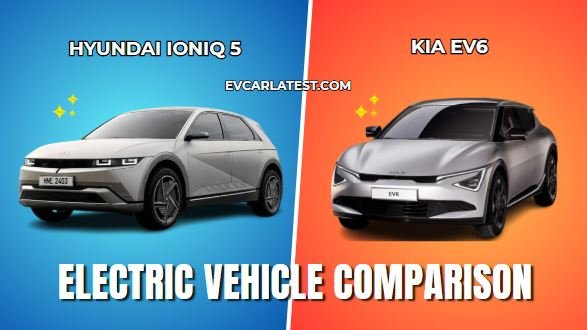
The Ioniq 5 delivers an EPA-estimated maximum range of 303 miles on its long-range rear-wheel-drive trim, while the EV6 edges ahead at up to 310 miles — and the 2025 model pushes that further. Kia states the 2025 EV6 can go from 10% to 80% charge in roughly 20 minutes on a compatible DC fast charger, with available EPA-estimated range reaching 319 miles on certain trims. The Ioniq 5 matches this with its own 800V ultra-fast charging support. On a 350kW fast charger, both can replenish from 10% to 80% in approximately 18 minutes, and both support full charging via Level 2 in around seven hours. For African buyers relying on home solar or a public charger, the overnight Level 2 figure is the one that matters most day-to-day.
The 2025 Ioniq 5 carries a starting MSRP of approximately $42,600, with the EV6 entering at around $42,900. Both escalate significantly toward the top — the EV6 GT AWD reaches over $61,000. In Nigeria, expect grey-market landed costs of roughly ₦65M–₦90M for standard trims, depending on year and duty calculations; South African buyers can access both through select Hyundai and Kia dealers. The Ioniq 5 is the better pick for buyers who want more interior space and a lower entry cost. The EV6 suits buyers willing to pay a slight premium for sportier dynamics and slightly better official range figures.
Within Hyundai’s lineup, the Ioniq 5 sits between the sleeker Ioniq 6 sedan (longer range, lower drag) and the larger Ioniq 9 SUV — both worth considering if range or space is the priority. On the Kia side, the EV6 sits above the compact EV3 and below the three-row EV9, making it the sweet spot for buyers who need one car that does everything. Outside both brands, the Tesla Model Y and Volkswagen ID.4 compete at similar price points and are worth a test drive, though neither matches the 800V charging speed that makes both Korean models stand out for long-distance use.
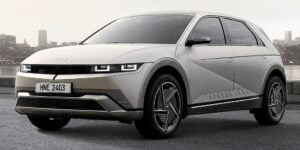
Hyundai Ioniq 5 The Ioniq 5’s flat-floor interior gives rear passengers genuinely generous legroom, which matters on long Nigerian or Kenyan highway runs where comfort is non-negotiable. Its slightly lower starting price means buyers get more EV for less outlay, a real advantage when import duties already inflate final costs. The retro-futuristic design is distinctive enough that it draws attention on any road — an underrated benefit in markets where EVs are still a statement. On the downside, its reliability score sits at the lower end of average among its peers, which raises some concern for buyers far from an authorised service centre. Its cargo volume, while decent, feels limited for buyers who regularly load up for family road trips.
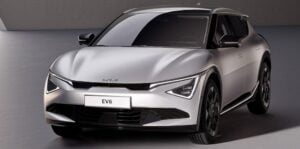
Kia EV6 The EV6’s sportier suspension tuning makes it the more engaging car to drive on open roads, which buyers who cover long inter-city distances will genuinely appreciate. Its NACS compatibility on newer trims expands charging network access, a future-proofing advantage as charging infrastructure slowly grows across Africa. Its slightly higher EPA range ceiling gives it a practical edge for buyers who cannot always count on a charger at their destination. However, the EV6’s firmer ride becomes fatiguing on the pothole-heavy roads common across much of West and East Africa. Its interior materials, while stylish, fall slightly short of the Ioniq 5’s quality on equivalent trim levels.
⚡ Quick Verdict
Choose the Ioniq 5 if a spacious cabin, smoother ride, and lower entry price matter most to you — it is the more practical, family-first choice. Choose the EV6 if driving dynamics, slightly superior range, and a sportier profile are your priorities. Both share the same fast-charging architecture, so neither punishes you on road trips. The real decision comes down to how you use the car daily: city comfort favours the Ioniq 5, open-road performance favours the EV6.
FAQ
Is the Hyundai Ioniq 5 better than the Kia EV6 for long trips?
Both use the same 800V platform and can charge from 10% to 80% in under 20 minutes on a fast charger, making both strong long-distance options. The EV6 has a slight range advantage on paper, but the Ioniq 5’s more comfortable ride reduces fatigue on extended journeys. The better choice depends on which trade-off you prefer.
Which is cheaper to maintain, the Ioniq 5 or the EV6?
Running costs are broadly similar since both share platform components and have no engine oil, timing belt, or transmission fluid to service. Tyre wear may be slightly higher on the EV6 due to its firmer, performance-oriented suspension setup. In markets like Nigeria where spare parts availability is limited, proximity to an authorised service centre matters more than brand.
Is the Kia EV6 available in Nigeria or Africa?
The EV6 is not officially sold through local Kia dealers in Nigeria but is available through parallel importers and grey-market channels, typically as a used model from the UK, US, or Korea. In South Africa, Kia has an official presence and the EV6 is sold through authorised dealerships. Always confirm warranty coverage before purchasing a grey-market unit.
Which holds its value better — the Ioniq 5 or the EV6?
Over five years, the EV6 depreciates slightly faster than the Ioniq 5, which retains roughly 2.4 percentage points more of its original value. For buyers planning to resell within a few years, the Ioniq 5 has a modest but measurable advantage in residual value.
Related EV Comparisons
| |
| Price | $44,000.00 $42,000.00 |
| Our Rating | |
| Brand | Hyundai KIA |
| Category | Electric Cars Electric Cars |
MODEL
| Available Trims / Variants |
Hyundai Ioniq 5 63kWh RWD Hyundai Ioniq 5 84kWh RWD Hyundai Ioniq 5 84kWh AWD Kia EV6 Standard Range RWD Kia EV6 Long Range RWD Kia EV6 Long Range AWD Kia EV6 GT |
PRICE & AVAILABILITY
| Base Price (USD) |
€ 44,000 £ 40,000 - Hyundai Ioniq 5 63kWh RWD € 51,700 £ 43,400 - Hyundai Ioniq 5 84kWh RWD € 59,400 £ 50,900 - Hyundai Ioniq 5 84kWh AWD $ 42,900 € 45,000 - Kia EV6 Standard Range RWD $ 46,200 € 50,000 £ 45,600 - Kia EV6 Long Range RWD $ 50,300 € 54,000 £ 52,100 - Kia EV6 Long Range AWD $ 63,800 € 70,000 £ 65,500 - Kia EV6 GT |
| Availability Status |
Available to order. Released 2024, July
Available to order. Released 2024, September - Kia EV6 Standard Range RWD Available to order. Released 2024, September - Kia EV6 Long Range RWD Available to order. Released 2024, September - Kia EV6 Long Range AWD Available to order. Released 2025, January - Kia EV6 GT |
BATTERY & CHARGING
| Battery Capacity |
63 kWh total - Hyundai Ioniq 5 63kWh RWD 84 kWh total - Hyundai Ioniq 5 84kWh RWD 84 kWh total - Hyundai Ioniq 5 84kWh AWD 63 kWh total - Kia EV6 Standard Range RWD 84 kWh total - Kia EV6 Long Range RWD 84 kWh total - Kia EV6 Long Range AWD 84 kWh total - Kia EV6 GT |
| Range (WLTP/CLTC/EPA) |
273 mi WLTP (240 mi EPA) - Hyundai Ioniq 5 63kWh RWD 320 mi WLTP (310 mi EPA) - Hyundai Ioniq 5 84kWh RWD 308 mi WLTP (280 mi EPA) - Hyundai Ioniq 5 84kWh AWD 266 mi WLTP (237 mi EPA) - Kia EV6 Standard Range RWD 347 mi WLTP (319 mi EPA) - Kia EV6 Long Range RWD 324 mi WLTP (295 mi EPA) - Kia EV6 Long Range AWD 280 mi WLTP (231 mi EPA) - Kia EV6 GT |
| DC Charging (Max kW) |
CCS 180 kW, 10-80% in 18 min - Hyundai Ioniq 5 63kWh RWD CCS 235 kW, 10-80% in 18 min - Hyundai Ioniq 5 84kWh RWD CCS 235 kW, 10-80% in 18 min - Hyundai Ioniq 5 84kWh AWD CCS 195 kW max, 10-80% in 18 min - Kia EV6 Standard Range RWD CCS 258 kW max, 10-80% in 18 min - Kia EV6 Long Range RWD CCS 258 kW max, 10-80% in 18 min - Kia EV6 Long Range AWD CCS 258 kW max, 10-80% in 18 min - Kia EV6 GT |
| AC Charging (Max kW) |
Type 2 11 kW
Type 2 11 kW, 0-100% in 8 h 45 min |
| Energy Consumption |
251 Wh/mi WLTP - Hyundai Ioniq 5 63kWh RWD 277 Wh/mi WLTP - Hyundai Ioniq 5 84kWh RWD 293 Wh/mi WLTP - Hyundai Ioniq 5 84kWh AWD 264 Wh/mi WLTP - Kia EV6 Standard Range RWD 272 Wh/mi WLTP - Kia EV6 Long Range RWD 285 Wh/mi WLTP - Kia EV6 Long Range AWD 336 Wh/mi WLTP - Kia EV6 GT |
PERFORMANCE
| Power Output (kW / hp) |
RWD 170 hp (125 kW) - Hyundai Ioniq 5 63kWh RWD RWD 228 hp (168 kW) - Hyundai Ioniq 5 84kWh RWD AWD 325 hp (239 kW) - Hyundai Ioniq 5 84kWh AWD RWD 167 hp (125 kW) - Kia EV6 Standard Range RWD RWD 225 hp (168 kW) - Kia EV6 Long Range RWD AWD 320 hp (239 kW) - Kia EV6 Long Range AWD AWD 641 hp (478 kW) - Kia EV6 GT |
| 0–100 km/h / 0-60 mph (seconds) The acceleration numbers are an easy way to compare car performance. We list either time from 0 to 100 km/h or time from 0 to 60mph, depending on which number(s) the manufacturers provide. The lower the acceleration time, the higher performance the car is. |
8.5 sec 0-62 mph - Hyundai Ioniq 5 63kWh RWD 7.5 sec 0-62 mph - Hyundai Ioniq 5 84kWh RWD 5.3 sec 0-62 mph - Hyundai Ioniq 5 84kWh AWD 8.3 sec 0-60 mph (8.7 sec 0-62 mph) - Kia EV6 Standard Range RWD 7.3 sec 0-60 mph (7.3 sec 0-62 mph) - Kia EV6 Long Range RWD 5 sec 0-60 mph (5.2 sec 0-62 mph) - Kia EV6 Long Range AWD 3.4 sec 0-60 mph (3.5 sec 0-62 mph) - Kia EV6 GT |
| Torque (Nm) |
350 Nm (258 lb-ft) - Hyundai Ioniq 5 63kWh RWD 350 Nm (258 lb-ft) - Hyundai Ioniq 5 84kWh RWD 605 Nm (446 lb-ft) - Hyundai Ioniq 5 84kWh AWD 350 Nm (258 lb-ft) - Kia EV6 Standard Range RWD 350 Nm (258 lb-ft) - Kia EV6 Long Range RWD 605 Nm (446 lb-ft) - Kia EV6 Long Range AWD 770 Nm (568 lb-ft) - Kia EV6 GT |
| Top Speed (km/h / mph) |
115 mph (185 km/h)
115 mph (185 km/h) - Kia EV6 Standard Range RWD 115 mph (185 km/h) - Kia EV6 Long Range RWD 117 mph (185 km/h) - Kia EV6 Long Range AWD 161 mph (260 km/h) - Kia EV6 GT |
BODY & DIMENSIONS
| Dimensions (L×W×H mm) | 4655 x 1890 x 1605 mm (183.3 x 74.4 x 63.2 in) 4695 x 1880 x 1550 mm (184.8 x 74.0 x 61.0 in) |
| Trunk/Boot Capacity (L) | EU: 527 l, 1587 l max EU: 490 l, 1290 l max (US: 691 l, 1322 l max) |
| Body Style | 5 door crossover, 5 seats 5 door crossover, 5 seats |
| Kerb Weight (kg) |
EU: 1965 kg unladen, 2470 kg gross - Hyundai Ioniq 5 63kWh RWD EU: 2070 kg unladen, 2590 kg gross - Hyundai Ioniq 5 84kWh RWD EU: 2175 kg unladen, 2685 kg gross - Hyundai Ioniq 5 84kWh AWD EU: 1855 kg unladen, 2405 kg gross (US: 1874 kg curb, 2320 kg GVWR) - Kia EV6 Standard Range RWD EU: 1950 kg unladen, 2495 kg gross (US: 1995 kg curb, 2475 kg GVWR) - Kia EV6 Long Range RWD EU: 2060 kg unladen, 2600 kg gross (US: 2100 kg curb, 2580 kg GVWR) - Kia EV6 Long Range AWD EU: 2220 kg unladen, 2660 kg gross (US: 2215 kg curb, 2650 kg GVWR) - Kia EV6 GT |
| Ground Clearance (mm) | 160 mm (6.3 in) 155 mm (6.1 in) |
| Frunk/Bonnet Capacity (L) |
57 l 57 l 24 l 52 l |
SAFETY & DRIVER ASSISTANCE
COMFORT & SEATING
| Seating Capacity |
Heated and ventilated front seats, heated rear seats
Heated and cooled front seats, heated outer rear seats |
DISPLAYS & CONNECTIVITY
| Centre Screen (inches) |
12.3" touchscreen
12.3" touchscreen |
| Driver's Display (inches) | 12.3" 12.3" |
| Head-Up Display (HUD) | Yes, projector type Yes, with augmented reality |
TECHNOLOGY
ADDITIONAL SPECS
Note

|
Disclaimer Note
Specifications sourced from manufacturer data and may reflect WLTP, CLTC, or EPA test conditions. Import prices in your local are estimates based on grey-market landing costs and exclude duties, clearing fees, and local taxes. Figures are subject to change without notice. Always verify with your local importer before purchase. We can not guarantee that the information on this page is 100% correct