- Electric Vehicles
- Hyundai
- Hyundai Ioniq V
Hyundai Ioniq V
- Drive Type: FWD, AWD
- Body Type: 4-door fastback sedan
- Self Driving:
- Airbags: Yes
PROS
- Distinctive, localized design that breaks from Hyundai's usual global Ioniq styling
- Two LFP battery options with CLTC-rated range up to 404 miles (650 km) on the larger pack
- 800V architecture and a 27-inch dual-screen, Snapdragon-powered cabin at what's expected to be a competitive China price point
CONS
- Charging specs (AC rate, DC peak, 10–80% time) and final pricing remain unconfirmed ahead of launch
- China-exclusive — not available in North America, Europe, or any other global Hyundai market
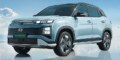
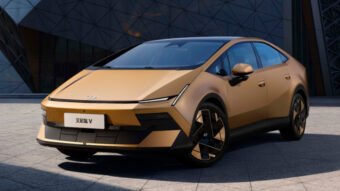
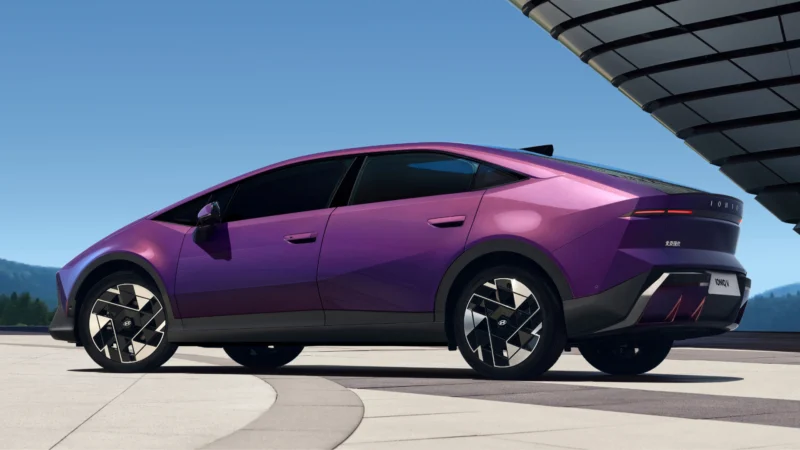
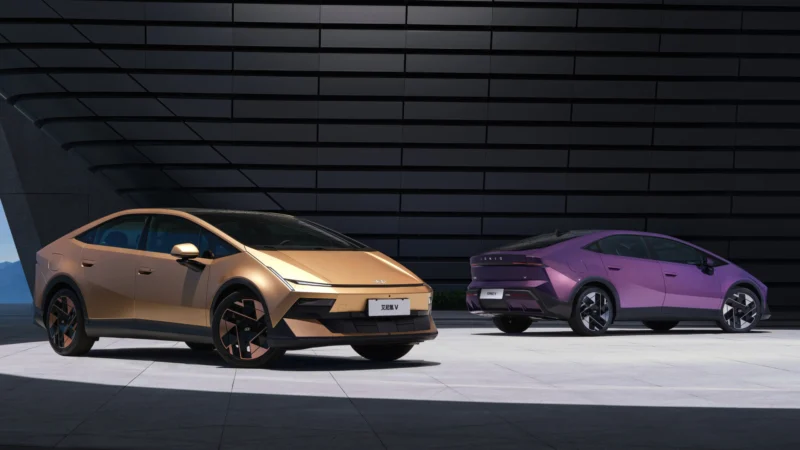
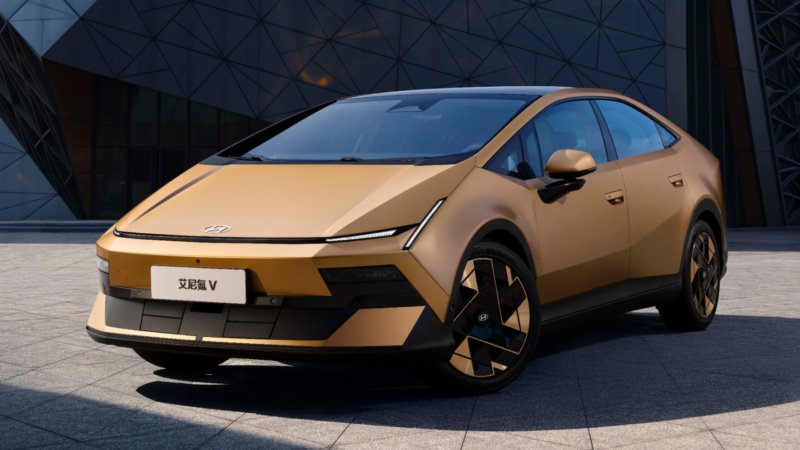
The Hyundai Ioniq V is a mid-size electric fastback sedan built by Hyundai Motor Company exclusively for the Chinese market, sitting as an entry-to-mid position within the Ioniq sub-brand’s China lineup. It’s a four-door sedan with a fastback profile, riding on the E-GMP platform in front-wheel-drive, single-motor form. What makes it notable isn’t performance — it’s the design pivot: the Ioniq V (originally shown as the Venus concept) drops Hyundai’s familiar global “retro-pixel” Ioniq styling for a sharp, localized cyberpunk look penned by a China-based design team, and it’s the first Ioniq model developed exclusively for that market rather than adapted from a global product.
Power comes from one of two lithium-iron phosphate (LFP) battery packs supplied by CATL: a 53.5 kWh pack paired with a 188-hp motor, or a 66.8 kWh pack paired with a 225-hp motor. Hyundai’s claimed range figures — up to 336 miles (540 km) for the smaller pack and up to 404 miles (650 km) for the larger one — are rated on the CLTC cycle, which tends to run optimistic versus real-world driving; expect closer to 250 miles and 311 miles respectively once WLTP- or EPA-style conditions are factored in. The Ioniq V rides on an 800V electrical architecture, which typically enables DC fast-charging in the 200–350 kW range on E-GMP-based Hyundais, but Hyundai has not published official AC onboard rate, DC peak kW, or 10–80% charge time for the Ioniq V specifically — these remain unconfirmed pending the car’s formal China launch. An extended-range EV (EREV) variant and a dual-motor version are both said to be in development but are not yet detailed.
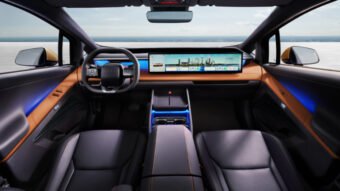
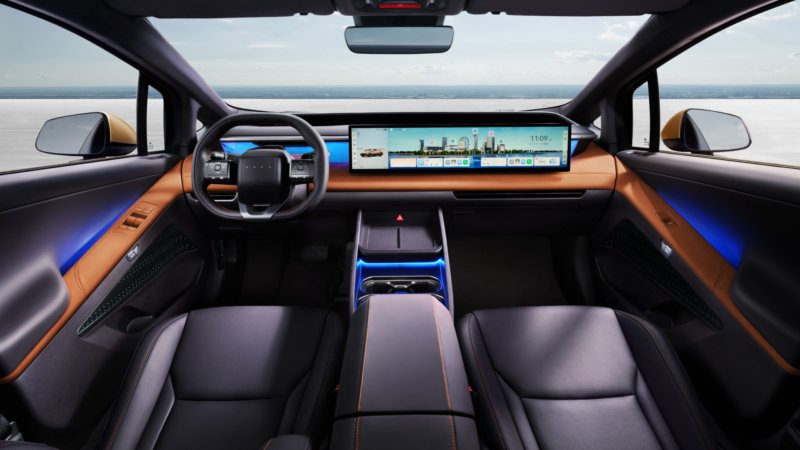
Pricing has not been announced, and there’s no regional equivalent to quote since the Ioniq V is not planned for sale outside China. Given its size, fastback styling, and tech-forward cabin — a 27-inch dual-screen dashboard on a Snapdragon chip, plus Momenta-developed ADAS — this car realistically suits urban Chinese buyers who want a design-led, tech-heavy sedan over a crossover, rather than fleet or budget commuter buyers. Within Hyundai’s own China lineup, it slots between the more conservative Ioniq 6 (sold globally) and the larger Ioniq 9 in overall market positioning, even though the V is a China-exclusive nameplate with no direct global sibling. Outside the brand, its closest rivals are Chinese-market fastback and sedan EVs like the Zeekr 007 and the Nio ET5, both of which compete on similar size, range claims, and tech-forward cabins. For a direct spec-and-price comparison angle, the Xiaomi SU7 is the closest match — same fastback sedan format, same CLTC-range positioning, and the same target buyer chasing design plus tech over badge prestige.
Hyundai Ioniq V Photos
Full Electric Vehicle Specifications
MODEL
| Full Model Name | Hyundai Ioniq V (Ioniq Venus) |
| Generation | 1st generation |
| Segment / Class | Mid-size (D-segment) EV fastback sedan |
| Available Trims / Variants | 188 hp / 53.5 kWh; 225 hp / 66.8 kWh |
| Powertrain Options | Single-motor FWD (confirmed); EREV variant and dual-motor AWD planned |
| Additional Notes | China-exclusive Ioniq model; not a rebadge of a global Hyundai EV |
LAUNCH
| Reveal Date | Venus concept, April 10, 2026; production version, April 24, 2026 (Beijing Auto Show) |
| Launch Year | 2026 |
| Availability Status | Pre-launch / upcoming |
| Brand / Manufacturer | Hyundai Motor Company |
| Country of origin | South Korea (brand); design led by Hyundai's China team |
| Assembly Country | China (Beijing Hyundai) |
| Markets Available | China only |
| Grey Market Import | Not applicable |
| Additional Notes | One of 20 new models Hyundai plans to launch in China over the next five years |
BATTERY
| Battery Capacity | 53.5 kWh or 66.8 kWh |
| Battery Chemistry | LFP (lithium iron phosphate) |
| Battery Architecture | 800V |
| Range (WLTP/CLTC/EPA) | (CLTC): Up to 336 mi / 540 km (53.5 kWh); up to 404 mi / 650 km (66.8 kWh) — CLTC-rated, real-world likely ~250 mi / ~311 mi respectively |
| Heat Pump | |
| Cell Brand | CATL |
| Additional Notes | Larger pack figure has also been reported as "at least 600 km CLTC" |
PERFORMANCE
| Motor Type | PMSM |
| Motor Configuration | Single motor, front-mounted (standard trims) |
| Front Motor Output (kW / HP) | 140 kW / 188 hp, or 168 kW / 225 hp (trim-dependent) |
| Power Output (kW / hp) | 188 hp or 225 hp |
| Peak Power (kW / hp) | 188 hp or 225 hp |
| Top Speed (km/h / mph) | 165 km/h / 103 mph |
| Transmission / Drive | FWD (single-motor trims) |
| Additional Notes | 225 hp motor is shared with the global Ioniq 5 |
BODY
| Body Style | 4-door fastback sedan |
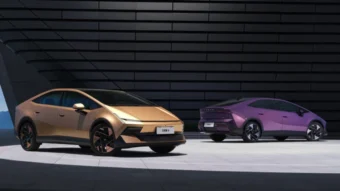
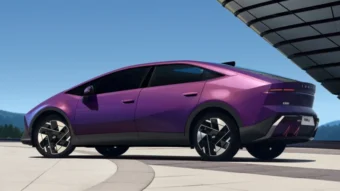
| Body Colour Options | 8 total, including Cyber Gold, Dimensional Purple, Gamma Green, Magnetic Grey |
| Platform / Architecture | Electric Global Modular Platform (E-GMP) |
| Dimensions (L×W×H mm) | 4,900 × 1,890 × 1,470 mm |
| Wheelbase (mm) | 2,900 mm |
| Aerodynamics | Frameless doors, aero wheels, low-slung fastback profile designed for efficiency |
| Additional Notes | Similar footprint to the global-market Ioniq 6 |
SAFETY
| Driver Assistance (ADAS) | Confirmed fitted |
| ADAS Features | Momenta-developed ADAS system |
| Autonomous Driving System Name | Momenta-based system |
COMFORT
| Seating Capacity | 5 |
| Additional Notes | Interior confirmed to use a two-tone motif with orange accents |
DISPLAYS
| Centre Screen (inches) | Part of integrated 27-inch dual-screen setup |
| Driver's Display (inches) | Part of integrated 27-inch dual-screen setup |
| Display Resolution | 4K |
| Screen Technology | Snapdragon-chip-powered dual-screen |
| Additional Notes | 27-inch dual-screen is a confirmed centerpiece interior feature |
LIGHTING
| Headlight Type (LED/Matrix/Laser) | "Dimensional Light Blade" LED headlights |
| Tail Light Design | "Dimensional Star Track" taillights |
| Additional Notes | Lighting signature is a core part of the cyberpunk design language |
INFOTAINMENT & AUDIO
TECHNOLOGY
| Additional Notes | Tech features likely to mirror other Snapdragon-based Chinese EV cockpits; official list pending |
OWNERSHIP
| Official Dealer Network | China (Beijing Hyundai) only |
| Spare Parts Availability | China market only |
| Import Duty Class | Not applicable outside China |
| Grey Market Support | None (no official grey-market channel) |
Note
| Data Source | Hyundai Beijing Auto Show reveal (April 2026), MIIT regulatory filings, Wikipedia, Carscoops, ArenaEV, Autoblog, CarNewsChina |
| Last Updated | August 14, 2026 |
User Reviews
Disclaimer Note
Specifications sourced from manufacturer data and may reflect WLTP, CLTC, or EPA test conditions. Import prices in your local are estimates based on grey-market landing costs and exclude duties, clearing fees, and local taxes. Figures are subject to change without notice. Always verify with your local importer before purchase. We can not guarantee that the information on this page is 100% correct