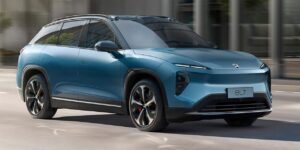
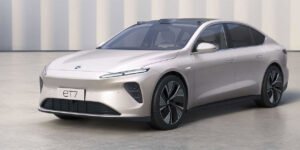
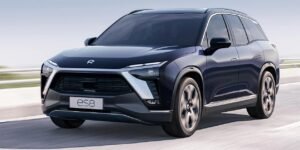
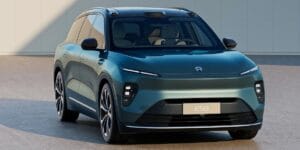
The NIO ET5 and Tesla Model 3 are both mid-size electric sedans, but they come from very different directions. The ET5 is NIO’s answer to the everyday driver — a sleek, well-equipped sedan built around NIO’s battery-swap ecosystem and a subscription-based ownership model. The Model 3 is Tesla’s best-selling car globally, the one that made electric sedans a mainstream conversation. Both target daily commuters and tech-leaning buyers who want a car that does the basics well and doesn’t require much thought at the charging stop. The ET5 buyer tends to be drawn to the interior quality and the swap-station convenience. The Model 3 buyer usually leads with range confidence and network trust.

The NIO ET5 Standard Range delivers around 550 km CLTC, while the Long Range variant pushes to 700 km CLTC — real-world figures sit closer to 420–520 km depending on conditions. The Tesla Model 3 Long Range AWD is rated at 629 km WLTP, a harder standard to hit, and real-world performance tends to track within 10–15% of that figure. Where NIO does something genuinely different is charging: instead of waiting at a fast charger, ET5 owners can swap a depleted battery for a full one in under five minutes at a NIO Power Swap Station. That’s not a small thing for buyers in markets where NIO’s swap network is dense. Tesla counters with its Supercharger network — 250 kW on V3 stations, widely available across North America and Europe — which is slower than a swap but available in far more locations globally.
The ET5 starts around $32,000–$38,000 USD in China depending on battery option, though the BaaS (Battery-as-a-Service) model lets buyers pay less upfront and lease the battery monthly instead. In European markets like Norway and Germany, pricing moves up considerably once local duties apply. The Model 3 starts at $38,990 USD in the United States before incentives, with European pricing in a similar band. In most African markets including Nigeria, both arrive through grey import channels, which means pricing is unpredictable and after-sales support is effectively nonexistent through official channels. This page is for buyers deciding between these two on range, charging strategy, price structure, and how much the ownership ecosystem matters to them — not just the spec numbers.
NIO’s broader lineup includes the ES6 SUV, ET7 full-size sedan, EL6, and the EC6 coupe-SUV — worth considering if the ET5’s footprint doesn’t fit. Tesla’s lineup beyond the Model 3 includes the Model Y, which outsells the sedan in most markets, and the Model S for buyers stepping up in price. On the rival side, the XPeng P7 competes directly with the ET5 in the Chinese market and offers a comparable tech-forward interior. The BMW i4 goes head-to-head with both in the premium compact sedan space in Europe and North America. The Hyundai Ioniq 6 is another strong Model 3 rival worth looking at, particularly on efficiency.
The ET5 has a genuinely good interior for the price, battery-swap that works if you’re near NIO’s network, and strong CLTC range numbers across trims. NIO’s Power Swap infrastructure is still geographically limited — outside China, coverage is sparse and the BaaS model doesn’t transfer cleanly across borders. The Model 3 delivers real-world range that holds up against its rated figures, and the Supercharger network remains the most consistent fast-charge experience available at scale. Early Model 3 builds had panel gap and fit-and-finish complaints that became a recurring topic; Tesla has improved since, but it still comes up. Autopilot adds hands-on highway assistance but has limits that aren’t always clearly communicated to new buyers.
QUICK VERDICT
The ET5 makes the most sense if you’re in China or a market where NIO’s swap stations are accessible — the battery swap model genuinely changes the refuel experience. Outside that network, a lot of its edge disappears. The Model 3 is the safer global pick: the charging infrastructure is more established, resale value holds better in Western markets, and the range figures are more honest against real driving conditions. Both are solid cars in their home environments. The ET5 is the more interesting ownership model. The Model 3 is the lower-risk one.
Related EV Comparisons
| Models |
NIO ET5
Tesla Model 3 Standard Range Tesla Model 3 Long Range RWD Tesla Model 3 Long Range Tesla Model 3 Performance |
| Announced |
December 2021
2023, September 01 - Tesla Model 3 Standard Range 2024, July 11 - Tesla Model 3 Long Range RWD 2023, September 01 - Tesla Model 3 Long Range 2024, April 23 - Tesla Model 3 Performance |
| Status |
In production
Available to order. Released 2023, October - Tesla Model 3 Standard Range Available to order. Released 2024, July - Tesla Model 3 Long Range RWD Available to order. Released 2023, October - Tesla Model 3 Long Range Available to order. Released 2024, April - Tesla Model 3 Performance |
| Country of origin | China United States |
| Base Price |
$46,000
€ 43,000 - Tesla Model 3 Standard Range $ 42,500 - Tesla Model 3 Long Range RWD $ 47,500 € 52,000 - Tesla Model 3 Long Range $ 53,000 € 58,500 £ 60,000 - Tesla Model 3 Performance |
| Power |
483 hp, dual motor AWD
RWD 283 hp (208 kW) - Tesla Model 3 Standard Range RWD -Tesla Model 3 Long Range RWD AWD 498 hp (366 kW) - Tesla Model 3 Long Range AWD 625 hp (460 kW) - Tesla Model 3 Performance |
| Torque |
700 Nm
450 Nm (332 lb-ft) - Tesla Model 3 Standard Range 493 Nm (364 lb-ft) - Tesla Model 3 Long Range 741 Nm (547 lb-ft) - Tesla Model 3 Performance |
| Acceleration The acceleration numbers are an easy way to compare car performance. We list either time from 0 to 100 km/h or time from 0 to 60mph, depending on which number(s) the manufacturers provide. The lower the acceleration time, the higher performance the car is. |
0 to 100 km/h in 4.0 seconds
5.8 sec 0-60 mph (6.1 sec 0-62 mph) - Tesla Model 3 Standard Range 4.9 sec 0-60 mph - Tesla Model 3 Long Range RWD 4.2 sec 0-60 mph (4.4 sec 0-62 mph) - Tesla Model 3 Long Range 2.9 sec 0-60 mph (3.1 sec 0-62 mph) - Tesla Model 3 Performance |
| Max Speed |
200 km/h
125 mph (201 km/h) - Tesla Model 3 Standard Range 125 mph (201 km/h) - Tesla Model 3 Long Range RWD 125 mph (201 km/h) - Tesla Model 3 Long Range 163 mph (262 km/h) - Tesla Model 3 Performance |
| transmission | Single-speed |
| Capacity |
75 kWh or 100 kWh
57.3 kWh usable, 60 kWh total -Tesla Model 3 Standard Range 78 kWh total - Tesla Model 3 Long Range RWD 78 kWh total - Tesla Model 3 Long Range 78 kWh total - Tesla Model 3 Performance |
| Tech |
Lithium ion. Semi solid state for swap battery
Liquid-cooled Li-ion 360V LFP battery - Tesla Model 3 Standard Range Liquid-cooled Li-Ion NCM (400V type) - Tesla Model 3 Long Range RWD Liquid-cooled Li-Ion NCM (400V type) - Tesla Model 3 Long Range Liquid-cooled Li-ion NCM (400V type) - Tesla Model 3 Performance |
| Range |
75 kWh: about 350 miles WLTP 100 kWh: about 435 miles WLTP 272 mi EPA (319 mi WLTP) - Tesla Model 3 Standard Range 436 mi WLTP (363 mi EPA) - Tesla Model 3 Long Range RWD 421 mi WLTP (342 mi EPA) - Tesla Model 3 Long Range 328 mi WLTP (296 mi EPA) - Tesla Model 3 Performance |
| Consumption |
16 to 17 kWh per 100 km
212 Wh/mi WLTP - Tesla Model 3 Standard Range 225 Wh/mi WLTP (260 Wh/mi EPA) - Tesla Model 3 Long Range 269 Wh/mi WLTP - Tesla Model 3 Performance |
| Recuperation | Adjustable regenerative braking 1 level, no coasting, no regen when pedal braking |
| Heat Pump | |
| AC Charging |
Up to 11 kW. Full charge in about 8 to 10 hours
Type 2 11 kW, 0-100% in 7 hours 33 min - Tesla Model 3 Standard Range Type 2 11 kW, 0-100% in 8 hours 15 min - Tesla Model 3 Long Range RWD Type 2 11 kW, 0-100% in 8 hours 15 min - Tesla Model 3 Long Range Type 2 11 kW - Tesla Model 3 Performance |
| DC Charging |
Up to 140 kW. 10 to 80 percent in about 30 minutes
Supercharger V3 170 kW max -Tesla Model 3 Standard Range CCS 170 kW max Supercharger V3 250 kW max - Tesla Model 3 Long Range RWD CCS 250 kW max Supercharger V3 250 kW max - Tesla Model 3 Long Range CCS 250 kW max Supercharger V3 250 kW max - Tesla Model 3 Performance CCS 250 kW max |
| Others | Battery swap support |
| Type | 4 door sedan, 5 seats 4 door sedan, 5 seats |
| Platform | NIO NT 2.0 |
| Dimensions |
Length: 4,790 mm Width: 1,960 mm Height: 1,499 mm 4720 x 1933 x 1441 mm (185.8 x 76.1 x 56.7 in) |
| Drag Co-Efficient | 0.24 0.219 Cd |
| Wheelbase | 2,888 mm 2875 mm (113.2 in) |
| Clearance | 150 mm 138 mm (5.4 in) |
| Weight |
2,200 kg
EU: 1765 kg unladen -Tesla Model 3 Standard Range EU: 1822 kg unladen - Tesla Model 3 Long Range RWD EU: 1828 kg unladen, 2263 kg gross - Tesla Model 3 Long Range EU: 1929 kg unladen, 2271 kg gross - Tesla Model 3 Performance |
| Suspension | Multi link front and rear Front double wishbone-type coil spring, rear multi-link |
| Wheels | 19 or 20 inch R18, R19 |
| Trunk/Boot |
386 liters
EU: 682 l - Tesla Model 3 Standard Range EU: 594 l - Tesla Model 3 Long Range RWD EU: 594 l - Tesla Model 3 Long Range EU: 594 l - Tesla Model 3 Performance |
| Frunk/Bonnet | 88 l |
| Towing | Up to 1,400 kg EU: 1000 kg unbraked |
| Others | Near 50 50 weight distribution |
| Centre | 15.6 inch AMOLED 15.4" touchscreen |
| Driver's Display | 10.2 inch digital cluster No |
| Head-Up | 18.8 inch AR HUD No |
| Others |
NOMI AI assistant
8" rear passengers touchscreen display |
| Seats | Heated, ventilated, massage optional Heated and ventilated/cooled front seats, heated rear seats |
| Roof | Panoramic glass roof All-glass roof |
| Parking Aids | Cameras, sensors, auto park Front, side, rear cameras, Parking Assist |
| Connectivity | 5G, wireless Android Auto and Apple CarPlay dependent on market |
| Others | Ambient lighting, premium audio 360˚ acoustic glass |
| Airbags | 7 airbags 8 airbags: front, side, rear, head airbag system, front seats knee airbags |
| Driving Aids | Adaptive cruise, lane assist, blind spot monitoring 3 front, 2 side and 3 rear cameras (up to 250m object detection). Automatic Emergency Braking, Dynamic Brake Lights, Lane Assist, Collision Avoidance Assist, Speed Assist, Lane Departure Avoidance, Traffic Light and Stop Sign Control |
| Self Driving | NIO Pilot with advanced assist features Autopilot with full Self-Driving capability |
| Crash Tests | 5 star rating in major markets |
| Others |
Battery subscription and swap stations reduce upfront cost in supported regions
02 October 2024: Model 3 Standard Range is discontinued in USA 10 January 2024: Initial release price 38,990 USD 01 September 2023: Initial release price 42,990 EUR |
| disclaimer | We can not guarantee that the information on this page is 100% correct. |
|
We can not guarantee that the information on this page is 100% correct