

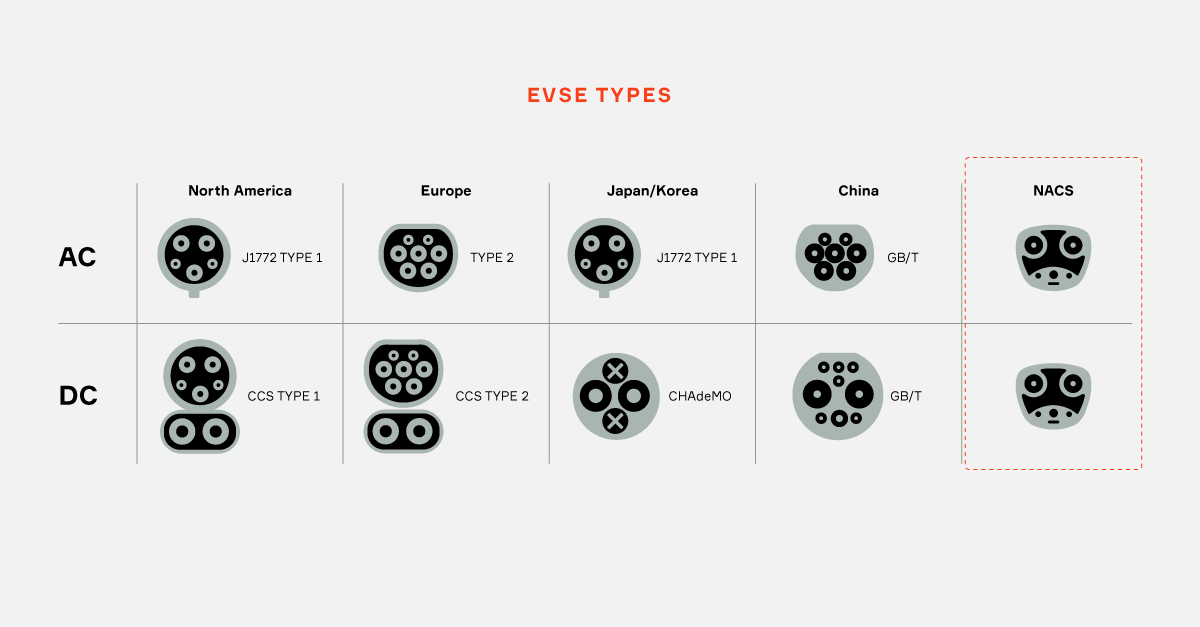
As electric vehicles (EVs) go mainstream, understanding charging plug types is more important than ever. Whether you’re buying your first EV or planning a long road trip, the charging standard your car supports can greatly affect convenience, speed, charging network access and how long you battery will last.
In this article, we’ll compare NACS vs CCS vs CHAdeMO, the most used EV plug types in 2025 and help you determine which one suits your needs.
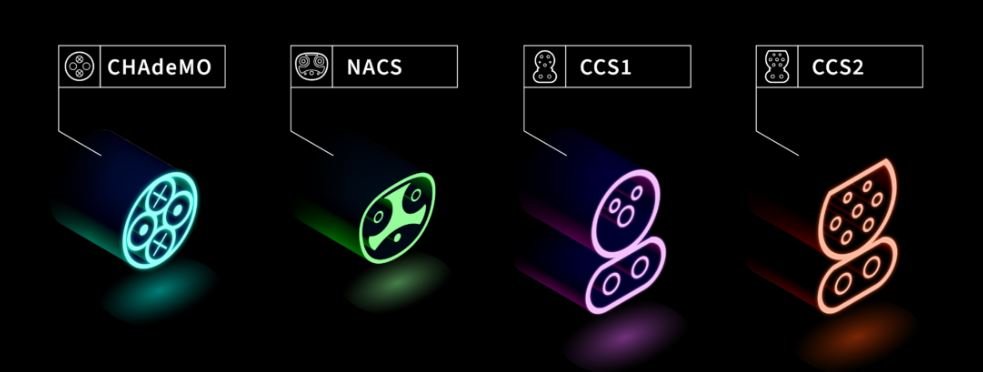
What Are the Main EV Charging Plug Types?
| Plug Type | Full Name | Common In | Max Power (DC Fast Charging) | Compatible Networks |
|---|---|---|---|---|
| NACS | North American Charging Standard | USA, Canada | 250–350 kW | Tesla Supercharger, upcoming Ford, GM, Hyundai |
| CCS | Combined Charging System | USA, EU | 250–350 kW | Electrify America, EVgo, ChargePoint |
| CHAdeMO | “CHArge de MOve” | Japan, Older Nissan EVs | ~50–100 kW | Limited in U.S., used by Leaf |
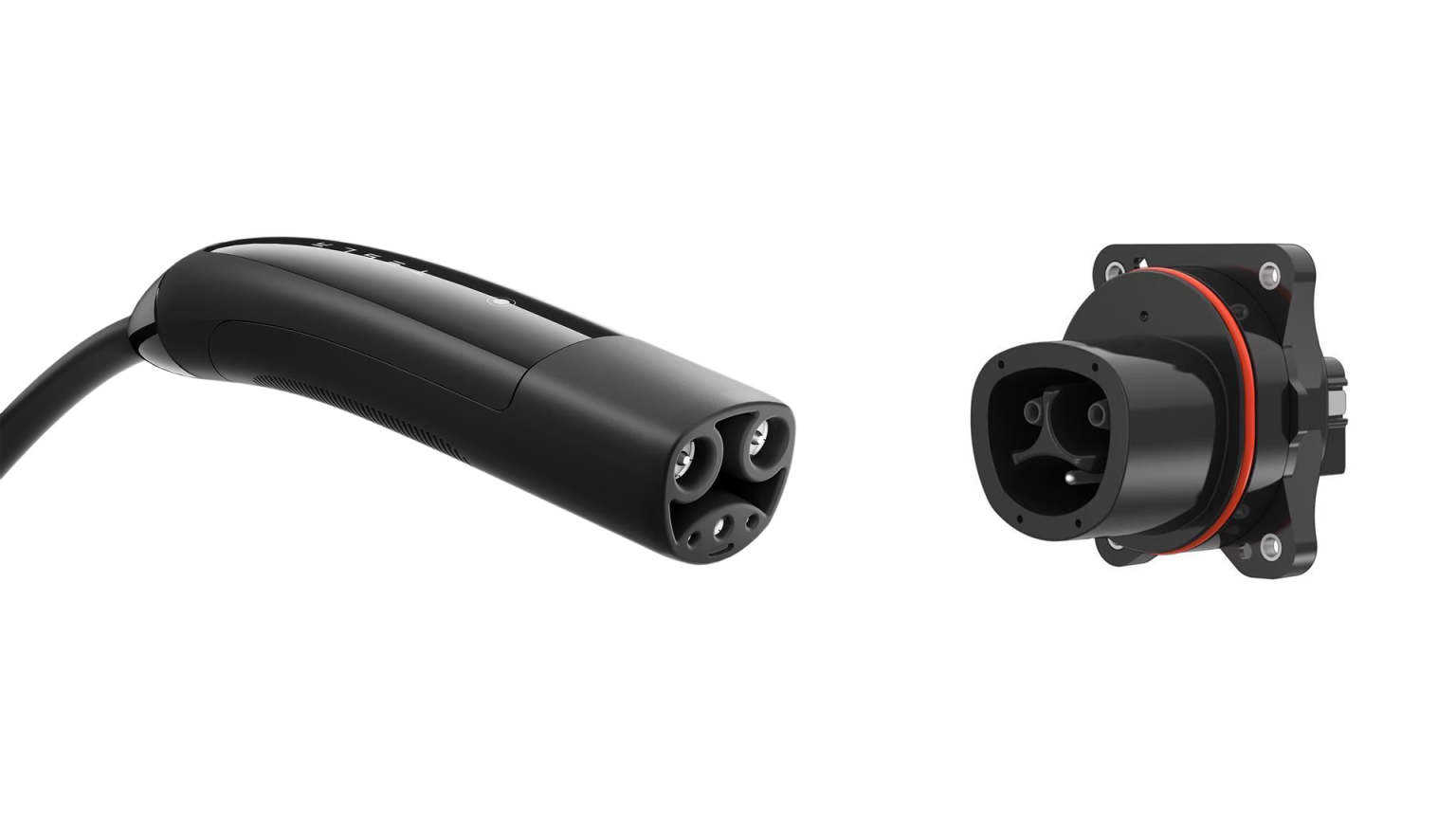
NACS (North American Charging Standard)
- Originally Developed By: Tesla
- Shape: Slim, compact design
- Max DC Speed: Up to 350 kW (V4 Superchargers)
- Benefits:
Most widespread fast-charging network (Tesla Superchargers)
Becoming the de facto standard in North America
Now being adopted by Ford, GM, Hyundai, Rivian, and others
2025 Update: Most new EVs in North America will ship with NACS ports or adapters due to widespread adoption.
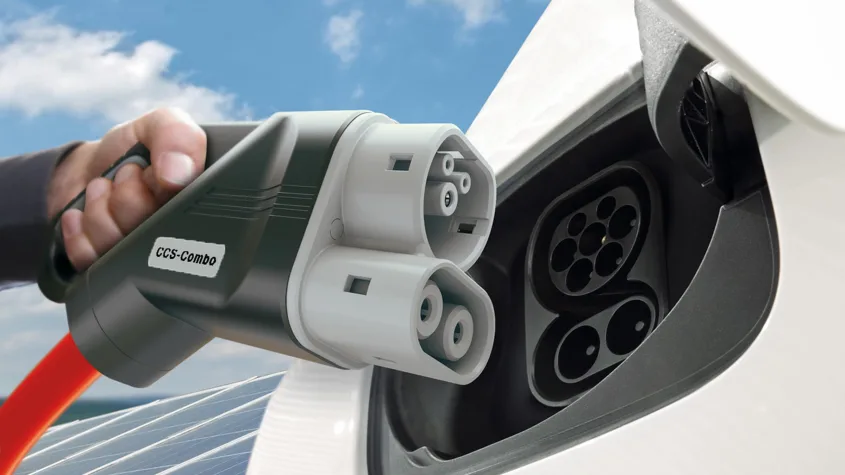
CCS (Combined Charging System)
- Types: CCS1 (U.S.), CCS2 (Europe)
- Max Power: Up to 350 kW
- Popular EVs Using CCS: Volkswagen ID.4, BMW i4, Chevrolet Bolt EUV, Hyundai IONIQ 5 (older models)
Pros:
Supported by most public chargers like Electrify America, EVgo
Standardized across various manufacturers
Cons:
Bulkier plug design
Fewer fast chargers than Tesla’s network
2025 Trend: CCS adoption is declining in North America as many automakers transition to NACS.
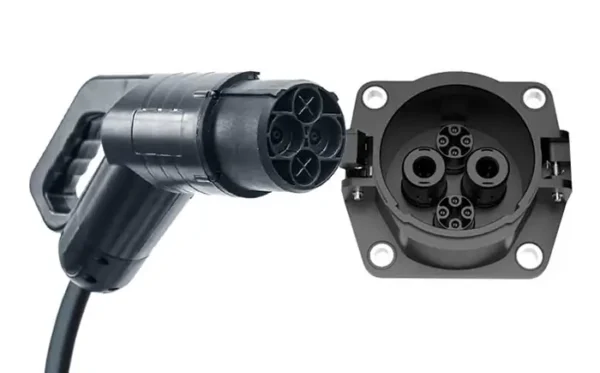
CHAdeMO (CHArge de MOve)
- Origin: Japan
- Max Power: Typically up to 62.5 kW (some up to 100 kW)
- Main EVs Using CHAdeMO: Older Nissan Leaf, Mitsubishi Outlander PHEV
- Pros:
Bi-directional charging (V2G) support
Cons:
Slower charging speeds
Poor availability in U.S. charging stations
2025 Outlook: CHAdeMO is being phased out in North America and Europe, but still relevant in Japan.
Which Plug Type Is Best in 2025?
| Feature | NACS | CCS | CHAdeMO |
|---|---|---|---|
| Fast Charging Speed | ✅ Excellent | ✅ Excellent | ❌ Limited |
| Charging Network Availability | ✅ Widespread | ⚠️ Moderate | ❌ Limited |
| Future-Proof | ✅ Yes | ⚠️ Declining | ❌ Obsolete |
| Plug Design | ✅ Compact | ❌ Bulky | ⚠️ Older |
If you’re in North America, NACS is the most future-proof and reliable option thanks to Tesla’s network and increasing industry support. CCS still holds relevance, especially for older models and European EVs, while CHAdeMO is largely obsolete outside Japan.
Changing to NACS: What It Means for EV Owners
Adapters Available: Tesla offers CCS-to-NACS and vice versa for older vehicles.
Charging Networks Adapting: EVgo, Electrify America, and others are adding NACS connectors in 2025.
OEM Shifts: Ford, GM, Rivian, Hyundai, and Kia are officially moving to NACS in North America.
The ease and speed of charging your EV can be impacted by the type of plug you choose. With its superior convenience and quick charging capabilities, the NACS plug is the industry leader in North America in 2025.
Being informed helps guarantee compatibility and flexibility for years to come as the EV industry unites around this standard. However, keep in mind that depending on your location, the majority of more recent EVs come with an adapter to support charging stations.
Related
- Spain Reaches 50,000 Public EV Chargers in 2025 as High Power Infrastructure Surges
- 2025 Top Electric Vehicle Charging Stations – Global Buying Guide for EV Owners
- 17-State Lawsuit Slams EV Charger Funding Freeze
- Mahindra Launches Charge_IN Ultra-Fast Charging Network With 180 kW in India
- Uno Minda Car EV Wall Charger: Home EV Charging Solution






@Dunbar – what you said is inaccurate – NACS makes up ~62% of fast chargers; CCS makes up the remaining ~38%
This is _wildly_ inaccurate.
The VAST _majority_ of level 3 Fast Charging (over 80%) in the US is now CCS. NOT NACS.
Nearly ALL new build out is ALSO CCS. NOT NACS. NO infrastructure build out from the Omnibus Infrastructure Package has been used for NACS, as NACS is still not a formal, recognized international standard (though steps are in process to have it recognized as such).
And, while numerous manufacturers have stated an eventual intent to start shipping NACS-equipped EVs, after making backroom deals with Tesla, most have also delayed doing so, because NACS is still proprietary, still controlled by Tesla, and, also now vastly under built out compared to CCS infrastructure, since VW has been rapidly building out Electrify America locations, while Tesla has basically stalled out, with minimal new infrastructure built out over the last three years.
The fast pace of EV rolling out is wild, plus most people have converters.