

- Electric Vehicles
- Compare Electric Cars
- Smart Concept #2 vs Smart #1
Smart Concept #2 vs Smart #1
Smart is a brand that once defined city-car culture with the ForTwo, then pivoted hard into premium compact SUVs. The Smart #1 represents that pivot — a five-door electric hatchback crossover designed for buyers who want an upmarket, connected daily driver with real range. The Smart Concept #2, revealed at Beijing in April 2026, is something different: a revival of the iconic two-seat urban microcar format, reimagined as a premium EV. The comparison matters now because Smart is expanding from one product to five — and buyers need to understand where each model actually fits.

Range & Charging
The Smart #1 offers a 49kWh battery in the base Pro trim with a WLTP range of 193 miles, and a 66kWh battery across higher trims delivering between 260 and 273 miles (WLTP). DC fast charging peaks at 130kW on the Pro and 150kW on larger-battery variants, with a 10–80% charge taking under 30 minutes. AC charging on the base trims is limited to 7.4kW, while the Premium and Brabus get 22kW. Real-world return sits close to the rated figure in mild conditions.
The Smart Concept #2, if concept figures carry over to production, will offer a range of approximately 186 miles (300km) and a 10–80% charge time of under 20 minutes. It also includes V2L (vehicle-to-load) capability — unusual for a car this size. These are concept-stage specs; final production figures will be confirmed at the Paris Motor Show in October 2026.
Price, Availability & Market Fit
The Smart #1 is available now across Europe and several other markets, starting from around £32,270 in the UK across Pure, Pro, Pro+, Premium, and Brabus trims. It suits buyers who want a well-equipped compact EV with genuine range and day-to-day versatility.
The Smart Concept #2 is expected to be priced in the premium small EV segment from approximately £20,000–£25,000, with production targeted for 2027. Europe is the confirmed key region, though availability in other markets has not been announced. If you need something available right now, the #1 is the only option between these two. If you’re planning ahead for city-only transport, the #2 is worth monitoring.
Ecosystem & Rival Context
Within Smart’s lineup, the #3 is a coupe-SUV with up to 283 miles WLTP and sits above the #1 in size. The #5 is a larger mid-size SUV for buyers needing more space. Outside Smart, relevant rivals at the #1’s price point include the Renault Megane E-Tech and the BYD Atto 3. For the #2’s expected segment, the Fiat 500e and Renault Twingo Electric are direct competitors — though neither offers the #2’s stated charging speed or V2L. The Smart brand’s premium positioning and Mercedes-influenced design give both models a differentiation edge over volume-brand rivals.
Pros & Cons
Smart #1: Its real-world range on the 66kWh battery makes it genuinely usable for longer drives, not just urban commuting. A five-star ANCAP rating and a standard suite of driver assistance features mean it holds its own against more expensive rivals. Multiple trim levels allow buyers to match spec to budget. On the downside, the base Pro’s 7.4kW AC charging limit is a real inconvenience at public chargers. The starting price also puts it above comparable-size EVs from BYD and MG.
Smart Concept #2: A sub-20-minute 10–80% charge time is exceptional for a small urban EV, making top-ups genuinely quick. The V2L feature adds practical utility that few city cars offer. Its ultra-compact footprint makes it ideal for dense urban environments where parking is genuinely difficult. However, as a concept, buyers take on real uncertainty — specs and pricing are not final. Its two-seat layout also limits usefulness beyond solo or paired urban trips.
Quick Verdict
Choose the Smart #1 if you need an EV that can handle both the city and longer weekend drives, with available stock and confirmed specs. Choose the Smart Concept #2 — when it reaches production — if urban-only transport, minimal parking footprint, and fast charging are your main priorities, and you’re comfortable with the two-seat limitation. The #1 is the practical choice today. The #2 may be the more interesting one in 2027.
Related EV Comparisons
- Smart Concept #2 vs Smart #5
- Mini Aceman vs Smart #1
- Zeekr X vs Smart #1
- Volvo EX30 vs Smart #1
- VinFast VF3 vs Smart #1
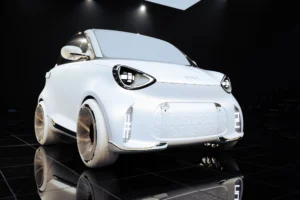
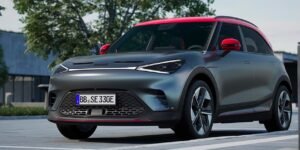
| |
| Price | $25,000.00 $37,000.00 |
| Our Rating | |
| Brand | SMART SMART |
| Category | Electric Cars Electric Cars |
MODEL
| Full Model Name | Smart Concept #2 |
| Generation | 1st generation (#2 nameplate); spiritual successor to Smart ForTwo Gen 3 |
| Segment / Class | Microcar / Electric City Car |
| Available Trims / Variants |
Smart #1 Pure / Pro Smart #1 Pro+ / Premium - Also known as Smart +1 Premium, Smart #1 Pure+ Smart #1 Pulse Smart #1 Brabus |
| Powertrain Options | Full electric only |
| Additional Notes | Production reveal confirmed for Paris Motor Show, October 2026 |
LAUNCH
| Reveal Date |
April 22, 2026 (Beijing Auto Show)
2024, January 26 - Smart #1 Pure / Pro 2022, April 07 - Smart #1 Pro+ / Premium 2023, June - Smart #1 Pulse 2023, March - Smart #1 Brabus |
| Launch Year | 2027 (expected) |
| Availability Status |
Concept stage; production pending
Available to order. Released 2024, February - Smart #1 Pure / Pro Available to order. Released 2023, July - Smart #1 Pro+ / Premium Available to order. Released 2023, June - Smart #1 Pulse Available to order. Released 2023, March - Smart #1 Brabus |
| Brand / Manufacturer | Smart Automobile (Mercedes-Benz AG × Geely Holding Group JV) |
| Country of origin | China China |
| Assembly Country | China |
| Markets Available | Europe (confirmed); UK from early 2027 |
| Base Price (USD) |
~$25,000 estimated (UK target: ~£20,000)
€ 37,500 £ 31,950 - Smart #1 Pure / Pro € 42,500 £ 39,500 - Smart #1 Pro+ / Premium € 46,500 - Smart #1 Pulse € 49,000 £ 43,450 - Smart #1 Brabus |
BATTERY
| Battery Capacity |
~30–35 kWh
47 kWh usable, 49 kWh total - Smart #1 Pure / Pro 62 kWh usable, 66 kWh total - Smart #1 Pro+ / Premium 62 kWh usable, 66 kWh total - Smart #1 Pulse 62 kWh usable, 66 kWh total - Smart #1 Brabus |
| Battery Chemistry |
Li-ion LFP battery (400V type) - Smart #1 Pure / Pro Li-ion NCM (400V type) - Smart #1 Pro+ / Premium Li-ion NCM (400V type) - Smart #1 Pulse Li-ion NCM (400V type) - Smart #1 Brabus |
| Battery Architecture | Smart ECA platform (proprietary) |
| Range (WLTP/CLTC/EPA) |
300 km / 186 miles - WLTP
193 mi WLTP - Smart #1 Pure / Pro 261 mi WLTP - Smart #1 Pro+ / Premium 249 mi WLTP - Smart #1 Pulse 249 mi WLTP - Smart #1 Brabus |
| Energy Consumption |
291 Wh/mi WLTP - Smart #1 Pure / Pro 270 Wh/mi WLTP - Smart #1 Pro+ / Premium 288 Wh/mi WLTP - Smart #1 Pulse 288 Wh/mi WLTP - Smart #1 Brabus |
| Regen Braking (Max kW) |
Yes |
| Heat Pump | |
| AC Charging (Max kW) |
Type 2 7.4 kW (Pro+ version) Type 2 22 kW, 10-80% in 3 hours (Premium version) |
| DC Charging (Max kW) |
(supports DC fast charging)
CCS 130 kW, 10-80% in 30 min - Smart #1 Pure / Pro CCS 150 kW, 10-80% in 30 min - Smart #1 Pro+ / Premium CCS 150 kW, 10-80% in 30 min - Smart #1 Pulse CCS 150 kW, 10-80% in 30 min - Smart #1 Brabus |
| Charging Time (10–80%) | Under 20 minutes |
| Additional Notes | All battery specs are concept-stage targets only |
PERFORMANCE
| Motor Type | Electric (single motor, assumed) |
| Motor Configuration | Rear-wheel drive (unconfirmed; consistent with ForTwo lineage) |
| Power Output (kW / hp) |
~100–130 hp estimated
RWD 272 hp (200 kW) - Smart #1 Pure / Pro RWD 272 hp (200 kW) - Smart #1 Pro+ / Premium AWD 428 hp (315 kW) - Smart #1 Pulse AWD 428 hp (315 kW) - Smart #1 Brabus |
| Torque (Nm) |
343 Nm (253 lb-ft) - Smart #1 Pure / Pro 384 Nm (283 lb-ft) - Smart #1 Pro+ / Premium 584 Nm (431 lb-ft) - Smart #1 Pulse 584 Nm (431 lb-ft) - Smart #1 Brabus |
| 0–100 km/h / 0-60 mph (seconds) The acceleration numbers are an easy way to compare car performance. We list either time from 0 to 100 km/h or time from 0 to 60mph, depending on which number(s) the manufacturers provide. The lower the acceleration time, the higher performance the car is. |
6.7 sec 0-62 mph - Smart #1 Pure / Pro 6.7 sec 0-62 mph - Smart #1 Pro+ / Premium 4.5 sec 0-62 mph - Smart #1 Pulse 3.9 sec 0-62 mph -Smart #1 Brabus |
| Top Speed (km/h / mph) | 112 mph (180 km/h) |
| Transmission / Drive | Single-speed, direct drive Single-speed |
BODY
| Body Style |
2-door, 2-seat microcar hatchback
5 door Hatchback, 5 seats |
| Body Colour Options | Matte white with warm gold two-tone shown on concept |
| Platform / Architecture | Electric Compact Architecture (ECA) SEA |
| Dimensions (L×W×H mm) | 2,792 mm Length 4270 x 1822 x 1636 mm (168.1 x 71.7 x 64.4 in) |
| Drag Coefficient (Cd) |
0.29 Cd |
| Wheelbase (mm) |
2750 mm (108.3 in) |
| Ground Clearance (mm) |
182 mm (7.2 in) |
| Kerb Weight (kg) |
EU: 1788 kg unladen, 2205 kg gross - Smart #1 Pure / Pro EU: 1788 kg unladen, 2213 kg gross - Smart #1 Pro+ / Premium EU: 1900 kg unladen, 2325 kg gross - Smart #1 Pulse EU: 1900 kg unladen, 2325 kg gross - Smart #1 Brabus |
| Suspension (Front / Rear) |
Front MacPherson struts, rear multi-link |
| Wheel Size (inches) | R19 |
| Trunk/Boot Capacity (L) |
EU: 323 l, 986 l max - Smart #1 Pure / Pro EU: 323 l, 986 l max - Smart #1 Pro+ / Premium EU: 313 l, 976 l max - Smart #1 Pulse EU: 313 l, 976 l max - Smart #1 Brabus |
| Frunk/Bonnet Capacity (L) |
15 l |
| Towing Capacity (kg) |
Not applicable (microcar class)
No - Smart #1 Pure / Pro No - Smart #1 Pro+ / Premium EU: 750 kg unbraked, 1600 kg braked - Smart #1 Pulse EU: 750 kg unbraked, 1600 kg braked - Smart #1 Brabus |
| Turning Circle (m) | 6.95 m |
SAFETY
| Airbags (count) |
7 airbags: front, side, rear, head airbag system |
| Child Seat Anchors (ISOFIX / LATCH) | Not applicable (no rear seats) |
| Driver Assistance (ADAS) |
Front radar, front/reversing cameras, 12 front/rear sensors. Active lane keeping system, blind spot assist, traffic jam assist, adaptive high beam assist |
| Crash Test Ratings |
NCAP 2022: 5 stars |
COMFORT
| Seating Capacity |
2
Heated front seats |
| Roof Type |
Panoramic glass sunroof, fixed |
| Bluetooth / Wi-Fi |
Android Auto and Apple CarPlay |
| Parking Aids |
Front and rear sensors, 360 camera, reversing camera, auto parking assist |
DISPLAYS
| Centre Screen (inches) |
12.8" touchscreen |
| Driver's Display (inches) |
9.2" |
| Head-Up Display (HUD) |
10" (retractable) |
LIGHTING
| Headlight Type (LED/Matrix/Laser) | LED |
| Daytime Running Lights (DRL) | Shown on concept |
| Tail Light Design | LED strip (concept) |
INFOTAINMENT & AUDIO
TECHNOLOGY
| Vehicle-to-Load (V2L) | Confirmed on concept |
OWNERSHIP
| Official Dealer Network | Smart's existing European dealer network |
Note
| Data Source | Smart official press release (April 22, 2026); What Car?, Autoblog, Carscoops, Electrifying.com, Electrive.com |
| Last Updated | May 2026 |
| Editor's Note | The vast majority of technical specifications remain undisclosed as this is a concept reveal. Battery capacity, motor output, interior features, dimensions beyond length, and pricing outside the UK are all unconfirmed. Production specifications will be published at the Paris Motor Show, October 2026. Do not publish performance or battery figures as confirmed data. |
| Disclaimer | We can not guarantee that the information on this page is 100% correct |
|
Disclaimer Note
Specifications sourced from manufacturer data and may reflect WLTP, CLTC, or EPA test conditions. Import prices in your local are estimates based on grey-market landing costs and exclude duties, clearing fees, and local taxes. Figures are subject to change without notice. Always verify with your local importer before purchase. We can not guarantee that the information on this page is 100% correct