- Home
- Electric Vehicles
- RENAULT
- Renault Twingo
Renault Twingo
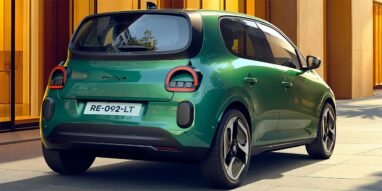
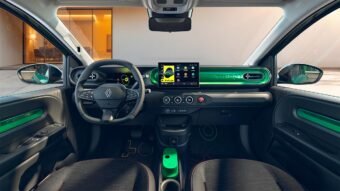
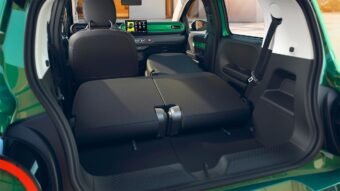
- Drive Type: FWD
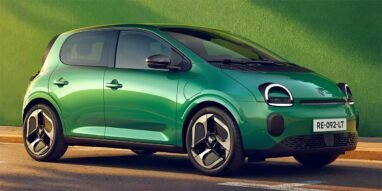
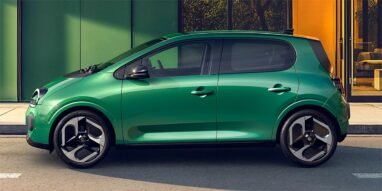
- Body Type: 5-door hatchback, seating for 4
- Self Driving: None
PROS
- Lowest starting price of any current EV in its class (~€19,500)
- V2L and V2G support are rare at this price point
- Compact 3.79 m footprint makes it genuinely easy to park and drive in cities
CONS
- Real-world range (110–150 miles) is modest, and LFP cells lose more range in cold weather
- DC fast charging isn't standard outside Germany — it's a paid add-on
Renault Twingo the fourth-generation is the first one designed as an EV from the ground up, not adapted from a combustion car. It sits below the Renault 5 and Renault 4 E-Tech, sharing their platform, and comes as a five-door hatchback, front-wheel drive, built in Slovenia. At 3.79 metres long, it’s genuinely tiny — an actual A-segment city car, not something stretched to look small in photos.
The interesting part isn’t the styling. It’s that Renault got this under €20,000 at all. LFP cells instead of NMC, plus an engineering deal with CATL in China, did most of the work. Almost everyone else has walked away from A-segment EVs because the numbers stopped adding up. Renault’s betting it hasn’t.
Battery and range
The pack is 27.5 kWh usable, LFP chemistry, cell-to-pack construction from CATL. The motor puts out 60 kW (82 hp) to the front wheels. WLTP range is 263 km on 16-inch wheels; go up to the Techno’s 18-inch wheels and that drops to roughly 250 km.
In practice, expect something closer to 110–150 miles, depending on the season and how heavy your foot is. On the press drive in Ibiza — warm roads, gentle pace — one journalist got close to 5.0 miles/kWh, which is good for a car this size. Whether that holds up through a cold January is a different question; LFP cells are notorious for shedding range in low temperatures, and Renault’s app-based preconditioning helps without solving it completely.
Charging
Renault Twingo onboard charger does 6.6 kW AC as standard, which covers an overnight home charge without issue. Want more? Renault sells an Advanced Charge Pack — about €490 in Italy at launch — that bumps you to 11 kW AC and adds 50 kW DC fast charging. On a 50 kW public charger, that’s roughly 30 minutes for a 10-80% top-up.
One thing to check before you order: DC charging is standard in Germany but an optional extra everywhere else Renault sells this. The 11 kW charger also supports V2L (up to 3.7 kW) and V2G, where your country and home setup allow it.
Price and trims
Renault Twingo Evolution trim launches at €19,500 across Europe from spring 2026. UK pricing should stay under £20,000, though Renault hasn’t nailed down exact trim-level numbers for Britain yet.
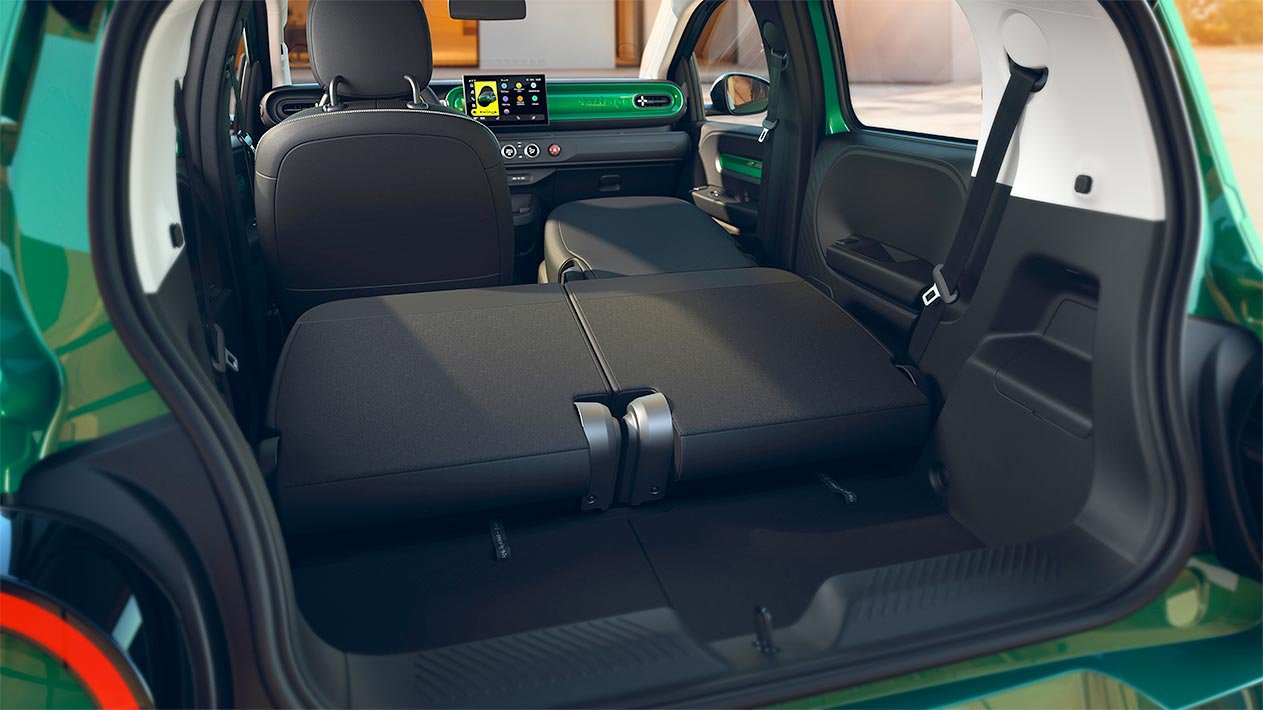
Evolution gets a 6.6 kW AC charger, a 10-inch touchscreen, manual air con, a sliding rear bench, and 16-inch wheels. Techno steps up to the 11 kW bidirectional charger, OpenR Link with Google baked in, a digital rear camera, adaptive cruise, one-pedal driving, and 18-inch wheels.
Where it fits against the competition
Within lineup, the Renault Twingo sits at the bottom — the 5 and 4 are both bigger, faster, and more expensive. This one’s built for city errands, not motorway trips.
Its real rivals are the Citroën ë-C3 and the BYD Dolphin Surf. The Dacia Spring undercuts it on price, but you’re trading away range and tech to get there.
The ë-C3 is the closest spec-for-spec match. It has slightly better base range and Citroën’s Free2Move network gives it a broader charging footprint — but it has no V2L or V2G, and its own AC charging maxes out at 7 kW anyway, so the on-paper advantage shrinks once you look closer.
Renault’s case for the car is straightforward: the average French driver covers 35 km a day, well inside what the Twingo can handle on a single charge. Anyone with a longer commute or regular motorway driving is better served by the Renault 5.
Renault Twingo Images
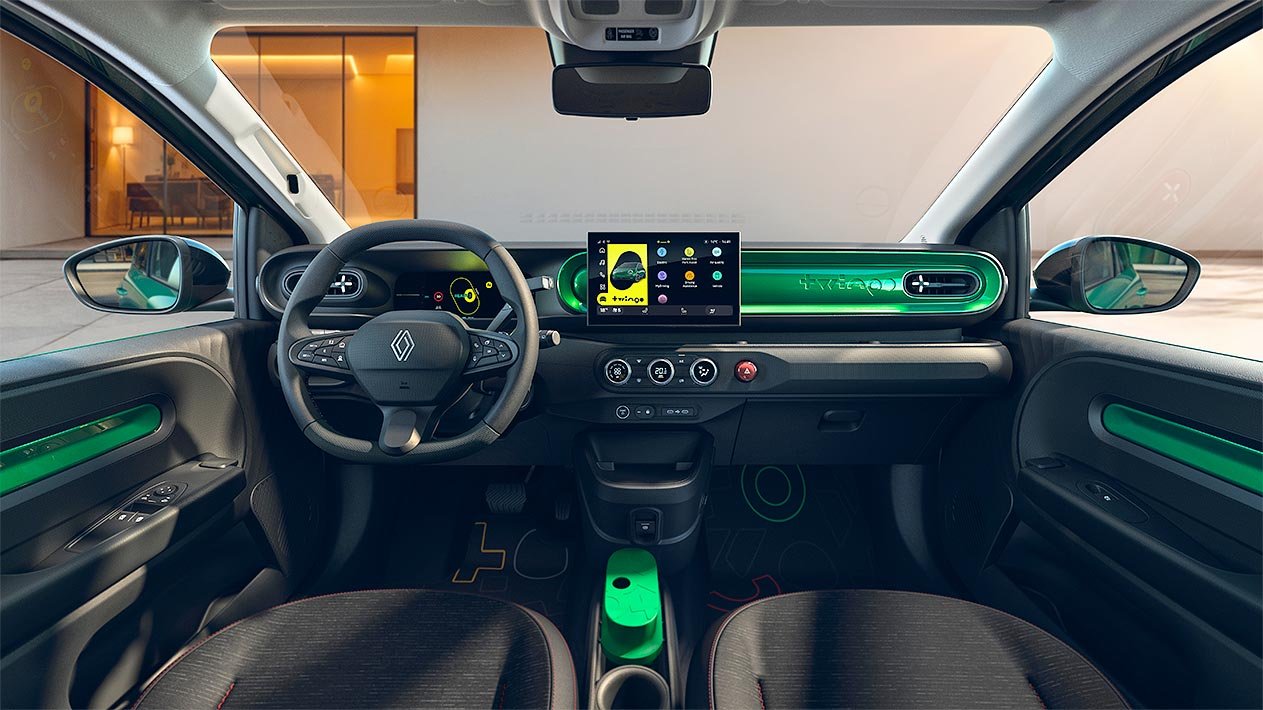
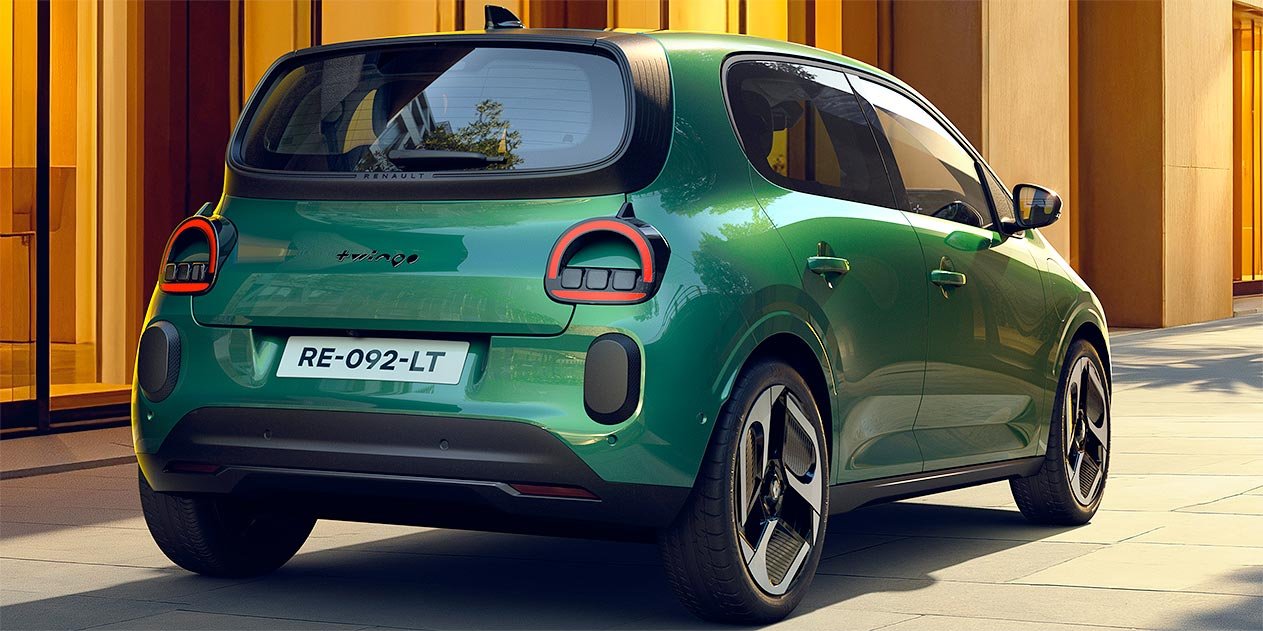
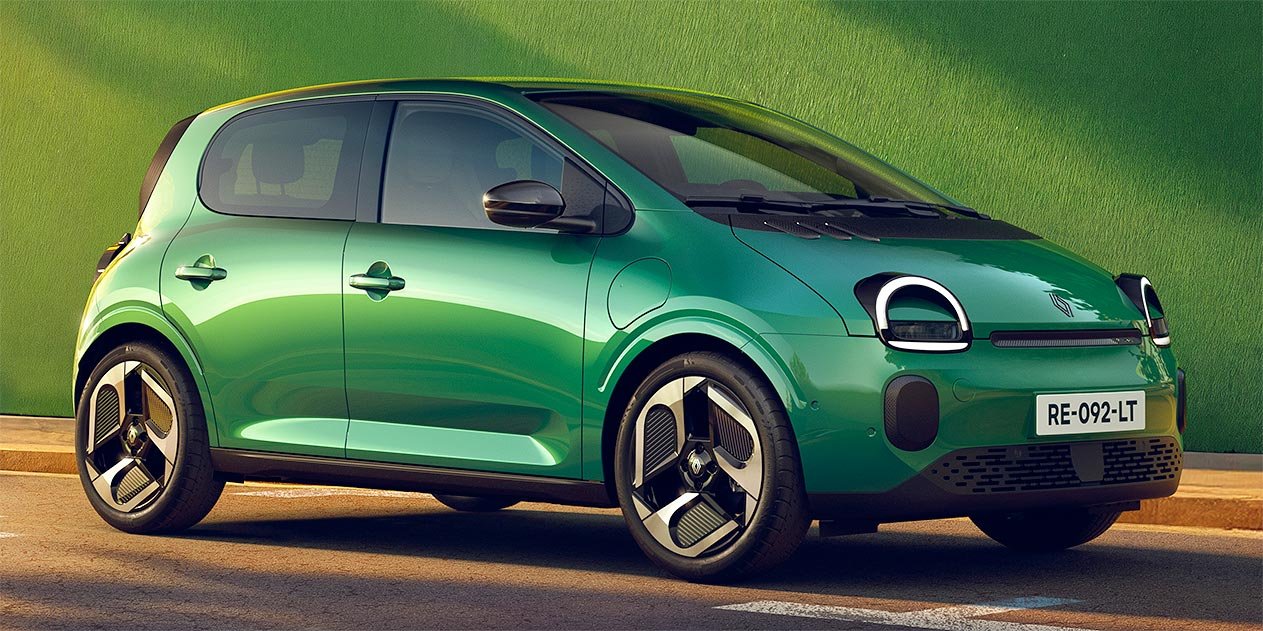
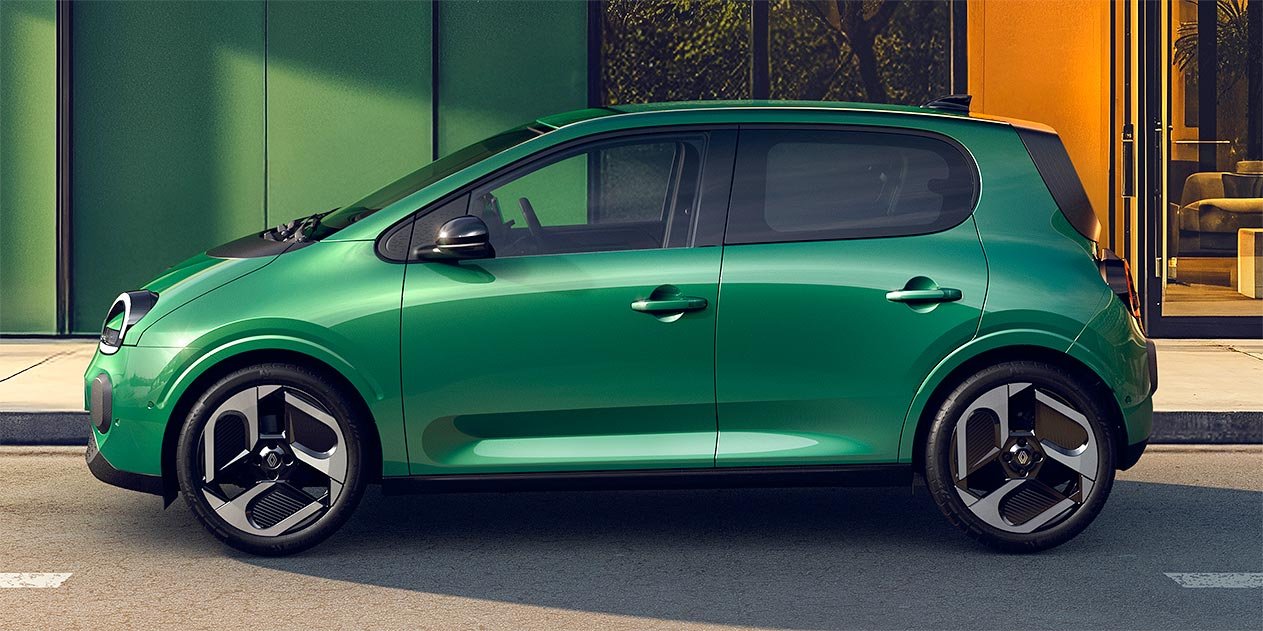
Full Electric Vehicle Specifications
MODEL
| Full Model Name | Renault Twingo E-Tech Electric |
| Segment / Class | A-segment city car (entry-level EV hatchback) |
| Available Trims / Variants | Evolution, Techno |
| Powertrain Options | Single motor, FWD (only one option offered) |
PRICE & AVAILABILITY
| Base Price (USD) | €19,500 (Evolution, Europe) |
| Availability Status | Launching spring 2026 |
| Markets Available | Europe (UK confirmed under £20,000) |
| Brand / Manufacturer | Renault |
BATTERY & CHARGING
| Battery Capacity | 27.5 kWh usable, LFP, cell-to-pack (CATL) |
| Range (WLTP/CLTC/EPA) | (WLTP): 263 km (16" wheels) / ~250 km (18" wheels, Techno) |
| DC Charging (Max kW) | 50 kW — standard in Germany, optional elsewhere (Advanced Charge Pack) |
| Charging Time (10–80%) | ~30 min on 50 kW DC |
| AC Charging (Max kW) | 6.6 kW standard / 11 kW with Advanced Charge Pack |
| Battery Warranty | Not confirmed |
| Energy Consumption | ~5.0 mi/kWh |
PERFORMANCE
| Power Output (kW / hp) | 60 kW / 82 hp |
| 0–100 km/h / 0-60 mph (seconds) The acceleration numbers are an easy way to compare car performance. We list either time from 0 to 100 km/h or time from 0 to 60mph, depending on which number(s) the manufacturers provide. The lower the acceleration time, the higher performance the car is. | Not confirmed |
| Motor Configuration | Single front motor, FWD |
| Torque (Nm) | 1Not confirmed |
| Top Speed (km/h / mph) | Not confirmed |
BODY & DIMENSIONS
| Dimensions (L×W×H mm) | 3.79 m long |
| Trunk/Boot Capacity (L) | Not confirmed |
| Body Style | Five-door hatchback |
| Kerb Weight (kg) | Not confirmed |
| Ground Clearance (mm) | Not confirmed |
| Frunk/Bonnet Capacity (L) | Not confirmed |
| Sunroof | Not confirmed |
SAFETY & DRIVER ASSISTANCE
| ADAS Features | Adaptive cruise control, one-pedal driving (Techno only) |
| Autonomous Driving Level | Not confirmed |
| Crash Test Ratings | Not confirmed |
| Over-the-Air (OTA) Safety Updates | Not confirmed |
COMFORT & SEATING
| Seating Capacity | Not confirmed |
| Seat Material | Not confirmed |
| Wireless Charging | Not confirmed |
DISPLAYS & CONNECTIVITY
| Centre Screen (inches) | 10" (Evolution) |
| Mirror Link / Apple CarPlay / Android Auto | OpenR Link with Google built in (Techno); |
| Driver's Display (inches) | not confirmed |
| Head-Up Display (HUD) | not confirmed |
TECHNOLOGY
| Vehicle-to-Load (V2L) | Yes, up to 3.7 kW |
| Vehicle-to-Grid (V2G) | Yes, select markets with compatible home hardware |
| Over-the-Air Map Updates | Not confirmed |
ADDITIONAL SPECS
| Headlight Type (LED/Matrix/Laser) | Not confirmed |
| Adaptive Headlights | Not confirmed |
| Sound System Brand | Not confirmed |
| Speaker Count | Not confirmed |
| Navigation System | Built-in nav (Evolution); OpenR Link nav (Techno) |
| Face Recognition | Not confirmed |
| Fingerprint Sensor | Not confirmed |
| Remote Parking | Not confirmed |
| Official Dealer Network | Not confirmed |
| Service Interval | Not confirmed |
| Roadside Assistance | Not confirmed |
Note
| Data Source | Renault press materials, international press drive (Ibiza) |
| Last Updated | September 2026 |
| Additional Notes | Several specs unconfirmed at time of writing; UK trim-level pricing pending |
User Reviews
Disclaimer Note
Specifications sourced from manufacturer data and may reflect WLTP, CLTC, or EPA test conditions. Import prices in your local are estimates based on grey-market landing costs and exclude duties, clearing fees, and local taxes. Figures are subject to change without notice. Always verify with your local importer before purchase. We can not guarantee that the information on this page is 100% correct