

- Electric Vehicles
- Compare Electric Cars
- Xpeng GX vs Nio ES9
Xpeng GX vs Nio ES9
The XPeng GX and NIO ES9 are both full-size, six-seat electric SUVs from China’s top-tier EV brands, launched within weeks of each other in April–May 2026. The GX is XPeng’s most ambitious premium push yet — a family-focused flagship designed for buyers who want range, autonomous driving hardware, and luxury space without paying European luxury prices. The ES9, meanwhile, is NIO’s long-anticipated answer to the Mercedes GLS and BMW X7, targeting executive buyers who value brand ecosystem, battery flexibility, and raw performance. Both are China-market launches arriving at a moment when full-size electric SUVs are redefining what premium means.
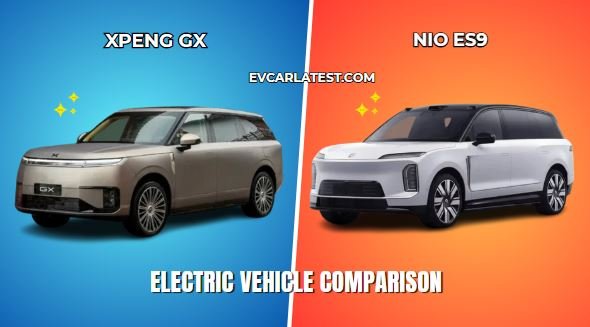
Range & Charging
The XPeng GX BEV delivers up to 750 km of CLTC range in AWD configuration, while the REEV variant offers 430 km of pure EV range and up to 1,585 km combined. The NIO ES9 packs a 102 kWh CATL battery with a CLTC-rated range of up to 620 km. Real-world estimates land around 550–600 km for the GX BEV and 500–560 km for the ES9 in mixed driving. On charging, the GX uses an 800V silicon carbide platform with 5C fast charging, hitting 10–80% in roughly 12 minutes at a compatible DC charger. The ES9 goes further with a 900V architecture — NIO’s 600 kW hyperchargers can add approximately 255 km in just 5 minutes, making the ES9 the faster charger of the two where infrastructure exists.
Price, Availability & Market Fit
The XPeng GX BEV starts at 279,800 yuan (~$38,700) for the base Max trim, rising to 359,800 yuan (~$49,800) for the Ultra Flagship edition. The NIO ES9 starts at 420,000 yuan (~$61,440) under the BaaS battery rental scheme, or 528,000 yuan (~$77,200) with the battery included. Both are sold in China only. Grey-market import into Nigeria, Kenya, or South Africa adds significant shipping, duty, and clearing costs — expect a landed cost of roughly ₦65M–80M for the GX base and ₦100M–125M for the ES9 entry trim. The GX makes sense for buyers who want maximum space and tech at a lower price point. The ES9 suits buyers willing to pay a premium for NIO’s battery-swap ecosystem and brand positioning.
Ecosystem & Rivals
Within XPeng’s lineup, the G9 SUV offers a closer-to-affordable alternative, while the MONA M03 and P7+ serve sedan buyers. NIO’s own ladder runs from the ES8 crossover up through the ET9 executive sedan — the ES9 slots in between. Rival alternatives from outside both brands include the Li Auto L9 (EREV, strong family value) and the AITO M9 (Huawei-powered, aggressive tech specs at a similar price). Neither match the GX’s CLTC range figure or the ES9’s charging speed in a single package — which is why this comparison still stands on its own merits.
Pros & Cons
XPeng GX: Its 750 km CLTC range means less range anxiety for long-haul family trips. The Level 4–ready autonomous driving hardware future-proofs the vehicle beyond most rivals. The lower entry price makes it genuinely accessible in the full-size luxury segment. However, XPeng’s charging network is less mature than NIO’s, which matters on long routes. The GX is also very new — first deliveries began May 2026, so long-term reliability data is not yet available.
NIO ES9: The 900V charging architecture is class-leading, and NIO’s battery-swap network eliminates charging waits entirely where available. The ES9’s interior space — at 5,365 mm long on a 3,250 mm wheelbase — is the largest of the two. Its ET9-derived technology makes it one of the most capable vehicles NIO has built. On the downside, the full-battery purchase price is significantly higher than the GX, and BaaS lock-in adds a recurring monthly cost. Deliveries only begin June 2026, making it even earlier in its production cycle.
Quick Verdict
Choose the XPeng GX if long range, lower cost of entry, and future-proof autonomous hardware are your priorities — it delivers more range per yuan than anything in this segment. Choose the NIO ES9 if charging speed, battery flexibility, and premium brand positioning matter more. The ES9 costs roughly 50% more than the GX at base, but its 900V charging and swap network are practical advantages no spec sheet fully captures. Neither is widely available outside China yet, so African buyers should factor grey-market import costs and after-sales support carefully before committing.
Related EV Comparisons
- Xpeng GX vs BMW iX
- Xpeng GX vs XPENG G7
- Xpeng GX vs XPeng G6 2026
- Xpeng GX vs XPeng G9
- Tesla Model Y L vs XPeng G9
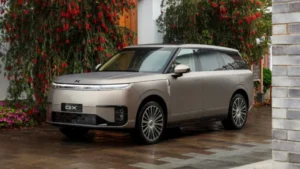
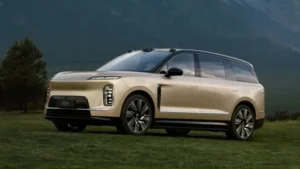
| |
| Price | $41,000.00 $69,000.00 |
| Our Rating | |
| Brand | XPeng NIO |
| Category | Electric Cars Electric Cars |
MODEL
| Full Model Name | XPeng GX (小鹏 GX) NIO ES9 (天行 / Tiān Xíng) |
| Generation | 1st Generation 1st Generation |
| Segment / Class | Full-size luxury SUV Full-size Luxury SUV (F-segment) |
| Available Trims / Variants | BEV RWD · BEV AWD Ultra · EREV AWD Ultra; ADAS tiers: Max (750 TOPS), Ultra SE (1,500 TOPS), Ultra (2,250 TOPS), L4 Robo (3,000 TOPS) Executive Premium Edition · Executive Signature Edition · Horizon Edition |
| Powertrain Options | BEV (pure electric) · EREV (extended-range electric) Dual-motor AWD (single powertrain configuration across all trims) |
| Special Editions | Kunlun Cloud Realm two-tone paint (15-layer, 230 µm finish) |
| Additional Notes | Sits above G9 in XPeng's SUV lineup; first XPeng model built on SEPA 3.0 platform Flagship SUV counterpart to the NIO ET9 sedan. Shares NT 3.0 platform and most ET9 technologies. |
LAUNCH
| Reveal Date | February 2026 (MIIT filing); April 15, 2026 (pre-sale open); April 24–28, 2026 (Beijing Auto Show official debut) January 2026 (CES announcement); April 9, 2026 (pre-sales + tech deep-dive) |
| Launch Year | 2026 2026 |
| Availability Status | On sale in China On sale (launched May 27, 2026) |
| Brand / Manufacturer | XPeng Motors (XPEV) NIO Inc. |
| Country of origin | China China |
| Assembly Country | China (Guangzhou, Guangdong) China (F2 Plant, Hefei, Anhui) |
| Markets Available | China only at launch China (initial); NIO's European markets expected later |
| Grey Market Import | Possible via third-party importers; no official export programme confirmed Possible via grey-market channels |
| Base Price (USD) |
~$41,000–58,000 (399,800 RMB; USD equivalent varies with exchange rate)
~$69,000 (full vehicle, Executive Premium) · ~$54,000 with BaaS battery rental ¥498,000 full vehicle · ¥390,000 with BaaS Executive Premium ~$69K / ~$54K BaaS · Signature ~$77K / ~$62K BaaS · Horizon ~$87K / ~$72K BaaS |
| Additional Notes | Both BEV and EREV variants share the same launch price of 399,800 RMB Launch prices came in ¥30,000 lower than April pre-sale prices. BaaS (Battery-as-a-Service) separates battery cost from vehicle cost. |
BATTERY
| Battery Capacity |
110 kWh (NMC) - BEV 63.3 kWh (LFP) - EREV 102 kWh (Gross) 95.0 kWh (Net/Usable) |
| Battery Chemistry |
NMC (nickel manganese cobalt) - BEV LFP (lithium iron phosphate) - EREV NMC (Nickel Manganese Cobalt) |
| Battery Architecture | 800V silicon carbide CTP (Cell-to-Pack); 900V architecture; nominal voltage 720V |
| Thermal Management | Active (800V platform standard) Active thermal management (confirmed) |
| Range (WLTP/CLTC/EPA) |
750 km / 466 mi (AWD) (CLTC) - BEV 430 km / 267 mi pure EV; 1,585 km / 985 mi combined (CLTC) - EREV 620 km (385 miles) - CLTC |
| Energy Consumption | 15.3 kWh/100 km (CLTC) |
| Heat Pump | |
| AC Charging (Max kW) | 11 kW |
| DC Charging (Max kW) | 5C-capable 600 kW (5C ultra-fast charging) |
| Charging Time (10–80%) |
~12 min (XPeng claim);
~11 minutes Charging Time (0–100%) - ~44 minutes |
| Cell Brand | CALB CATL |
| Battery Preheating | Yes |
| Additional Notes |
Battery SwapYes — NIO 3rd-gen swap stations (~3 minutes) 900V high-voltage architecture across all trims. BaaS model allows battery rental instead of outright purchase. |
PERFORMANCE
| Motor Type | Permanent magnet synchronous Front: AC Induction · Rear: Permanent Magnet Synchronous (PMSM) |
| Motor Configuration |
Single rear - BEV RWD Dual (front + rear) - BEV AWD Dual (front + rear) + generator - EREV AWD Dual-motor AWD |
| Front Motor Output (kW / HP) |
160 kW / 215 hp - BEV AWD 210 kW / 282 hp - EREV AWD 180 kW (~241 hp) |
| Rear Motor Output (kW / HP) |
270 kW / 362 hp - BEV RWD 270 kW / 362 hp - BEV AWD 160 kW / 215 hp - EREV AWD 340 kW (~456 hp) |
| Power Output (kW / hp) |
270 kW / 362 hp - BEV RWD 430 kW / 577 hp - BEV AWD 370 kW / 496 hp - EREV AWD 520 kW / 707 hp |
| Torque (Nm) | 700 Nm (517 lb-ft) |
| 0–100 km/h / 0-60 mph (seconds) The acceleration numbers are an easy way to compare car performance. We list either time from 0 to 100 km/h or time from 0 to 60mph, depending on which number(s) the manufacturers provide. The lower the acceleration time, the higher performance the car is. | ~4 sec 4.3 seconds |
| Top Speed (km/h / mph) | 200 km/h / 124 mph 220 km/h (137 mph) |
| Transmission / Drive |
Single-speed / RWD - BEV RWD Single-speed / AWD - BEV AWD Single-speed / AWD - EREV AWD Single-speed · AWD |
| Rear-Wheel Steering | Yes (SkyRide Intelligent Chassis) |
| Drive Mode | standard NIO multi-mode setup |
BODY
| Body Style | 5-door full-size SUV, 3-row 5-door full-size SUV |
| Body Colour Options | Everest White, Polar Black, Fjord Grey, Danxia Red, Cloud Gold (matte); Kunlun Cloud Realm two-tone (special) |
| Platform / Architecture | SEPA 3.0 (Smart Electric Platform Architecture) NT 3.0 |
| Dimensions (L×W×H mm) | 5,265 × 1,999 × 1,800 mm 5,365 × 2,029 × 1,870 mm |
| Drag Coefficient (Cd) | 0.255 0.264 |
| Wheelbase (mm) | 3,115 mm 3,250 mm |
| Front Track (mm) | 1,730 mm |
| Rear Track (mm) | 1,758 mm |
| Kerb Weight (kg) | BEV: 2,690–2,820 kg · EREV: 2,840–2,890 kg 2,845–2,915 kg |
| Max Laden Weight (kg) | 2,900 kg |
| Suspension (Front / Rear) | Dual-chamber air suspension Full Active Electrohydraulic Suspension (FAS) — "SkyRide" system; dual-chamber air suspension option |
| Wheel Size (inches) | 21" or 22" |
| Brakes (Front / Rear) | Hydraulic brake-by-wire, dual-chamber hydraulic |
| Parking Brake | Electronic |
| Trunk/Boot Capacity (L) | 673 L (all seats up) · 1,748 L (third row folded) 477 L (seats up) · 1,586 L (rear seats folded) |
| Frunk/Bonnet Capacity (L) | Yes — BEV only 216 L |
| Roof Load (kg) | 100 kg |
| Turning Circle (m) | 5.4 m radius (10.8 m diameter) 10.8 m |
| Approach / Departure Angle | 17° / 20° |
| Sunroof | Panoramic sunroof (standard) |
| Additional Notes | Rear-wheel steering: 7.5° standard, up to 10° in self-parking mode; retractable door handles; auto soft-close doors on all four doors; split-opening tailgate At 5,365 mm, the ES9 is China's largest battery electric SUV. Its wheelbase is 179 mm longer than a Cadillac Escalade IQ despite being 332 mm shorter overall. Cabin length claimed at 2,805 mm. |
SAFETY
| Airbags (count) | 11 — driver front, 125-litre passenger, 41-litre triple-chamber far-side (front row), full-length side curtains ×2 (all 3 rows, 6-sec pressure hold), side airbags ×4 (rows 1 & 2), seat cushion airbags ×2 (zero-gravity seats) 12 (standard across all variants; total inflation volume 525 L) |
| Anti-lock Braking System (ABS) | Yes Yes |
| Electronic Brakeforce Distribution (EBD) | Yes Yes |
| Electronic Stability Control (ESC) | Yes Yes |
| Traction Control System (TCS) | Yes Yes |
| Low-Speed Pedestrian Warning | Yes |
| Structural Safety | 16,000-tonne integrated die-cast front and rear structures; passed 720-degree five-stage chain collision test |
| Tyre Pressure Monitoring (TPMS) | Yes Yes |
| Child Seat Anchors (ISOFIX / LATCH) | Yes Yes |
| 360° Camera / Surround View | Yes Yes (25 HD cameras) |
| Reversing Camera | Yes Yes |
| Hill Start Assist | Yes Yes |
| Driver Assistance (ADAS) | Yes — XPeng AI Driving (tier depends on chip variant) Yes — NIO Aquila super-sensing system + NIO Supercomputing |
| ADAS Features | AEB up to 150 km/h; AES (emergency steering) up to 130 km/h (including icy roads); lane keeping; adaptive cruise; campus roaming; second-gen VLA model for complex environments (fog, rain, low light) City navigation assist, highway assist, auto lane change, auto parking, active safety; 3× LiDAR for 360° 3D perception |
| Autonomous Driving Level | L2+ standard; L4 hardware-ready (L4 Robo variant, H2 2026) L2+ (driver assistance; driver must remain attentive) |
| Autonomous Driving System Name | XPeng AI Driving (second-gen VLA + VLM) |
| Autonomous Driving Hardware | Up to 4× Turing AI chips (3,000 TOPS); pure vision, no LiDAR; cameras + mmWave radar NIO Shenji NX9031 (5nm automotive-grade, in production since March 2025) |
| Aviation-Grade Redundancy | Yes — 6-layer: quadruple backups for steering and braking; dual power and comms channels; 4 independent door-unlock methods |
| Over-the-Air (OTA) Safety Updates | Yes Yes |
| Additional Notes | NIO claims the Shenji chip uses ~50% less power than competing flagship chips during city assist and ~40% less in active safety scenarios. |
COMFORT
| Seating Capacity | 6 (2+2+2 layout) 6-seat or 7-seat layouts |
| Seat Material | Nappa leather Premium |
| Driver Seat Adjustment | Multi-way electric Yes |
| Passenger Seat Adjustment | 180° electric recline ("Queen's co-pilot" zero-gravity mode) |
| Power Seats | Yes — all rows Yes |
| Seat Heating | Yes Yes |
| Seat Ventilation | Yes Yes |
| Massage Function | Yes — 16-point Yes |
| Climate Control | 3-zone; "silent soft airflow" system with forest-style front vents and wraparound rear distribution Multi-zone |
| PM2.5 Filtration | Yes Yes (standard NIO feature) |
| Steering Wheel | Two-spoke steer-by-wire multi-function wheel Steer-by-Wire |
| Roof Type | Panoramic sunroof; AI-dimming privacy glass Panoramic roof |
| Ambient Lighting | Yes — dome ambient + star ribbon; multi-zone Yes |
| Rain-Sensing Wipers | Yes Yes |
| Heated Mirrors | Yes |
| Electrically Folding Mirrors | Yes |
| Central Armrest | Yes — with storage and dual wireless charging pads |
| Gear Selector | Column-mounted |
| Noise Insulation | Active noise design; "noise-canceling" fridge cited separately |
| Bluetooth / Wi-Fi |
Yes
5G OTA updates |
| Wireless Charging | Yes — dual pads (front console) Yes |
| 5G / LTE | Yes |
| Parking Aids | Yes — automatic and remote parking confirmed 360-degree cameras |
| Additional Notes | Built-in dual-door dual-zone refrigerator (12.5 L); fragrance system; AI antibacterial system; third-row seats recline 0–180° electrically; seats co-developed with Nissan Positioned for business/executive use. Cabin described as "exquisite craftsmanship." |
DISPLAYS
| Centre Screen (inches) | 17.3-inch, 3K resolution, 120Hz, floating design Large central touchscreen |
| Driver's Display (inches) | 8.8-inch LCD instrument cluster Digital cluster |
| Head-Up Display (HUD) | AR-HUD — 88-inch equivalent projection Yes |
| Rear Passenger Screen | 21.4-inch, 3K, ceiling-mounted (second row) |
| Display Resolution | Centre: 3K · Rear: 3K |
| Screen Technology | LCD (driver cluster) |
| Operating System | XPeng proprietary (Turing AI chip-based) NIO OS |
| Physical Controls | Yes (mix of touch and physical) |
| Voice Control | Yes — AI voice assistant Yes — NIO NOMI AI assistant |
| Additional Notes | NOMI AI assistant |
LIGHTING
| Headlight Type (LED/Matrix/Laser) | LED (integrated into lower bumper, vertically stacked modules) LED matrix (precision illumination system — "brighter, wider, longer range") |
| High Beams | LED Yes — adaptive |
| Daytime Running Lights (DRL) | Yes — "Star Ring" integrated LED strips Yes |
| Adaptive Headlights | Yes Yes |
| Delayed Headlight Shut-off | Yes |
| Welcome Lighting | Yes |
| Tail Light Design | Full-width rear light bar Signature NIO design |
| Interior Ambient Lighting | Yes — dome + star ribbon, multi-zone Yes |
INFOTAINMENT & AUDIO
| Sound System Brand | XPeng AI Audio LYRA Sound System (NIO proprietary) |
| Speaker Count | 33 47 |
| Audio Output (watts) | 2,032 W |
| Navigation System | Yes — OTA map updates Yes |
| Offline Maps | Yes |
| Rear Entertainment | Yes — 21.4-inch 3K ceiling screen (second row); magnetic expansion dock on right side |
| Additional Notes | Headrest-mounted speakers in second row |
TECHNOLOGY
| Smartphone App Control | Yes Yes — NIO app |
| Keyless Entry / Start | Yes Yes |
| Remote Start | Yes Yes |
| Bluetooth Key | Yes Yes |
| Remote Parking | Yes Yes |
| Automatic Parking | Yes Yes |
| Remote Climate Control | Yes Yes |
| Digital Key | Yes Yes |
| Smart Home Integration | Yes — "Smart Home 2.0" ecosystem |
| AI Assistant | Yes — XPeng AI assistant (Turing chip-powered) Yes — NIO NOMI |
| Over-the-Air Map Updates | Yes Yes |
| Additional Notes | X-VMC integrated motion control system; rear-wheel steering up to 10° in self-parking mode; steer-by-wire enables 5.4 m turning radius in a 5.27 m vehicle NIO's battery swap ecosystem (3rd-gen stations, ~3-minute swap) is a major ownership differentiator. |
OWNERSHIP
| Official Dealer Network | China only at launch NIO Spaces / NIO Houses (China, Europe); |
| Service Interval | NIO-to-Door mobile service + NIO service centres |
| Spare Parts Availability | China only; export markets: grey-market import risk |
| Import Duty Class | Varies by country |
| Grey Market Support | No official support outside China; after-sales risk is buyer's responsibility Possible via China/Dubai sourcing; |
| Roadside Assistance | Yes (China) Yes (official markets) |
| Additional Notes | NIO's BaaS model allows battery subscription (separate monthly fee); reduces upfront cost but ties owner to NIO's network. Grey-market buyers would not have access to swap stations or BaaS. |
Note
| Data Source | XPeng official launch materials; Beijing Auto Show 2026; MIIT filings; Electrek, Gasgoo, CarsGuide, paultan.org, carnewschina.com Wikipedia (NIO ES9 page) · EVKX.net · Electrek · CnEVPost · BigGo Finance · NIO official website (nio.com/es9) |
| Last Updated | May 2026 May 2026 |
| Additional Notes | CLTC range figures overstate real-world performance in non-Chinese conditions. WLTP or EPA equivalents not yet published. DC peak charging kW and AC onboard rate are unconfirmed for the GX specifically — flagged ⚠️ throughout. Largest SUV in Nio lineup |
| Editor's Note | This is a launch-period spec sheet. Several technical details remain unpublished by XPeng. All ⚠️ entries should be reverified once full technical documentation or independent test data is available. The NIO ES9 is not officially sold in Nigeria or anywhere in Africa. Grey-market import is feasible but buyers would lose BaaS battery-swap privileges, OTA updates may be restricted outside China, and spare parts availability is uncertain. Pricing in NGN at the time of writing: at ~₦1,650/USD, the BaaS base price of ~$54,000 equals approximately ₦89 million — making this a trophy/prestige import rather than a practical choice for most buyers. |
|
Disclaimer Note
Specifications sourced from manufacturer data and may reflect WLTP, CLTC, or EPA test conditions. Import prices in your local are estimates based on grey-market landing costs and exclude duties, clearing fees, and local taxes. Figures are subject to change without notice. Always verify with your local importer before purchase. We can not guarantee that the information on this page is 100% correct