

- Electric Vehicles
- Compare Electric Cars
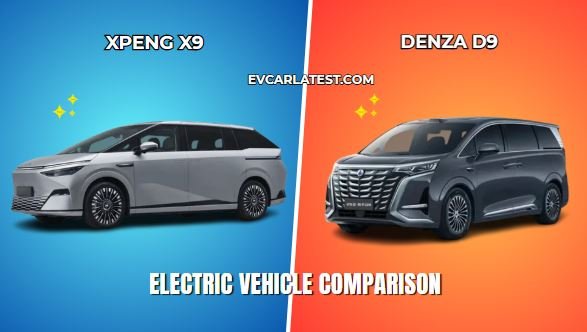
- Xpeng X9 EV vs Denza D9
Xpeng X9 EV vs Denza D9
The Xpeng X9 and Denza D9 are full-size electric MPVs from Chinese automakers, both targeting buyers who need serious passenger capacity without giving up on technology or refinement. The X9 is Xpeng’s flagship people-carrier — built for tech-forward executives and large families who want advanced driver assistance and a premium seven-seat cabin. The Denza D9, backed by BYD’s engineering, targets a similar buyer but leans toward comfort and powertrain flexibility, offering both pure EV and PHEV variants. With grey-market imports of both models becoming more common in Nigeria, Kenya, and South Africa in 2026, this comparison is directly relevant for African buyers in the segment.
Range & Charging
The Xpeng X9 is rated at approximately 702 km under CLTC — real-world range is closer to 520–560 km depending on load and conditions. It runs on an 800V architecture, supporting DC fast charging that brings it from 10–80% in roughly 30 minutes on a compatible charger. The Denza D9 EV version is rated around 620 km CLTC, with real-world estimates of 460–500 km. Its DC charging tops out at around 166 kW, putting the 10–80% time at roughly 35–40 minutes. Neither vehicle is optimised for African charging networks, where DC fast chargers are still limited to major urban corridors.
Price, Availability & Market Fit
The Xpeng X9 starts at approximately CNY 359,800 (~$49,500 USD / ₦80–85 million NGN grey-market estimate inclusive of shipping and import duties). The Denza D9 EV starts around CNY 329,800 (~$45,500 USD / ₦74–78 million NGN). Neither has official African distribution — both arrive through grey-market dealers in Lagos, Nairobi, or Johannesburg. If you want the wider BYD-linked parts supply chain, the D9 has a practical advantage. If you’re choosing on technology and range, the X9 justifies the price gap.
Ecosystem & Rival Context
Xpeng’s lineup includes the X8 SUV and G9, which share platform DNA with the X9 and suit buyers who want similar tech in a more conventional body style. Denza’s range includes the N7 sedan and N8 SUV for buyers who want the brand at a lower price point. Outside both brands, the Voyah Dreamer MPV and ZEEKR 009 are worth comparing at this price tier. This X9 vs D9 comparison still holds because both are purpose-built electric MPVs — the Dreamer and 009 serve slightly different buyer profiles.
Pros & Cons
Xpeng X9: The 800V charging system means noticeably shorter charging stops on long family trips, which matters where charging stations are spread thin. Its XNGP driver-assistance suite is one of the most capable in this class, reducing fatigue on highway journeys. The interior space and configurable seating rival premium European vans at a lower cost. On the downside, Xpeng’s service network outside China is close to non-existent, which makes grey-market maintenance a genuine risk. Its higher price also limits resale value where brand recognition is low.
Denza D9: BYD’s parts ecosystem gives the D9 better long-term serviceability in markets where Chinese vehicle maintenance is already established. The PHEV option is a practical fallback where charging infrastructure is unreliable. It also comes in at a lower price, making it easier to justify for fleet buyers or cost-conscious families. That said, its charging speed trails the X9 noticeably on longer routes. The interior is comfortable but doesn’t offer the same tech differentiation that separates this segment from a well-specced large SUV.
Quick Verdict
Choose the Xpeng X9 if fast charging, advanced driver assistance, and a flagship interior are your priorities, and you have a reliable local technician for servicing. Choose the Denza D9 if parts availability, a lower buy-in price, or PHEV flexibility matter more for everyday use. Both are grey-market purchases in most African markets — factor in long-term service access before deciding on either.
Related EV Comparisons
- Xpeng X9 EV vs Volkswagen ID. Buzz
- Zeekr 009 2026 vs Denza D9
- Xpeng GX vs AITO M9
- Xpeng GX vs Nio ES9
- Xpeng GX vs BMW iX
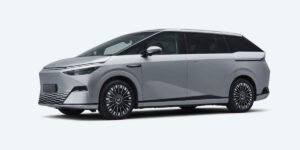

| |
| Price | $44,000.00 $45,000.00 |
| Our Rating | |
| Brand | XPeng Denza |
| Category | Electric Cars Electric Cars |
MODEL
| Available Trims / Variants |
RWD Standard Range RWD Long Range AWD Performance FWD (single motor) AWD (dual motor) |
LAUNCH
| Reveal Date | 2024 (updates continue into 2026 model year) 2024 update cycle |
| Availability Status | On sale Available / rolling global launch |
| Country of origin | China China |
| Base Price (USD) | $44,000 $45,000 – 65,000 |
BATTERY
| Battery Capacity |
84.5 kWh 101.5 kWh 103–103.4 kWh |
| Battery Chemistry | NMC lithium-ion, 800V platform LFP Blade battery |
| Range (WLTP/CLTC/EPA) | 350 to 430 miles (est. WLTP equivalent) 298–323 miles (480–520 km) |
| Energy Consumption | 17–19 kWh/100 km 23 kWh/100 km |
| Regen Braking (Max kW) | Adjustable regenerative braking Yes |
| Heat Pump | |
| AC Charging (Max kW) | 11 kW, ~8–10 hours full charge 11 kW, ~8–10 hours (0–100%) |
| DC Charging (Max kW) | up to 330 kW, 10–80% in ~12–20 min 200 kW, ~30 min (30–80%) |
| Additional Notes | 5C ultra-fast charging support V2L supported |
PERFORMANCE
| Power Output (kW / hp) |
RWD: ~315 HP AWD: ~503 HP dual motor 230 kW (≈308 hp) FWD 275 kW (≈369 hp) AWD |
| Torque (Nm) |
640 Nm (AWD)
360 Nm (FWD) 470 Nm (AWD) |
| 0–100 km/h / 0-60 mph (seconds) The acceleration numbers are an easy way to compare car performance. We list either time from 0 to 100 km/h or time from 0 to 60mph, depending on which number(s) the manufacturers provide. The lower the acceleration time, the higher performance the car is. |
5.7 s (RWD) 3.9 s (AWD) 9.5 s (FWD), 6.9 s (AWD) |
| Top Speed (km/h / mph) | 200 km/h (124 mph) 180–190 km/h |
| Transmission / Drive | Single speed automatic Single speed automatic |
BODY
| Body Style | 5-door MPV, 6 or 7 seats 5-door MPV, 6–7 seats |
| Platform / Architecture | SEPA 2.0 (800V EV platform) BYD e-platform (800V architecture) |
| Dimensions (L×W×H mm) | 5293 mm length, 1988 mm width, 1785 mm height 5250 / 1960 / 1920 mm |
| Drag Coefficient (Cd) | 0.227 Cd 0.29–0.30 |
| Wheelbase (mm) | 3160 mm 3110 mm |
| Ground Clearance (mm) | 140 mm 140–150 mm |
| Kerb Weight (kg) | 2,500–2,700 kg 2764–2865 kg |
| Suspension (Front / Rear) | Air suspension with adaptive damping Adaptive (DiSus-C on higher trims) |
| Wheel Size (inches) | 19 to 21 inch 18–20 inch |
| Trunk/Boot Capacity (L) | Large rear cargo, flexible seating fold 410–2310 L |
| Frunk/Bonnet Capacity (L) | No 410–2310 L |
| Towing Capacity (kg) | Limited |
| Additional Notes | Rear-wheel steering Dual sliding doors |
SAFETY
| Airbags (count) | Multiple front, side, curtain Multiple airbags (front, side, curtain) |
| Driver Assistance (ADAS) | Adaptive cruise, lane keep assist, collision avoidance AEB, adaptive cruise, lane assist, blind spot |
| Autonomous Driving Level | XPeng XNGP advanced driver assist Level 2 (DiPilot) |
| Crash Test Ratings | Focus on comfort, space, and fast charging over sporty driving dynamics |
COMFORT
| Seating Capacity | Heated, ventilated, massage (front and second row) Heated, ventilated, massage (2nd row captain seats) |
| Roof Type | Panoramic glass roof Panoramic glass |
| Bluetooth / Wi-Fi | 5G, OTA updates, voice control 5G, OTA updates, voice control |
| Parking Aids | 360 camera, auto park 360° camera, sensors |
| Additional Notes | AI-assisted cabin system Rear fridge, ambient lighting |
DISPLAYS
| Centre Screen (inches) | 17.3-inch touchscreen 15.6-inch touchscreen |
| Driver's Display (inches) | 10.25-inch digital cluster 10.3-inch digital cluster |
| Head-Up Display (HUD) | Yes 12-inch HUD |
| Additional Notes | Rear entertainment screen Rear seat control screens |
LIGHTING
INFOTAINMENT & AUDIO
TECHNOLOGY
OWNERSHIP
Note
| Additional Notes |
Focus on comfort over performance Targets premium MPV segment with long wheelbase and luxury interior |

|
Disclaimer Note
Specifications sourced from manufacturer data and may reflect WLTP, CLTC, or EPA test conditions. Import prices in your local are estimates based on grey-market landing costs and exclude duties, clearing fees, and local taxes. Figures are subject to change without notice. Always verify with your local importer before purchase. We can not guarantee that the information on this page is 100% correct