

- Electric Vehicles
- Compare Electric Cars
- Zeekr 009 2026 vs Denza D9
Zeekr 009 2026 vs Denza D9
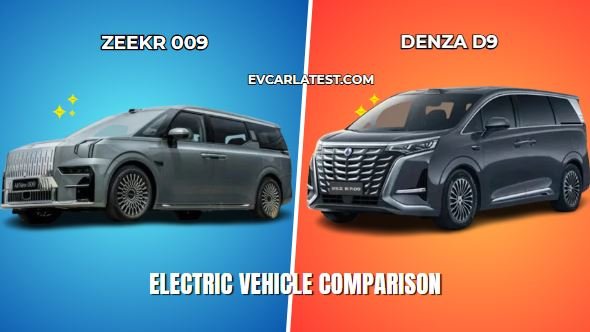
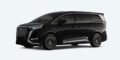
The Zeekr 009 and Denza D9 are both full-size electric MPVs from China’s two most ambitious EV groups — Geely and BYD respectively. The 009 targets high-net-worth buyers who want a chauffeured, business-class cabin experience, while the D9 is built for large families and fleet operators who need practicality without sacrificing comfort. Both have been arriving in African markets through grey-market imports, making this comparison especially timely for buyers in Nigeria, Kenya, and South Africa looking at the premium people-carrier segment.
Range & Charging
The Zeekr 009 2026 delivers approximately 580 km on the CLTC cycle; expect 420–460 km in real-world mixed driving. DC fast charging peaks at around 500 kW on compatible infrastructure, with a 10–80% charge achievable in roughly 15 minutes. AC onboard charging runs at 11 kW. The Denza D9 EV version offers around 620 km CLTC, with a realistic 440–480 km real-world estimate. Its DC charging tops out at 166 kW, placing 10–80% around 30–35 minutes — slower than the Zeekr but still practical. Both figures are CLTC-rated; no WLTP data is confirmed for either model at the time of writing.
Price, Availability & Market Fit
In China, the Zeekr 009 2026 starts at approximately ¥499,000 (~$69,000 USD). Grey-market import pricing into Nigeria lands around ₦90–105 million depending on spec and clearing costs. The Denza D9 starts lower, around ¥329,000 (~$45,000 USD), with Nigerian import estimates of ₦60–75 million. The D9 also offers a PHEV variant, which matters for buyers concerned about charging access. If your core question is “which luxury MPV gives me the most van for my money in Africa,” the D9 answers it more easily — but the 009 targets a different buyer entirely.
Ecosystem & Rival Context
Within Zeekr’s lineup, the Zeekr X and 001 serve buyers who want the brand in a smaller package, but neither competes in the MPV space. Within Denza, the D9 sits alongside the N7 SUV, which suits buyers who want BYD-adjacent quality in a different form factor. Outside both brands, the AITO M9 and the Li Auto MEGA are worth considering at similar price points in this segment. Both are strong alternatives — but this 009 vs D9 comparison remains the most direct match for buyers specifically needing a six-to-seven-seat EV MPV.
Pros & Cons
Zeekr 009 2026 The lounge-style rear cabin with airline-style seating makes it genuinely competitive with premium minivans costing far more, which matters if the vehicle doubles as a mobile office. Its 800V architecture means charging stops are short enough to avoid disrupting business schedules. The 2026 update brings improved NVMe-based infotainment, which reduces the lag that annoyed early owners.
On the downside, the higher entry price creates a significant affordability gap for most buyers in African markets without corporate or fleet backing. Service and parts availability outside China remains limited, meaning ownership risk is higher.
Denza D9 The lower starting price opens this segment to a wider buyer base, including mid-size fleet operators and family buyers who would otherwise look at combustion alternatives. The PHEV variant addresses range anxiety on long highway routes where charging infrastructure is unreliable — a real-world advantage in Nigeria and Kenya. Cabin space and build quality punch well above its price point.
The slower DC charging speed is a practical limitation if you’re running the vehicle on tight daily schedules. BYD’s Denza brand also carries less prestige recognition in Africa than it deserves, which can affect resale value.
Quick Verdict
Choose the Zeekr 009 if executive presentation and ultra-fast charging are your top priorities and budget is not the deciding factor. Choose the Denza D9 if you need a capable, spacious family or fleet MPV at a more accessible price, especially if the PHEV option eases your concerns about charging reliability. The gap in purchase price alone — roughly $24,000 — is the deciding factor for most buyers in this market.
Related EV Comparisons
- Zeekr X vs Smart #1
- Zeekr 007 GT (7 GT) 2026 vs Tesla Model 3 2025
- Zeekr 007 GT (7 GT) 2026 vs Porsche Taycan Sport Turismo
- Zeekr 007 GT (7 GT) 2026 vs Xiaomi SU7 2026
- Zeekr 007 GT (7 GT) 2026 vs BMW i5 Touring
| |
| Price | $67,000.00 $45,000.00 |
| Our Rating | |
| Brand | Zeekr Denza |
| Category | Electric Cars Electric Cars |
MODEL
| Full Model Name | Zeekr 009 |
| Generation | 2nd Generation (2026 update) |
| Segment / Class | Premium Large Electric MPV |
| Available Trims / Variants |
Ultra (7-seat) · Ultra+ Family (7-seat) · Ultra+ Executive (6-seat)
FWD (single motor) AWD (dual motor) |
| Powertrain Options | Single Motor (Ultra) · Dual Motor (Ultra+) |
| Additional Notes | 2026 update introduces 900V architecture on upper trims and Thor-U ADAS chip |
LAUNCH
| Reveal Date | April 2026 (Beijing Auto Show pre-sale) 2024 update cycle |
| Launch Year | 2026 |
| Availability Status | On sale — China Available / rolling global launch |
| Brand / Manufacturer | Zeekr (Geely Group) |
| Country of origin | China China |
| Assembly Country | China |
| Markets Available | China (official) · Australia (prior gen) · Malaysia (prior gen) |
| Grey Market Import | Possible — via third-party importers |
| Base Price (USD) | ~$64,700 (Ultra) · ~$67,600 (Ultra+ Family) · ~$69,100 (Ultra+ Executive) $45,000 – 65,000 |
BATTERY
| Battery Capacity |
108 kWh - Ultra (Base) 115 kWh - Ultra+ Trims 103–103.4 kWh |
| Battery Chemistry | NMC (Ternary Lithium) LFP Blade battery |
| Battery Architecture |
800V - Ultra (Base) 900V - Ultra+ Trims |
| Thermal Management | Liquid-cooled |
| Range (WLTP/CLTC/EPA) |
CLTC - 740 km - Ultra (Base) CLTC - 720 km - Ultra+ Trims 298–323 miles (480–520 km) |
| Energy Consumption | 23 kWh/100 km |
| Regen Braking (Max kW) | Yes |
| Heat Pump | |
| AC Charging (Max kW) | 11 kW, ~8–10 hours (0–100%) |
| DC Charging (Max kW) | 200 kW, ~30 min (30–80%) |
| Charging Time (10–80%) |
11.5 min - Ultra (Base) 10 min - Ultra+ Trims |
| Cell Brand | CATL (Qilin Battery) |
| Additional Notes | CLTC figures only — real-world range typically 15–20% lower. WLTP data pending. V2L supported |
PERFORMANCE
| Motor Type | Permanent Magnet Synchronous |
| Motor Configuration |
Single — Rear - Ultra (Base) Dual — Front + Rear - Ultra+ Trims |
| Rear Motor Output (kW / HP) | 310 kW / 416 hp - Ultra (Base) |
| Power Output (kW / hp) |
310 kW / 416 hp - Ultra (Base) 680 kW / 912 hp - Ultra+ Trims 230 kW (≈308 hp) FWD 275 kW (≈369 hp) AWD |
| Torque (Nm) |
440 Nm - Ultra (Base)
360 Nm (FWD) 470 Nm (AWD) |
| 0–100 km/h / 0-60 mph (seconds) The acceleration numbers are an easy way to compare car performance. We list either time from 0 to 100 km/h or time from 0 to 60mph, depending on which number(s) the manufacturers provide. The lower the acceleration time, the higher performance the car is. |
6.9 sec - Ultra (Base) 3.9 sec 9.5 s (FWD), 6.9 s (AWD) |
| Top Speed (km/h / mph) | 180–190 km/h |
| Transmission / Drive |
Single-speed / RWD - Ultra (Base) Single-speed / AWD - Ultra+ Trims Single speed automatic |
| Launch Control | Likely - Ultra+ Trims |
BODY
| Body Style | Large MPV (Minivan) 5-door MPV, 6–7 seats |
| Platform / Architecture | SEA (Sustainable Experience Architecture) — Geely Group BYD e-platform (800V architecture) |
| Dimensions (L×W×H mm) | 5,217 × 2,024 × 1,812 5250 / 1960 / 1920 mm |
| Drag Coefficient (Cd) | 0.29–0.30 |
| Wheelbase (mm) | 3,205 3110 mm |
| Ground Clearance (mm) | Air suspension — adjustable 140–150 mm |
| Kerb Weight (kg) | 2764–2865 kg |
| Suspension (Front / Rear) | Closed dual-chamber air suspension with Smart Magic Carpet function Adaptive (DiSus-C on higher trims) |
| Wheel Size (inches) | 18–20 inch |
| Trunk/Boot Capacity (L) | 410–2310 L |
| Frunk/Bonnet Capacity (L) | 410–2310 L |
| Additional Notes | Dual sliding doors |
SAFETY
| Airbags (count) | 7 Multiple airbags (front, side, curtain) |
| Anti-lock Braking System (ABS) | Standard |
| Electronic Brakeforce Distribution (EBD) | Standard |
| Electronic Stability Control (ESC) | Standard |
| Traction Control System (TCS) | Standard |
| Tyre Pressure Monitoring (TPMS) | Standard |
| Reversing Camera | Standard |
| Hill Start Assist | Standard |
| Driver Assistance (ADAS) | Thor-U chip (proprietary Zeekr) AEB, adaptive cruise, lane assist, blind spot |
| Autonomous Driving Level | Level 2 (DiPilot) |
| Over-the-Air (OTA) Safety Updates | Yes |
COMFORT
| Seating Capacity | 7-seat (Ultra, Ultra+ Family) · 6-seat (Ultra+ Executive) Heated, ventilated, massage (2nd row captain seats) |
| Seat Material | Nappa leather |
| Driver Seat Adjustment | Power |
| Passenger Seat Adjustment | Power |
| Power Seats | Yes |
| Seat Heating | Yes |
| Climate Control | Multi-zone |
| Steering Wheel | Heated |
| Roof Type | Panoramic glass |
| Ambient Lighting | Yes |
| Electrically Folding Mirrors | Power |
| Noise Insulation | High (flagship positioning) |
| Bluetooth / Wi-Fi | Yes 5G, OTA updates, voice control |
| Wireless Charging | Yes |
| Parking Aids | 360° camera, sensors |
| Additional Notes | 6-seat Executive layout uses 2+2+2 configuration with upgraded second-row specification Rear fridge, ambient lighting |
DISPLAYS
| Centre Screen (inches) | OLED 15.6-inch touchscreen |
| Driver's Display (inches) | 10.3-inch digital cluster |
| Head-Up Display (HUD) | 12-inch HUD |
| Screen Technology | OLED (confirmed for 2026 update) |
| Operating System | Zeekr OS (Flyme Auto) |
| Voice Control | Yes |
| Additional Notes | OLED cabin screen confirmed Rear seat control screens |
LIGHTING
| Headlight Type (LED/Matrix/Laser) | LED matrix |
| Daytime Running Lights (DRL) | Yes |
| Welcome Lighting | Yes |
| Tail Light Design | Intelligent interactive light groups |
| Interior Ambient Lighting | Yes |
| Additional Notes | Chrome-finished waterfall grille with interactive light group retained from prior gen; fog light trim updated |
INFOTAINMENT & AUDIO
| Navigation System | Yes |
TECHNOLOGY
| Smartphone App Control | Yes |
| Keyless Entry / Start | Yes |
| Remote Start | Yes |
| AI Assistant | Yes |
| Over-the-Air Map Updates | Yes |
| Additional Notes | Thor-U chip is the primary ADAS and compute platform for the 2026 model |
OWNERSHIP
| Official Dealer Network | China only (for 2026 model) |
| Spare Parts Availability | Limited outside China and select export markets |
| Import Duty Class | Luxury MPV — high duty band |
| Grey Market Support | None official — buyer assumes full risk |
| Insurance Category | High-value EV — specialist cover required |
| Roadside Assistance | China only (official) |
Note
| Data Source | CnEVPost · CarNewsChina · Carsales AU · The Beep AU · CenYavto |
| Last Updated | May 20, 2026 |
| Additional Notes |
2026 model launched in China on May 19, 2026. Full technical documentation not yet published. Multiple specs marked "Unconfirmed" will update as manufacturer releases official data.
Focus on comfort over performance Targets premium MPV segment with long wheelbase and luxury interior |
| Editor's Note | CLTC range figures apply — WLTP equivalents are typically 15–20% lower. Do not publish CLTC figures without the cycle label. |
|
Disclaimer Note
Specifications sourced from manufacturer data and may reflect WLTP, CLTC, or EPA test conditions. Import prices in your local are estimates based on grey-market landing costs and exclude duties, clearing fees, and local taxes. Figures are subject to change without notice. Always verify with your local importer before purchase. We can not guarantee that the information on this page is 100% correct