- Electric Vehicles
- Denza
- Denza Z9 GT
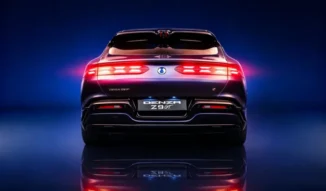
Denza Z9 GT
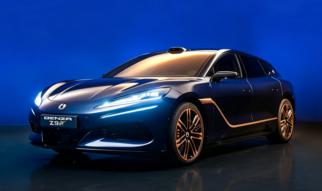
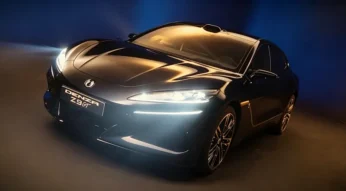

- Drive Type: RWD, AWD
- Body Type: 5-door shooting brake (GT); 4-door sedan also available as Z9 (not GT)
- Self Driving: L2+ (L2 with enhanced features)
- Airbags: Yes
PROS
- The Z9 GT is the first production EV to reach European market with megawatt-level Flash Charging, enabling a near-full recharge in under ten minutes at compatible stations.
- The 122.5 kWh LFP battery delivers up to 599 km WLTP (tri-motor) or 800 km WLTP (RWD), the longest WLTP-rated range in its class.
- At its Chinese launch price of around $39,000–$54,000, it significantly undercuts European luxury rivals with comparable or higher power output.
CONS
- Flash Charging speeds depend entirely on BYD's proprietary infrastructure, which has limited rollout outside China and a handful of European cities — most buyers will charge at significantly lower real-world rates for the foreseeable future.
- The €115,000 European price erodes the value case against Porsche and Audi, and Denza carries no brand recognition in Western markets or Africa, where the vehicle is not currently available for sale.
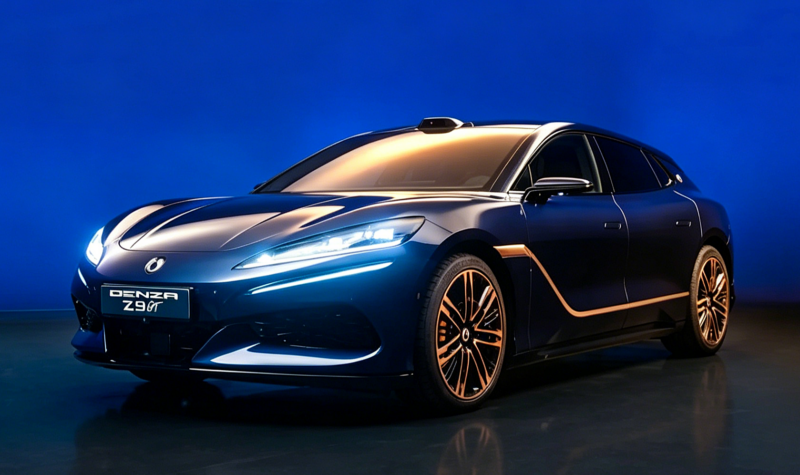
The Denza Z9 GT is a five-door shooting brake produced by Denza, a premium sub-brand wholly owned by BYD Auto. The Z9 GT sits on BYD’s e3 platform and uses a triple-motor, all-wheel-drive layout as its performance configuration, with a single-motor rear-wheel-drive variant introduced in the 2026 refresh. It is the first vehicle sold in Europe equipped with BYD’s megawatt-level Flash Charging system, making it a deliberate technology demonstration for the brand’s global push into the executive segment.
The top-specification 122.5 kWh variant carries a net usable capacity of 120.0 kWh and returns a WLTP-rated range of up to 599 km (372 miles). BYD states that the single-motor RWD configuration achieves a WLTP range of 800 km (497 miles), though WLTP figures tend to run higher than real-world figures. The standard onboard AC charger supports up to 11 kW. On the DC side, the Z9 GT can recharge from 10% to 80% in approximately six and a half minutes and reach 97% in under ten minutes using BYD’s Flash infrastructure, with a peak of 1,000 kW via CCS2 in European markets — the full 1,500 kW capacity is currently limited to the Chinese-market connector. The original 100 kWh model, which remains the primary spec for the 2025 European wave, is rated at a peak DC rate of 270 kW; the 122.5 kWh Flash-capable version is the 2026 refresh.
In Europe, the Z9 GT is priced at €115,000 (~$125,000 USD), which places it above the Porsche Taycan Sport Turismo. In its home market of China, the refreshed 2026 model is priced between 269,800 and 369,800 yuan (~$39,100 to $53,600 USD across five variants.) The buyer profile is a performance-oriented luxury buyer who prioritises long-range touring capability and fast charging over brand heritage — broadly the same customer cross-shopping a Porsche Taycan or Audi RS e-tron GT. Within the Denza lineup, the Z9 GT sits above the Denza N7, a mid-size electric SUV with a 91.4 kWh battery and up to 150–230 kW DC charging, and above the Z9 sedan variant which shares the same platform. External rivals include the Porsche Taycan Sport Turismo and the Audi RS e-tron GT; the closest direct comparison on specification and price is the Taycan Sport Turismo Turbo S.
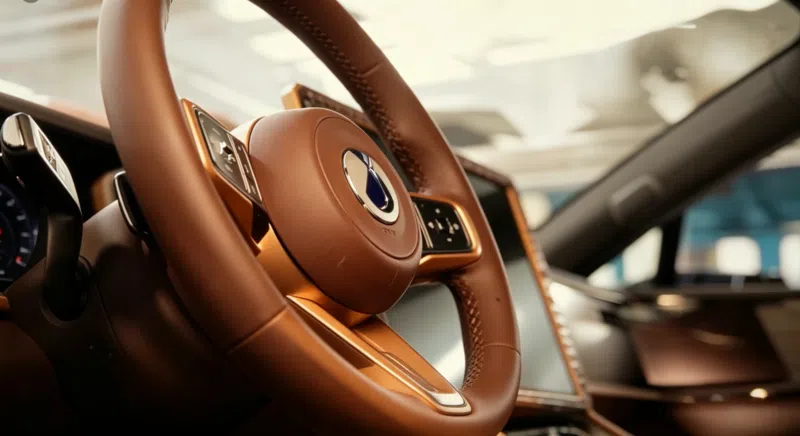
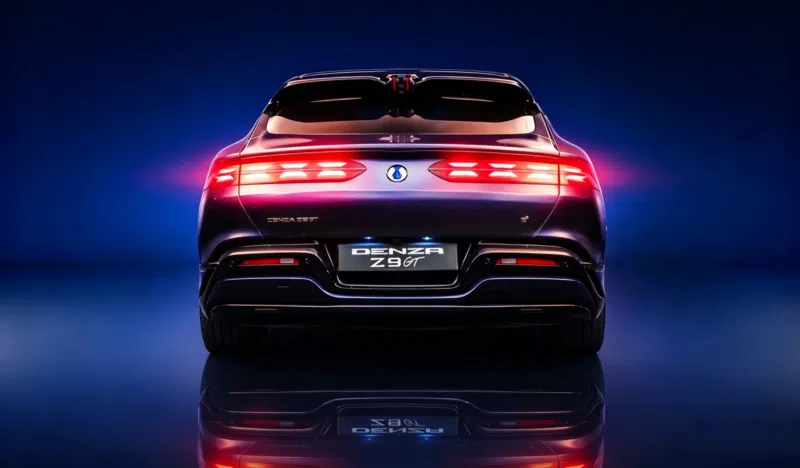
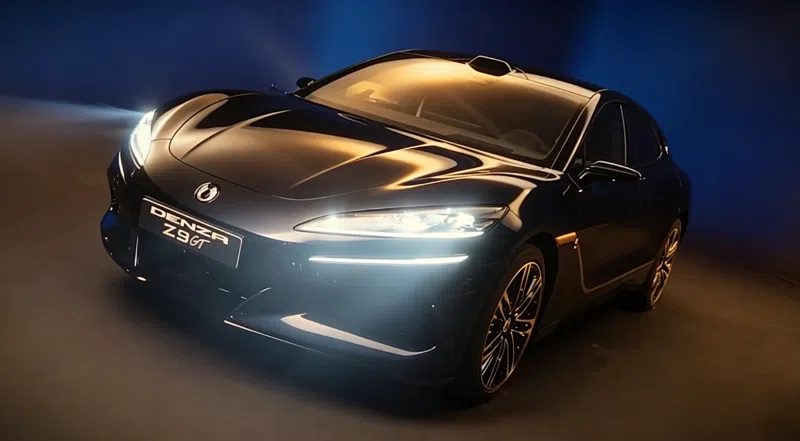
Denza Z9 GT Pictures
Full Electric Vehicle Specifications
MODEL
| Full Model Name | Denza Z9 GT |
| Generation | 1st generation (2024–present); 2026 refresh launched in China and Europe |
| Segment / Class | Executive / Full-size luxury shooting brake (E/F-segment) |
| Available Trims / Variants | Standard, Max, Ultra, Limited First Edition (China); single trim at launch (Europe) |
| Powertrain Options | BEV (pure electric, tri-motor AWD or single-motor RWD); PHEV (2.0L turbo + tri-motor AWD) |
| Special Editions | Limited First Edition (China launch) |
| Additional Notes | Post focuses on the BEV version. PHEV specs listed separately where they differ significantly |
LAUNCH
| Reveal Date | April 2024 (Beijing Auto Show) |
| Launch Year | 2024 (China); 2026 (Europe) |
| Availability Status | On sale in China and select European markets as of 2026 |
| Brand / Manufacturer | Denza (wholly owned by BYD Auto) |
| Country of origin | China |
| Assembly Country | China — Shenzhen, Guangdong |
| Markets Available | China, Europe (UK, Germany, France, and others); Australia confirmed for Q3 2026 |
| Grey Market Import | Possible via third-party importers; no official support outside listed markets |
| Base Price (USD) | ~$39,100 (China, refreshed 2026 model); ~$125,000 (Europe, €115,000) |
BATTERY
| Battery Capacity | 100 kWh gross / 99 kWh usable (standard BEV); 122.5 kWh gross / 120 kWh usable (2026 refresh / Flash Charging variant) |
| Battery Chemistry | LFP (Lithium Iron Phosphate) |
| Battery Architecture | BYD Blade Battery (CTB — Cell-to-Body integration) |
| Thermal Management | Liquid cooling; battery preheating supported |
| Range (WLTP/CLTC/EPA) |
630 km / 392 mi (100 kWh, tri-motor); 1,036 km / 644 mi (122.5 kWh, single-motor RWD) — CLTC ~560 km / 348 mi (100 kWh, tri-motor); ~599 km / 372 mi (122.5 kWh, tri-motor); ~800 km / 497 mi (122.5 kWh, RWD) — WLTP |
| Heat Pump | |
| AC Charging (Max kW) | 11 kW (onboard charger); ~11 hours for 0–100% at home |
| DC Charging (Max kW) | 270 kW (100 kWh model); up to 1,500 kW via BYD Flash Charging (122.5 kWh model); ~1,000 kW via CCS2 in Europe |
| Charging Time (10–80%) | 20–25 min (270 kW / 100 kWh); ~6.5 min (Flash Charging / 122.5 kWh) |
| Cell Brand | BYD |
| Battery Preheating | Yes |
| Additional Notes | Flash Charging requires BYD proprietary infrastructure. CCS2 peak in Europe may be capped at ~1,000 kW |
PERFORMANCE
| Motor Type | AC permanent magnet synchronous |
| Motor Configuration | Tri-motor AWD (1 front + 2 rear) or Single-motor RWD |
| Front Motor Output (kW / HP) | ~230 kW / 308 hp (tri-motor) |
| Rear Motor Output (kW / HP) | 2 × 310 kW / 416 hp each (tri-motor, 2026 refresh) |
| Power Output (kW / hp) | 710 kW / 952 hp (100 kWh model); 850 kW / 1,140 hp (122.5 kWh model) |
| Torque (Nm) | 1,150 Nm / 849 lb-ft |
| 0–100 km/h / 0-60 mph (seconds) The acceleration numbers are an easy way to compare car performance. We list either time from 0 to 100 km/h or time from 0 to 60mph, depending on which number(s) the manufacturers provide. The lower the acceleration time, the higher performance the car is. | 3.4 sec (100 kWh tri-motor); 2.7 sec (122.5 kWh tri-motor) |
| Top Speed (km/h / mph) | 240 km/h / 149 mph |
| Transmission / Drive | Single-speed reduction; AWD (tri-motor) or RWD (single-motor) |
| Rear-Wheel Steering | Yes — independent rear-wheel steering; enables crab-walk and 360° U-turn |
| Drive Mode | Multiple modes confirmed |
| Launch Control | Yes |
| Overboost / Boost Mode | Confirmed (Lava Red trim includes "Boost" racing paddle) |
| Torque Vectoring | Yes |
| Additional Notes | Crab-walk (all four wheels steer simultaneously) is a confirmed production feature |
BODY
| Body Style | 5-door shooting brake (GT); 4-door sedan also available as Z9 (not GT) |
| Body Colour Options | Multiple; specifics vary by market |
| Platform / Architecture | BYD e3 platform |
| Dimensions (L×W×H mm) | 5,180–5,195 mm × 1,990 mm × 1,480–1,500 mm |
| Wheelbase (mm) | 3,125 mm / 123.0 in |
| Kerb Weight (kg) | 2,740–2,875 kg (varies by trim and powertrain) |
| Suspension (Front / Rear) | Adaptive air suspension with electronically controlled pneumatic dampers (front and rear) |
| Brakes (Front / Rear) | 6-piston calipers with carbon ceramic discs (top trim); standard large rotors on lower trims |
| Parking Brake | Electronic |
| Turning Circle (m) | Functionally reduced via rear-wheel steering and crab-walk mode |
| Sunroof | Panoramic glass roof (confirmed) |
| Aerodynamics | Optimised front bumper; hidden door handles; aerodynamic wheel designs |
SAFETY
| Anti-lock Braking System (ABS) | Yes |
| Electronic Brakeforce Distribution (EBD) | Yes |
| Electronic Stability Control (ESC) | Yes |
| Traction Control System (TCS) | Yes |
| 360° Camera / Surround View | Yes |
| Reversing Camera | Yes |
| Night Vision | Yes (confirmed on higher trims) |
| Hill Start Assist | Yes |
| Driver Assistance (ADAS) | Yes — L2+ |
| ADAS Features | Adaptive cruise control, lane keeping assist, automatic emergency braking (AEB), driver monitoring, autonomous parking |
| Autonomous Driving Level | L2+ (L2 with enhanced features) |
| Autonomous Driving System Name | DiPilot (BYD/Denza system) |
| Autonomous Driving Hardware | LiDAR added on 2026 refresh |
| Over-the-Air (OTA) Safety Updates | Yes |
COMFORT
| Seating Capacity | 5 |
| Seat Material | Nappa leather (upper trims); Alcantara available |
| Power Seats | Yes |
| Seat Heating | Yes |
| Seat Ventilation | Yes |
| Massage Function | Yes — front and rear (varies by trim) |
| Climate Control | Multi-zone; PM2.5 filtration confirmed |
| PM2.5 Filtration | Yes |
| Steering Wheel | Heated; 3-spoke sports steering wheel on Lava Red trim |
| Roof Type | Panoramic glass roof |
| Ambient Lighting | Yes — up to 128 colour options |
| Rain-Sensing Wipers | Yes |
| Gear Selector | Column-mounted shifter (redesigned on 2026 refresh) |
| Bluetooth / Wi-Fi | Yes |
| Wireless Charging | Yes |
| 5G / LTE | Yes |
| Additional Notes | Front and rear refrigerators confirmed. Electrically powered doors on Ultra trim (6 closing modes, 5 opening modes) |
DISPLAYS
| Centre Screen (inches) | 17.3-inch floating central control screen |
| Driver's Display (inches) | Separate instrument cluster screen |
| Head-Up Display (HUD) | Yes — AR HUD, 50-inch equivalent projection |
| Rear Passenger Screen | Confirmed on higher trims |
| Screen Technology | OLED (confirmed for select screens) |
| Operating System | DiLink / BYD cockpit OS (BYD 9000 cockpit chip) |
| Physical Controls | Minimal; column shifter retained |
| Voice Control | Yes |
LIGHTING
| Headlight Type (LED/Matrix/Laser) | LED Matrix |
| Daytime Running Lights (DRL) | Yes — signature elongated DRL design |
| Adaptive Headlights | Yes |
| Welcome Lighting | Yes |
| Tail Light Design | Full-width LED strip |
| Interior Ambient Lighting | Yes — dynamic, up to 128 colours |
| Additional Notes | Exterior lighting design updated on 2026 refresh with sharper front fascia |
INFOTAINMENT & AUDIO
| Sound System Brand | Devialet (Ultra trim); Dynaudio (lower trims) |
| Speaker Count | 26 speakers (Devialet, Ultra trim) |
| Streaming Services | Yes — BYD app ecosystem |
| Navigation System | Yes — built-in |
| USB Ports (count/type) | Multiple |
| Rear Entertainment | Rear screen confirmed on higher trims |
| Additional Notes | Devialet system is reserved for Ultra and above trims |
TECHNOLOGY
| Smartphone App Control | Yes |
| Keyless Entry / Start | Yes |
| Remote Start | Yes |
| Bluetooth Key | Yes |
| Vehicle-to-Load (V2L) | Yes |
| Vehicle-to-Grid (V2G) | Yes |
| Vehicle-to-Vehicle (V2H) | Yes |
| Remote Parking | Yes |
| Automatic Parking | Yes |
| Remote Climate Control | Yes |
| AI Assistant | Yes — voice-based via BYD cockpit chip |
| Over-the-Air Map Updates | Yes |
OWNERSHIP
| Official Dealer Network | China (established); Europe (being built out 2025–2026) |
| Spare Parts Availability | Limited outside China and Europe |
| Grey Market Support | None official |
| Insurance Category | Expected high — due to weight, power, and repair complexity |
| Roadside Assistance | Confirmed in China; Europe TBC |
| Additional Notes | Flash Charging infrastructure is being deployed across China and Europe simultaneously with the vehicle; Africa has no confirmed infrastructure plan |
Note
| Data Source | Wikipedia (Denza Z9), EVKX.net, Autocar, Motor1, InsideEVs, Autoblog, CarNewsChina, Top Gear, Zecar (Australia) |
| Last Updated | May 2026 |
| Editor's Note | Specs reflect both the original 100 kWh (2024–2025) and refreshed 122.5 kWh (2026) variants. Where figures differ between them, both are listed. Flash Charging figures apply only to the 122.5 kWh model. Several comfort and tech specs are unconfirmed for European trim levels specifically — China-market specs may not carry over in full |
Disclaimer Note
Specifications sourced from manufacturer data and may reflect WLTP, CLTC, or EPA test conditions. Import prices in your local are estimates based on grey-market landing costs and exclude duties, clearing fees, and local taxes. Figures are subject to change without notice. Always verify with your local importer before purchase. We can not guarantee that the information on this page is 100% correct