If you want the best all-round electric SUV for a family in 2026, the BYD Tang is the strongest case in Africa — it seats seven, charges fast, and arrives at a price the Model Y cannot touch in Nigeria, Kenya, or South Africa. But it is not the only option worth taking seriously. The Kia EV9 beats it on interior quality and software. The Tesla Model Y is still the safest bet for resale value. The rest depend on your budget, where you live, and how patient you are with grey-market paperwork.
We compared seven models across range, boot space, safety ratings, charging speed, and real-world pricing in African markets. Here is what we found.
⚡ Quick Summary
| Best overall for Africa | BYD Tang (2026) |
| Best premium pick | Kia EV9 |
| Best for resale value | Tesla Model Y Long Range |
| Best budget entry | BYD Atto 3 (5-seat alternative) |
| Watch out for | Charging infrastructure gaps in most African cities |
Key takeaways:
- Seven-seater EVs are now widely available via grey import into Nigeria, Kenya, and South Africa, though official warranties vary by brand.
- CLTC range figures (used by Chinese brands) run 15–25% higher than real-world WLTP equivalents — factor this into your range planning.
- Prices in this article are grey-market estimates (Lagos/Nairobi/Johannesburg) unless stated otherwise. Exchange rates as of May 2026.
Why Buying a Family EV in 2026 Is Different From 2024
Two years ago, a family shopping for an electric SUV in Lagos, Nairobi, or Johannesburg had maybe three realistic options. Today there are at least seven worth comparing seriously, and several Chinese brands have expanded their grey-market dealer networks into West Africa and East Africa.
The problem has not fully gone away. Charging is still patchy outside major city centres. Spare parts for some Chinese models require ordering direct from Guangzhou. And range figures from Chinese manufacturers — quoted in CLTC, not WLTP — are almost always optimistic on Nigerian roads.
But the cars have gotten genuinely good. A family of five or six, doing mostly city driving with occasional highway runs to a second home or school trip, can make an electric SUV work today in a way that was genuinely difficult in 2022.
Here is how the top seven stack up.
The 7 Best Electric SUVs for Families in 2026
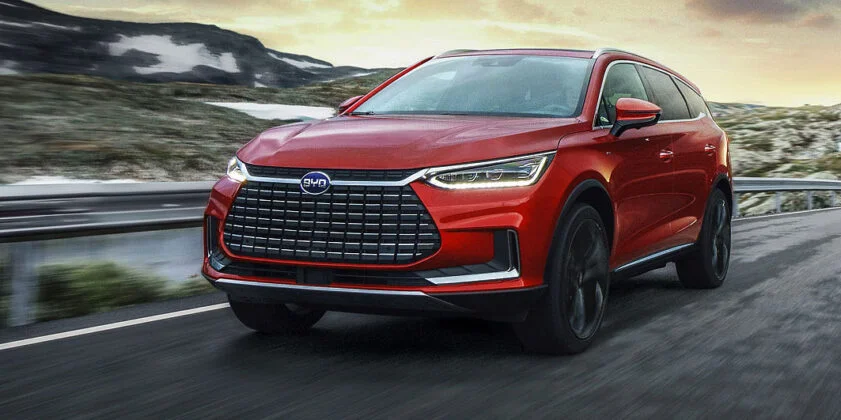
1. BYD Tang EV (2026) — Best for African Families Overall
The BYD Tang is the most practical family EV available in Africa right now. It seats seven across three rows, the third row is actually usable for adults under 5’9″, and the charging speed — 110 kW DC — is fast enough to add meaningful range during a 30-minute stop.
Key specs:
- Range: 530 km CLTC (estimate 420–450 km real-world)
- Battery: 86.4 kWh
- Seating: 7
- Charging: 110 kW DC / 7 kW AC
- NCAP: 5-star Euro NCAP (2023)
- 0–100 km/h: 4.6 seconds (AWD)
Africa pricing (grey market, May 2026 estimates):
- Nigeria (Lagos): ₦55,000,000 – ₦62,000,000
- Kenya (Nairobi): KES 5,800,000 – KES 6,400,000
- South Africa (Jo’burg): ZAR 980,000 – ZAR 1,150,000
The Tang’s weaknesses are real. The interior materials feel slightly behind its price point. Infotainment is BYD’s own system, which takes getting used to. And resale value in Nigerian grey-market conditions is still uncertain.
But for a family that needs seven seats, a fast charger, and a price that does not require a mortgage, the Tang is the clear starting point. We covered it in more detail in our full BYD Tang review.
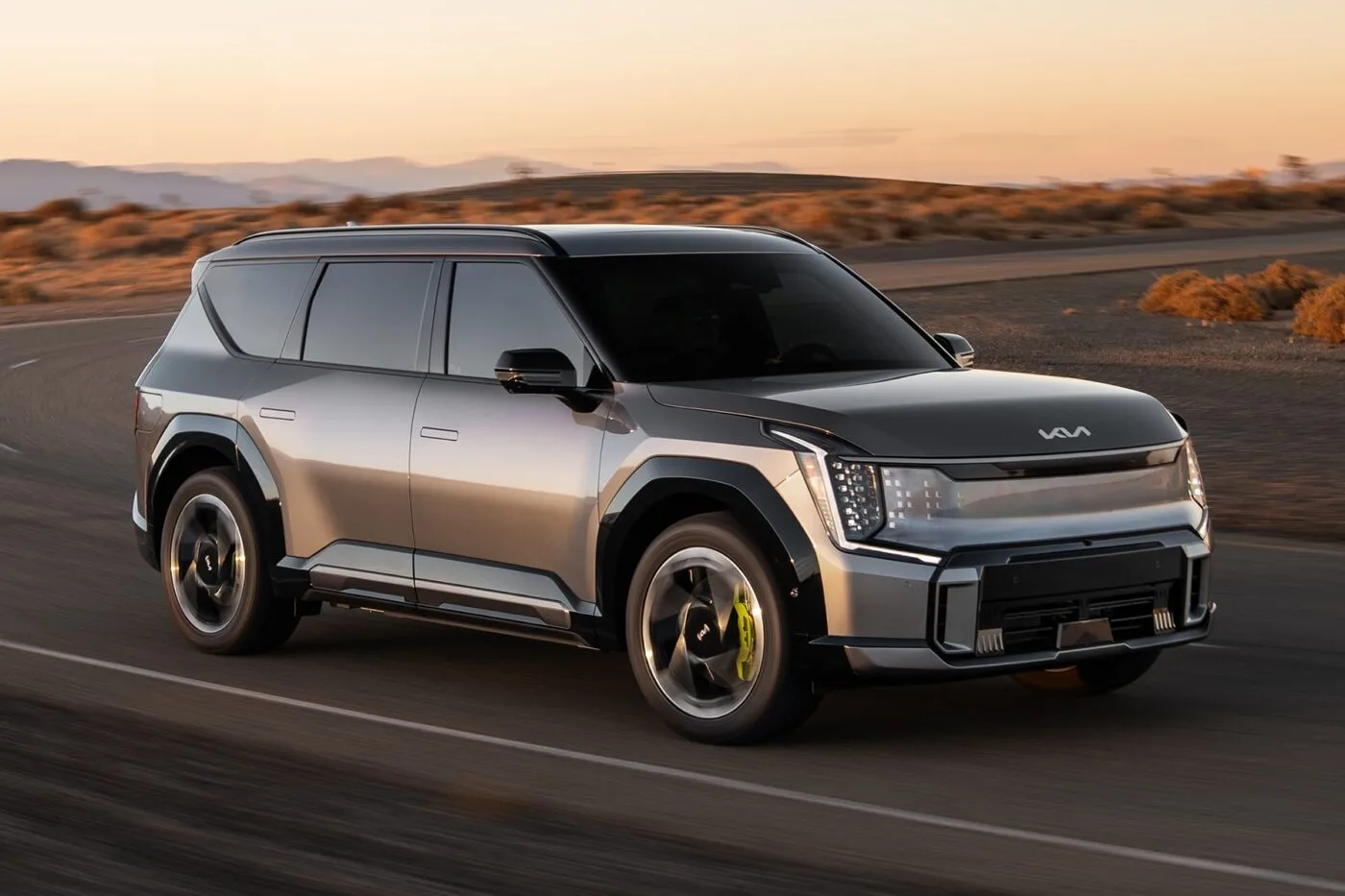
2. Kia EV9 (2026) — Best Premium Family EV
The EV9 is probably the best-engineered family EV on this list. The interior layout is genuinely clever — the second row can swivel to face the third row for face-to-face seating, which is more useful than it sounds if you have young children. The 800V charging architecture means 239 kW DC charging at the right station, though 800V infrastructure is almost nonexistent in most African cities right now.
Key specs:
- Range: 541 km WLTP (Long Range AWD)
- Battery: 99.8 kWh
- Seating: 6 or 7 (depending on configuration)
- Charging: 239 kW DC (800V) / 11 kW AC
- NCAP: 5-star Euro NCAP (2024)
- 0–100 km/h: 5.3 seconds (AWD)
Africa pricing (grey market, May 2026 estimates):
- Nigeria (Lagos): ₦82,000,000 – ₦95,000,000
- Kenya (Nairobi): KES 8,200,000 – KES 9,500,000
- South Africa: Available via official Kia dealers from ZAR 1,500,000
The South Africa situation is notable — Kia EV9 has an official dealer presence there, which means warranty coverage and parts availability that grey-market buyers in Nigeria and Kenya do not get.
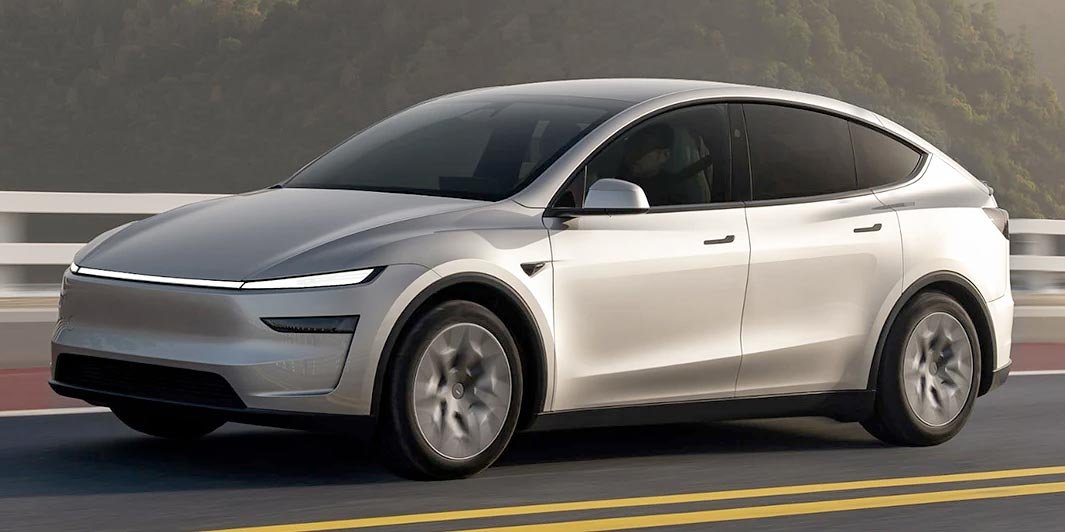
3. Tesla Model Y Long Range (2026) — Best for Resale
The Model Y remains the global benchmark for a reason. It is not the biggest family EV on this list — the five-seat layout and optional folding third row are tighter than the Tang or EV9 — but software, safety, and resale value keep it relevant.
Tesla’s Autopilot is still the most usable driver assistance system available. Over-the-air updates mean a 2023 Model Y can gain features a 2026 BYD cannot. And resale value in South Africa, where Tesla has official operations, holds meaningfully better than grey-market alternatives.
Key specs:
- Range: 533 km WLTP (Long Range AWD)
- Battery: 82 kWh
- Seating: 5 (7 with optional third row)
- Charging: 250 kW DC Supercharger / 11 kW AC
- NCAP: 5-star Euro NCAP (2024)
- 0–100 km/h: 4.8 seconds
Africa pricing (May 2026 estimates):
- Nigeria (Lagos): ₦78,000,000 – ₦88,000,000 (grey market)
- Kenya (Nairobi): KES 7,800,000 – KES 9,000,000 (grey market)
- South Africa: from ZAR 1,299,900 (official, Model Y Standard Range)
The Supercharger network in South Africa now covers Johannesburg, Cape Town, Durban, and a growing number of highway corridors. In Nigeria and Kenya, Tesla owners rely on Type 2 AC charging at home or at third-party DC stations — which works, but removes one of Tesla’s biggest advantages.
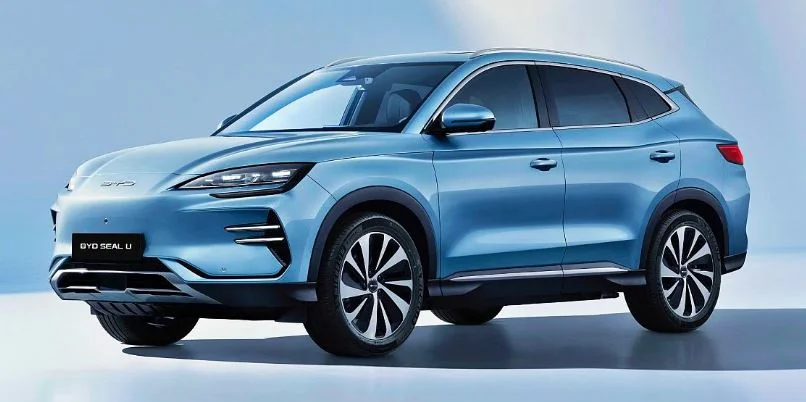
4. BYD Seal U (2026) — Best Five-Seat Value
The Seal U is BYD’s mid-size family SUV — positioned below the Tang in price, with five seats and a smaller battery. It is a better package than the older Atto 3 in most respects, and it arrives cheaper than any other vehicle on this list.
Key specs:
- Range: 460 km CLTC (estimate 360–390 km real-world)
- Battery: 71.8 kWh
- Seating: 5
- Charging: 80 kW DC / 7 kW AC
- NCAP: Not yet tested (as of May 2026 — spec unconfirmed in African markets)
- 0–100 km/h: 6.9 seconds (FWD)
Africa pricing (grey market, May 2026 estimates):
- Nigeria (Lagos): ₦42,000,000 – ₦50,000,000
- Kenya (Nairobi): KES 4,400,000 – KES 5,200,000
- South Africa (Jo’burg): ZAR 750,000 – ZAR 850,000
If your family is five people and the budget ceiling is real, the Seal U is worth serious consideration over the Tang. The 80 kW charge speed is the main downside — at a 50 kW DC station, you are looking at a long stop.
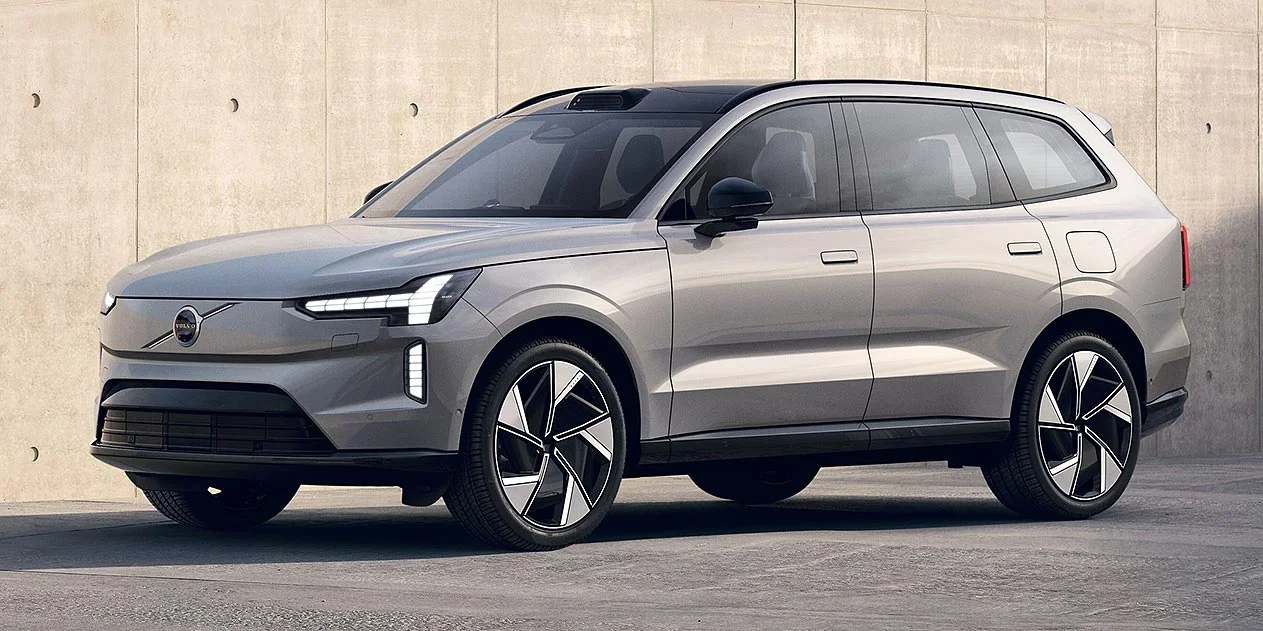
5. Volvo EX90 (2026) — Safest Option, Full Stop
The EX90 is the highest-rated family SUV for passive safety on this list. Volvo’s LiDAR-based driver assistance system is more advanced than most vehicles here, and the interior quality — Scandinavian minimalism with sustainable materials — is a step above anything from BYD or even Kia at this price.
The catch is the price. And in Nigeria and Kenya, the EX90 is grey-market only, which means you are paying premium import costs with no official after-sales support.
Key specs:
- Range: 580 km WLTP (Twin Motor)
- Battery: 111 kWh
- Seating: 7
- Charging: 250 kW DC / 11 kW AC
- NCAP: 5-star Euro NCAP (2024) — highest score in class
- 0–100 km/h: 4.9 seconds
Africa pricing (grey market, May 2026 estimates):
- Nigeria (Lagos): ₦115,000,000 – ₦130,000,000
- Kenya (Nairobi): KES 11,500,000 – KES 14,000,000
- South Africa: Available via official Volvo dealers from ZAR 2,100,000
Unless you are in South Africa with access to official Volvo service, the EX90 is a difficult recommendation in practical terms — not because of the car, but because of what happens when something goes wrong.
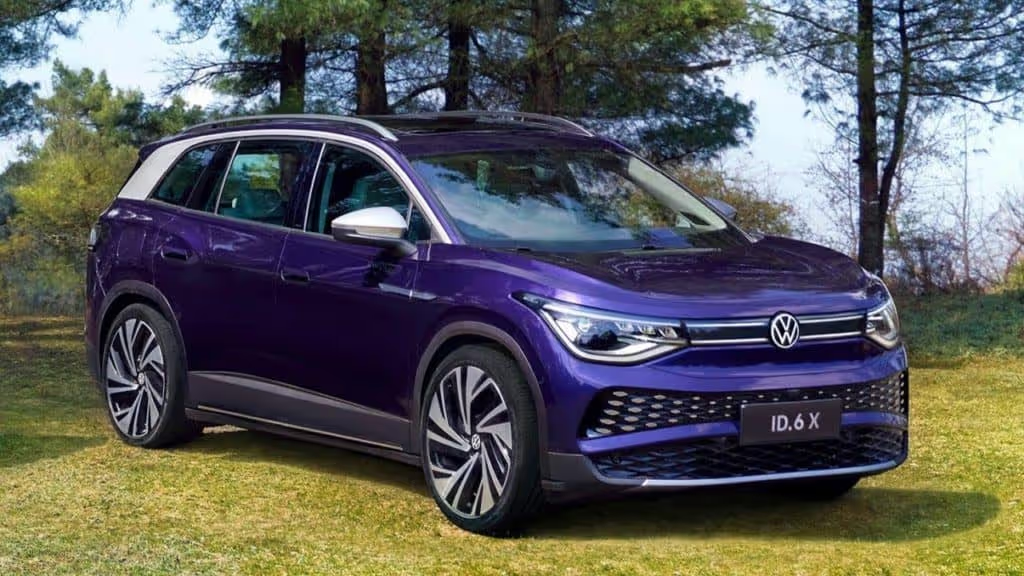
6. VW ID.6 (2026) — Seven Seats, Familiar Brand
Volkswagen’s ID.6 is not officially sold in most African markets but arrives via grey import regularly into South Africa and occasionally Kenya. It seats seven with a layout similar to the Tang — usable second and third rows, decent boot space with all seats in use.
The ID.6 runs on VW’s MEB platform, which means parts compatibility with other ID-series cars if that is relevant to your situation. OTA updates are less frequent than Tesla or Kia.
Key specs:
- Range: 440 km WLTP (Pro S)
- Battery: 77 kWh
- Seating: 7
- Charging: 135 kW DC / 11 kW AC
- NCAP: 5-star Euro NCAP (2021, MEB platform)
- 0–100 km/h: 7.4 seconds
Africa pricing (grey market, May 2026 estimates):
- South Africa (Jo’burg): ZAR 950,000 – ZAR 1,100,000
- Kenya (Nairobi): KES 5,500,000 – KES 7,000,000
- Nigeria (Lagos): Less common; limited grey stock
The ID.6 undercuts the Tang slightly in South Africa and Kenya, but the Tang’s faster charging and stronger BYD after-market presence in those markets tilts the balance for most buyers.
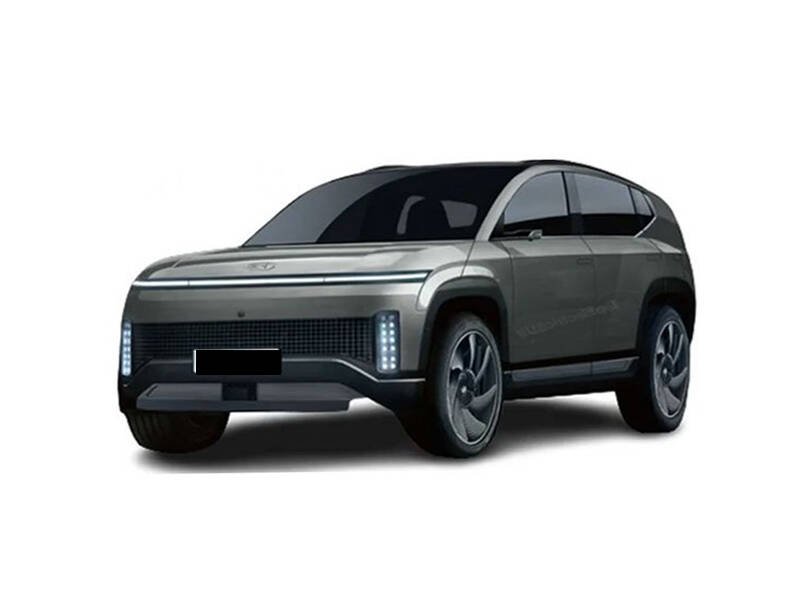
7. Hyundai IONIQ 7 (2026) — Best Upcoming Option
The IONIQ 7 was confirmed for production in late 2025 and began reaching some markets in early 2026. Pricing and availability in Africa are still being established — no confirmed grey-market supply chain exists as of this writing. We include it here because it will matter.
Key specs (confirmed):
- Range: ~600+ km WLTP (projected)
- Battery: 100+ kWh (unconfirmed for all trims)
- Seating: 7
- Charging: 800V / 350 kW DC capability
- NCAP: Testing pending (as of May 2026)
Note: IONIQ 7 specs and African market pricing are unconfirmed at time of publication. We will update this article when official data is available.
Comparison Table: All 7 Side by Side
| Model | Range (real-world est.) | Seats | DC Charging | Boot (all seats) | Africa Price Range (NGN) | WLTP/CLTC |
|---|---|---|---|---|---|---|
| BYD Tang | ~430 km | 7 | 110 kW | 235 L | ₦55M – ₦62M | CLTC |
| Kia EV9 | 541 km | 6/7 | 239 kW | 333 L | ₦82M – ₦95M | WLTP |
| Tesla Model Y LR | 533 km | 5 (7 opt.) | 250 kW | 854 L (5-seat) | ₦78M – ₦88M | WLTP |
| BYD Seal U | ~375 km | 5 | 80 kW | 425 L | ₦42M – ₦50M | CLTC |
| Volvo EX90 | 580 km | 7 | 250 kW | 310 L | ₦115M – ₦130M | WLTP |
| VW ID.6 | 440 km | 7 | 135 kW | 272 L | Not common | WLTP |
| Hyundai IONIQ 7 | ~600 km | 7 | 350 kW | TBC | TBC | WLTP |
Prices are grey-market estimates for Lagos, Nigeria as of May 2026. Exchange rates fluctuate — confirm with importers before purchasing. CLTC ranges are Chinese test-cycle figures; real-world performance in Nigerian conditions will be lower.
Charging: The Honest Reality in African Cities
No family EV purchase in Africa in 2026 makes sense without a home charging plan. Public fast charging has improved but is not reliable enough to be your primary option.
- Lagos and Abuja: EKEDC and a handful of private operators now run 50 kW DC stations at select locations. Coverage is thin outside Victoria Island and Lekki.
- Nairobi: Charge.Africa and several private stations offer 50–150 kW DC. Westlands and the CBD have reasonable coverage.
- Johannesburg and Cape Town: Best infrastructure on the continent — multiple 150 kW+ stations, Tesla Superchargers in major retail parks.
For most families outside Johannesburg, the realistic strategy is: charge at home overnight on a 7 kW AC wallbox, use public DC fast charging for long trips only.
What Actually Matters for Family Buyers
Space first. Boot capacity with the third row folded matters more than 0–100 km/h. A school run + weekend grocery load is your actual use case.
Third row usability. The EV9’s third row is comfortable for adults. The Tang’s third row works for children and small adults. The Model Y’s optional third row is genuinely cramped.
Charging speed at your nearest public station. The EV9’s 239 kW charging is irrelevant if your nearest public station is 50 kW. Check what is actually near you before paying the premium.
Grey-market risk. If something breaks on a BYD Tang bought through a Lagos importer, your warranty claim goes nowhere official. Ask your seller specifically about their parts sourcing and service arrangement before you sign anything.
Bottom Line Verdict
For most families in Nigeria and Kenya in 2026, the BYD Tang is the right call — it seats seven, charges at a useful speed, and arrives at a price that does not require selling another asset to fund it. If your budget stretches to the premium tier and you are in South Africa with access to official dealer support, the Kia EV9 is the better-engineered car and worth the extra spend. The Tesla Model Y remains the most sensible buy if resale value and software longevity matter more to you than the third row. Everything else on this list is worth knowing about but harder to recommend in full confidence given current African market conditions.
All prices are grey-market estimates based on Lagos, Nairobi, and Johannesburg importer data as of May 2026 and will fluctuate with exchange rates and availability. EV Car Latest does not sell vehicles. Specifications marked as unconfirmed reflect information not yet verified by the manufacturer for African market variants.
Related EV Updates
- Nio vs Xpeng vs Li Auto: Who Is Winning China’s EV War?
- Best Chinese EV Under $25,000 for African Import: 2026 Shortlist
- Electric Bike vs Electric Scooter: Which Is Right for You?
- Plug-in Hybrid vs Full Electric Car: Which to Buy in 2026?
- BYD vs Geely: Which Chinese EV Brand Is Actually Better in 2026?