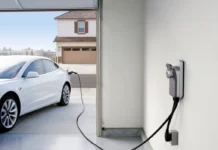
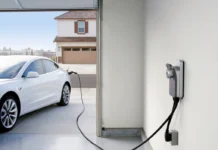
Yes, pairing solar panels with an EV is usually worth it financially — but the payback period depends heavily on how the system is sized, not just on the fact that you own an EV. A home solar system built to offset an EV’s charging load alone typically takes 10–13 years to pay for itself at 2026 prices. A whole-house system that happens to also cover EV charging pays back faster, in the 8–12 year range that solar has historically delivered. These are averages; local electricity rates, sunlight hours, and system pricing shift the number for any specific home. The rest of this article walks through the actual costs, so the decision doesn’t rest on a rule of thumb.
Quick Summary
| Takeaway | 2026 Reality |
|---|---|
| Average solar cost | $2.50–$3.50 per watt installed; a typical 8 kW system runs roughly $20,000–$28,000 before incentives, according to Lawrence Berkeley National Laboratory’s Tracking the Sun dataset and SEIA market analysis |
| US federal solar tax credit | The 30% residential credit (Section 25D) expired December 31, 2025, for cash and loan purchases; it’s still available on leases and PPAs where a third-party financing company claims the credit |
| Grid EV charging cost | Residential electricity averaged 18.83 cents per kWh nationwide in April 2026, putting home charging around $0.05–$0.06 per mile |
| Solar-charged EV cost | Effectively $0 marginal cost per mile once the system is paid off, since the electricity is already produced |
| EV-only solar payback | 10–13 years if the system is sized just to cover EV charging demand; faster when it also offsets whole-home usage |
What Solar Actually Costs in 2026
Installed solar pricing has settled into a fairly narrow band. Multiple independent data sources put the national average at $2.50 to $3.50 per watt fully installed, which works out to roughly $20,000–$28,000 for a typical 8 kW residential system before any incentives. Smaller systems (4–6 kW) run closer to $11,000–$20,000, while larger 12 kW installations sized for high-consumption homes land around $35,000–$40,000.
The single biggest change for 2026 isn’t the hardware price — panel costs have actually kept drifting down over the past decade — it’s the incentive landscape. The federal Section 25D tax credit for purchased or loan-financed home solar systems expired at the end of 2025, so homeowners paying cash or financing with a standard solar loan no longer get the 30% federal write-off that shaped payback math for the past several years. The credit still applies to leases and power purchase agreements, where the installer or financing company owns the system and passes savings through as a lower monthly rate.
Cost Per Watt Breakdown
- Panels: roughly 30–50 cents per watt of the total installed price
- Inverter, racking, wiring, and labor: the remaining 60–70%
- Battery storage (optional): adds $8,000–$15,000 to a system, based on ConsumerAffairs and NREL benchmarking
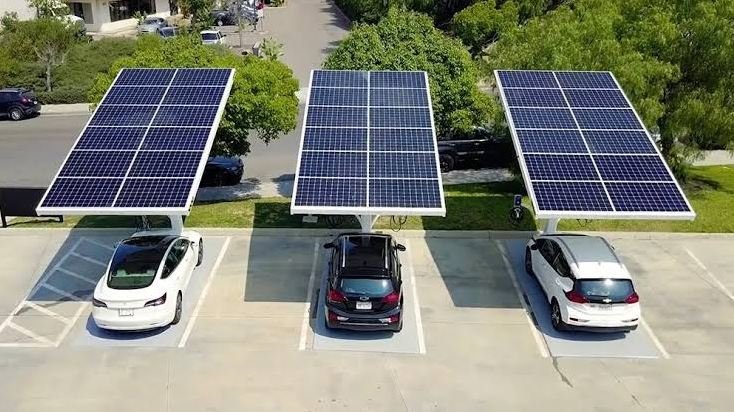
Battery storage matters specifically for EV owners who want to charge overnight from stored solar power rather than the grid — without it, most home solar systems only offset EV charging when the sun is up and the car happens to be plugged in.
What EV Charging Actually Costs in 2026
This is the number solar sales pitches tend to gloss over, so it’s worth stating plainly: charging an EV at home from the grid is already cheap. At the US average residential rate of about 19 cents per kWh, most EVs use 25 to 35 kWh to travel 100 miles, which works out to roughly 5–6 cents per mile. For a driver covering 12,000 miles a year, that’s approximately $600–$720 annually in electricity — before solar enters the picture at all.
Public charging is a different story. DC fast charging averages around $0.53 per kWh, and Level 2 public stations run $0.25–$0.40 per kWh — both substantially higher than home rates. If most of your charging happens away from home, solar at your house won’t touch those costs at all, since the panels can’t follow the car to a public station.
Grid vs. Solar Charging Cost Per Mile
| Charging Method | Cost per kWh | Cost per 100 Miles* | Annual Cost (12,000 mi) |
|---|---|---|---|
| Home grid (average rate) | ~$0.18–$0.19 | ~$5.00–$5.65 | ~$600–$680 |
| Public Level 2 | $0.25–$0.40 | ~$7.50–$12.00 | ~$900–$1,440 |
| Public DC fast charging | $0.45–$0.53 | ~$13.50–$16.00 | ~$1,620–$1,920 |
| Home solar (post-payback) | ~$0 marginal | ~$0 | ~$0 |
| Gasoline equivalent (32 mpg, $3.80/gal) | — | ~$11.90 | ~$1,425 |
*Assumes 28–30 kWh per 100 miles, representative of mid-size EVs like a Model 3, Ioniq 6, or Equinox EV.
The Payback Math: How Long Until It Pays for Itself
Here’s where the “solar for EVs” pitch needs a reality check. Charging a single EV 12,000 miles a year consumes roughly 3,400–3,700 kWh annually. Covering that load alone requires a fairly small solar array — around 2.2–2.5 kW of panel capacity in most US climates — costing approximately $6,500–$8,750 installed at 2026 pricing.
Against grid-charging savings of roughly $650/year, that small EV-only system pays back in 10–13 years. That’s slower than the 8–12 year payback typically quoted for solar overall, because a system sized only for EV charging doesn’t spread its fixed costs (permitting, inverter, labor) across a larger amount of offset electricity.
The math improves meaningfully when solar is sized for the whole house, not just the car. A homeowner replacing $150–$200/month in total electricity costs — home use plus EV charging combined — gets the same fixed installation costs working across a much larger annual savings figure, pulling payback back into the more commonly cited 8–12 year window, roughly matching solar’s traditional 10-year average payback with 15 years of essentially free power afterward.
Why Sizing Matters More Than the EV Itself
- A system sized only for EV charging: slower payback, smaller absolute savings
- A whole-home system that also covers EV charging: standard payback timeline, EV charging becomes a bonus rather than the primary justification
- Adding battery storage for overnight charging: extends payback further, since batteries add $8,000–$15,000 without directly reducing the electricity bill
When Solar + EV Actually Makes Financial Sense
Solar paired with an EV works best under three conditions: the homeowner is already planning a whole-house solar system regardless of the EV, most charging happens at home rather than on public networks, and the household expects to stay in the home long enough to clear the 8–13 year payback window. Under those conditions, EV charging effectively becomes free once the system is paid off, on top of whatever the panels are already saving on regular household electricity.
It makes less sense as a standalone justification. Buying solar panels specifically to charge one EV, on a small system sized only for that load, produces a slower payback than either a full home solar system or simply charging from the grid at home — which, at roughly 5–6 cents a mile, is already the cheapest way to fuel a vehicle short of not driving at all.
Bottom Line
Solar plus EV charging is worth it as part of a whole-home solar decision, not as a reason to install solar by itself — a small, EV-only system pays back slower (10–13 years) than a properly sized whole-house system (8–12 years) that happens to cover the car too. If solar is already on the table for the house, add EV charging to the load calculation and let it ride along; if the EV is the only motivation, grid charging at 5–6 cents a mile is hard to beat on payback math alone.
Figures are 2026 US national averages (EIA, SEIA, NREL, Lawrence Berkeley National Laboratory) and will vary by local electricity rates, solar irradiance, installer pricing, and available state/utility incentives. Confirm current local rates and quotes before making a purchase decision.