For most fleets in 2026, the best electric truck is the Ford E-Transit for local delivery and service routes, the Chevrolet Silverado EV WT for heavy-duty work-truck duty, and the Tesla Semi for long-haul freight — the right pick depends entirely on route length, payload, and depot charging. Range anxiety, which stalled fleet electrification a few years ago, is largely resolved for return-to-base operations under 150 miles a day. The harder question now is matching payload, charging speed, and total cost of ownership to the actual job the truck does, not the spec sheet.
Below, we break down the strongest electric pickups, cargo vans, and heavy-duty trucks available to business buyers this year, with pricing, range, and payload compared side by side — plus one major 2026 lineup change fleet managers need to know about before ordering.
Quick Summary
- Best cargo van for local routes: Ford E-Transit — lowest starting price in the segment, EPA-estimated range of 143–159 miles.
- Best work pickup: Chevrolet Silverado EV WT — fleet-specific trim with up to 12,500 lbs towing and onboard power outlets for jobsite equipment.
- Best long-haul option: Tesla Semi — up to roughly 500 miles of range and sub-45-minute fast charging on Tesla’s Megacharger network.
- Major 2026 change: Ford has ended production of the battery-electric F-150 Lightning; fleets should not plan 2026–2027 orders around it.
- Best for last-mile logistics at scale: Chevrolet BrightDrop Zevo and Rivian Commercial Van, both proven on high-volume delivery routes.
Why Fleets Are Moving to Electric Trucks in 2026
Electric fleet vehicles have moved past the early-adopter phase. Per-mile energy costs remain meaningfully lower than diesel or gasoline equivalents at current U.S. commercial electricity rates, and electric drivetrains cut scheduled maintenance events by eliminating oil changes, transmission service, and much of the wear-item replacement that comes with combustion engines. Fleets that pair EVs with proactive battery-health monitoring have reported materially lower maintenance costs by the second year of operation, once charging schedules and preventive service are aligned to how the vehicles are actually used.
The catch is that published range and payload figures rarely reflect real fleet conditions. A pickup’s advertised range assumes an empty bed; a van’s assumes no roof rack or ladder rig. Fleet managers who plan around GVWR, trailer weight, and daily route length — not headline range — are the ones avoiding expensive mismatches.
Best Electric Pickup Trucks for Business Fleets
Chevrolet Silverado EV WT
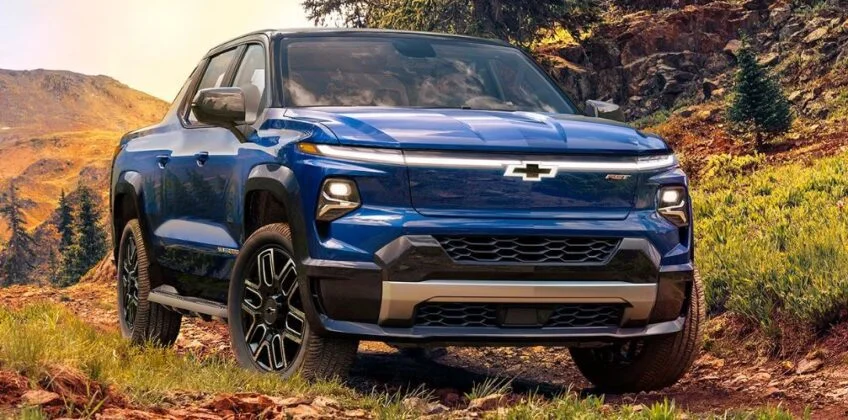
The Work Truck (WT) trim is Chevrolet’s fleet-specific version of the Silverado EV, built on GM’s 800-volt Ultium platform. For 2026, WT pricing starts at $54,895 for the Standard Range configuration and rises to $76,295 for WT Max Range. The base WT Standard Range is rated around 286 miles; higher trims push toward the 400-mile range depending on configuration ( full WT-specific range figures for mid-tier packs were not published at review time — confirm with a dealer before ordering). Payload runs from 1,400 to 2,350 lbs depending on battery size, and towing tops out at 12,500 lbs on higher trims. The WT comes with eight power outlets, including a 240-volt bed outlet, useful for running jobsite tools directly off the truck.
Ford F-150 Lightning — Status Update for Fleet Buyers
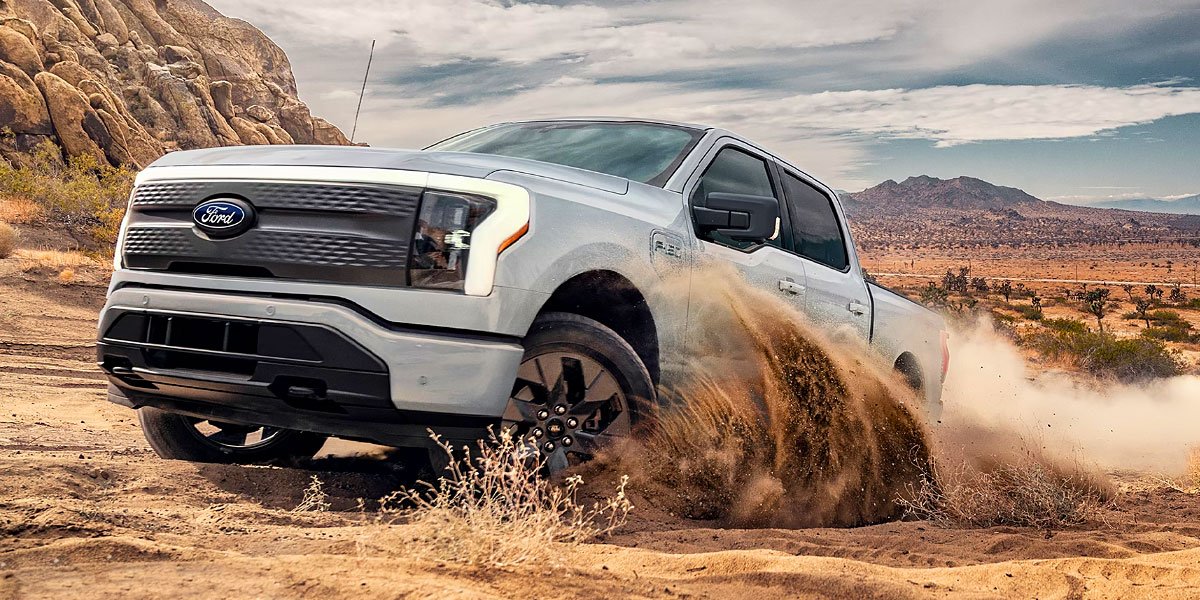
Fleet managers still building 2026–2027 procurement plans around the F-150 Lightning need to know this changed recently: Ford has ended production of the battery-electric F-150 Lightning. The company says the nameplate will continue, but as an extended-range electric vehicle (EREV) with an onboard gas generator rather than a pure battery-electric truck. Existing Lightning units remain in dealer stock and used-market inventory, but new factory orders for the all-electric version are no longer being taken. Fleets that already standardized on the Lightning should plan replacement or transition sourcing now rather than assuming continued availability.
Rivian R1T (Mixed-Use Fleet Role)

The Rivian R1T isn’t a dedicated fleet trim, but it shows up in mixed personal/fleet roles — field supervisors, sales teams, and consulting staff who need capability without a full work-truck footprint. It’s a reasonable fit where towing is occasional rather than constant, and less suited to crews doing daily upfit work (ladder racks, flatbeds) where a dedicated WT-trim truck makes more sense.
Best Electric Cargo Vans for Last-Mile and Service Fleets
Ford E-Transit
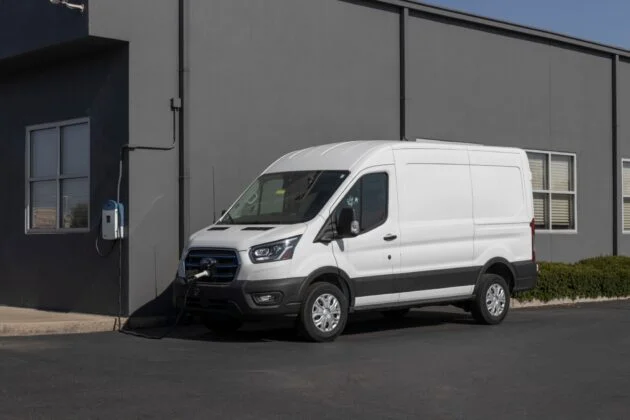
The E-Transit remains the most widely adopted electric cargo van in North America, and the price leader in the segment. 2026 pricing starts at $53,260 for the Low Roof configuration and reaches $58,770 for the High Roof Extended body. All configurations use an 89.9 kWh battery driving a 266 hp rear motor, with EPA-estimated range from 159 miles (Low Roof) down to 143 miles (High Roof Extended) as body size and drag increase. Payload reaches up to 3,880 lbs and cargo volume spans 277.7 to 487.3 cubic feet across roof heights and lengths. For fleets running fixed, return-to-base routes under 100 miles a day — the profile of most last-mile and contractor work — the range is more than adequate.
Chevrolet BrightDrop Zevo 400 / 600
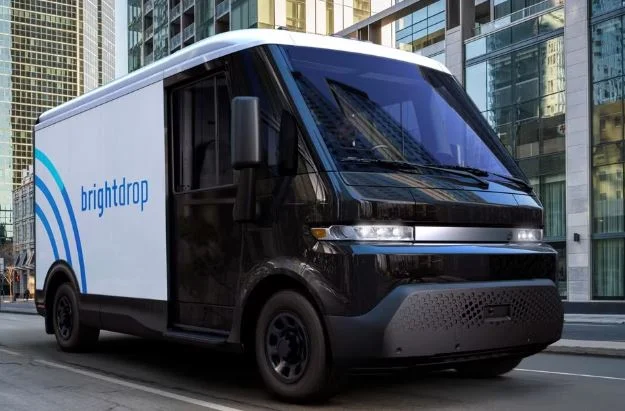
BrightDrop, now folded fully under the Chevrolet brand, targets the same urban delivery and service niche with two body sizes. The larger Zevo 600 offers an EPA-estimated 250 miles of range, and the Zevo 400 can be ordered with an 11,000 lb GVWR configuration that raises payload capacity to roughly 2,800 lbs. Pricing has moved above its original launch point as the lineup added an Extended Range battery and Power Offboarding for 2026 (confirm current-year MSRP directly with a GM fleet dealer, as figures shift by model year and configuration). BrightDrop’s advantage is GM’s dealer network scale, relevant for fleets that value nationwide service coverage over a boutique buying process.
Rivian Commercial Van
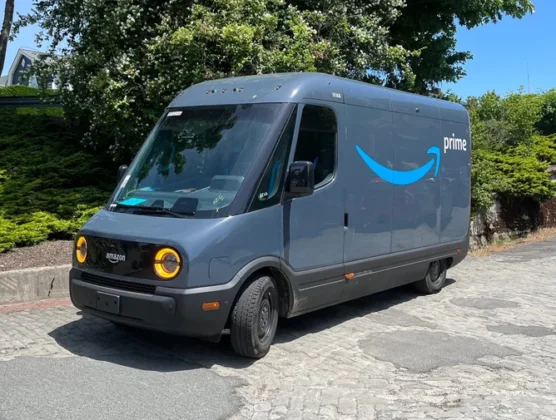
The Rivian Commercial Van — sold as the Delivery 500 and Delivery 700 — built its reputation inside Amazon’s delivery network before opening to other fleet buyers. Pricing starts at $79,900 for the Delivery 500 and around $83,900–$87,000 for the longer Delivery 700 ( sources vary on exact Delivery 700 pricing; confirm current figures with Rivian Fleet). The Delivery 500 offers roughly 487 cubic feet of cargo space and a payload capacity around 2,734 lbs in its sub-10,000 lb GVWR configuration. Purchase access has historically been limited to fleet accounts rather than open retail, so smaller operators should confirm eligibility before specifying it in a bid.
Best Electric Trucks for Long-Haul and Heavy-Duty Fleets
Tesla Semi
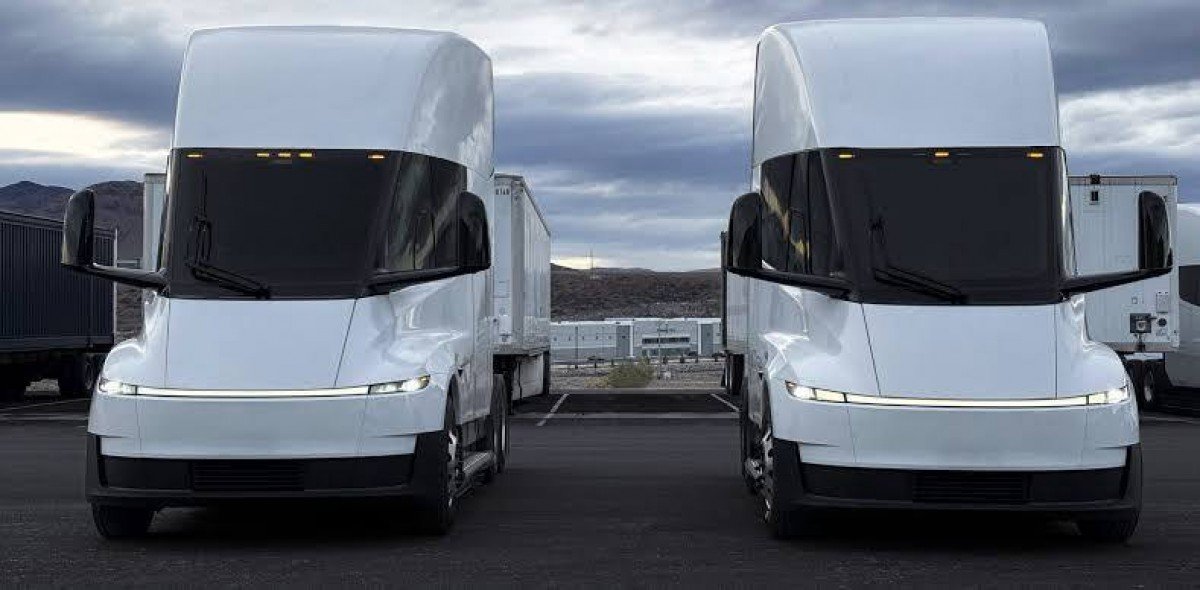
For fleets running highway freight rather than local routes, the Tesla Semi is the most range-capable Class 8 electric truck on the U.S. market, with pricing starting around $180,000. The top configuration is rated for roughly 500 miles of range, with a base configuration closer to 300 miles, and Tesla’s Megacharger network can add a meaningful charge — reported at up to roughly 70–80% — in under 45 minutes. Competing European entries like the Volvo FH Aero Electric and Windrose R700 are aimed at similar long-haul duty but are positioned primarily for markets outside the U.S. in 2026 ( confirm regional availability before including either in a North American fleet RFP).
How to Choose the Right Electric Truck for Your Fleet
- Match range to your actual route, not the brochure figure. Published range rarely accounts for a full payload, roof rack, or towing — build in a buffer of at least 20–30%.
- Confirm charging infrastructure before the vehicles arrive. Depot-based Level 2 charging works for vans and pickups on return-to-base routes; DC fast charging or dedicated Megachargers matter far more for long-haul trucks.
- Weigh payload against fleet duty, not horsepower. Electric pickups generally carry less payload than gas equivalents because of battery weight — check this before assuming a like-for-like swap.
- Factor in total cost of ownership, not just sticker price. Lower per-mile energy costs and reduced scheduled maintenance typically offset a higher upfront price within a few years for high-mileage routes.
- Verify fleet purchase eligibility early. Some options, including the Rivian Commercial Van, have historically restricted sales to qualified fleet accounts rather than general retail.
Comparison Table: Best Electric Trucks for Business Fleets in 2026
| Vehicle | Type | Starting Price (USD) | EPA-Est. Range | Payload | Best For |
|---|---|---|---|---|---|
| Ford E-Transit | Cargo van | $53,260 | 143–159 mi | Up to 3,880 lbs | Local delivery & service routes |
| Chevrolet BrightDrop Zevo 400/600 | Cargo van | Confirm with dealer | Up to 250 mi | Up to 2,800 lbs | High-volume last-mile logistics |
| Rivian Commercial Van (Delivery 500/700) | Cargo van | $79,900+ | Not fully published | ~2,734 lbs (Delivery 500) | Qualified fleet accounts, proven delivery routes |
| Chevrolet Silverado EV WT | Pickup | $54,895–$76,295 | ~286 mi to ~400+ mi by trim | 1,400–2,350 lbs | Heavy-duty work-truck fleets |
| Ford F-150 Lightning | Pickup | EV production ended | — | — | Legacy fleets only; not available for new orders |
| Tesla Semi | Class 8 truck | ~$180,000 | 300–500 mi | N/A (Class 8 freight) | Long-haul freight fleets |
Bottom Line
For most business fleets in 2026, the Ford E-Transit is the smartest default for local delivery and service work, the Chevrolet Silverado EV WT is the strongest pick for heavy-duty pickup duty, and the Tesla Semi leads the long-haul category by a clear margin. The one thing every fleet manager needs to update in their 2026 planning: the all-electric F-150 Lightning is no longer in production, so it should come off any active procurement shortlist.