- Home
- Electric Vehicles
- Compare Electric Cars
- Rivian R1T vs Chevrolet Silverado EV
Rivian R1T vs Chevrolet Silverado EV
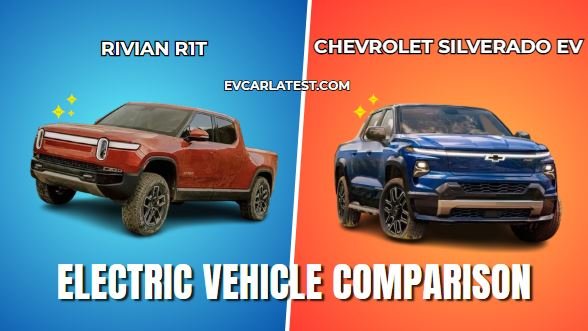
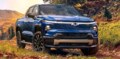
The Rivian R1T and the Chevrolet Silverado EV are both American-built electric pickup trucks, but they were designed for different buyers and it shows. The R1T is a mid-size crew-cab built by Rivian, an EV-native startup in Normal, Illinois. It targets the outdoor-adventure buyer — the person who genuinely goes off-road, camps, kayaks, and wants a truck that does all of that without a drop of fuel. The Silverado EV is Chevrolet’s answer to the same question, but from a very different place. It’s a full-size crew cab riding on GM’s BT1 electric platform, built at Factory Zero in Michigan, and aimed squarely at the working truck buyer who also wants best-in-class range and towing without switching brands.
The reason this comparison matters right now is straightforward: both trucks are now available simultaneously in their second-year (Silverado EV) and second-generation (R1T) forms, with enough real-world data to make an honest call — and both are in a price band that serious EV truck buyers in Tier-1 markets are actively shopping.
Range & Charging: The Silverado Has More Miles, the Rivian Charges Faster
On paper, the Silverado EV wins the range argument without much debate. The 2025 RST Max Range trim is EPA-rated at 460 miles, while the LT Extended Range hits 408 miles. The entry Work Truck Standard Range comes in at 282 miles (EPA), which is more useful as a fleet spec than a personal purchase. The Rivian R1T 2025, with its three battery options, goes 270 miles (Standard, 92.2 kWh), 330 miles (Large, 109.4 kWh), or 420 miles (Max, 141.5 kWh) on the EPA cycle. Real-world numbers for both sit roughly 10–15% below those figures depending on load, speed, and temperature.
Charging tells a different story. The Silverado EV supports DC fast charging up to 350 kW, which Chevrolet says translates to 100 miles of added range in 10 minutes at a compatible station. The R1T‘s DC fast charging tops out at 200 kW, adding around 140 miles in 20 minutes at peak — slower in raw kilowatts, but Rivian’s charging network and Tesla Supercharger access (via NACS from 2025) give it a practical advantage on the road. For home AC charging, the Silverado EV’s onboard charger handles up to 19.2 kW, while the R1T supports standard Level 2 charging with times ranging from approximately nine to fourteen hours depending on battery size. For a 10–80% DC fast charge, the Silverado EV can realistically get there in under 30 minutes on a high-output charger; the R1T takes closer to 30–40 minutes on its 200 kW peak.
Price, Availability & Market Fit
The 2025 Rivian R1T starts at $71,700 (Adventure Dual Standard) and climbs to $101,700 for the Ascend Tri Max. The Quad Motor sits above that but pricing hasn’t been formally published yet. In Nigerian Naira at prevailing rates, that’s roughly ₦114.7 million to ₦162.7 million before shipping, duties, and clearing fees — figures that place this truck firmly in the grey-import category for buyers on the continent. The Chevrolet Silverado EV has a lower entry point at $57,095 for the Work Truck Standard Range, rising to $97,895 for the RST Max Range. In Naira terms, that’s approximately ₦91.3 million to ₦156.6 million before landing costs. In South Africa or Kenya, the same grey-import math applies — neither truck has a formal distribution footprint on the continent yet.
Regarding variants: on the R1T, the trim worth noting for most buyers is the Adventure Dual Large (Large 109.4 kWh battery, 330-mile range) — it hits the best balance of price and real-world usability. On the Silverado EV, the LT Extended Range at $75,195 is the practical choice; the RST trims add range and power but at a steep premium. Both trucks are available in the US market; neither has a confirmed launch date or distributor for Nigeria, West Africa, or East Africa. African buyers importing either truck should factor in shipping, NAFDAC/customs clearance where applicable, and the absence of local service infrastructure.
This comparison helps you answer one specific question: if you’re importing an electric pickup from the US, which one makes more sense for your use case and budget?
Ecosystem & Rival Context
On the Rivian side, the most relevant companion vehicle is the R1S — a three-row electric SUV built on the same platform as the R1T, with similar battery options and off-road capability. If a buyer needs passenger space over truck bed utility, the R1S is the natural alternative. Rivian has also announced a smaller R2 crossover priced from $45,000, which could be more accessible for import markets when it arrives.
On the Chevrolet side, the closest siblings are the GMC Sierra EV, which shares the BT1 platform and offers similar specs in a slightly different body, and the GMC Hummer EV Pickup, a more extreme (and more expensive) off-road statement vehicle. The Ford F-150 Lightning also belongs in this conversation — it starts lower than both, at around $49,995 for the base trim, and carries a 320-mile max EPA range on the extended battery. The Tesla Cybertruck is the other name that keeps appearing in this segment, with up to 320 miles (EPA) and dual/tri-motor options from around $79,990.
The R1T vs Silverado EV comparison still wins over those alternatives because it isolates the two trucks most closely matched on price and most clearly differentiated by design philosophy — adventure-first versus work-first. That tension is worth examining directly rather than being diluted by four or five options.
Pros & Cons
Rivian R1T — Pros
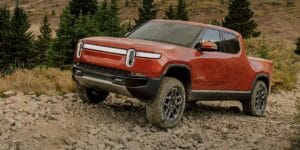
The R1T’s off-road capability is a genuine design priority, not a marketing claim. At nearly 15 inches of ground clearance in its highest suspension setting, with the ability to wade through 3 feet of water and a steering calibrated to give feedback on uneven terrain, this truck was engineered for trails rather than adapted for them. For buyers who actually use their truck off-road, that matters more than a higher tow rating.
The storage system is one of the cleverest on any truck in this segment. The Gear Tunnel — a full-width, watertight compartment between the cab and the cargo bed — provides usable storage that no other production truck currently offers. Combined with a front trunk and under-seat compartments, it makes the R1T genuinely practical for overlanding or extended trips in a way a standard truck bed cannot.
The R1T’s safety rating is the strongest in its class. It earned IIHS Top Safety Pick+ status, with good scores across all crash test categories. For buyers who prioritize occupant protection alongside capability, that designation carries real weight.
On the downside, the R1T’s charging speed ceiling of 200 kW means it will add range more slowly than the Silverado EV at stations capable of delivering 350 kW. On a long road trip where speed matters, that gap adds time. The second concern is price for range. Getting to 420 miles on the R1T requires the Max battery, which pushes the price up significantly. The 330-mile Large pack is the sensible choice, but 330 miles is not class-leading at the price point.
Chevrolet Silverado EV — Pros
The Silverado EV’s range leadership is its clearest competitive advantage. Up to 460 miles on the RST Max Range (EPA) is the highest-rated range figure in the electric truck segment as of 2025, higher than the Cybertruck, the F-150 Lightning, and the R1T. For buyers doing highway miles between cities — or considering a cross-country import drive — that’s not a small detail.
The 350 kW DC fast charging support means that where the infrastructure exists, the Silverado EV can add 100 miles in 10 minutes. That’s a meaningful edge at charging stops and one that becomes more relevant as 350 kW stations expand across North America. The LT trim’s Apple CarPlay and Android Auto support is also worth naming — the R1T still doesn’t offer either, which is a real gap for buyers who rely on smartphone integration for navigation and audio.
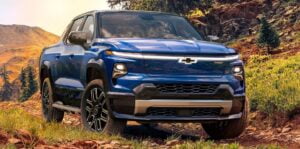
On the negative side, the Silverado EV is a heavy truck at around 8,800 pounds, and that mass affects ride quality, particularly in the RST trims with larger wheels. Multiple reviewers noted the initial RST’s 24-inch rims made for a firm, unsettled ride — a problem GM addressed with 22-inch wheels on the 2025 LT, but worth knowing before committing to a specific trim. The price floor is also misleading: the $57,095 WT Standard Range is a fleet-spec vehicle with 282 miles of range that isn’t commonly available through standard dealership channels. Most buyers will be starting at $75,195 for the LT Extended Range, which reframes the value proposition considerably.
Quick Verdict
The Rivian R1T and Chevrolet Silverado EV are both competent electric trucks with distinct strengths, and neither is the wrong answer for every buyer.
Choose the R1T if off-road performance and purpose-built adventure storage are your priorities. Its suspension, ground clearance, water-fording depth, and Gear Tunnel are advantages that don’t have direct equivalents in the Silverado EV. It’s also the more refined driving experience on-road, with the IIHS’s highest safety rating to back it up.
Choose the Silverado EV if range confidence, towing capacity, and charging speed matter most. The LT Extended Range delivers up to 408 miles, 350 kW charging, and 10,000 pounds of tow capability at a price point that undercuts the most comparable R1T trim. If you do highway miles and long hauls more than trails and campsites, the Silverado EV is the more practical tool.
The trade-off is clear: the R1T is the better truck for adventure buyers. The Silverado EV is the better truck for working and touring. Both are priced in the same band, but neither belongs in the same sentence as “affordable.”
Frequently Asked Questions
Is the Rivian R1T better than the Chevrolet Silverado EV for long trips?
The Silverado EV has the edge on long trips for most buyers. Its RST Max Range trim is EPA-rated at 460 miles — the highest in the electric truck segment — and its 350 kW DC fast charging capability allows it to add 100 miles of range in as little as 10 minutes at a compatible station. The R1T Max battery offers 420 miles of EPA range and charges at up to 200 kW, which is capable but slower than the Silverado EV at high-output chargers. That said, Rivian’s expanding Adventure Network and NACS compatibility from 2025 improve the R1T’s long-distance practicality significantly.
For long-distance highway trips, the Silverado EV holds a clear advantage. Its RST Max Range is EPA-rated at 460 miles — the highest figure in the electric truck segment — and its 350 kW DC fast charging can add 100 miles in about 10 minutes at a compatible station. The R1T’s Max battery is rated at 420 miles, and its 200 kW peak charging speed is respectable but slower. Both trucks have improved charging access through Rivian’s Adventure Network and the broader CCS/NACS infrastructure, so neither should leave you stranded on a planned route. The Silverado EV is simply faster to top up.
Which is cheaper to maintain — the Rivian R1T or the Chevrolet Silverado EV?
Both trucks are fully electric, which eliminates oil changes, transmission fluid, and exhaust system maintenance. The Silverado EV benefits from GM’s established dealer network across North America, making parts and service more accessible than Rivian’s smaller service footprint. Rivian offers over-the-air software updates that can resolve many issues remotely, but its physical service centers are fewer in number compared to Chevy’s dealership network. Long-term, the Silverado EV is likely to carry lower service friction costs simply because of GM’s scale and parts availability.
Both trucks eliminate the routine maintenance costs associated with combustion engines — no oil changes, no transmission service, no exhaust work. The practical maintenance difference comes down to service access. GM’s dealer network is extensive across North America, which means the Silverado EV is easier and often cheaper to service than the Rivian, which relies on a smaller and still-expanding network of service centers. Rivian’s over-the-air software updates handle a significant number of issues remotely, but for physical repairs, GM’s infrastructure is the broader safety net.
Is the Chevrolet Silverado EV available in Nigeria or Africa?
As of 2025, the Chevrolet Silverado EV has no official distributor or dealership network in Nigeria or any other African market. The same applies to the Rivian R1T. Both trucks are sold exclusively in the United States. African buyers importing either vehicle privately will face significant shipping costs, customs duties, and the absence of local manufacturer warranty coverage or service infrastructure. For buyers in Nigeria, Kenya, or South Africa seeking a locally supported EV option, alternatives such as BYD Atto 3, the Chery Tiggo EV range, or Spiro electric motorcycles represent more practical near-term choices
Neither the Chevrolet Silverado EV nor the Rivian R1T has an official presence in Nigeria or any African market as of 2025. Both are sold in the United States only. Private importation is possible but involves substantial shipping costs, customs duties, and the complete absence of manufacturer warranty support or local service infrastructure. Buyers in Nigeria, Kenya, or South Africa looking for EV options with actual distributor backing should explore the BYD Atto 3, the Chery Tiggo EV range, or emerging African-market EV providers like Spiro and Roam Electric for more practical local alternatives.
Which electric truck has better off-road capability — the R1T or the Silverado EV?
The Rivian R1T is the stronger off-road performer between the two. It offers up to 14.9 inches of ground clearance, can wade through 3 feet of water, and features a suspension tuned specifically for trail driving with individual motor control at each wheel for precise torque delivery. The Chevrolet Silverado EV has decent off-road specs but was designed with work and highway performance as its primary brief. For buyers who regularly use trails or unpaved roads, the R1T’s off-road engineering is a meaningful and deliberate advantage.
The R1T is the stronger off-road truck, and that comparison isn’t particularly close. It was built with trail use as a core design requirement — nearly 15 inches of ground clearance, 3-foot water-fording depth, and independent motor control per wheel for precise torque delivery on loose terrain. The Silverado EV has all-wheel drive and reasonable clearance, but its engineering priorities are range, towing, and highway efficiency rather than trail performance. If off-road use is a genuine requirement, the R1T is the right truck.
Related EV Comparisons
| |
| Price | $69,000.00 $57,000.00 |
| Our Rating | |
| Brand | RIVIAN Chevrolet |
| Category | Electric Cars Electric Cars |
MODEL
| Full Model Name | Chevrolet Silverado EV |
| Segment / Class | Full-size electric pickup truck |
| Available Trims / Variants |
Rivian R1T Dual Motor Standard Pack (2024) Rivian R1T Dual Motor Standard+ Pack (2024) Rivian R1T Dual Motor Standard+ Perfromance Pack (2024) Rivian R1T Dual Motor Large Pack Rivian R1T Dual Motor Max Pack Rivian R1T Quad Motor Large Pack Rivian R1T Quad Motor Max Pack Rivian R1T Performance Large Pack Rivian R1T Performance Max Pack WT (Work Truck) LT RST |
| Powertrain Options | Dual permanent-magnet electric motors, electronic AWD (Ultium platform) |
PRICE & AVAILABILITY
| Base Price (USD) |
$ 69,900 - Rivian R1T Dual Motor Standard Pack (2024) $ 73,000 - Rivian R1T Dual Motor Standard+ Pack (2024) $ 78,000 - Rivian R1T Dual Motor Standard+ Perfromance Pack (2024) $ 73,500 - Rivian R1T Dual Motor Large Pack - $ 83,500 - Rivian R1T Dual Motor Max Pack $ 79,500 - Rivian R1T Quad Motor Large Pack $ 89,500 - Rivian R1T Quad Motor Max Pack Starts at $57,095 (WT Standard Range) up to $97,895 (RST Max Range) |
| Availability Status |
Available to order. Released 2024, February - Rivian R1T Dual Motor Standard Pack (2024) Available to order. Released 2024, February - Rivian R1T Dual Motor Standard+ Pack (2024) Available to order. Released 2024, February - Rivian R1T Dual Motor Standard+ Perfromance Pack (2024) Available to order. Released 2024, Q2 - Rivian R1T Dual Motor Large Pack Available to order. Released 2023 - Rivian R1T Dual Motor Max Pack Available to order. Released 2021, November - Rivian R1T Quad Motor Large Pack Available to order. Released 2022, Q4 - Rivian R1T Quad Motor Max Pack Available to order. Released 2023, April - Rivian R1T Performance Large Pack Available to order. Released 2023, April - Rivian R1T Performance Max Pack On sale now |
| Markets Available | United States, Canada |
| Brand / Manufacturer | Chevrolet (General Motors) |
BATTERY & CHARGING
| Battery Capacity |
106 kWh total - Rivian R1T Dual Motor Standard Pack (2024) 121 kWh total - Rivian R1T Dual Motor Standard+Pack (2024) 121 kWh total - Rivian R1T Dual Motor Standard+ Perfromance Pack (2024) 135 kWh total - Rivian R1T Dual Motor Large Pack 149 kWh total - Rivian R1T Dual Motor Max Pack 135 kWh usable, 135 kWh total - Rivian R1T Quad Motor Large Pack 149 kWh total - Rivian R1T Quad Motor Max Pack 135 kWh total - Rivian R1T Performance Large Pack 149 kWh total - Rivian R1T Performance Max Pack 170 kWh (Extended Range), 205 kWh (Max Range) |
| Range (WLTP/CLTC/EPA) |
270 mi EPA - Rivian R1T Dual Motor Standard Pack (2024) 315 mi EPA - Rivian R1T Dual Motor Standard+ Pack (2024) 315 mi EPA - Rivian R1T Dual Motor Standard+ Perfromance Pack (2024) 328 mi EPA - Rivian R1T Dual Motor Large Pack 400 mi EPA - Rivian R1T Dual Motor Max Pack 314 mi EPA - Rivian R1T Quad Motor Large Pack 400 mi EPA - Rivian R1T Quad Motor Max Pack 350 mi EPA - Rivian R1T Performance Large Pack 400 mi EPA - Rivian R1T Performance Max Pack Standard: 282 mi · Extended: 390–422 mi · Max: 460–492 mi (no WLTP/CLTC — US market only) |
| DC Charging (Max kW) |
CCS 200 kW max Up to 350 kW (800V fast-charging architecture) |
| Charging Time (10–80%) | ~30–35 min at a compatible 350kW DC fast charger |
| AC Charging (Max kW) |
Type 1 11.5 kW 11.5 kW or 19.2 kW, depending on trim |
| Battery Warranty | 8 years / 100,000 miles (GM standard EV battery coverage) |
| Energy Consumption | ~45–55 kWh/100mi |
PERFORMANCE
| Power Output (kW / hp) |
AWD 533 hp (392 kW) - Rivian R1T Dual Motor Standard Pack (2024) AWD 533 hp (392 kW) - Rivian R1T Dual Motor Standard+ Pack (2024) AWD 665 hp (489 kW) - Rivian R1T Dual Motor Standard+ Perfromance Pack (2024) AWD 533 hp (392 kW) - Rivian R1T Dual Motor Large Pack AWD 533 hp (392 kW) - Rivian R1T Dual Motor Max Pack AWD 835 hp (562 kW) - Rivian R1T Quad Motor Large Pack AWD 835 hp (614 kW) - Rivian R1T Quad Motor Max Pack AWD 665 hp (489 kW) - Rivian R1T Performance Large Pack AWD 665 hp (489 kW) - Rivian R1T Performance Max Pack LT: 645 hp · RST: 754 hp (with Wide Open Watts boost) |
| 0–100 km/h / 0-60 mph (seconds) The acceleration numbers are an easy way to compare car performance. We list either time from 0 to 100 km/h or time from 0 to 60mph, depending on which number(s) the manufacturers provide. The lower the acceleration time, the higher performance the car is. |
4.5 sec 0-60 mph - Rivian R1T Dual Motor Standard Pack (2024) 4.5 sec 0-60 mph - Rivian R1T Dual Motor Standard+ Pack (2024) 4.5 sec 0-60 mph - Rivian R1T Dual Motor Standard+ Perfromance Pack (2024) 4.5 sec 0-60 mph - Rivian R1T Dual Motor Large Pack 4.5 sec 0-60 mph - Rivian R1T Dual Motor Max Pack 3 sec 0-60 mph - Rivian R1T Quad Motor Large Pack 3 sec 0-60 mph - Rivian R1T Quad Motor Max Pack 3.5 sec 0-60 mph - Rivian R1T Performance Large Pack 3.5 sec 0-60 mph - Rivian R1T Performance Max Pack Under 4.5 sec (RST, Wide Open Watts mode) |
| Motor Configuration | Dual motor, one per axle (electronic AWD) |
| Torque (Nm) |
610 lb-ft (827 Nm) - Rivian R1T Dual Motor Standard Pack (2024) 827 Nm (610 lb-ft) - Rivian R1T Dual Motor Standard+ Pack (2024) 1124 Nm (829 lb-ft) - Rivian R1T Dual Motor Standard+ Perfromance Pack (2024) 827 Nm (610 lb-ft) - Rivian R1T Dual Motor Large Pack 827 Nm (610 lb-ft) - Rivian R1T Dual Motor Max Pack 1231 Nm (908 lb-ft) - Rivian R1T Quad Motor Large Pack 1231 Nm (908 lb-ft) - Rivian R1T Quad Motor Max Pack 1124 Nm (829 lb-ft) - Rivian R1T Performance Large Pack 1124 Nm (829 lb-ft) - Rivian R1T Performance Max Pack Up to 785 lb-ft (1,064 Nm) with Wide Open Watts |
| Top Speed (km/h / mph) | 125 mph (201 km/h) Not officially disclosed (electronically limited) |
BODY & DIMENSIONS
| Dimensions (L×W×H mm) |
217.1 x 81.8 x 78.2 in (5514 x 2077 x 1986 mm) 5,921 × 2,129 × 1,999 mm (233.1 × 83.8 × 78.7 in) |
| Trunk/Boot Capacity (L) | US: 1756 l - Rivian R1T Quad Motor Large Pack N/A — pickup bed instead (5'11" short bed) |
| Body Style |
4 door pick-up truck, 5 seats Crew cab pickup truck |
| Kerb Weight (kg) | EU: 1670 kg unladen, 3470 kg gross - Rivian R1T Quad Motor Large Pack ~2,970–3,900 kg depending on trim/battery (heavy due to Ultium pack) |
| Ground Clearance (mm) |
14.9 in (378 mm) Not officially disclosed |
| Frunk/Bonnet Capacity (L) |
No 314 l - Rivian R1T Quad Motor Large Pack ~300 L (10.7 cu ft) front trunk |
| Sunroof | Available panoramic sunroof (higher trims) |
SAFETY & DRIVER ASSISTANCE
| ADAS Features | Chevy Safety Assist standard: automatic emergency braking, pedestrian detection, lane-keep assist, blind-spot monitoring with trailering, adaptive cruise control |
| Autonomous Driving Level | Level 2 (Super Cruise hands-free driving, standard on RST) |
| Crash Test Ratings | Not yet rated by NHTSA/IIHS |
| Over-the-Air (OTA) Safety Updates | Yes, supported via GM's OTA system |
COMFORT & SEATING
| Seating Capacity |
Heated and ventilated front seats 5 |
| Seat Material | Cloth (WT); leatherette/leather with heating/cooling (LT/RST) |
| Wireless Charging | Available |
DISPLAYS & CONNECTIVITY
| Centre Screen (inches) |
12.3" touchscreen 11.0-inch standard; 17.7-inch available on LT and above |
| Mirror Link / Apple CarPlay / Android Auto | Only on the 11.0-inch screen; not available on the 17.7-inch Google-based screen |
| Driver's Display (inches) | 15.3 8.0-inch standard; 11.0-inch on LT/RST |
| Head-Up Display (HUD) | No Not offered |
TECHNOLOGY
| Vehicle-to-Load (V2L) | Yes, via bed/cabin power outlets |
| Vehicle-to-Grid (V2G) | Bidirectional home power via optional PowerShift charger ($1,695); full grid V2G not confirmed |
| Over-the-Air Map Updates | Yes, via built-in Google Maps |
ADDITIONAL SPECS
| Headlight Type (LED/Matrix/Laser) | LED |
| Adaptive Headlights | Not confirmed |
| Sound System Brand | Bose (premium, higher trims) |
| Speaker Count | ~12 (Bose system) |
| Navigation System | Built-in Google Maps standard |
| Face Recognition | No |
| Fingerprint Sensor | No |
| Remote Parking | Automatic Parking Assist available |
| Official Dealer Network | Chevrolet dealers (US/Canada) |
| Service Interval | Standard GM EV maintenance schedule (tire rotation ~7,500 mi) |
| Roadside Assistance | Included with new-vehicle limited warranty |
Note
| Data Source | CarGurus, CarsDirect, GM Newsroom, Equipment World, TrueCar, Northwest Chevrolet, Car and Driver (via Raceway Chevrolet), Major World Chevrolet |
| Last Updated | September 2026 |
| Additional Notes |
Active Safety Assist: Collision warning, alerts and preventative action. Automatic High Beams, Forward Collision Warning, Automatic Emergency Braking. No WLTP or CLTC figures exist since this is a North America-only market vehicle rated under EPA standards |
| Editor's Note | Some figures (top speed, ground clearance, adaptive headlights) remain officially undisclosed by Chevrolet as of this writing |

|
Disclaimer Note
Specifications sourced from manufacturer data and may reflect WLTP, CLTC, or EPA test conditions. Import prices in your local are estimates based on grey-market landing costs and exclude duties, clearing fees, and local taxes. Figures are subject to change without notice. Always verify with your local importer before purchase. We can not guarantee that the information on this page is 100% correct