- Home
- Electric Vehicles
- Compare Electric Cars
- BMW iX3 2026 vs Audi Q6 e-tron
BMW iX3 2026 vs Audi Q6 e-tron
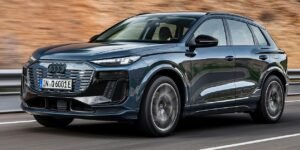
Both the BMW iX3 2026 and the Audi Q6 e-tron are mid-size premium electric SUVs from German brands, targeting buyers who want luxury, range, and daily practicality in one package. The iX3 suits drivers who value a familiar BMW driving feel with a proven EV platform at a lower entry price. The Q6 e-tron is aimed at buyers willing to spend more for significantly better range and faster charging. This comparison matters now because both models are available as grey-market imports in Nigeria and Kenya, and the Q6 e-tron recently launched officially in South Africa.
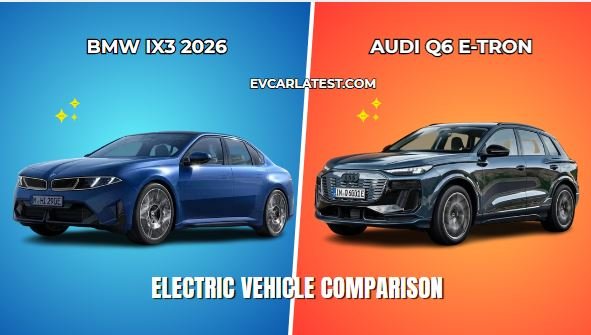
The BMW iX3 2026 delivers 461 km on the WLTP cycle; real-world estimates sit closer to 360–390 km. DC charging peaks at 150 kW, with 11 kW AC onboard. A 10–80% charge takes roughly 34 minutes on a fast charger. The Audi Q6 e-tron pulls ahead here with a WLTP range of 625 km (rear-motor base) and real-world figures around 490–530 km. Its 270 kW DC charging capability brings the battery from 10 to 80% in about 21 minutes, and the optional 22 kW AC charging is useful where fast DC infrastructure is scarce, as it is across much of West Africa.
The iX3 2026 starts at approximately $55,000 (around ₦85M NGN / ZAR 1.1M as a grey import in Nigeria and South Africa). The Q6 e-tron starts closer to $65,000 (around ₦100M NGN / ZAR 1.35M). The iX3 comes in standard and M Sport trims; the Q6 e-tron offers rear-wheel drive and quattro AWD variants. The iX3 is available via grey imports in Nigeria and Kenya, with a growing official presence in South Africa. The Q6 e-tron has official Audi dealer support in South Africa and is imported privately elsewhere on the continent. If your primary question is which to buy within a ₦85–100M budget, this page answers it directly: they serve different buyers.
Within BMW’s lineup, the iX1 offers a more affordable entry into the brand’s EV family, while the iX steps up to a larger platform. On the Audi side, the Q4 e-tron sits below this pairing at a lower price point, and the Q8 e-tron targets buyers who want maximum space. Outside both brands, the Mercedes EQC and Volvo EX60 compete in this segment and are worth considering. This comparison still wins over those alternatives because the BMW and Audi combination covers the widest price gap within a single brand tier decision.
The iX3 is the right call if charging infrastructure is limited where you drive most. Its 150 kW DC charging is adequate for routes between Lagos and Abuja with planned stops, and the lower purchase price reduces the grey-import financial risk. It also costs less to service relative to the Q6 e-tron where BMW parts are accessible. On the downside, the range gap is real on long trips, and the interior, while good, trails the Q6 e-tron in material quality. The Q6 e-tron’s 270 kW charging is its main practical advantage — when infrastructure catches up, that speed matters. The PPE platform also gives it a more modern cabin and a stronger tech stack. The downside is price and parts availability, both of which are real considerations for grey-market buyers in Nigeria and Kenya.
Quick Verdict: Choose the BMW iX3 2026 if budget control and parts availability matter more than maximum range. Choose the Audi Q6 e-tron if you cover long distances regularly and want faster charging. The ₦15M price gap is the clearest deciding factor for most African buyers. Neither is a poor choice; the Q6 e-tron simply does more if you can absorb the cost.
FAQ
Is the BMW iX3 2026 better than the Audi Q6 e-tron for long trips?
No. The Q6 e-tron covers roughly 160 km more per charge on the WLTP cycle and charges significantly faster at 270 kW versus 150 kW. For routes above 400 km with limited charging stops, the Q6 e-tron is the more practical option.
Which is cheaper to maintain, the iX3 or the Q6 e-tron?
The iX3 generally costs less to maintain in markets where BMW has an established dealer network, including South Africa and parts of Nigeria. The Q6 e-tron is newer, and parts remain harder to source as a grey import. Both benefit from low EV running costs overall.
Is the Audi Q6 e-tron available in Nigeria?
Not officially. The Q6 e-tron enters Nigeria as a grey-market import, typically from European or UAE auctions. South Africa has official Audi dealer support and is the most straightforward African market for buying one with warranty coverage.
Related EV Comparisons
- BMW iX3 2026 vs Tesla Model Y 2025
- BMW iX3 2026 vs Mercedes-Benz GLC
- BMW iX3 2026 vs Polestar 3
- BMW iX3 2026 vs Porsche Macan
- Zeekr 007 GT (7 GT) 2026 vs BMW i5 Touring
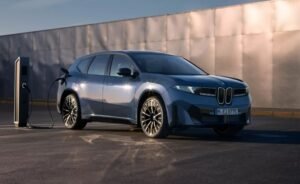
| |
| Price | $60,000.00 $63,000.00 |
| Our Rating | |
| Brand | BMW AUDI |
| Category | Electric Cars Electric Cars |
MODEL
| Full Model Name | Audi Q6 e-tron (Sportback variant also available) |
| Segment / Class | Compact luxury electric SUV |
| Available Trims / Variants |
iX3 40 (RWD, coming late 2026), iX3 50 xDrive (AWD, at launch) Audi Q6 e-tron Audi Q6 e-tron performance Audi Q6 e-tron quattro Audi SQ6 e-tron |
| Powertrain Options | Single-motor RWD; Dual-motor Quattro AWD; SQ6 e-tron performance AWD |
PRICE & AVAILABILITY
| Base Price (USD) |
$60,000
$ 63,800 € 63,500 £ 60,000 - Audi Q6 e-tron € 68,800 - Audi Q6 e-tron performance $ 65,800 € 74,700 £ 69,000 - Audi Q6 e-tron quattro $ 72,900 € 93,800 £ 93,000 - Audi SQ6 e-tron |
| Availability Status |
On sale — UK/Europe from Sept 2025; US/Canada from summer 2026
Available to order. Released 2024, September - Audi Q6 e-tron Available to order. Released 2024, August - Audi Q6 e-tron performance Available to order. Released 2024, April - Audi Q6 e-tron quattro Available to order. Released 2024, May - Audi SQ6 e-tron |
| Markets Available | US, UK, Canada, EU, China (as Q6L e-tron) |
| Brand / Manufacturer | Audi (Volkswagen Group) |
BATTERY & CHARGING
| Battery Capacity |
108.4 kWh usable / 113.4 kWh total
75.8 kWh usable, 83 kWh total - Audi Q6 e-tron 94.9 kWh usable, 100 kWh total - Audi Q6 e-tron performance 94.9 kWh usable, 100 kWh total - Audi Q6 e-tron quattro 94.9 kWh usable, 100 kWh total - Audi SQ6 e-tron |
| Range (WLTP/CLTC/EPA) |
(WLTP): 456–500 miles (EPA): ~400 miles 331 mi WLTP (321 mi EPA) - Audi Q6 e-tron 398 mi WLTP - Audi Q6 e-tron performance 388 mi WLTP (307 mi EPA) - Audi Q6 e-tron quattro 372 mi WLTP (275 mi EPA) - Audi SQ6 e-tron |
| DC Charging (Max kW) |
Up to 400 kW — 10–80% in 21 minutes; 231 miles added in 10 minutes
CCS 225 kW max, 10-80% in 21 min - Audi Q6 e-tron CCS 260 kW max, 10-80% in 22 min - Audi Q6 e-tron performance CCS 270 kW max, 10-80% in 21 min - Audi Q6 e-tron quattro CCS 270 kW max, 10-80% in 21 min - Audi SQ6 e-tron |
| Charging Time (10–80%) | ~21–22 minutes |
| AC Charging (Max kW) |
11 kW onboard charger — 0–100% approx. 11 hours
Type 2 11 kW, 100% in 8 h - Audi Q6 e-tron Type 2 11 kW - Audi Q6 e-tron performance Type 2 11 kW, 100% in 10 h - Audi Q6 e-tron quattro Type 2 11 kW, 100% in 10 h - Audi SQ6 e-tron |
| Battery Warranty | 8 years / 100,000 miles |
| Energy Consumption |
3.7–4.1 miles/kWh (WLTP)
259 Wh/mi WLTP - Audi Q6 e-tron 266 Wh/mi WLTP - Audi Q6 e-tron performance 274 Wh/mi WLTP - Audi Q6 e-tron quattro 282 Wh/mi WLTP - Audi SQ6 e-tron |
PERFORMANCE
| Power Output (kW / hp) |
463 hp (345 kW) — dual-motor AWD — Front motor: 123 kW / 255 Nm; Rear motor: 240 kW / 435 Nm RWD 292 hp (215 kW) - Audi Q6 e-tron RWD 326 hp (240 kW) - Audi Q6 e-tron performance AWD 382 hp (285 kW) - Audi Q6 e-tron quattro AWD 509 hp (380 kW) - Audi SQ6 e-tron |
| 0–100 km/h / 0-60 mph (seconds) The acceleration numbers are an easy way to compare car performance. We list either time from 0 to 100 km/h or time from 0 to 60mph, depending on which number(s) the manufacturers provide. The lower the acceleration time, the higher performance the car is. |
0–62 mph in 4.9 seconds
6.3 sec 0-60 mph (7 sec 0-62 mph) - Audi Q6 e-tron 6.6 sec 0-62 mph - Audi Q6 e-tron performance 4.9 sec 0-60 mph (5.9 sec 0-62 mph) - Audi Q6 e-tron quattro 4.1 sec 0-60 mph (4.3 sec 0-62 mph) - Audi SQ6 e-tron |
| Motor Configuration | Single motor (RWD) or dual motor (AWD Quattro) |
| Torque (Nm) |
645 Nm (475 lb-ft)
332 lb-ft (450 Nm) - Audi Q6 e-tron 485 Nm (358 lb-ft) - Audi Q6 e-tron performance 855 Nm (631 lb-ft) - Audi Q6 e-tron 855 Nm (631 lb-ft) - Audi SQ6 e-tron |
| Top Speed (km/h / mph) |
130.5 mph (210 km/h)
130 mph (210 km/h) - Audi Q6 e-tron 130 mph (210 km/h) - Audi Q6 e-tron performance 130 mph (210 km/h) - Audi Q6 e-tron quattro 143 mph (230 km/h) - Audi SQ6 e-tron |
BODY & DIMENSIONS
| Dimensions (L×W×H mm) | 4,782 mm L × 1,895 mm W × 1,635 mm H 4771 x 1939 x 1685 mm (187.8 x 76.3 x 66.3 in) |
| Trunk/Boot Capacity (L) | 520 L standard; 1,750 L with rear seats folded EU: 526 l, 1529 l max |
| Body Style | 5-door, 5-seat electric SUV 5 door SUV, 5 seats |
| Kerb Weight (kg) |
2,285 kg curb weight; 2,825 kg max allowable
EU: 2200 kg unladen, 2740 kg gross - Audi Q6 e-tron EU: 2275 kg unladen, 2815 kg gross - Audi Q6 e-tron performance EU: 2400 kg unladen, 2940 kg gross - Audi Q6 e-tron quattro EU: 2425 kg unladen, 2965 kg gross - Audi SQ6 e-tron |
| Ground Clearance (mm) | 176 mm Not officially published by Audi |
| Frunk/Bonnet Capacity (L) | 58 L 64 l |
| Sunroof | Optional panoramic glass roof |
SAFETY & DRIVER ASSISTANCE
| ADAS Features | Adaptive cruise + lane centering, AEB, pedestrian detection, blind-spot, park assist |
| Autonomous Driving Level | AI-based automated driving superbrain co-developed with Qualcomm, processes data 20× faster than previous systems; Highway Assist (hands-free) optional Level 2 (advanced driver assistance, not autonomous) |
| Crash Test Ratings | NCAP 2024: 5 stars |
| Over-the-Air (OTA) Safety Updates | Yes |
COMFORT & SEATING
| Seating Capacity | Heated front seats standard with electric adjustment; M Sport seats add 10-way adjustment and 7-stage massage 5 |
| Seat Material | Synthetic leather standard; leather/Alcantara optional; heated/ventilated available |
| Wireless Charging | Yes |
DISPLAYS & CONNECTIVITY
| Centre Screen (inches) | 17.9-inch touchscreen, 3,340 × 1,440 px, angled 17.5° toward driver; BMW Operating System X (iDrive X) 14.5" touchscreen |
| Mirror Link / Apple CarPlay / Android Auto | Wireless, standard |
| Driver's Display (inches) | BMW Panoramic Vision — projects across the full windshield base (110 cm / 43.3 in), A-pillar to A-pillar; three fixed driver tiles plus six configurable widgets 11.9" |
| Head-Up Display (HUD) | 3D HUD Optional, Augmented Reality HUD |
TECHNOLOGY
| Vehicle-to-Load (V2L) | Not confirmed/standard |
| Vehicle-to-Grid (V2G) | Not currently offered |
| Over-the-Air Map Updates | Yes |
ADDITIONAL SPECS
| Headlight Type (LED/Matrix/Laser) | Matrix LED standard; digital light signatures optional |
| Adaptive Headlights | Yes |
| Sound System Brand | Bang & Olufsen (optional) |
| Speaker Count | 16 (up to 18 on Vorsprung) |
| Navigation System | Standard (MMI Navigation Plus) |
| Face Recognition | Not available |
| Fingerprint Sensor | Not available |
| Remote Parking | Available (Park Assist Plus) |
| Official Dealer Network | Global Audi dealer network |
| Service Interval | ~1 year / 10,000 miles |
| Roadside Assistance | Included, term matches warranty |
Note
| Data Source | Audi official specs + Carwow, Auto Express, Electrifying, Cars.com, Wikipedia |
| Last Updated | September 16, 2026 |
| Additional Notes | The iX3 also won the 2026 World Electric Vehicle Award. The iX3 40 (single motor, RWD) is arriving later in 2026 at a lower price. A long-wheelbase China-market variant with 900 km CLTC range is also in production. Some specs and pricing vary by market and trim. Figures vary by market and trim |
| Editor's Note | Real-world range typically runs 15–25% below WLTP figures per owner/reviewer testing |
|
Disclaimer Note
Specifications sourced from manufacturer data and may reflect WLTP, CLTC, or EPA test conditions. Import prices in your local are estimates based on grey-market landing costs and exclude duties, clearing fees, and local taxes. Figures are subject to change without notice. Always verify with your local importer before purchase. We can not guarantee that the information on this page is 100% correct