- Home
- Electric Vehicles
- Compare Electric Cars
- BMW iX3 2026 vs Polestar 3
BMW iX3 2026 vs Polestar 3
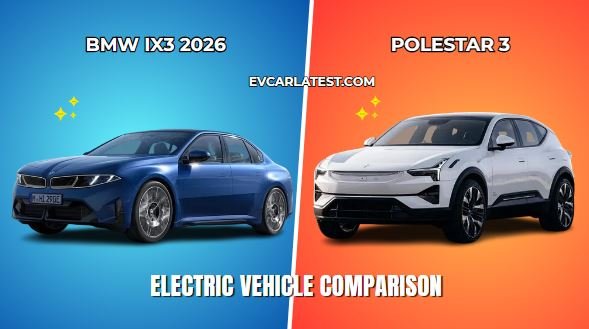
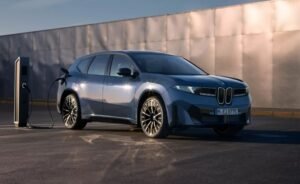
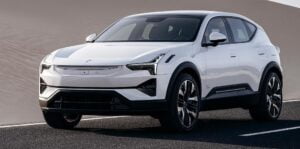
The BMW iX3 2026 is a mid-size electric SUV from Germany’s BMW Group, designed for urban professionals who want premium EV credentials without moving into flagship territory. The Polestar 3 is a larger electric SUV-coupé from Swedish-Chinese brand Polestar, positioned for buyers who want a performance-forward alternative to Tesla or Audi. Both compete in the premium electric SUV segment at broadly similar price points, making this comparison directly relevant as grey-market imports of both models continue to appear in Nigeria and South Africa.
Range & Charging
The iX3 2026 delivers up to 461 km WLTP on a single charge, with real-world estimates closer to 370–390 km depending on driving conditions. It supports 11 kW AC charging and 150 kW DC fast charging, reaching 10–80% in approximately 34 minutes. The Polestar 3 offers up to 631 km WLTP in Long Range configuration, with real-world figures around 500 km. Its 22 kW AC capability is a practical advantage for overnight charging at home, and 250 kW DC peak charging takes it from 10–80% in roughly 30 minutes. Polestar 3 holds a clear advantage on range and AC charging speed.
Price, Availability & Market Fit
The BMW iX3 2026 starts at approximately $65,000 USD (≈ ₦102m / ZAR 1.19m / KES 8.4m at current rates), with the M Sport trim adding luxury and sportier styling. The Polestar 3 starts around $73,400 USD (≈ ₦115m / ZAR 1.35m / KES 9.5m), with Long Range Single Motor and Dual Motor variants available. BMW has stronger official presence in South Africa and Kenya; Polestar’s African footprint remains limited, making the iX3 the more practical choice for buyers who want local service access. This comparison helps buyers decide whether to pay a premium for the Polestar’s longer range and larger cabin or prioritise the iX3’s established dealer support.
Ecosystem & Rival Context
Within BMW’s EV lineup, buyers considering the iX3 may also look at the iX1 at a lower price point or the iX SUV if budget allows. On the Polestar side, the Polestar 2 is a smaller and more affordable fastback alternative for buyers who want the brand without the larger footprint. Outside both brands, the Audi Q8 e-tron and Mercedes EQC compete in this segment with similar pricing and more established service networks in Africa. However, neither matches the iX3’s widespread BMW dealer coverage or the Polestar 3’s range figures simultaneously, which is precisely what makes this pairing worth comparing.
Pros & Cons
BMW iX3 2026: Its BMW dealer network across South Africa, Kenya, and Nigeria means buyers can access parts and service without relying on grey-market workarounds. The M Sport trim delivers genuinely engaging driving dynamics that matter on variable African road surfaces. Charging infrastructure compatibility is broad, which reduces dependency on brand-specific networks. On the downside, 461 km WLTP range feels conservative against rivals at this price, which becomes noticeable on longer inter-city routes. The interior, while refined, lacks the visual distinction some buyers expect at this price bracket.
Polestar 3: The 631 km WLTP range is among the best in this segment, reducing range anxiety on routes where charging points are sparse. Its 22 kW AC charging speed makes slower home or hotel charging meaningfully faster overnight. The cabin design is minimalist and well-executed, appealing to buyers who find German interiors overly complex. However, Polestar’s limited official African presence creates real after-sales risk for buyers outside South Africa. The starting price is also higher, narrowing its appeal for buyers managing import duty and shipping costs.
QUICK VERDICT
Choose the BMW iX3 2026 if local service access, a familiar dealer network, and lower entry cost are your priorities. Choose the Polestar 3 if maximum range, faster home charging, and a more distinctive cabin justify the price premium and import complexity. For most buyers importing into Nigeria or Kenya, the iX3 is the lower-risk option. South African buyers with access to Polestar’s network may find the 3’s range advantage worth the extra spend.
FAQ
Is the BMW iX3 better than the Polestar 3 for long trips?
The Polestar 3 covers up to 631 km WLTP versus the iX3’s 461 km, making it the stronger choice for long-distance driving. That said, if charging infrastructure along your route is limited, neither model fully eliminates planning requirements.
Which is cheaper to maintain, the BMW iX3 or Polestar 3?
The iX3 is likely cheaper to maintain in most African markets due to BMW’s established dealer and parts network. Polestar’s limited regional presence can make service more expensive and logistically complex.
Is the Polestar 3 available in Nigeria or Africa?
Polestar has no official sales presence in Nigeria. Grey-market imports exist but come with after-sales risk. South Africa is the only African market with some level of Polestar service support.
Which has faster charging, the iX3 or Polestar 3?
The Polestar 3 supports 250 kW DC peak versus the iX3’s 150 kW, and its 22 kW AC charging significantly outperforms the iX3’s 11 kW. For buyers charging at home or at slower public stations, the Polestar’s AC speed advantage is the more practical daily-use benefit.
Related EV Comparisons
- BMW iX3 2026 vs Porsche Macan
- Zeekr 007 GT (7 GT) 2026 vs BMW i5 Touring
- Audi Q4 e-tron 2026 vs BMW iX1 2026
- Mercedes-Benz C-Class Electric vs BMW i3 2026
- BMW iX vs Audi Q8 e-tron
| |
| Price | $60,000.00 $78,000.00 |
| Our Rating | |
| Brand | BMW POLESTAR |
| Category | Electric Cars Electric Cars |
MODEL
| Available Trims / Variants |
iX3 40 (RWD, coming late 2026), iX3 50 xDrive (AWD, at launch) Polestar 3 Long range Single motor Polestar 3 Long range Dual motor Polestar 3 Long range Dual motor Performance |
PRICE & AVAILABILITY
| Base Price (USD) |
$60,000
$ 69,000 € 78,600 £ 69,900 - Polestar 3 Long range Single motor $ 73,400 € 88,600 £ 79,900 - Polestar 3 Long range Dual motor $ 79,400 € 96,500 £ 85,500 - Polestar 3 Long range Dual motor Performance |
| Availability Status |
On sale — UK/Europe from Sept 2025; US/Canada from summer 2026
Available to order. Released 2024, July - Polestar 3 Long range Single motor Available to order. Released 2023, February - Polestar 3 Long range Dual motor Available to order. Released 2023, February - Polestar 3 Long range Dual motor Performance |
BATTERY & CHARGING
| Battery Capacity |
108.4 kWh usable / 113.4 kWh total
107 kWh usable, 111 kWh total |
| Range (WLTP/CLTC/EPA) |
(WLTP): 456–500 miles (EPA): ~400 miles 404 mi WLTP (350 mi EPA) - Polestar 3 Long range Single motor 379 mi WLTP (315 mi EPA) - Polestar 3 Long range Dual motor 348 mi WLTP (279 mi EPA) - Polestar 3 Long range Dual motor Performance |
| DC Charging (Max kW) |
Up to 400 kW — 10–80% in 21 minutes; 231 miles added in 10 minutes
CCS 250 kW max, 10-80% in 30 min |
| AC Charging (Max kW) | 11 kW onboard charger — 0–100% approx. 11 hours Type 2 11 kW, 0-100% in 11 hrs |
| Energy Consumption |
3.7–4.1 miles/kWh (WLTP)
351 Wh/mi WLTP - Polestar 3 Long range Dual motor 372 Wh/mi WLTP - Polestar 3 Long range Dual motor Performance |
PERFORMANCE
| Power Output (kW / hp) |
463 hp (345 kW) — dual-motor AWD — Front motor: 123 kW / 255 Nm; Rear motor: 240 kW / 435 Nm RWD 299 hp (220 kW) - Polestar 3 Long range Single motor AWD 489 hp (360 kW) - Polestar 3 Long range Dual motor AWD 517 hp (380 kW) - Polestar 3 Long range Dual motor Performance |
| 0–100 km/h / 0-60 mph (seconds) The acceleration numbers are an easy way to compare car performance. We list either time from 0 to 100 km/h or time from 0 to 60mph, depending on which number(s) the manufacturers provide. The lower the acceleration time, the higher performance the car is. |
0–62 mph in 4.9 seconds
7.5 sec 0-60 mph (7.8 sec 0-62 mph) - Polestar 3 Long range Single motor 4.9 sec 0-60 mph (5 sec 0-62 mph) - Polestar 3 Long range Dual motor 4.6 sec 0-60 mph (4.7 sec 0-62 mph) - Polestar 3 Long range Dual motor Performance |
| Torque (Nm) |
645 Nm (475 lb-ft)
490 Nm (361 lb-ft) - Polestar 3 Long range Single motor 840 Nm (620 lb-ft) - Polestar 3 Long range Dual motor 910 Nm (671 lb-ft) - Polestar 3 Long range Dual motor Performance |
| Top Speed (km/h / mph) |
130.5 mph (210 km/h)
112 mph (180 km/h) - Polestar 3 Long range Single motor 130 mph (210 km/h) - Polestar 3 Long range Dual motor 130 mph (210 km/h) - Polestar 3 Long range Dual motor Performance |
BODY & DIMENSIONS
| Dimensions (L×W×H mm) |
4,782 mm L × 1,895 mm W × 1,635 mm H
4900 x 1968 x 1614 mm (192.9 x 77.5 x 63.5 in) |
| Trunk/Boot Capacity (L) | 520 L standard; 1,750 L with rear seats folded EU: 484 l, 1411 l max |
| Body Style | 5-door, 5-seat electric SUV 5 door SUV, 5 seats |
| Kerb Weight (kg) |
2,285 kg curb weight; 2,825 kg max allowable
EU: 2584 kg unladen - Polestar 3 Long range Dual motor EU: 2670 kg unladen - Polestar 3 Long range Dual motor Performance |
| Ground Clearance (mm) | 176 mm 201 mm (7.9 in) |
| Frunk/Bonnet Capacity (L) | 58 L 32 l |
SAFETY & DRIVER ASSISTANCE
| Autonomous Driving Level | AI-based automated driving superbrain co-developed with Qualcomm, processes data 20× faster than previous systems; Highway Assist (hands-free) optional |
COMFORT & SEATING
| Seating Capacity | Heated front seats standard with electric adjustment; M Sport seats add 10-way adjustment and 7-stage massage Heated and ventilated front seats, heated rear seats |
DISPLAYS & CONNECTIVITY
| Centre Screen (inches) | 17.9-inch touchscreen, 3,340 × 1,440 px, angled 17.5° toward driver; BMW Operating System X (iDrive X) 14.5" touchscreen |
| Driver's Display (inches) | BMW Panoramic Vision — projects across the full windshield base (110 cm / 43.3 in), A-pillar to A-pillar; three fixed driver tiles plus six configurable widgets 9" |
| Head-Up Display (HUD) | 3D HUD Yes, projector type |
TECHNOLOGY
ADDITIONAL SPECS
Note
| Additional Notes | The iX3 also won the 2026 World Electric Vehicle Award. The iX3 40 (single motor, RWD) is arriving later in 2026 at a lower price. A long-wheelbase China-market variant with 900 km CLTC range is also in production. Some specs and pricing vary by market and trim. Also known as Chevrolet Silverado Work Truck EV |

|
Disclaimer Note
Specifications sourced from manufacturer data and may reflect WLTP, CLTC, or EPA test conditions. Import prices in your local are estimates based on grey-market landing costs and exclude duties, clearing fees, and local taxes. Figures are subject to change without notice. Always verify with your local importer before purchase. We can not guarantee that the information on this page is 100% correct