- Home
- Electric Vehicles
- Abarth
- Fiat Abarth 500e
Fiat Abarth 500e

- Drive Type: FWD
- Body Type: 3 door hatchback, 4 seats
- Self Driving: No
PROS
- Agile, Fun-to-Drive Character
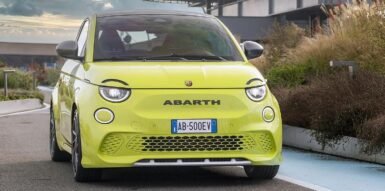
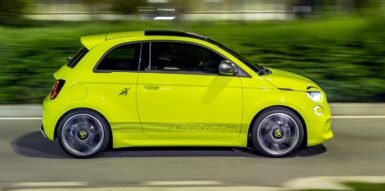
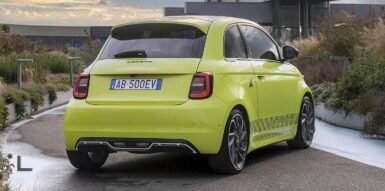
- Distinctive Sporty Styling
- Compact and City-Friendly
CONS
- Limited Range and Efficiency
- High Cost and Value Considerations
The Abarth 500e is Abarth’s first fully electric model, and it exists to answer one question: can a small, characterful hot hatch still feel like an Abarth once the engine’s gone electric? It shares its platform and 42 kWh battery with the standard Fiat 500e, but Abarth adds a stronger front motor, retuned suspension, and the brand’s usual visual and audio theatrics on top.
Powertrain and Performance
The Abarth 500e’s single front-mounted motor produces 155 hp (113 kW) and 235 Nm of torque, a meaningful step up from the regular Fiat 500e’s 117 hp. That’s enough for a 0-62 mph (0-100 km/h) time of 7.0 seconds and a limited top speed of 96 mph (155 km/h). It won’t trouble anything from Rivian or Tesla on a spec sheet, but the segment it’s aimed at — small, characterful hot hatches — isn’t chasing four-figure horsepower numbers to begin with.
Three drive modes are available: Turismo, Scorpion Street, and Scorpion Track, with full power only unlocked in the two Scorpion settings. Turismo mode softens throttle response for everyday driving and, on the Convertible, quietens the synthetic exhaust note piped through the speakers — a deliberate Abarth signature rather than an afterthought.
Battery, Range, and Charging
The Abarth 500e uses the same 42 kWh pack as the Fiat 500e (37.8 kWh usable), with a modified inverter and wiring to handle the extra power draw. WLTP-rated range sits at roughly 164 miles (264 km) for the hatchback, slightly less for the Convertible. Real-world testing from UK outlets has landed closer to 135-140 miles in mixed driving, dropping toward 115-120 miles at sustained motorway speeds — a real gap between the official figure and what most owners will actually see, and worth flagging plainly rather than leading with the WLTP number alone.
DC fast charging tops out at 85 kW, enough for a 10-80% charge in about 25 minutes, though speeds taper noticeably past 30% state of charge. Onboard AC charging is capped at 11 kW; a 7 kW home wallbox will take a depleted pack to full in roughly six hours.
Trims, Body Styles, and Pricing
Buyers choose between a standard 500e trim and the higher-spec Turismo, each available as a hardtop hatchback or a canvas-roof Convertible. Turismo adds 18-inch wheels (up from 17-inch), Alcantara interior trim, and a wireless charging pad, for roughly €4,000 (£4,000) over the base trim; the Convertible body style adds a further €3,000 (£3,000) on top of whichever trim it’s paired with.
European pricing starts around €36,900 after incentives for the standard hatchback, climbing past €40,000 for a well-optioned Turismo Convertible. UK pricing starts at £34,195, rising to roughly £38,195-plus for a fully loaded Turismo Convertible. The Abarth 500e is not sold in North America, so there’s no official USD MSRP — third-party estimates put a rough equivalent around $41,000, but treat that as a currency conversion rather than a real market price.
How It Compares
The Abarth 500e’s closest rival on sale today is the Mini Electric, which undercuts it slightly on price but is running on considerably older underpinnings. The more direct competitive pressure is coming: the Mini Cooper E and the Renault 5-based Alpine A290 both target the same compact hot-hatch-EV buyer, and both are expected to offer more range for similar money. Worth noting for anyone cross-shopping: Abarth’s e-CMP2 platform, shared with the base Fiat 500e, isn’t slated for further group-wide investment now that Stellantis has shifted its small-EV architecture elsewhere — this is very much a fixed-generation product rather than one due for major updates.
Warranty
Abarth backs the 500e with a 2-year, unlimited-kilometre vehicle warranty in Europe, with the high-voltage battery separately covered for 8 years or 160,000 km, guaranteed to retain at least 70% of its original capacity over that period.
Abarth 500e Images

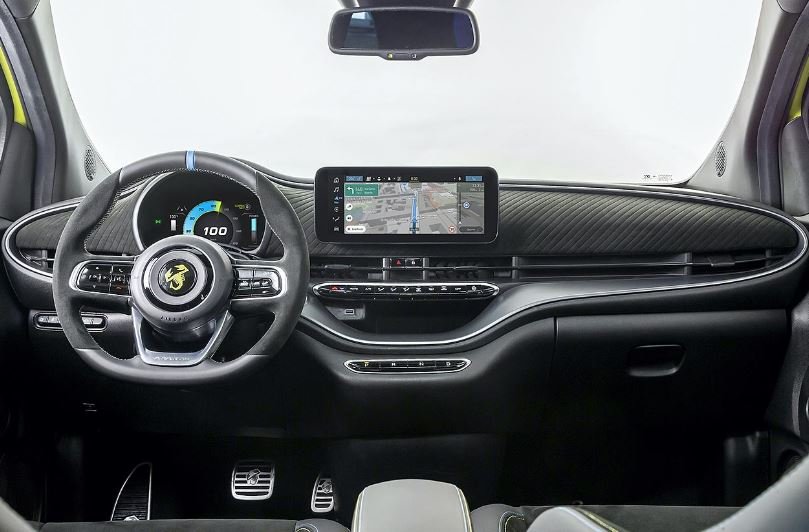
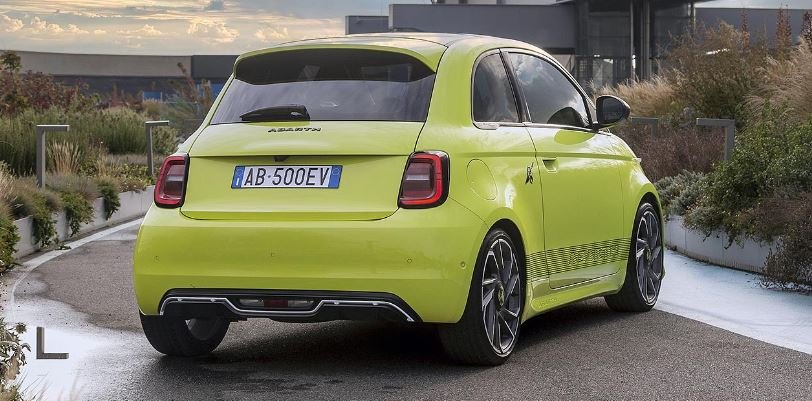
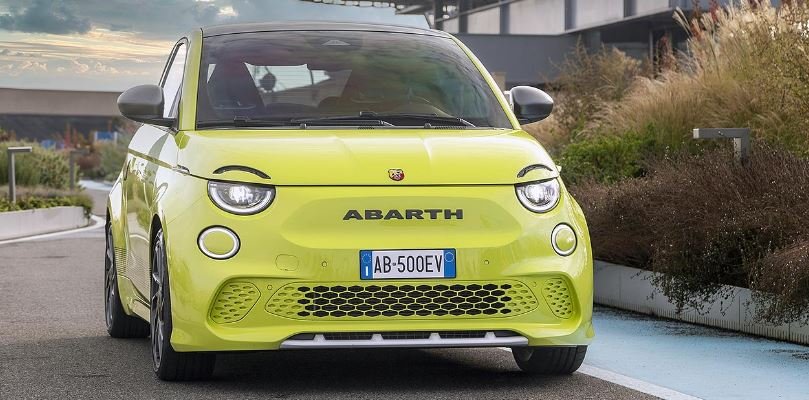

Full Electric Vehicle Specifications
MODEL
| Available Trims / Variants | Fiat Abarth 500e |
PRICE & AVAILABILITY
| Base Price (USD) | € 38,000 £ 34,200 |
| Availability Status | Available to order. Released 2023, June |
BATTERY & CHARGING
| Battery Capacity | 37.8 kWh usable, 42.2 kWh total |
| Range (WLTP/CLTC/EPA) | 164 mi WLTP |
| DC Charging (Max kW) | CCS 85 kW max, 0-80% in 35 min |
| AC Charging (Max kW) | Type 2 11 kW, 0-100% in 4 hours 15 min |
| Energy Consumption | 277 Wh/mi WLTP |
PERFORMANCE
| Power Output (kW / hp) | FWD 152 hp (114 kW) |
| 0–100 km/h / 0-60 mph (seconds) The acceleration numbers are an easy way to compare car performance. We list either time from 0 to 100 km/h or time from 0 to 60mph, depending on which number(s) the manufacturers provide. The lower the acceleration time, the higher performance the car is. | 7 sec 0-62 mph |
| Torque (Nm) | 235 Nm (173 lb-ft) |
| Top Speed (km/h / mph) | 96 mph (155 km/h) |
BODY & DIMENSIONS
| Dimensions (L×W×H mm) | 3673 x 1683 x 1518 mm (144.6 x 66.3 x 59.8 in) |
| Trunk/Boot Capacity (L) | EU: 185 l, 550 l max |
| Body Style | 3 door hatchback, 4 seats |
| Kerb Weight (kg) | EU: 1410 kg unladen, 1720 kg gross |
| Frunk/Bonnet Capacity (L) | No |
SAFETY & DRIVER ASSISTANCE
COMFORT & SEATING
| Seating Capacity | Heated front seats |
DISPLAYS & CONNECTIVITY
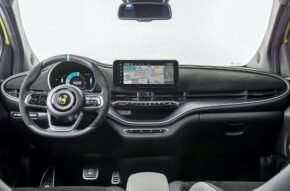
| Centre Screen (inches) | 10.25" touchscreen |
| Driver's Display (inches) | 7" |
| Head-Up Display (HUD) | No |
TECHNOLOGY
ADDITIONAL SPECS
Note
User Reviews
Disclaimer Note
Specifications sourced from manufacturer data and may reflect WLTP, CLTC, or EPA test conditions. Import prices in your local are estimates based on grey-market landing costs and exclude duties, clearing fees, and local taxes. Figures are subject to change without notice. Always verify with your local importer before purchase. We can not guarantee that the information on this page is 100% correct