- Electric Vehicles
- RENAULT
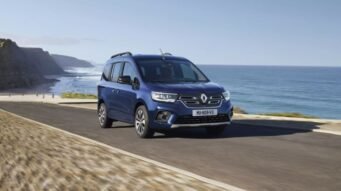
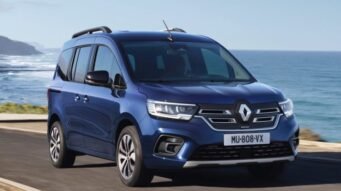
- Renault Kangoo E-Tech Electric
Renault Kangoo E-Tech Electric



- Drive Type: FWD
- Type: Compact panel van or MPV
- Self Driving: SAE Level 2
- Airbags: Yes
PROS
- Excellent cargo capacity in a compact footprint.
- Generous payload and towing capability.
- Efficient fast-charging and heat pump tech improves usability in varying climates.
- Ergonomic, well‑equipped and connected cabin with ample storage.
- Strong ADAS suite and comfort features.
CONS
- Infotainment feels dated compared to newer systems; sometimes slow UI response
- Real-world range can drop to around 200 km in highway driving or heavy usage scenarios
- Reported by some users to have occasional build quality issues; cold‑climate heating may underperform
The Renault Kangoo E-Tech Electric is a compact electric MPV and light commercial van sold across Europe and Australia. It comes in two body styles — a panel van and a multi-seat passenger variant — both riding on FWD with a single front-mounted motor. Renault launched this second generation in 2022 as the replacement for the older Kangoo Maxi ZE, which ran a smaller 33 kWh battery and made significantly less power.
For context inside Renault’s lineup: the Kangoo E-Tech sits above the discontinued Zoe in size and below the larger Trafic E-Tech in load capacity. In the passenger MPV configuration, it competes in a different lane from the Scenic E-Tech, which targets a more conventional family SUV buyer rather than utility-first buyers.
Battery, Range, and Real-World Performance
The Kangoo E-Tech runs a 48 kWh gross battery with 45 kWh usable. Renault rates it at 285 km on the WLTP cycle, with claimed consumption of 15.79 kWh/100 km. Independent real-world estimates place the figure closer to 240–250 km under mixed conditions.
The motor produces 90 kW and 245 Nm, driving the front wheels. Top speed is 135 km/h. The 0–100 km/h sprint takes around 13 seconds — not quick by EV standards, but consistent with the vehicle’s purpose as a practical carrier rather than a performance machine.
Three regenerative braking modes (B1 through B3) allow the driver to recover more energy in heavy traffic or on descents.
Charging: AC and DC Specs
| Charging Type | Rate | Notes |
|---|---|---|
| AC (standard) | 11 kW | 3-phase, on-board charger standard |
| AC (optional) | 22 kW | Upgrade available, 0–100% in ~3 hrs |
| DC fast charge | 80 kW peak | CCS Type 2 (EU) |
| DC 10–80% | ~35–40 min | Third-party estimate; Renault has not published an official 10–80% figure |
The optional 22 kW AC on-board charger is worth flagging: the standard unit is 11 kW, which is adequate for overnight home charging but slower on public AC stations. If fleet use or rapid base-charging is a priority, the upgrade is relevant.
Price: Europe, UK, Australia, and Africa
| Market | Price (Approx.) | Notes |
|---|---|---|
| Europe | From €35,850 | New, standard wheelbase |
| UK | From £28,100 | After applicable grant, van variant |
| Australia | From AUD $61,990 | SWB; LWB from $63,990 |
| Nigeria | ~₦59–75M+ | Grey market estimate only — see note below |
| Kenya / South Africa | Not officially distributed | Grey market import only |
African market note: The Kangoo E-Tech is not officially sold in Nigeria, Kenya, or South Africa. Any units in these markets arrive through grey-market import. At approximately ₦1,650 per euro, the base European price converts to roughly ₦59 million before Nigerian Customs duties, port charges, and clearing fees — which can add 35–50% on top depending on tariff classification. The ₦59–75M+ range above is an indicative estimate, not a confirmed retail figure.
Who Is the Kangoo E-Tech Electric For?
Urban and peri-urban fleet operators are the clearest fit: the 285 km WLTP range covers most commercial daily routes, the 22 kW AC option keeps downtime short at a depot with three-phase power, and the van’s load ratings (up to 668 kg payload on the LWB) are competitive for the segment.
For private buyers, it suits families who genuinely need the cargo volume and are comfortable with a van-derived ride. It is not a vehicle for buyers primarily seeking a smooth, car-like EV experience — the Renault Scenic E-Tech or similar passenger-focused EVs fit that profile better.
In African markets where it does occasionally appear through import, the landed cost puts it squarely in grey-market premium territory, where buyers typically have specific use-case requirements rather than buying on impulse.
How It Compares to Key Rivals
Citroën ë-Berlingo — Built on the same Stellantis platform as the Peugeot e-Rifter. Runs a slightly larger 50 kWh battery with comparable WLTP range figures. DC peak is 100 kW on newer variants, giving it a modest charging speed advantage over the Kangoo’s 80 kW cap.
Ford e-Tourneo Courier — The closest spec-and-price match. Also FWD, also targeting small electric MPV buyers in Europe, and positioned in a similar price bracket. The e-Tourneo Courier has a more car-like interior finish but a smaller cargo volume than the Kangoo’s LWB variant. This is the most direct head-to-head comparison for readers deciding between the two.
Peugeot e-Rifter — Another Stellantis stablemate of the ë-Berlingo, with a passenger-first emphasis. The e-Rifter’s ride quality tends to suit private buyers slightly better; the Kangoo’s payload and towing figures (up to 1,500 kg braked) give it the edge for mixed commercial-personal use.
Nissan Townstar Evalia EV — A newer entrant. Shares some platform architecture with the Kangoo and is priced similarly in Europe, but has a shorter real-world track record in fleet operation.
Renault Kangoo E-Tech Electric Images


Full Electric Vehicle Specifications
MODEL
| Available Trims / Variants | Renault Kangoo E-Tech Electric |
LAUNCH
| Reveal Date | April 2021 |
| Availability Status | Available (production since 2022, updated trims in 2024) |
| Base Price (USD) | ~€35,000 (varies by trim and country) |
BATTERY
| Battery Capacity | 45 kWh usable (lithium-ion) |
| Battery Chemistry | Liquid-cooled, pouch-type cells |
| Range (WLTP/CLTC/EPA) | Up to 285 km (WLTP) |
| Energy Consumption | ~17–20 kWh/100 km (real-world mixed driving) |
| Regen Braking (Max kW) | 3 levels (B1, B2, B3) |
| Heat Pump | |
| AC Charging (Max kW) | 11–22 kW (AC onboard charger) |
| DC Charging (Max kW) | 80 kW (up to 80% in ~35 min) |
| Additional Notes | Pre-conditioning via MyRenault app; Type 2 and CCS connectors |
PERFORMANCE
| Power Output (kW / hp) | 90 kW (≈120 hp) |
| Torque (Nm) | 245 Nm |
| 0–100 km/h / 0-60 mph (seconds) The acceleration numbers are an easy way to compare car performance. We list either time from 0 to 100 km/h or time from 0 to 60mph, depending on which number(s) the manufacturers provide. The lower the acceleration time, the higher performance the car is. | 0–100 km/h in ~11.6 seconds |
| Top Speed (km/h / mph) | 135 km/h (electronically limited) |
BODY
| Body Style | Compact panel van or MPV (Combi); front-wheel drive |
| Platform / Architecture | CMF-CD (shared with Nissan and other Renault models) |
| Dimensions (L×W×H mm) |
L1: ~4486 mm length L2 (Grand Kangoo): ~4910 mm length Width: ~1860 mm Height: ~1800–1850 mm |
| Drag Coefficient (Cd) | ~0.33 Cd (estimated) |
| Wheelbase (mm) | 2716 mm (L1), ~3100 mm (L2) |
| Ground Clearance (mm) | ~160 mm |
| Kerb Weight (kg) | ~1700–1850 kg (kerb) |
| Suspension (Front / Rear) |
Front: MacPherson strut Rear: Torsion beam |
| Wheel Size (inches) | 15"–17" steel or alloy, depending on trim |
| Trunk/Boot Capacity (L) |
Up to 3.3 m³ (L1); up to 4.2 m³ (L2) 600–800 kg payload |
| Frunk/Bonnet Capacity (L) | No |
| Towing Capacity (kg) | Up to 1,500 kg (braked) |
| Additional Notes |
Optional Easy Inside Rack (interior roof rack) Twin sliding side doors standard on most models |
SAFETY
| Airbags (count) | Front, side, and curtain airbags |
| Driver Assistance (ADAS) |
Adaptive cruise control Lane keep assist Autonomous emergency braking Traffic sign recognition Blind spot monitoring Driver drowsiness detection |
| Autonomous Driving Level | SAE Level 2 (with traffic jam assist) |
| Crash Test Ratings | 4 stars Euro NCAP (Kangoo 2021+ model tested) |
COMFORT
| Seating Capacity | Up to 5 (Combi), or 2–3 (Van); heated front seats optional |
| Roof Type | Standard metal; optional panoramic glass roof with electric sunblind (Combi only) |
| Bluetooth / Wi-Fi |
Android Auto & Apple CarPlay (wired/wireless) USB-C & USB-A ports Optional wireless charging |
| Parking Aids | Rearview camera, front/rear parking sensors, park assist |
| Additional Notes |
Climate control MyRenault remote preconditioning Keyless entry/start Heated windscreen, heated steering wheel (select trims) |
DISPLAYS
| Centre Screen (inches) | 8″ touchscreen (Easylink system) |
| Driver's Display (inches) | 4.2″ color digital cluster or optional 10″ fully digital cluster |
| Head-Up Display (HUD) | Not available |
| Additional Notes | Physical HVAC controls and steering wheel buttons |
LIGHTING
INFOTAINMENT & AUDIO
TECHNOLOGY
OWNERSHIP
Note
User Reviews
Disclaimer Note
Specifications sourced from manufacturer data and may reflect WLTP, CLTC, or EPA test conditions. Import prices in your local are estimates based on grey-market landing costs and exclude duties, clearing fees, and local taxes. Figures are subject to change without notice. Always verify with your local importer before purchase. We can not guarantee that the information on this page is 100% correct