- Electric Vehicles
- GAC
- GAC Aion Ray 7
GAC Aion Ray 7
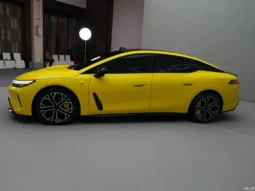
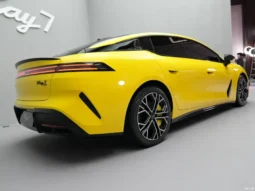
- Drive Type: RWD
- Body Type: 5-seat fastback sedan
- Self Driving:
- Airbags: Yes
PROS
- First production vehicle with a chip-level integrated drive-and-brake "Super Chassis" architecture
- CLTC-rated 700 km range on an LFP battery pack
- LiDAR-capable driver-assistance suite built on L4-derived algorithms, with a lower-cost non-LiDAR configuration also available
CONS
- Charging specs (AC rate, DC peak rate, 10–80% time) remain undisclosed ahead of launch
- Pricing and launch timing are still unconfirmed, and estimated positioning (200,000–250,000 yuan) puts it against an already-crowded field of established rivals
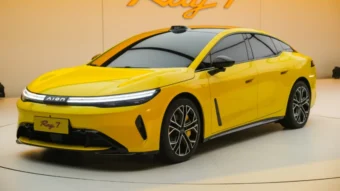
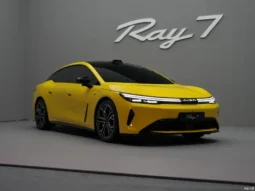
GAC Aion RAY 7 is the debut model of Aion’s new Ray series, positioned by the brand as a mid-to-large electric sedan aimed at younger, private buyers rather than the fleet and ride-hailing customers that make up much of Aion’s existing lineup. It’s a five-seat fastback sedan built on a rear-wheel-drive electric platform, measuring 4,960 mm long with a 2,920 mm wheelbase. What makes it notable isn’t styling — it’s the underlying hardware: the RAY 7 is the first production car to use Aion’s chip-level integrated drive-and-brake architecture, which the company calls its “Super Chassis,” and it’s also the first model to carry Aion’s redesigned brand logo.
Powertrain and charging. The RAY 7 uses a single Huawei-supplied permanent-magnet motor rated at 180 kW (241 hp), paired with lithium iron phosphate (LFP) battery packs sourced from two suppliers — CATL and Yinpai Battery, Aion’s in-house battery unit. Usable battery capacity in kWh has not been disclosed. Range is rated at 700 km on the CLTC cycle, with claimed energy consumption as low as 9.7 kWh/100 km. AC onboard charging rate, DC peak charging rate, and 10–80% charging time have not been officially released and should be treated as unconfirmed until Aion publishes full specifications. The car also pairs a Huawei DriveONE electromechanical braking (EMB) system with an LiDAR-capable driver-assistance suite built on algorithms derived from Aion’s L4 autonomous driving stack; roof-mounted LiDAR is listed as an optional add-on rather than standard equipment.
Pricing, fit and context. GAC Aion has not confirmed a launch price. Industry estimates place the RAY 7 in the 200,000–250,000 yuan range (roughly $29,500–$36,900 USD), positioning it well above Aion’s budget-focused models. Treat this range as a pre-launch estimate, not confirmed pricing. The car is a realistic fit for younger, tech-oriented commuters and private buyers who want sedan performance and ADAS features rather than a fleet or ride-hailing vehicle — a notable shift for a brand historically built on affordability. Within Aion’s own lineup, the RAY 7 sits well above value-focused models like the Aion Y and closer to the territory of the Hyptec HT, the more premium SUV brought under Aion’s umbrella after the Aion-Hyptec business merger. Externally, its closest rivals are the Xiaomi SU7 and the Zeekr 007, with the Shangjie Z7 also competing in the same price band. For direct spec-and-price comparison purposes, the Xiaomi SU7 is the closest match, since Aion has explicitly positioned the RAY 7 to compete with it.
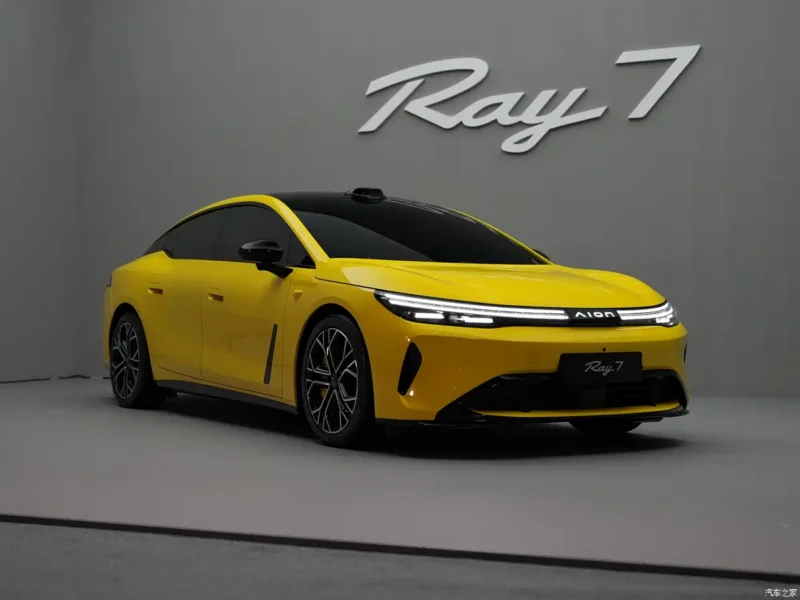
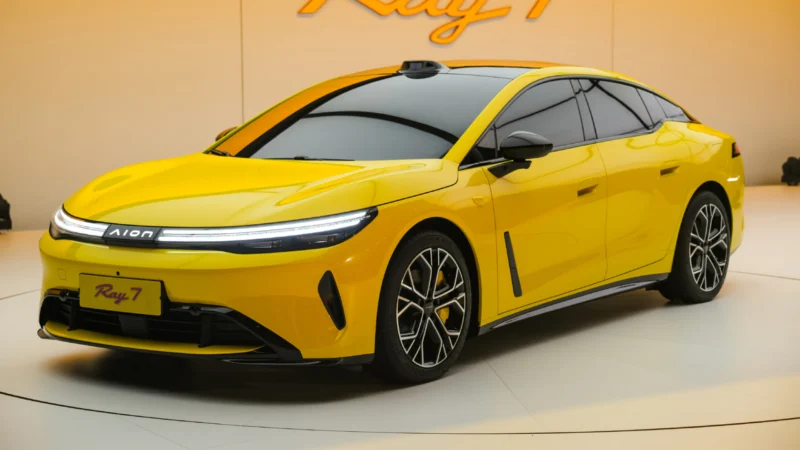
GAC Aion Ray 7 Photos
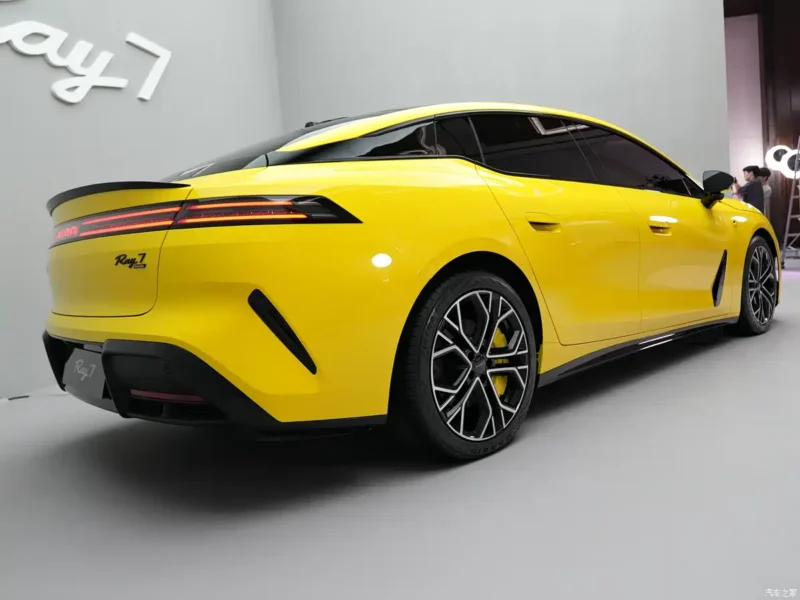
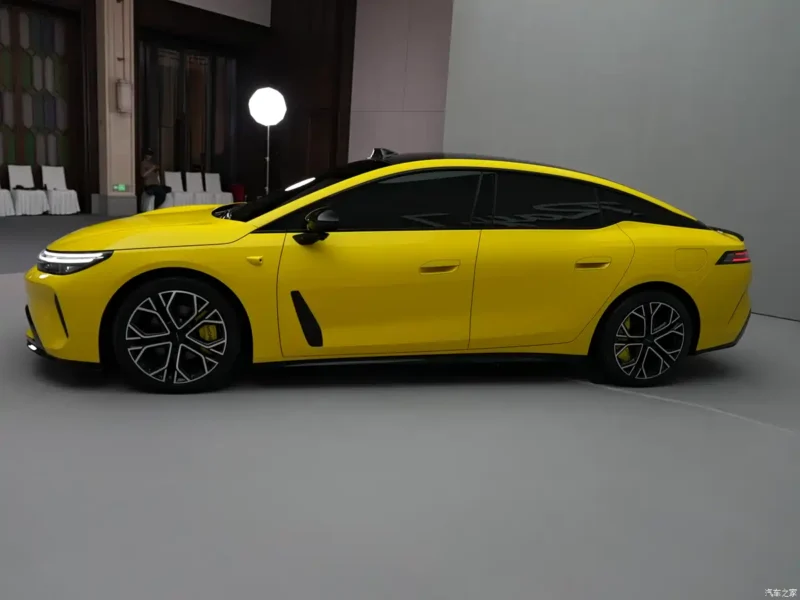
Full Electric Vehicle Specifications
MODEL
| Full Model Name | GAC Aion RAY 7 |
| Generation | 1st generation |
| Segment / Class | Mid-to-large electric sedan |
| Available Trims / Variants | Two battery-cell variants (CATL / Yinpai Battery); LiDAR and non-LiDAR configurations |
| Powertrain Options | Single rear motor, RWD only |
| Additional Notes | First model in Aion's new Ray series; first model with Aion's redesigned logo |
LAUNCH
| Reveal Date | August 19, 2026 |
| Availability Status | Unveiled, not yet on sale |
| Brand / Manufacturer | GAC Aion (GAC Group) |
| Country of origin | China |
| Assembly Country | China (Guangzhou) |
| Markets Available | China (initial market) |
| Grey Market Import | Not applicable |
| Base Price (USD) | 200,000–250,000 yuan (~$29,500–$36,900) |
| Additional Notes | Public debut at 2026 Chengdu Auto Show, Aug 21–30 |
BATTERY
| Battery Chemistry | LFP (Lithium Iron Phosphate) |
| Battery Architecture | Dual-sourced cells (CATL / Yinpai Battery) |
| Thermal Management | Next-gen thermal management system, 28-in-1 module |
| Range (WLTP/CLTC/EPA) | 700 km (CLTC) |
| Energy Consumption | 9.7 kWh/100 km |
| Heat Pump | |
| Cell Brand | CATL / Yinpai Battery |
PERFORMANCE
| Motor Type | Permanent-magnet synchronous motor (Huawei-supplied) |
| Motor Configuration | Single rear motor |
| Front Motor Output (kW / HP) | N/A |
| Rear Motor Output (kW / HP) | 180 kW / 241 hp |
| Power Output (kW / hp) | 180 kW / 241 hp |
| Peak Power (kW / hp) | 180 kW / 241 hp |
| Top Speed (km/h / mph) | 180 km/h (~112 mph) |
| Transmission / Drive | Single-speed, RWD |
| Traction Control Steps | Huawei iTRACK torque control (wet/snow slip mitigation) |
| Motor Unit Code | Huawei DriveONE |
| Additional Notes | First production car with claimed chip-level integrated drive-and-brake "Super Chassis" architecture |
BODY
| Body Style | 5-seat fastback sedan |
| Body Colour Options | Yellow, purple (at reveal) |
| Platform / Architecture | Dedicated BEV RWD platform; chassis tuning input credited to Alfa Romeo |
| Dimensions (L×W×H mm) | 4,960 × 1,900 × 1,455 mm |
| Drag Coefficient (Cd) | 0.22 |
| Wheelbase (mm) | 2,920 mm |
| Kerb Weight (kg) | 1,720 kg or 1,855 kg (config-dependent) |
| Suspension (Front / Rear) | Front double-wishbone (aluminium hybrid) / rear five-link, FSD adaptive damping |
| Wheel Size (inches) | 17-inch or 19-inch |
| Brakes (Front / Rear) | Huawei DriveONE EMB (electromechanical, brake-by-wire); 33 m stopping distance from 100 km/h |
| Additional Notes | Semi-hidden door handles, blacked-out C-pillar, closed-off front fascia |
SAFETY
| Structural Safety | Magazine Battery 2.0 (battery-specific safety system) |
| 360° Camera / Surround View | Fender cameras |
| Driver Assistance (ADAS) | LiDAR-based ADAS; algorithms derived from L4 autonomous driving stack |
| ADAS Features | 27 automotive-grade sensors, 192-line LiDAR (optional), three 4D mmWave radars |
| Autonomous Driving Hardware | Optional roof-mounted 192-line LiDAR |
| Additional Notes | Roof LiDAR and fender cameras are optional and can be omitted on lower configs |
COMFORT
DISPLAYS
LIGHTING
| Headlight Type (LED/Matrix/Laser) | Full-width front light bar, illuminated brand logo |
| Additional Notes | Star-ring light strip across the front fascia |
INFOTAINMENT & AUDIO
TECHNOLOGY
OWNERSHIP
Note
| Data Source | CnEVPost, The Electric Viking, CarNewsChina, Paultan.org — pre-launch reveal and MIIT filing coverage (Jul–Aug 2026) |
| Last Updated | August 20, 2026 |
User Reviews
Disclaimer Note
Specifications sourced from manufacturer data and may reflect WLTP, CLTC, or EPA test conditions. Import prices in your local are estimates based on grey-market landing costs and exclude duties, clearing fees, and local taxes. Figures are subject to change without notice. Always verify with your local importer before purchase. We can not guarantee that the information on this page is 100% correct