

- Home
- Electric Vehicles
- Compare Electric Cars
- Zeekr 007 GT (7 GT) 2026 vs Xiaomi SU7 2026
Zeekr 007 GT (7 GT) 2026 vs Xiaomi SU7 2026
The Zeekr 007 GT 2026 and Xiaomi SU7 2026 sit in the premium midsize EV segment, yet target different buyers. The Zeekr 007 GT is a shooting brake from Zeekr, built for drivers who want performance with added cargo space and lifestyle flexibility. The Xiaomi SU7, from Xiaomi, is a sleek sedan focused on tech-driven users who value smart integration and daily usability. This comparison matters now as both models gain attention in emerging markets, including African import channels, with strong value against established brands.
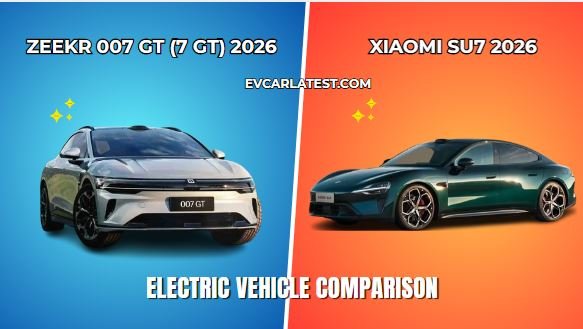
The Zeekr 007 GT delivers up to about 700 km (CLTC), while the Xiaomi SU7 reaches around 668 km (CLTC). In mixed real-world driving, expect 520–580 km for the Zeekr and 480–550 km for the Xiaomi depending on driving style and climate. Both use 800V architecture in higher trims, enabling fast charging. Zeekr supports up to 360 kW DC, while Xiaomi peaks near 300 kW DC. AC charging sits around 11 kW for both. In practical terms, a 10–80% charge takes about 15–20 minutes for the Zeekr and 20–25 minutes for the Xiaomi under optimal conditions.
Pricing places both in the upper mid-range EV bracket. The Zeekr 007 GT starts near $35,000 to $45,000, while the Xiaomi SU7 ranges from about $30,000 to $42,000 depending on trim. Converted, this lands roughly between ₦45 million and ₦70 million in Nigeria after import costs. Zeekr offers multiple battery and performance variants, including dual-motor AWD setups. Xiaomi focuses on Standard, Pro, and Max trims, with the Max pushing higher performance. Both are currently sold in China, with grey imports reaching Africa. This comparison helps you decide between a more practical performance wagon and a tech-focused sedan for daily use.
Within Zeekr’s lineup, the Zeekr 001 and Zeekr X target similar buyers who want design and range. Xiaomi complements the SU7 with its broader smart ecosystem rather than multiple EVs, tying into phones and home devices. Outside both brands, the Tesla Model 3 2025 and BYD Seal stand as strong rivals in this price range. This comparison stands out due to the mix of high-speed charging, long range, and distinct body styles that suit different lifestyles.
The Zeekr 007 GT offers strong performance with dual-motor options, which matters if you want quick acceleration and highway confidence. Its shooting brake design adds cargo flexibility, useful for travel or family use. The advanced 800V charging system reduces downtime on long trips. On the downside, limited global service coverage affects ownership in Africa, and pricing after import can rise steeply.
The Xiaomi SU7 delivers deep smart integration with Xiaomi devices, which benefits users already in that ecosystem. Its sedan design improves efficiency, giving stable range for daily commutes. The lower entry price makes it more accessible in this segment. Downsides include less cargo flexibility compared to the Zeekr and a newer automotive track record, which raises long-term reliability questions.
Choose the Zeekr 007 GT if you prioritize performance, faster charging, and cargo space for flexible use. Choose the Xiaomi SU7 if integrated tech, lower entry cost, and a sedan layout fit your daily driving needs better. Both deliver strong range and modern EV architecture, so your choice depends on lifestyle and ecosystem preference.
Related EV Comparisons


| |
| Price | $28,000.00 $32,000.00 |
| Our Rating | |
| Brand | Zeekr Xiaomi |
| Category | Electric Cars Electric Cars |
MODEL
| Available Trims / Variants |
RWD Standard Range RWD Long Range AWD Long Range Standard Pro Max (RWD and AWD) |
PRICE & AVAILABILITY
| Base Price (USD) | ~$28,400 (limited-time); MSRP ~$29,800 $32,800 |
| Availability Status | On sale — China Q2 2026; Europe (as Zeekr 7 GT) TBD In production |
BATTERY & CHARGING
| Battery Capacity |
75 kWh (LFP) 103 kWh (NMC) 73.6 / 96.3 / 101.7 kWh |
| Range (WLTP/CLTC/EPA) |
(CLTC) 75 kWh: up to 905 km 103 kWh: up to 905 km (WLTP est.)Not officially confirmed for 2026 update; ~620–680 km estimated (mi WLTP); ~430–520 mi (est from 700–900 km CLTC) |
| DC Charging (Max kW) | Up to 6C peak; 10–80% in ~10 minutes (900V ultra-fast) up to ~300 kW, ~10–80% in ~20–30 min |
| AC Charging (Max kW) | 11 kW 7–11 kW, ~7–10 hrs (full) |
| Energy Consumption | 12.3 kWh/100 km |
PERFORMANCE
| Power Output (kW / hp) |
RWD: 496 hp (370 kW) AWD: 784 hp (585 kW) 320–691 hp, RWD or dual-motor AWD |
| 0–100 km/h / 0-60 mph (seconds) The acceleration numbers are an easy way to compare car performance. We list either time from 0 to 100 km/h or time from 0 to 60mph, depending on which number(s) the manufacturers provide. The lower the acceleration time, the higher performance the car is. |
RWD: ~5.3 s AWD: 2.95 s 5.3 sec (base) 2.78 sec (Max) |
| Torque (Nm) |
RWD: ~440 Nm AWD: 710 Nm 400–838 Nm |
| Top Speed (km/h / mph) | 210 km/h (130 mph) 240–265 km/h |
BODY & DIMENSIONS
| Dimensions (L×W×H mm) | 4,858–4,880 mm (L) × 1,900 mm (W) × 1,445–1,460 mm (H) 4997 mm length, 1963 mm width, 1460 mm height |
| Trunk/Boot Capacity (L) | 456 L / up to 1,390 L (seats folded) 517 L |
| Body Style | 5-door shooting brake, 5 seats 4-door sedan, 5 seats |
| Kerb Weight (kg) | 2055 kg |
| Ground Clearance (mm) | 162–169 mm (air suspension adjustable, 55 mm travel range) 120 mm |
| Frunk/Bonnet Capacity (L) | 65 L (RWD) · 32 L (AWD) Yes |
SAFETY & DRIVER ASSISTANCE
| Autonomous Driving Level | L2 ADAS; NZP highway pilot; G-ASD system (Geely); ejection / drift / track modes on AWD Advanced driver assist with lidar (higher trims) |
COMFORT & SEATING
| Seating Capacity | Faux suede / Nappa leather; 14-way electric adjustment; heating, ventilation, 8-point massage 5 seats, powered and heated (higher trims) |
DISPLAYS & CONNECTIVITY
| Centre Screen (inches) | 15" OLED / 2.5K touchscreen Large central touchscreen |
| Driver's Display (inches) | 13" LCD instrument cluster Digital cluster |
| Head-Up Display (HUD) | 35.5" AR-HUD Available |
TECHNOLOGY
ADDITIONAL SPECS
Note
| Additional Notes | CLTC figures are from China's optimistic test cycle — real-world range will be lower. 900V upgrade arrived with the April 2026 refresh; earlier 007 GT (2025) used 800V. Sold overseas as Zeekr 7 GT. European pricing expected around €47,000. Focus on high efficiency, fast charging, and strong performance balance. |


|
Disclaimer Note
Specifications sourced from manufacturer data and may reflect WLTP, CLTC, or EPA test conditions. Import prices in your local are estimates based on grey-market landing costs and exclude duties, clearing fees, and local taxes. Figures are subject to change without notice. Always verify with your local importer before purchase. We can not guarantee that the information on this page is 100% correct