- Electric Vehicles
- Compare Electric Cars
- Hongqi Tiangong 06 vs Kia EV6
Hongqi Tiangong 06 vs Kia EV6
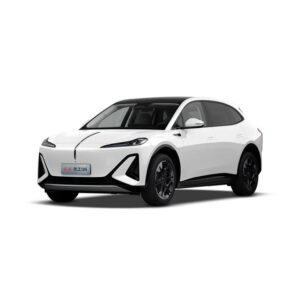
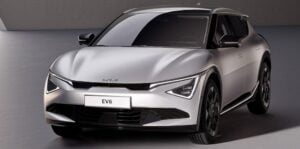
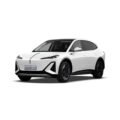
The Hongqi Tiangong 06 is a five-door midsize electric SUV produced by China’s state-owned Hongqi brand under FAW Group, designed for buyers who want near-luxury specifications at a significantly lower price point. It targets tech-savvy drivers and families prioritising range, fast charging, and premium cabin features. The Kia EV6 is a South Korean electric crossover that sits between a hatchback and a compact SUV, built for performance-minded urban professionals who value proven engineering, wide dealer networks, and strong resale value. Hongqi’s recent launch of an updated 800V fast-charging version of the Tiangong 06 makes this comparison particularly relevant, as it now directly challenges the EV6’s charging speed advantage that previously set it apart.
The updated Tiangong 06 800V variant is rated at up to 610 km under the CLTC cycle — translating to roughly 450–480 km in real-world WLTP-equivalent conditions. It charges from 10% to 80% in just 12 minutes on a compatible 800V fast charger. The EV6 GT-Line offers an EPA-estimated range of up to 295 miles (475 km), with real-world figures typically landing around 380–420 km in warm climates. Using a DC fast charger, the EV6 charges from 10% to 80% in approximately 20 minutes on its 800V architecture. Both vehicles support AC charging; the EV6 offers up to 11 kW on Level 2. The Tiangong 06’s 12-minute charge time is the more practical advantage for African routes with limited charging stops.
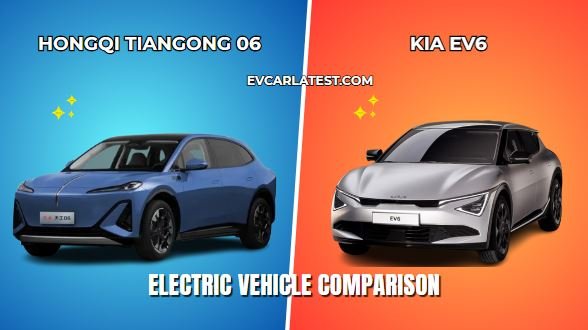
The Tiangong 06 800V version starts at 191,800 yuan, approximately $26,700 — around ₦43.5M NGN, KES 3.4M, or ZAR 490,000 before import duties and shipping from China. Budget an additional 20–35% for grey-market landing costs in Nigeria or Kenya. The Kia EV6 is available across Africa , starting at approximately $51,040, with financing and delivery options to multiple African countries. This page helps you decide whether the Tiangong 06’s lower base price justifies the import risk, or whether the EV6’s accessible African supply chain is worth the premium.
Within Hongqi’s lineup, the Tiangong 05 sedan starts at around $22,050 and offers a lower-cost alternative for buyers who prefer a saloon. Kia brackets the EV6 between the smaller Niro Electric and the larger three-row EV9 SUV, giving buyers clear step-up options. Beyond these two brands, the BYD Seal U and Hyundai Ioniq 5 are worth considering — both operate in a similar segment with growing African dealer coverage. The Tiangong 06 vs EV6 comparison still stands out because no other pairing in this segment puts 12-minute charging speed directly against an established African-market EV at such a sharp price gap.
Hongqi Tiangong 06: The 12-minute 10–80% charge time is a meaningful advantage on long Nigerian or Kenyan routes where charger access is sparse, reducing stop duration dramatically. Its base price sits roughly $15,000–$25,000 below the EV6, which is significant given high import duties in Africa. Standard features including an AR head-up display, 15.6-inch touchscreen, and massage seats deliver genuine luxury value at this price. On the downside, grey-market import means no warranty coverage or local spare parts network — a serious liability if a fault arises outside Lagos or Nairobi. Brand recognition across Africa is minimal, which will make resale considerably harder than Korean alternatives.
Kia EV6: The EV6’s Vehicle-to-Load capability allows it to power external appliances, making it genuinely useful during Nigeria’s frequent power outages — a practical feature few rivals match at this segment. Its 800V fast-charging infrastructure and wide CCS compatibility across South Africa and Kenya means less uncertainty at the charger. A 10-year/100,000-mile battery and EV system warranty provides long-term ownership confidence that no grey-market Chinese import can currently offer in Africa. However, its higher purchase price places it out of reach for most private buyers without financing. Real-world range can dip in heavy traffic or under load, which affects its long-distance advantage in African road conditions.
Quick Verdict
Choose the Hongqi Tiangong 06 if price-per-spec and ultra-fast charging are your top priorities and you have a reliable grey-market import agent and local mechanic. Choose the Kia EV6 if after-sales support, warranty coverage, and a functional African supply chain matter more to your ownership experience. The EV6 costs significantly more upfront, but that premium buys genuine peace of mind. For most private buyers in Nigeria or Kenya without access to a dealership network, the EV6’s availability through African EV platforms gives it a practical edge the Tiangong 06 cannot currently match.
FAQ
Is the Hongqi Tiangong 06 better than the Kia EV6 for long trips?
On charging speed alone, yes — the Tiangong 06’s 12-minute 10–80% charge versus the EV6’s 20 minutes is a genuine advantage on long-distance routes. However, the EV6’s wider charging network compatibility and official service presence in Africa makes it more reliable for extended travel where roadside support matters.
Which is cheaper to maintain, the Tiangong 06 or the Kia EV6?
The EV6 is cheaper to maintain in Africa over time. Official Kia service centres and EV24.africa’s delivery network provide standardised servicing and genuine parts. The Tiangong 06 has no official African service infrastructure, so maintenance depends entirely on private importers, which typically means higher costs and longer wait times.
Is the Kia EV6 available in Nigeria?
The EV6 is not officially sold through a Kia dealership in Nigeria. It is available across Africa through EV24.africa, which offers transparent pricing, financing, and delivery to multiple African countries. Buyers in Nigeria typically access it through grey-market imports from the UAE or UK, or through cross-border platforms.
Can the Hongqi Tiangong 06 be imported into Africa?
Yes, through Chinese grey-market import agents, some of whom operate in Nigeria and Kenya. The vehicle is not officially sold in any African market as of 2025. Buyers should factor in shipping, port clearance, and customs duties — which can add 20–35% to the base price — before comparing it directly to locally sourced alternatives like the EV6.
Related EV Comparisons
- Hongqi Tiangong 05 (EH5) vs MG MG4 2026
- Hongqi Tiangong 06 vs BYD Atto 3 2026
- Hongqi Tiangong 06 vs Tesla Model Y 2025
- Hongqi Tiangong 05 (EH5) vs XPeng P7
- Hongqi Tiangong 06 vs XPeng G6 2026
| |
| Price | $26,000.00 $42,000.00 |
| Our Rating | |
| Brand | Hongqi KIA |
| Category | Electric Cars Electric Cars |
MODEL
| Available Trims / Variants |
400V (RWD & AWD) and 800V (RWD & AWD); 2026 update applies to 800V series
Kia EV6 Standard Range RWD Kia EV6 Long Range RWD Kia EV6 Long Range AWD Kia EV6 GT |
LAUNCH
| Reveal Date |
Pre-sale opened March 2025 800V trims launched April 2026 2024, May 14 - Kia EV6 Standard Range RWD 2024, May 14 - Kia EV6 Long Range RWD 2024, May 14 - Kia EV6 Long Range AWD 2024, November 22 - Kia EV6 GT |
| Availability Status |
On sale — China market only
Available to order. Released 2024, September - Kia EV6 Standard Range RWD Available to order. Released 2024, September - Kia EV6 Long Range RWD Available to order. Released 2024, September - Kia EV6 Long Range AWD Available to order. Released 2025, January - Kia EV6 GT |
| Country of origin | China South Korea |
| Base Price (USD) |
~$26,700 (191,800 yuan) — 800V entry trim
$ 42,900 € 45,000 - Kia EV6 Standard Range RWD $ 46,200 € 50,000 £ 45,600 - Kia EV6 Long Range RWD $ 50,300 € 54,000 £ 52,100 - Kia EV6 Long Range AWD $ 63,800 € 70,000 £ 65,500 - Kia EV6 GT |
BATTERY
| Battery Capacity |
62 kWh or 85 kWh (400V trims) 98 kWh (800V trims) 63 kWh total - Kia EV6 Standard Range RWD 84 kWh total - Kia EV6 Long Range RWD 84 kWh total - Kia EV6 Long Range AWD 84 kWh total - Kia EV6 GT |
| Battery Chemistry |
LFP — 400V trims Ternary lithium (NMC) — 800V trims Liquid-cooled Lithium-ion Polymer 523V (800V type) - Kia EV6 Standard Range RWD Liquid-cooled Lithium-ion Polymer 697V (800V type) - Kia EV6 Long Range RWD Liquid-cooled Lithium-ion Polymer 697V (800V type) - Kia EV6 Long Range AWD Liquid-cooled Lithium-ion NCM 697V (800V type) - Kia EV6 GT |
| Range (WLTP/CLTC/EPA) |
520–610 km depending on trim (800V: up to 610 km CLTC) 370–380 mi / ~595–610 km — WLTP 266 mi WLTP (237 mi EPA) - Kia EV6 Standard Range RWD 347 mi WLTP (319 mi EPA) - Kia EV6 Long Range RWD 324 mi WLTP (295 mi EPA) - Kia EV6 Long Range AWD 280 mi WLTP (231 mi EPA) - Kia EV6 GT |
| Energy Consumption |
264 Wh/mi WLTP - Kia EV6 Standard Range RWD 272 Wh/mi WLTP - Kia EV6 Long Range RWD 285 Wh/mi WLTP - Kia EV6 Long Range AWD 336 Wh/mi WLTP - Kia EV6 GT |
| Regen Braking (Max kW) |
Yes, with steering wheel paddles |
| Heat Pump | |
| AC Charging (Max kW) |
Type 2 11 kW, 0-100% in 8 h 45 min |
| DC Charging (Max kW) |
800V: 10%–80% in 12 minutes
CCS 195 kW max, 10-80% in 18 min - Kia EV6 Standard Range RWD CCS 258 kW max, 10-80% in 18 min - Kia EV6 Long Range RWD CCS 258 kW max, 10-80% in 18 min - Kia EV6 Long Range AWD CCS 258 kW max, 10-80% in 18 min - Kia EV6 GT |
| Additional Notes |
V2L (vehicle-to-load) external discharge at 6 kW
Vehicle to load (V2L), Vehicle to vehicle (V2V) 250V electrical outlet (3.5 KW max) |
PERFORMANCE
| Power Output (kW / hp) |
400V RWD: 282 hp (210 kW) 400V AWD: 553 hp (412 kW) 800V RWD: 402 hp (300 kW) 800V AWD: ~643 hp (480 kW) RWD 167 hp (125 kW) - Kia EV6 Standard Range RWD RWD 225 hp (168 kW) - Kia EV6 Long Range RWD AWD 320 hp (239 kW) - Kia EV6 Long Range AWD AWD 641 hp (478 kW) - Kia EV6 GT |
| Torque (Nm) |
400V RWD: 317 Nm 400V AWD: 623 Nm 800V RWD: 450 Nm 800V AWD: 770 Nm 350 Nm (258 lb-ft) - Kia EV6 Standard Range RWD 350 Nm (258 lb-ft) - Kia EV6 Long Range RWD 605 Nm (446 lb-ft) - Kia EV6 Long Range AWD 770 Nm (568 lb-ft) - Kia EV6 GT |
| 0–100 km/h / 0-60 mph (seconds) The acceleration numbers are an easy way to compare car performance. We list either time from 0 to 100 km/h or time from 0 to 60mph, depending on which number(s) the manufacturers provide. The lower the acceleration time, the higher performance the car is. |
5 sec (AWD)
8.3 sec 0-60 mph (8.7 sec 0-62 mph) - Kia EV6 Standard Range RWD 7.3 sec 0-60 mph (7.3 sec 0-62 mph) - Kia EV6 Long Range RWD 5 sec 0-60 mph (5.2 sec 0-62 mph) - Kia EV6 Long Range AWD 3.4 sec 0-60 mph (3.5 sec 0-62 mph) - Kia EV6 GT |
| Top Speed (km/h / mph) |
230 km/h / 143 mph
115 mph (185 km/h) - Kia EV6 Standard Range RWD 115 mph (185 km/h) - Kia EV6 Long Range RWD 117 mph (185 km/h) - Kia EV6 Long Range AWD 161 mph (260 km/h) - Kia EV6 GT |
| Transmission / Drive | Single-speed direct drive Single-speed |
BODY
| Body Style | 5-door midsize SUV, 5 seats 5 door crossover, 5 seats |
| Platform / Architecture | Hongqi Tiangong Architecture (400V or 800V variant) E-GMP |
| Dimensions (L×W×H mm) | 4,750 mm (L) × 1,900 mm (W) × 1,640 mm (H) 4695 x 1880 x 1550 mm (184.8 x 74.0 x 61.0 in) |
| Drag Coefficient (Cd) | 0.259 Cd |
| Wheelbase (mm) | 2,900 mm 2900 mm (114.2 in) |
| Ground Clearance (mm) | 155 mm (6.1 in) |
| Kerb Weight (kg) |
EU: 1855 kg unladen, 2405 kg gross (US: 1874 kg curb, 2320 kg GVWR) - Kia EV6 Standard Range RWD EU: 1950 kg unladen, 2495 kg gross (US: 1995 kg curb, 2475 kg GVWR) - Kia EV6 Long Range RWD EU: 2060 kg unladen, 2600 kg gross (US: 2100 kg curb, 2580 kg GVWR) - Kia EV6 Long Range AWD EU: 2220 kg unladen, 2660 kg gross (US: 2215 kg curb, 2650 kg GVWR) - Kia EV6 GT |
| Suspension (Front / Rear) | Front MacPherson struts, rear multi-link |
| Wheel Size (inches) | 19-inch or 20-inch alloy; 235/55 R19 or 235/50 R20 R19, R20, R21 |
| Trunk/Boot Capacity (L) | 472 L standard / 1,611 L seats folded EU: 490 l, 1290 l max (US: 691 l, 1322 l max) |
| Frunk/Bonnet Capacity (L) | 52 l |
| Towing Capacity (kg) |
EU: 750 kg unbraked, 750 kg braked - Kia EV6 Standard Range RWD EU: 750 kg unbraked, 1800 kg braked (US: 1225 kg braked) - Kia EV6 Long Range RWD EU: 750 kg unbraked, 1800 kg braked (US: 1225 kg braked) - Kia EV6 Long Range AWD EU: 750 kg unbraked, 1800 kg braked (US: 1225 kg braked) - Kia EV6 GT |
| Additional Notes | Hidden door handles; double-layer acoustic laminated glass (front) |
SAFETY
| Airbags (count) | 10 airbags: front, center, side, rear, head airbag system |
| Driver Assistance (ADAS) | Hongqi Sinan system (camera-only); highway NOA; urban NOA; L2.9 ADAS rating Front radar, several cameras. Forward/Rear collision avoidance assist, Autonomous emergency braking with pedestrian recognition, Blind spot detection, Rear cross traffic alert, Safe exit assist, Front/side/rear parking collision avoidance assist, Remote Smart Parking Assist 2.0, Lane Following Assist 2.0 |
| Autonomous Driving Level | L2.9 (advanced driver assistance, not autonomous) |
COMFORT
| Seating Capacity |
Zero-gravity passenger seat; heated, ventilated, and massage seats (higher trims)
Heated and cooled front seats, heated outer rear seats |
| Roof Type |
Panoramic glass roof, tilt & slide |
| Bluetooth / Wi-Fi |
Bluetooth, Wi-Fi (assumed); Lingxi cockpit with AI voice
Wired Android Auto and Apple CarPlay |
| Parking Aids |
Auto parking; multi-level memory parking; trace reverse parking
Front and rear sensors, 360 camera, reversing camera, remote park assist |
| Additional Notes |
14-speaker Dynaudio system (higher trims) Warm ambient lighting; large bed/flat mode; 5 interior colour options |
DISPLAYS
| Centre Screen (inches) |
15.6-inch 2.5K floating touchscreen
12.3" touchscreen |
| Driver's Display (inches) | 12.3" |
| Head-Up Display (HUD) | AR-HUD (standard) Yes, with augmented reality |
| Additional Notes | Lingxi smart cockpit OS with AI voice assistant; multi-zone voice recognition |
LIGHTING
INFOTAINMENT & AUDIO
TECHNOLOGY
OWNERSHIP
Note
| Additional Notes |
Solid-state battery prototype has been installed in a Tiangong 06 test vehicle; production version targeting 2027, not confirmed for this model. CLTC figures are China-specific and typically read 15–20% higher than real-world range. The 800V/900V trims are the same architecture referenced under different names across sources — the 2026 launch specifically used the 800V designation. No confirmed export markets as of April 2026. |
| Disclaimer | We can not guarantee that the information on this page is 100% correct |
|
Disclaimer Note
Specifications sourced from manufacturer data and may reflect WLTP, CLTC, or EPA test conditions. Import prices in your local are estimates based on grey-market landing costs and exclude duties, clearing fees, and local taxes. Figures are subject to change without notice. Always verify with your local importer before purchase. We can not guarantee that the information on this page is 100% correct