- Home
- Electric Vehicles
- Compare Electric Cars
- Mercedes EQS 2026 vs Mercedes-Benz EQE Sedan
Mercedes EQS 2026 vs Mercedes-Benz EQE Sedan
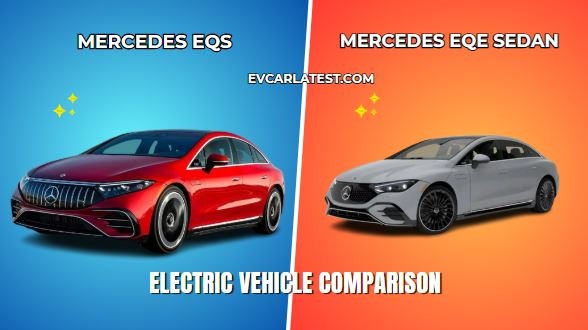
Both the 2026 Mercedes EQS and 2026 EQE Sedan are four-door all-electric luxury sedans from the same Stuttgart-based brand, sharing the same EVA2 platform and design language. The EQS is built for buyers who want the full flagship experience — maximum size, range, and technology — while the EQE targets professionals who want Mercedes electric ownership at a lower entry point without a significant comfort compromise. With Mercedes-Benz rethinking its EV lineup for key markets and grey-market units of both models arriving in Nigeria and South Africa, this within-brand comparison is the most practical buying decision many African luxury EV shoppers will face.
Range & Charging
The EQS 450+ carries a 118 kWh battery with an EPA-estimated range of 390 miles, and Edmunds’ real-world test recorded 422 miles on a single charge. DC fast charging peaks at 200 kW, covering 10–80% in approximately 31 minutes. The EQE’s maximum EPA range is 308 miles on the rear-drive 320 trim, with 10–80% DC charging completed in 32 minutes at up to 170 kW. An earlier Edmunds real-world EQE range test recorded 302 miles, exceeding its EPA estimate at the time. Both support 11 kW AC home charging. The EQS holds a clear range advantage; the charging time difference between the two is negligible despite the EQS’s faster peak rate.
Price, Availability & Market Fit
The 2026 EQE starts at $66,200 — approximately ₦104M NGN at current grey-market rates. The EQS 450 4MATIC starts at around $106,000, rising to $123,900 for the 580 4MATIC — roughly ₦167M–₦195M NGN. The EQE is available in 350+, 350 4MATIC, 500 4MATIC, and AMG trims; the EQS spans 450+, 450 4MATIC, and 580 4MATIC. Neither is officially sold in Nigeria, making both grey-import purchases with equal service risk. This page answers one question directly: if you want a Mercedes electric sedan, is the $40,000 price gap between these two models justified by what the EQS adds?
Ecosystem & Rival Context
EQS buyers sitting at the top of the Mercedes electric range have few in-house alternatives — the EQS SUV offers the same flagship status in a taller body if cargo space is needed. EQE buyers may also consider the EQE SUV for more headroom and practicality, or the EQC as a transitional option. Outside the Mercedes family, the BMW i5 competes directly with the EQE on price and segment, while the BMW i7 matches the EQS on size and prestige. This same-brand comparison wins over the BMW cross-shop because it isolates the exact trade-off — budget versus spec — within a badge buyers have already committed to.
Pros & Cons
Mercedes EQS 2026: The EQS’s rear legroom of 40.4 inches and hatchback cargo design offer meaningfully more space than the EQE, which matters to buyers who use the rear seat regularly or carry large items. Its 422-mile real-world range reduces charging stops on long intercity routes, a practical benefit where charging infrastructure is limited. The MBUX Hyperscreen on the 580 4MATIC represents the most complete in-car technology experience Mercedes currently offers, relevant to buyers who spend significant time inside the vehicle. However, the $40,000 price premium over the EQE is hard to justify on everyday urban driving where the extra range and space go unused. Grey-market import costs amplify this gap further in Nigeria and Kenya.
Mercedes-Benz EQE Sedan 2026: At $66,200, the EQE delivers the same Mercedes badge, MBUX system, and cabin refinement at roughly 40% less than the EQS, making it the more accessible entry point for buyers prioritising brand over specification. Its 170 kW DC charging capability and real-world range performance exceed EPA estimates, proving efficient in day-to-day driving despite a smaller battery. The shorter, lighter body makes the EQE easier to navigate in urban environments — relevant in cities like Lagos or Nairobi where road widths vary. On the downside, its 308-mile EPA range ceiling will require charging stops that the EQS avoids on the same routes. Mercedes-Benz is reportedly rethinking which EVs it brings to the US market, raising questions about long-term parts support for the EQE globally.
Quick Verdict
Choose the EQS 2026 if rear-seat space, long-distance range, and the full flagship specification matter to you and the price premium is within reach. Choose the EQE Sedan if you want Mercedes electric ownership, urban practicality, and a starting price roughly ₦63M lower than the EQS entry point. The core difference is range and size — not quality or brand experience, which both deliver comparably. For buyers who drive more than they are driven, the EQE is the stronger value argument.
FAQ
What is the difference between the Mercedes EQS and EQE?
The EQS is larger, with a 118 kWh battery, up to 390 miles of EPA range, and a hatchback cargo design that adds versatility. The EQE is shorter and lighter, with a 96 kWh battery, up to 308 miles of range, and a $40,000 lower starting price. Both share the same platform and MBUX infotainment system.
Is the Mercedes EQE being discontinued?
Mercedes-Benz has signalled it is reconsidering which electric models it brings to certain markets, and the EQE’s future in the US is uncertain beyond 2026. The 2026 model year is confirmed, but buyers should factor potential parts and support implications into a long-term ownership decision.
Which charges faster — the EQS or EQE?
The EQS supports up to 200 kW DC fast charging versus the EQE’s 170 kW ceiling, but both complete a 10–80% charge in approximately 31–32 minutes. The practical difference at a charging stop is minimal for most users.
Can I buy the Mercedes EQS or EQE in Nigeria?
Neither model has an official dealership or service network in Nigeria. Both are available through grey-market importers as ex-UK or UAE units. Factor in import duty, clearing fees, and the absence of authorised service support when budgeting for either vehicle.
Related EV Comparisons
- Mercedes EQS 2026 vs Porsche Taycan
- Mercedes EQS 2026 vs Lucid Air 2026
- Mercedes EQS 2026 vs Tesla Model S 2025
- BMW iX3 2026 vs Mercedes-Benz GLC
- Audi Q4 e-tron 2026 vs Mercedes-Benz EQB

| |
| Price | $94,000.00 $73,000.00 |
| Our Rating | |
| Brand | MERCEDES MERCEDES |
| Category | Electric Cars Electric Cars |
MODEL
| Available Trims / Variants |
Mercedes EQS 400 Mercedes EQS 450+ Mercedes EQS 500 4MATIC Mercedes EQS 580 4MATIC Mercedes-Benz EQE 320+ Sedan Mercedes-Benz EQE 320 4MATIC Sedan Mercedes-Benz AMG EQE Sedan |
PRICE & AVAILABILITY
| Base Price (USD) |
€ 94,400 - Mercedes EQS 400 € 108,600 - Mercedes EQS 450+ € 123,300 - Mercedes EQS 500 4MATIC € 134,700 - Mercedes EQS 580 4MATIC $73,000 - Mercedes-Benz EQE 320+ Sedan $67,450 (USD) - Mercedes-Benz EQE 320 4MATIC Sedan $108,000 (USD) - Mercedes-Benz AMG EQE Sedan |
| Availability Status | Coming soon. Expected release 2026, Q3 Available |
BATTERY & CHARGING
| Battery Capacity |
112 kWh usable - Mercedes EQS 400 122 kWh usable - Mercedes EQS 450+ 122 kWh usable - Mercedes EQS 500 4MATIC 122 kWh usable - Mercedes EQS 580 4MATIC 90.6 kWh (usable) |
| Range (WLTP/CLTC/EPA) |
508 mi WLTP - Mercedes EQS 400 575 mi WLTP - Mercedes EQS 450+ 544 mi WLTP - Mercedes EQS 500 4MATIC 544 mi WLTP - Mercedes EQS 580 4MATIC 395 miles (635 km) - Mercedes-Benz EQE 320+ Sedan 267 mi - Mercedes-Benz EQE 320 4MATIC Sedan 220 miles (EPA est.) - Mercedes-Benz AMG EQE Sedan |
| DC Charging (Max kW) |
CCS 175 kW max at 400V CCS 350 kW max at 800V Up to 170 kW (10–80% in ~32 min) |
| AC Charging (Max kW) |
Type 2 11 kW (22 kW optional)
11 kW (0–100% in ~8.5 hrs) - Mercedes-Benz EQE 320+ Sedan 9.6 kW (≈ 10.75 hrs 0-100%) - Mercedes-Benz EQE 320 4MATIC Sedan 9.6 kW (≈10.5 hrs, 0–100%) - Mercedes-Benz AMG EQE Sedan |
| Energy Consumption |
253 Wh/mi WLTP - Mercedes EQS 400 248 Wh/mi WLTP - Mercedes EQS 450+ 261 Wh/mi WLTP - Mercedes EQS 500 4MATIC 261 Wh/mi WLTP - Mercedes EQS 580 4MATIC 16.5 kWh/100 km - Mercedes-Benz EQE 320+ Sedan 2.5–3.0 mi/kWh (real-world) - Mercedes-Benz AMG EQE Sedan |
PERFORMANCE
| Power Output (kW / hp) |
RWD 367 hp (270 kW) - Mercedes EQS 400 RWD 408 hp (300 kW) - Mercedes EQS 450+ AWD 476 hp (350 kW) - Mercedes EQS 500 4MATIC AWD 585 hp (430 kW) - Mercedes EQS 580 4MATIC 288 hp, RWD (single motor) - Mercedes-Benz EQE 320+ Sedan 315 hp (dual-motor AWD) - Mercedes-Benz EQE 320 4MATIC Sedan 617 hp (up to 677 hp with boost), AWD - Mercedes-Benz AMG EQE Sedan |
| 0–100 km/h / 0-60 mph (seconds) The acceleration numbers are an easy way to compare car performance. We list either time from 0 to 100 km/h or time from 0 to 60mph, depending on which number(s) the manufacturers provide. The lower the acceleration time, the higher performance the car is. |
6.2 sec 0-62 mph - Mercedes EQS 400 5.9 sec 0-62 mph - Mercedes EQS 450+ 4.5 sec 0-62 mph - Mercedes EQS 500 4MATIC 4.1 sec 0-62 mph - Mercedes EQS 580 4MATIC 7.3 seconds - Mercedes-Benz EQE 320+ Sedan 5.5 s - Mercedes-Benz EQE 320 4MATIC Sedan 3.2 s - Mercedes-Benz AMG EQE Sedan |
| Torque (Nm) |
505 Nm (372 lb-ft) - Mercedes EQS 400 505 Nm (372 lb-ft) - Mercedes EQS 450+ 750 Nm (553 lb-ft) - Mercedes EQS 500 4MATIC 800 Nm (590 lb-ft) - Mercedes EQS 580 4MATIC 416 Nm (307 lb-ft) - Mercedes-Benz EQE 320+ Sedan 564 lb-ft - Mercedes-Benz EQE 320 4MATIC Sedan 701 lb-ft (738 lb-ft with boost) - Mercedes-Benz AMG EQE Sedan |
| Top Speed (km/h / mph) |
130 mph (210 km/h)
210 km/h (130 mph) - Mercedes-Benz EQE 320+ Sedan 137 mph - Mercedes-Benz AMG EQE Sedan |
BODY & DIMENSIONS
| Dimensions (L×W×H mm) | 5216 x 1926 x 1512 mm (205.4 x 75.8 x 59.5 in) (L×W×H): 4,964 × 1,906 × 1,509 mm |
| Trunk/Boot Capacity (L) | EU: 520 l, 1770 l max 430 liters |
| Body Style | 5 door liftback, 5 seats 4-door electric sedan, 5 seats |
| Kerb Weight (kg) |
2,355 kg - Mercedes-Benz EQE 320+ Sedan 5,445 lb - Mercedes-Benz EQE 320 4MATIC Sedan 5,577 lbs - Mercedes-Benz AMG EQE Sedan |
| Ground Clearance (mm) | 134 mm (5.3 in) 135 mm |
| Frunk/Bonnet Capacity (L) | No |
SAFETY & DRIVER ASSISTANCE
| Autonomous Driving Level |
Level 3 autonomous driving (Drive Pilot – market dependent) Level 4 automated valet parking (Intelligent Park Pilot) Level 2+ (Drive Pilot available in select regions) |
| Crash Test Ratings | NCAP 2021: 5 stars 5-star Euro NCAP rating |
COMFORT & SEATING
| Seating Capacity | Heated and cooled front seats, heated and cooled outer rear seats, hot-stone massaging seats front and rear Electrically adjustable, heated front seats with memory; optional ventilation and massage |
DISPLAYS & CONNECTIVITY
| Centre Screen (inches) | 17.7" touchscreen 12.8-inch OLED touchscreen (MBUX) |
| Driver's Display (inches) | 12.3" 12.3-inch digital cluster |
| Head-Up Display (HUD) | Yes, with augmented reality Optional AR head-up display |
TECHNOLOGY
ADDITIONAL SPECS
Note
| Additional Notes | Made with sustainable materials, interior noise reduction, and energy-efficient climate tech |


|
Disclaimer Note
Specifications sourced from manufacturer data and may reflect WLTP, CLTC, or EPA test conditions. Import prices in your local are estimates based on grey-market landing costs and exclude duties, clearing fees, and local taxes. Figures are subject to change without notice. Always verify with your local importer before purchase. We can not guarantee that the information on this page is 100% correct