- Home
- Electric Vehicles
- Compare Electric Cars
- Mercedes VLE vs Volkswagen ID. Buzz
Mercedes VLE vs Volkswagen ID. Buzz
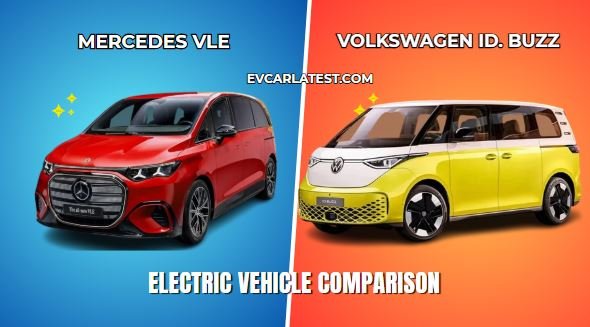
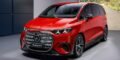
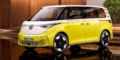
The Mercedes VLE (Van Large Electric) and the Volkswagen ID. Buzz occupy the same broad category — electric people carriers with room for five to eight passengers — but they are built for entirely different buyers. The VLE is the production version of Mercedes’ Vision V concept and the first model to use the brand’s new VAN.EA electric architecture, positioning itself as a full-scale luxury alternative to the large SUV or executive shuttle. The ID. Buzz, by contrast, is an electric reincarnation of the iconic Microbus, blending vintage charm with state-of-the-art EV technology to appeal to lifestyle-driven families and design-conscious buyers. This comparison is particularly relevant right now because Mercedes has opened orders for the VLE in 2026 just as Volkswagen is pausing U.S. imports of the ID. Buzz after the 2025 model year, forcing buyers in multiple markets to make a decision before product lineups shift again.
Range & Charging
The launch-spec VLE 300 delivers up to 713 km (443 miles) of WLTP range with its 115 kWh usable battery, making it one of the longest-range electric people movers announced to date. A future VLE 250 with an 80 kWh LFP pack is expected to offer around 450–480 km (280–300 miles) WLTP. The VLE uses an 800-volt architecture supporting up to 320 kW DC fast charging, adding approximately 355 km of range in just 15 minutes at a compatible ultra-fast charger; the 10–80% charge completes in roughly 25 minutes. The ID. Buzz tells a more modest story: EPA-estimated range stands at 234 miles for rear-wheel-drive models and 231 miles for the 4Motion all-wheel-drive variant, with European WLTP figures for the long-wheelbase version coming in at around 283 miles in base spec. Real-world highway range for the Buzz typically lands between 190 and 210 miles at motorway speeds. DC fast charging peaks at 200 kW, with 10–80% achievable in approximately 30 minutes, while AC charging is supported at 11 kW on all variants. The VLE’s 800V platform is a meaningful advantage here — its charging speed is nearly double the Buzz’s peak rate, a significant factor on long intercontinental routes or executive timetables where a 15-minute stop versus a 30-minute stop matters.
Price, Availability & Market Fit
In Germany, the VLE 300 starts at around €79,000, with the VLE 400 estimated at approximately €90,000. A later, lower-specification VLE 300 is expected with a starting price of €70,464 for the five-seater and €70,916 for the six-seat configuration. U.S. buyers can expect pricing from approximately $140,000 for the VLE 400, with the base VLE 300 likely sitting below the IRA’s $80,000 threshold. Sales begin later in 2026 across Europe, the US, UK, Japan, and South Korea, with the US market not receiving vehicles until 2027. The ID. Buzz is considerably more accessible: the 2025 U.S. lineup starts at $61,545 for the Pro S, rising to $65,045 for the Pro S Plus and higher for all-wheel-drive and First Edition trims. Neither vehicle is officially sold in Nigeria, Kenya, or South Africa, meaning African buyers would access both through grey-market import channels. At current rates, the ID. Buzz Pro S would land at approximately ₦95–110 million NGN all-in (grey import, Lagos clearing), while a VLE 300 would be estimated at ₦180–230 million NGN depending on spec and import route — both well above the typical Nigerian executive vehicle spend but within reach for fleet operators or high-net-worth individuals. This page helps a buyer decide whether the VLE’s ultra-long range and premium positioning justify a price premium of roughly 50–80% over the ID. Buzz, or whether the Buzz’s lower cost, proven availability, and established service network make it the smarter buy for a premium electric MPV today.
Ecosystem & Rival Context
Within the Mercedes lineup, the VLE sits above the EQV (which it effectively replaces) and is complemented by the forthcoming VLS, described as a ‘grand limousine’ version of the same VAN.EA platform. Buyers who want a more conventionally sized Mercedes EV could also consider the EQE or EQS sedan, though neither offers people-carrier capability. Within the Volkswagen Group ecosystem, the ID. Buzz is flanked by the ID.4 and ID.7 for buyers who want more conventional form factors, and the forthcoming ID.7 Tourer for those who prefer estate-wagon proportions. The Kia EV9 and Hyundai Ioniq 9 are the two most compelling rivals from outside both brands at this price tier, offering seven seats, 300-plus miles of range, and 800V ultra-fast charging at prices ranging from roughly $55,000 to $80,000 — which makes them stronger value propositions than either the Buzz or the VLE for buyers whose primary goal is maximum seats at minimum cost. Even so, neither Kia nor Hyundai matches the ID. Buzz’s cultural identity or the VLE’s outright luxury and range, which is why this Mercedes vs Volkswagen comparison remains the defining choice for buyers who want either design-led lifestyle transport or first-class travel without a combustion engine.
Pros & Cons
The VLE’s most significant strength is its range. With over 700 km of WLTP range in flagship trim, it removes charging anxiety entirely for buyers who regularly cover 400–500 km in a day — a real benefit for intercity travel in Europe or long-distance African road trips where fast chargers are scarce. Its 800V platform and 320 kW peak charging rate mean that when you do need to charge, a 15-minute stop recovers over 350 km, which is faster than refuelling a comparable diesel MPV at most motorway stations. The cabin itself — with configurable seating for four to eight, an 8K rear cinema screen, and Mercedes’ MB.OS software suite — is designed to function as a mobile office or luxury lounge, making it genuinely competitive with high-end charter or business-class travel for buyers who measure their time in business outcomes.
On the downside, the VLE’s starting price of €79,000 in Europe and an estimated $140,000 in the U.S. places it in a category where buyers have very high expectations and very few direct competitors — meaning any service or parts shortfall will feel magnified. The vehicle is also new to market, with deliveries expected through late 2026; buyers in Africa and many emerging markets have no firm timeline for official availability, making resale value and after-sales support genuinely unpredictable risks for early adopters considering grey-market imports.
The ID. Buzz’s greatest practical advantage is that it already exists, with a developed charging network, established dealer support in Europe and North America, and real-world ownership data available for evaluation. For family buyers who need five to seven seats and plan to charge primarily at home overnight, the 234-mile EPA range (or ~283 miles WLTP in LWB European spec) covers the vast majority of real-world use without compromise. The van’s retro styling also gives it a social presence that few EVs at any price point can match — buyers consistently report that it draws positive attention and creates a different kind of ownership experience than a conventional premium SUV.
The Buzz’s 400V architecture, however, is a genuine limitation on longer trips: a 30-minute 10–80% fast-charge session is workable but noticeably slower than the new generation of 800V rivals, and at highway speeds the real-world range of 190–210 miles between stops demands route planning discipline that buyers moving from a larger ICE vehicle may find unfamiliar. The U.S. market situation also introduces short-term uncertainty — Volkswagen is pausing U.S. imports after the 2025 model year and plans to resume with a refreshed version for the 2027 model year, which means buyers purchasing now are buying into a model that is already transitional and may see faster depreciation than its European counterparts.
QUICK VERDICT
Choose the Mercedes VLE if long-range capability and cabin luxury are the non-negotiables — it is genuinely in a different class for range, charging speed, and interior quality, and makes a compelling case for buyers replacing a diesel executive shuttle or premium minibus. Choose the ID. Buzz if you want an EV that is available now, priced within reach of the premium-but-not-ultra-luxury segment, and carries enough design character to make the ownership experience feel distinct from simply buying a large electric crossover. The core trade-off is straightforward: the VLE asks you to pay significantly more for significantly more range and technology that is still rolling out to market, while the Buzz delivers a proven, balanced, and visually distinctive family vehicle that has already demonstrated it can be lived with daily. For Nigerian and African buyers specifically, the Buzz’s lower import cost and broader existing service ecosystem in South Africa and Kenya make it the more pragmatic near-term choice, even as the VLE defines where the segment is heading.
Related EV Comparisons
- Mercedes VLE vs Ford E-Tourneo Custom
- Mercedes VLE vs Mercedes-Benz EQB
- Mercedes VLE vs Maxus Mifa 9
- Mercedes VLE vs Zeekr 009
- Mercedes VLE vs Denza D9
| |
| Price | $84,000.00 $55,000.00 |
| Our Rating | |
| Brand | MERCEDES VOLKSWAGEN |
| Category | Electric Cars Electric Cars |
MODEL
| Available Trims / Variants |
Mercedes VLE 300 Electric Mercedes VLE 400 4MATIC Volkswagen ID. Buzz Pure Volkswagen ID. Buzz Pro Volkswagen ID. Buzz GTX |
PRICE & AVAILABILITY
| Base Price (USD) |
€ 79,000 - Mercedes VLE 300 Electric € 90,000 - Mercedes VLE 400 4MATIC € 54,100 - Volkswagen ID. Buzz Pure € 64,600 £ 57,100 - Volkswagen ID. Buzz Pro € 73,100 £ 67,440 - Volkswagen ID. Buzz GTX |
| Availability Status |
Coming soon
Available to order. Released 2024, September - Volkswagen ID. Buzz Pure Available to order. Released 2022, May - Volkswagen ID. Buzz Pro Available to order. Released 2024, September - Volkswagen ID. Buzz GTX |
BATTERY & CHARGING
| Battery Capacity |
115 kWh usable
59 kWh usable - Volkswagen ID. Buzz Pure 77 kWh usable, 82 kWh total - Volkswagen ID. Buzz Pro 79 kWh usable, 82 kWh total - Volkswagen ID. Buzz GTX |
| Range (WLTP/CLTC/EPA) |
435 mi WLTP - Mercedes VLE 300 Electric 391 mi WLTP - Mercedes VLE 400 4MATIC 205 mi WLTP - Volkswagen ID. Buzz Pure 261 mi WLTP - Volkswagen ID. Buzz Pro 262 mi WLTP - Volkswagen ID. Buzz GTX |
| DC Charging (Max kW) |
CCS 300 kW max, 10-80% in 15 min
CCS 165 kW, 10-80% in 24 min - Volkswagen ID. Buzz Pure CCS 170 kW, 5-80% in 30 min - Volkswagen ID. Buzz Pro CCS 185 kW, 10-80% in 26 min - Volkswagen ID. Buzz GTX |
| AC Charging (Max kW) |
Type 2 11 kW
Type 2 11 kW, 100% in 6 h 30 min - Volkswagen ID. Buzz Pure Type 2 11 kW - Volkswagen ID. Buzz Pro Type 2 11 kW, 100% in 8 h 30 min - Volkswagen ID. Buzz GTX |
| Energy Consumption |
299 Wh/mi WLTP - Mercedes VLE 300 Electric 340 Wh/mi WLTP - Mercedes VLE 400 4MATIC 327 Wh/mi WLTP - Volkswagen ID. Buzz Pure 332 Wh/mi WLTP (304 Wh/mi NEDC) - Volkswagen ID. Buzz Pro 332 Wh/mi WLTP - Volkswagen ID. Buzz GTX |
PERFORMANCE
| Power Output (kW / hp) |
RWD 276 hp (203 kW) - Mercedes VLE 300 Electric AWD 408 hp (300 kW) - Mercedes VLE 400 4MATIC RWD 170 hp (125 kW) - Volkswagen ID. Buzz Pure RWD 201 hp (150 kW) - Volkswagen ID. Buzz Pro AWD 340 hp (250 kW) - Volkswagen ID. Buzz GTX |
| 0–100 km/h / 0-60 mph (seconds) The acceleration numbers are an easy way to compare car performance. We list either time from 0 to 100 km/h or time from 0 to 60mph, depending on which number(s) the manufacturers provide. The lower the acceleration time, the higher performance the car is. |
9.5 sec 0-62 mph - Mercedes VLE 300 Electric 6.5 sec 0-62 mph - Mercedes VLE 400 4MATIC 10.7 sec 0-62 mph - Volkswagen ID. Buzz Pure 10.2 sec 0-62 mph - Volkswagen ID. Buzz Pro 6.1 sec 0-62 mph - Volkswagen ID. Buzz GTX |
| Torque (Nm) |
229 lb-ft (310 Nm) - Volkswagen ID. Buzz Pure 310 Nm (229 lb-ft) - Volkswagen ID. Buzz Pro 560 Nm (413 lb-ft) - Volkswagen ID. Buzz GTX |
| Top Speed (km/h / mph) |
112 mph (180 km/h)
90 mph (145 km/h) - Volkswagen ID. Buzz Pure 90 mph (145 km/h) - Volkswagen ID. Buzz Pro 99 mph (160 km/h) - Volkswagen ID. Buzz GTX |
BODY & DIMENSIONS
| Dimensions (L×W×H mm) | 5309 x 1999 x 1943 mm (209.0 x 78.7 x 76.5 in) 185.5 x 78.1 x 76.3 in (4712 x 1985 x 1937 mm) |
| Trunk/Boot Capacity (L) |
EU: 795 l, 4078 l max
EU: 1121 l, 2205 l max - Volkswagen ID. Buzz Pure EU: 1121 l, 2205 l max - Volkswagen ID. Buzz Pro EU: 1121 l, 2123 l max - Volkswagen ID. Buzz GTX |
| Body Style | 5 door minivan, 6/7/8 seats 5 door Van, 5/6 seats |
| Kerb Weight (kg) |
EU: 2720 kg unladen - Mercedes VLE 300 Electric EU: 2790 kg unladen - Mercedes VLE 400 4MATIC EU: 2400 kg unladen, 3000 kg gross - Volkswagen ID. Buzz Pure EU: 2459 kg unladen, 3000 kg gross - Volkswagen ID. Buzz Pro EU: 2652 kg unladen, 4925 kg gross - Volkswagen ID. Buzz GTX |
| Frunk/Bonnet Capacity (L) | No No |
SAFETY & DRIVER ASSISTANCE
COMFORT & SEATING
| Seating Capacity | Heated and cooled front seats, heated and cooled rear seats Heated front seats |
DISPLAYS & CONNECTIVITY
| Centre Screen (inches) | 14" touchscreen 10" or 12" touchscreen |
| Driver's Display (inches) | 10.25" 10" |
| Head-Up Display (HUD) | Yes, projector type Yes |
TECHNOLOGY
ADDITIONAL SPECS
Note
|
Disclaimer Note
Specifications sourced from manufacturer data and may reflect WLTP, CLTC, or EPA test conditions. Import prices in your local are estimates based on grey-market landing costs and exclude duties, clearing fees, and local taxes. Figures are subject to change without notice. Always verify with your local importer before purchase. We can not guarantee that the information on this page is 100% correct