- Home
- Electric Vehicles
- NIO
- Nio ET7
Nio ET7
- Drive Type: AWD
- Body Type: 4-door sedan
- Self Driving: Level 2
PROS
- 150 kWh semi-solid-state pack gives genuinely class-leading range on paper
- Battery swap means no charger queue, if there's a station nearby
- Strong crash-test record (Euro NCAP + C-NCAP 5-star) with a standard 7-airbag layout
CONS
- No CarPlay or Android Auto — you're locked into NIO OS
- Pricing and availability are unclear outside China; no official US/UK retail channel
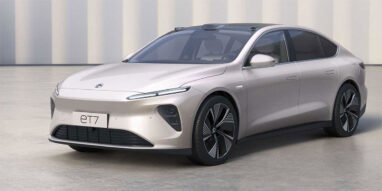
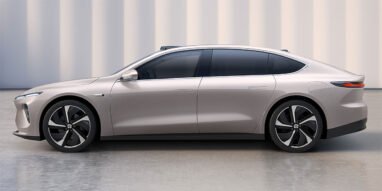
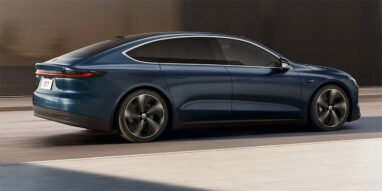
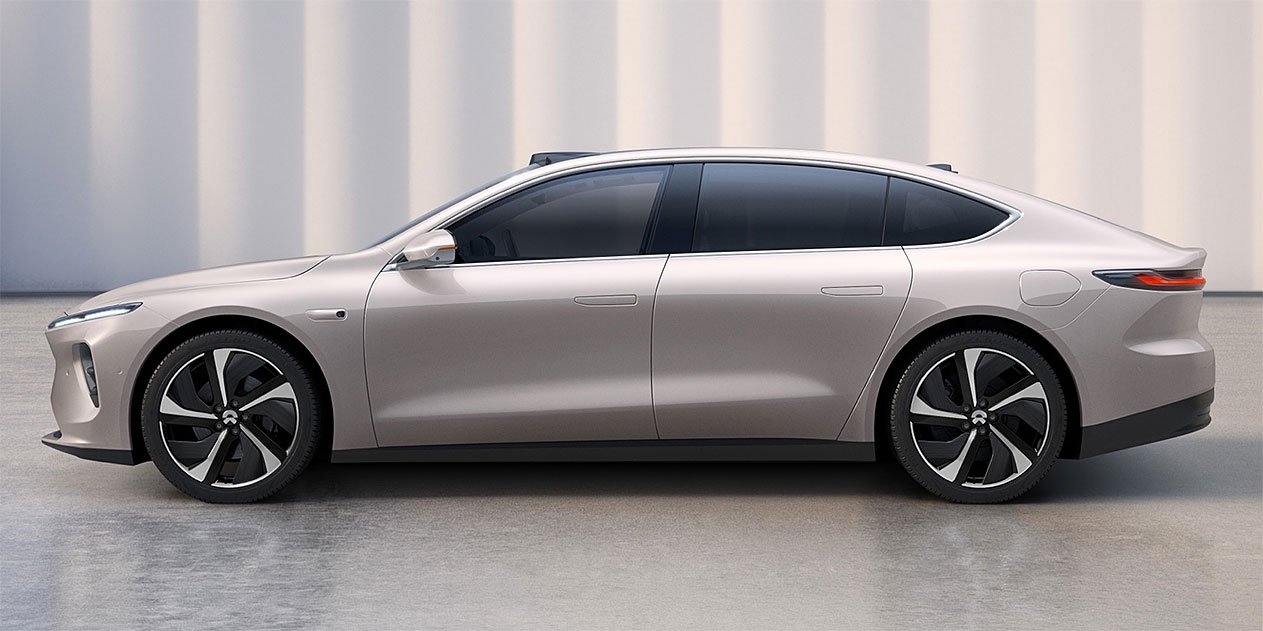
Nio built the Nio ET7 to show it could do a full-size sedan, not just another crossover with a badge on it. It sits between the smaller ET5 and the ultra-luxury ET9, and it carries most of Nio’s tech pitch at once: swappable batteries, a lidar-based driver-assist stack, and an in-car AI named NOMI that talks back.
The powertrain is the easy part to explain
Every Nio ET7 uses a dual-motor AWD setup rated at 480 kW (653 hp) and 850 Nm of torque, good for a 3.9-second 0-100 km/h run and a 200 km/h top speed. That part hasn’t changed across trims or model years — Nio spends its engineering effort on the battery, not the motors.
The battery lineup is where the ET7 actually differentiates itself. Base cars use a 75 kWh pack (an earlier 70 kWh LFP cell-to-pack unit ran before the 2024 update) for around 445 km WLTP. The 100 kWh NMC pack, sourced from CATL or CALB, pushes that to somewhere between 580 and 705 km WLTP depending on market and test conditions. Then there’s the 150 kWh semi-solid-state pack from WeLion — the first mass-produced automotive battery to use semi-solid electrolyte, and the one Nio quotes near 1,000 km on. That number’s on NEDC or CLTC, though, and both cycles run noticeably more generous than WLTP or EPA on the same car. Read “1,000 km” as a lab result, not something you’ll see on a real drive.
Exact range and charging figures shift by market and haven’t all been independently verified outside China — cross-check against your region’s official Nio spec sheet before treating any of the above as final.
Battery swap is still the ET7’s actual party trick
Fast charging on the 100 kWh pack tops out around 170 kW post-2024, which is fine but unremarkable next to some 800V rivals. What sets the Nio ET7 apart is that you can skip charging altogether: pull into a Power Swap station and a robotic system pulls the depleted pack and drops in a charged one in a few minutes. It only works where Nio has built the infrastructure — mainly China, with a slower European rollout — so it’s a regional advantage, not a universal one.
NAD, Aquila, and Adam — Nio’s answer to self-driving
The ET7’s assisted-driving hardware runs under the NAD (Nio Autonomous Driving) banner, built on two subsystems: Aquila Super Sensing (lidar plus cameras, radar, and ultrasonic sensors for 360-degree coverage) and Adam Super Computing (four Nvidia Orin X chips plus a Qualcomm Snapdragon 8295 for the cockpit, totaling over 1,000 TOPS). In practice this covers highway navigation assist, automated parking, and — fittingly — automated alignment for battery swaps. Some of the more advanced NAD features are gated behind a monthly subscription, which is worth knowing before you get attached to a demo unit’s capabilities.
Pricing is the part nobody should trust blindly
Mainland China pricing has moved around across trims and BaaS (battery-as-a-service) options since launch. Export listings quote UK/EU prices in the roughly £81,000-£101,000 / equivalent EUR range and UAE prices near AED 270,000-300,000, but the Nio ET7 isn’t officially sold in the US or UK through Nio’s own retail channel — any USD or GBP figure you see is either a converted China price, a grey-market import estimate, or a third-party listing site’s guess. Treat it as directional, not a quote you can act on.
Where it fits
Take away the swap network and the ET7 is a solid, well-equipped sedan with strong numbers on paper. Keep the swap network in the picture and it starts to look like something else entirely — a bet that owning a car doesn’t have to mean owning a battery. Whether that bet pays off for you has less to do with the car and more to do with how close the nearest Power Swap station is.
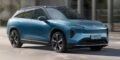
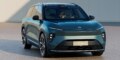
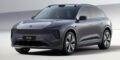
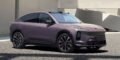
Nio ET7 Photos
Full Electric Vehicle Specifications
MODEL
| Full Model Name | Nio ET7 |
| Segment / Class | Executive / full-size luxury sedan |
| Available Trims / Variants | Standard Range (75 kWh), Long Range (100 kWh), Ultra Long Range (150 kWh, subscription-only battery) |
| Powertrain Options | Single option — dual-motor AWD |
PRICE & AVAILABILITY
| Base Price (USD) | ~¥458,000 at China launch; current pricing varies by market and isn't officially published outside China |
| Availability Status | On sale in China and select Europe/Middle East markets |
| Markets Available | China, Norway, Germany, Netherlands, Denmark, Sweden, UAE |
| Brand / Manufacturer | Nio Inc. |
BATTERY & CHARGING
| Battery Capacity | 75 kWh / 100 kWh / 150 kWh |
| Range (WLTP/CLTC/EPA) | 445–580 km WLTP; 550–1,050 km CLTC/NEDC (varies by pack) |
| DC Charging (Max kW) | ~170 kW (100 kWh pack, post-2024) |
| Charging Time (10–80%) | 30 min per Nio |
| AC Charging (Max kW) | not confirmed |
| Battery Warranty | not published |
| Energy Consumption | not independently confirmed |
PERFORMANCE
| Power Output (kW / hp) | 480 kW / 653 hp |
| 0–100 km/h / 0-60 mph (seconds) The acceleration numbers are an easy way to compare car performance. We list either time from 0 to 100 km/h or time from 0 to 60mph, depending on which number(s) the manufacturers provide. The lower the acceleration time, the higher performance the car is. | 3.8–3.9 sec |
| Motor Configuration | Dual motor, AWD (front PM synchronous + rear induction) |
| Torque (Nm) | 850 Nm |
| Top Speed (km/h / mph) | 200 km/h / 124 mph |
BODY & DIMENSIONS
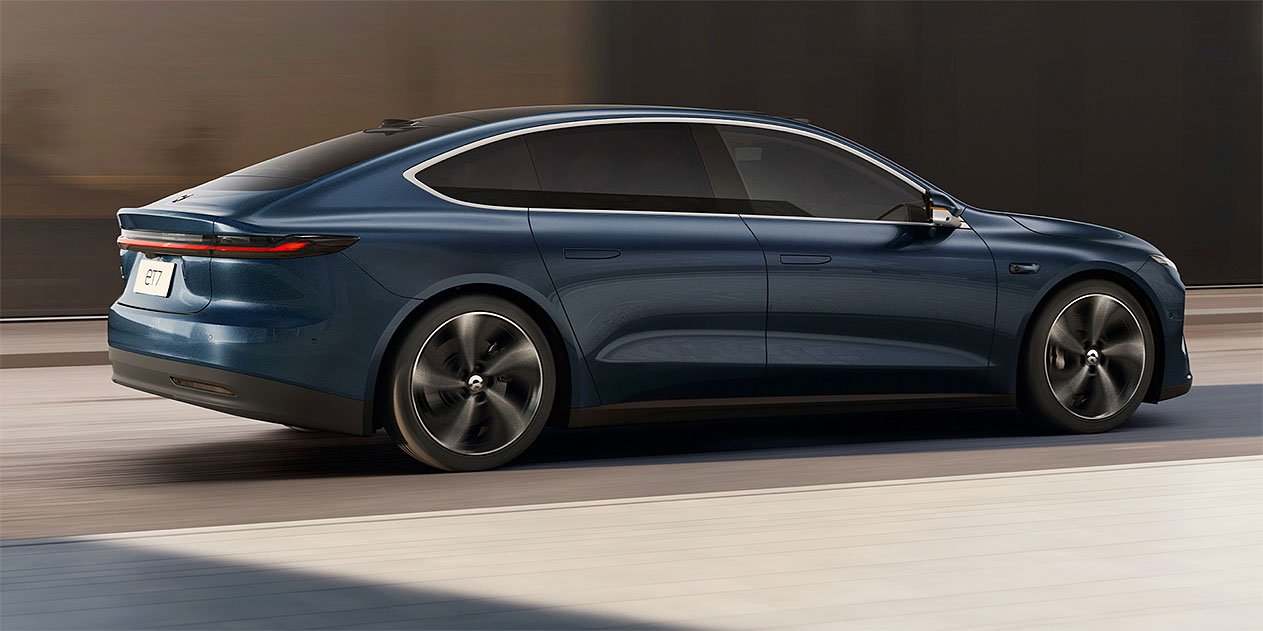
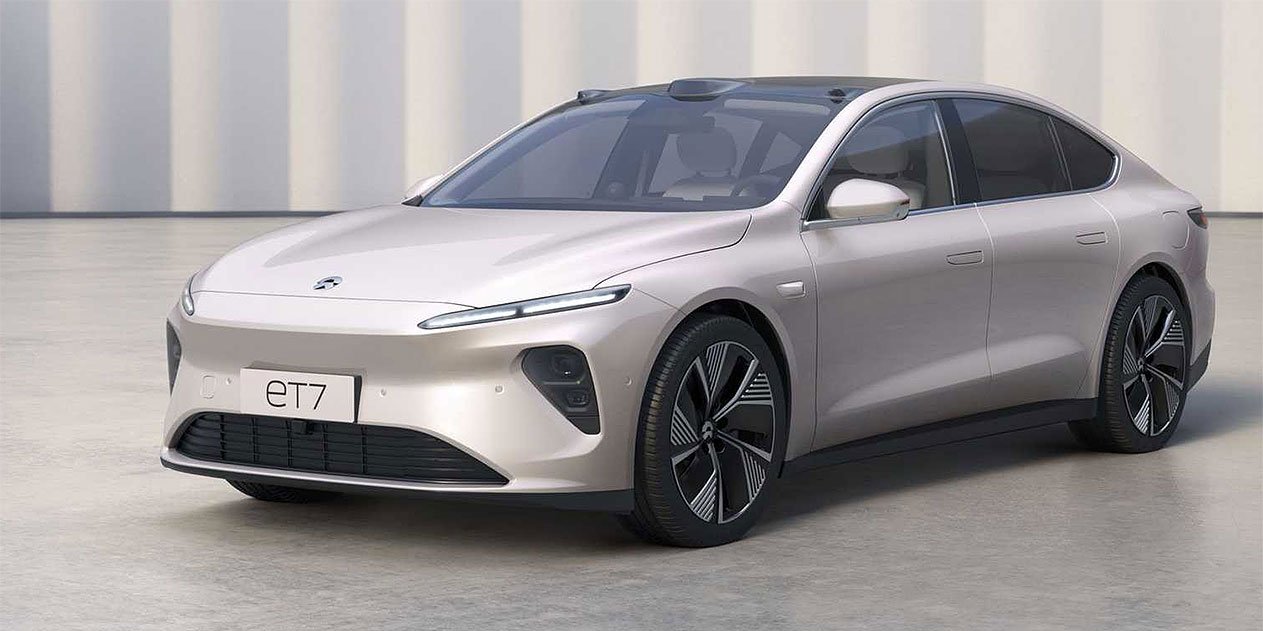
| Dimensions (L×W×H mm) | 5,101 × 1,987 × 1,505 mm |
| Trunk/Boot Capacity (L) | 363 L |
| Body Style | 4-door sedan |
| Kerb Weight (kg) | 2,349–2,454 kg (varies by pack) |
| Ground Clearance (mm) | not published |
| Frunk/Bonnet Capacity (L) | not published |
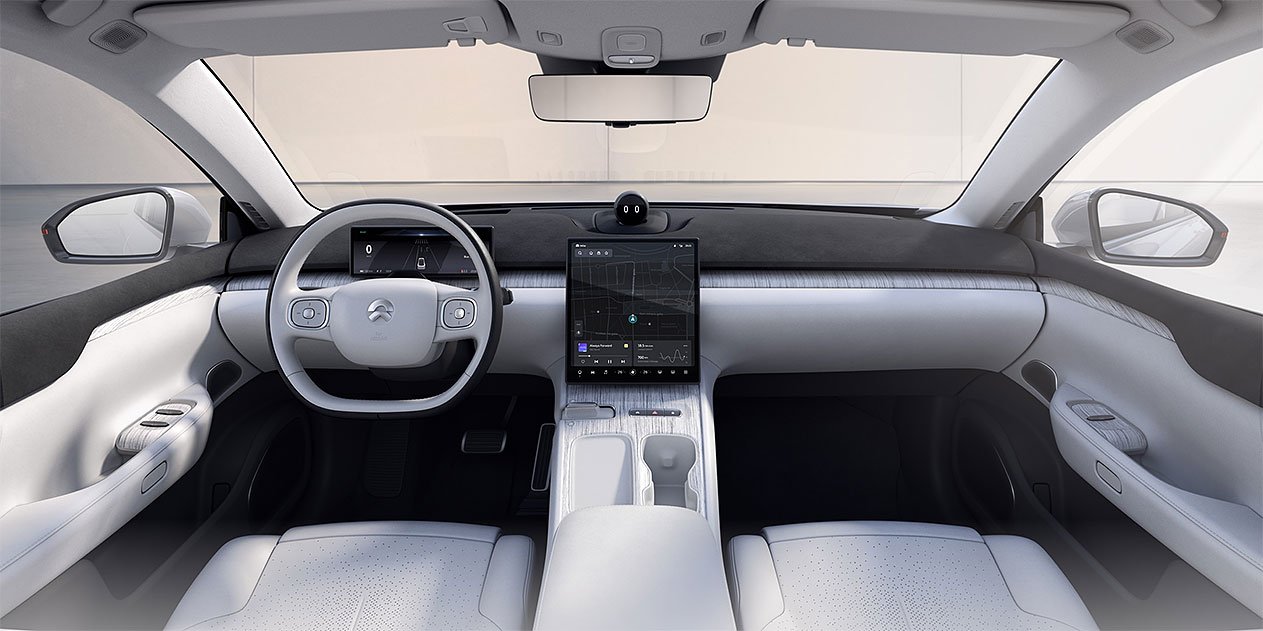
| Sunroof | Fixed panoramic glass roof (standard, not an opening sunroof) |
SAFETY & DRIVER ASSISTANCE
| ADAS Features | AEB, lane keep/departure warning, driver fatigue monitoring, highway pilot (NOP+), automated parking |
| Autonomous Driving Level | Level 2 (NAD/NOP+) |
| Crash Test Ratings | Euro NCAP 5-star; C-NCAP 5-star (87.3%) |
| Over-the-Air (OTA) Safety Updates | Yes |
COMFORT & SEATING
| Seating Capacity | 5 |
| Seat Material | Nappa leather on upper trims |
| Wireless Charging | not confirmed |
DISPLAYS & CONNECTIVITY
| Centre Screen (inches) | 12.8-inch AMOLED |
| Mirror Link / Apple CarPlay / Android Auto | Not supported — runs Nio's own NIO OS |
| Driver's Display (inches) | 10.2-inch digital cluster |
| Head-Up Display (HUD) | Yes, standard |
TECHNOLOGY
| Vehicle-to-Load (V2L) | not confirmed for ET7 specifically |
| Vehicle-to-Grid (V2G) | not confirmed |
| Over-the-Air Map Updates | Yes |
ADDITIONAL SPECS
| Headlight Type (LED/Matrix/Laser) | LED (adaptive) |
| Adaptive Headlights | Yes |
| Sound System Brand | Dolby Atmos / Dirac-tuned |
| Speaker Count | 23 |
| Navigation System | Built-in NIO OS navigation |
| Face Recognition | Yes, driver profile ID |
| Fingerprint Sensor | not confirmed |
| Remote Parking | Yes, via NAD |
| Official Dealer Network | Direct sales via NIO House / NIO Space (no third-party dealers) |
| Service Interval | not published |
| Roadside Assistance | varies by market, not confirmed |
Note
| Data Source | Nio official specs, Wikipedia, Euro NCAP/C-NCAP |
| Last Updated | September 2026 |
| Additional Notes | ET7 has had multiple battery and platform updates since 2022 — figures shift by model year and market |
| Editor's Note | spec sheet or vary too much by region to state as fact |
User Reviews
Disclaimer Note
Specifications sourced from manufacturer data and may reflect WLTP, CLTC, or EPA test conditions. Import prices in your local are estimates based on grey-market landing costs and exclude duties, clearing fees, and local taxes. Figures are subject to change without notice. Always verify with your local importer before purchase. We can not guarantee that the information on this page is 100% correct