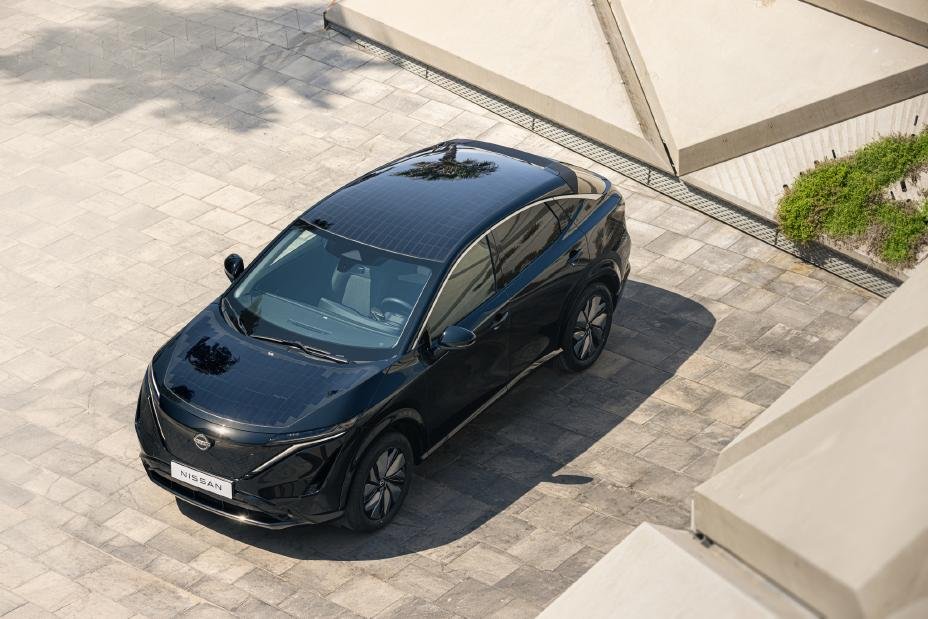
Electric cars rely on plugs to stay on the road. Nissan is testing a different idea. To mark Clean Energy Day, the company revealed a Nissan Ariya concept that uses solar panels to charge its battery. The goal is simple. Reduce plug-in dependence by turning sunlight into usable driving range.
Solar Panels Integrated Into the Body
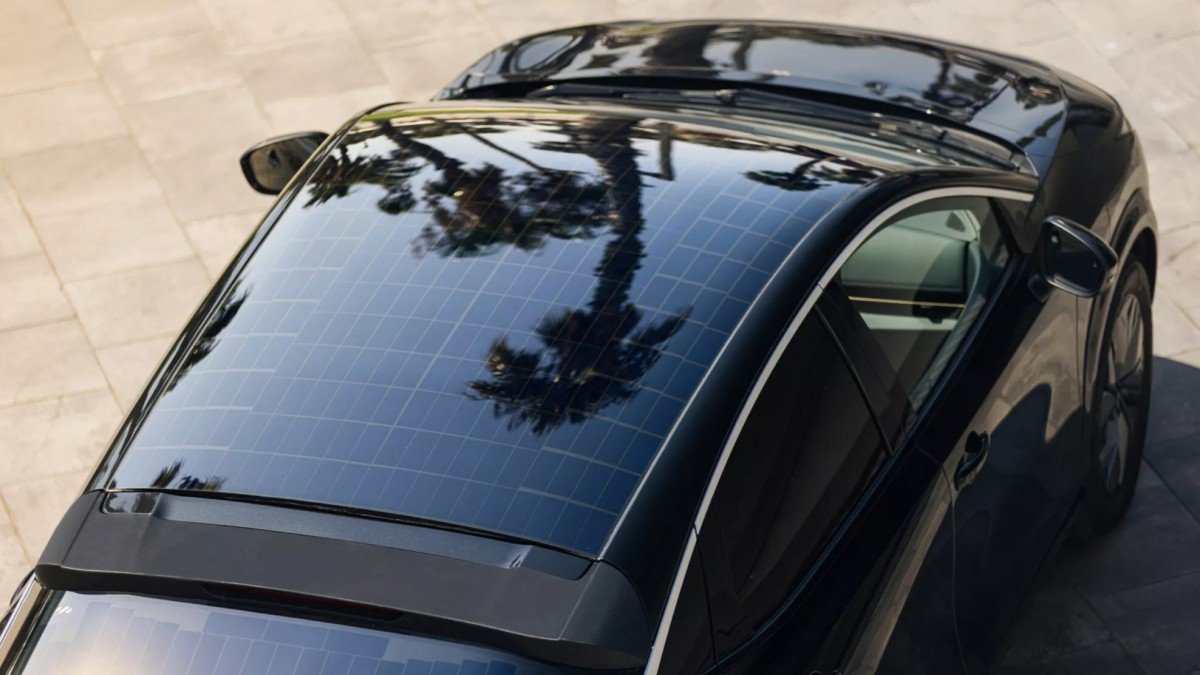
Nissan covered 3.8 square meters of the Ariya with advanced solar panels. The panels sit on the hood, roof, and rear liftgate. These body panels use a polymer and glass structure designed to convert sunlight into DC power. The system feeds energy directly into the battery without external charging.
Real-World Solar Charging Range
Testing shows strong results in clear weather. On a sunny day, the solar setup adds up to 14 miles of range. For daily use, this matters. Many drivers travel under 40 miles per day. In ideal conditions, solar input could cover over one third of a daily commute.
Solar Performance by Location
Geography plays a major role in output.
In Dubai, the system averages about 13.2 miles of range per day
In New Delhi, output reaches around 11.7 miles per day
In London, even with frequent clouds, drivers still see about 6.3 miles per day
Nissan also reports that two hours of driving in direct sunlight adds roughly 1.9 miles of range.
Reduced Plug-In Frequency
Nissan estimates solar charging could cut plug-in sessions by 35 to 65 percent. For a driver covering 6,000 km per year, charging sessions drop from 23 times per year to eight. Short-distance drivers might go weeks without using a charging cable.
Benefits for Areas With Limited Charging
Solar-assisted EVs help drivers in regions with poor charging coverage. Rural areas and developing markets benefit the most. Parking in sunlight becomes a charging opportunity. This reduces range anxiety and improves day-to-day usability.
Partnership With Lightyear
Nissan partnered with Dutch solar EV firm Lightyear on this project. Lightyear no longer operates, but its solar technology remains effective. The system uses a smart energy controller to manage power flow. Inside the cabin, drivers see live data showing solar energy contribution on the displays.
Nissan’s Long-Term Strategy
According to Nissan powertrain expert Shunsuke Shigemoto, this project supports the company’s carbon neutrality target for 2050. Solar-assisted EVs help cut grid reliance and lower lifetime emissions from both vehicles and production.
Limits of Solar EV Charging
The added range remains modest. Large SUVs still rely on grid charging for long trips. Parking in intense heat also increases cooling demand later. Still, when a car sits in the sun anyway, free electricity offsets energy use. Even small gains improve efficiency over time.
Outlook
The solar Nissan Ariya remains a concept. Test data shows promise. As solar cells improve and costs fall, integrated solar panels could move from experiments to production models.
FAQ
[saswp_tiny_multiple_faq headline-0=”h3″ question-0=”Does the Nissan Ariya solar concept charge while driving” answer-0=”Yes. The panels generate power while driving or parked in sunlight.” image-0=”” headline-1=”h3″ question-1=”How much range do the solar panels add per day” answer-1=”Up to 14 miles on clear, sunny days. Output varies by location and weather.” image-1=”” headline-2=”h3″ question-2=”Does solar charging replace plug-in charging” answer-2=”No. It reduces plug-in frequency but does not replace fast or home charging.” image-2=”” headline-3=”h3″ question-3=”Is the solar Nissan Ariya available for sale” answer-3=”No. It is a concept vehicle used for testing future technology.” image-3=”” count=”4″ html=”true”]
Related EV News
- Chery Hilma EV Pickup Launched From $18,300 With Up to 510 km Range
- BYD Yangwang U7 Gets 1,006 km Range With 150 kWh Battery
- Porsche Cayenne Electric Debuts in 2026 With Up to 1,156 HP
- Luxeed V9 MPV Revealed With Huawei ADS and Helmet Airbags
- Mitsubishi’s New Electric Hot Hatch Will Be Built With Foxconn Tech