- Home
- Electric Vehicles
- PEUGEOT
- Peugeot e-2008 SUV
Peugeot e-2008 SUV
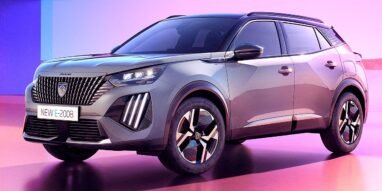
- Drive Type: FWD
- Body Type: 5-door compact SUV
- Self Driving: Level 2
PROS
- Fast charging relative to battery size — small pack means less time waiting at 100 kW
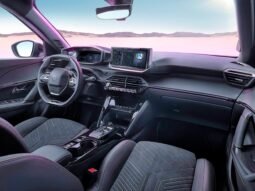
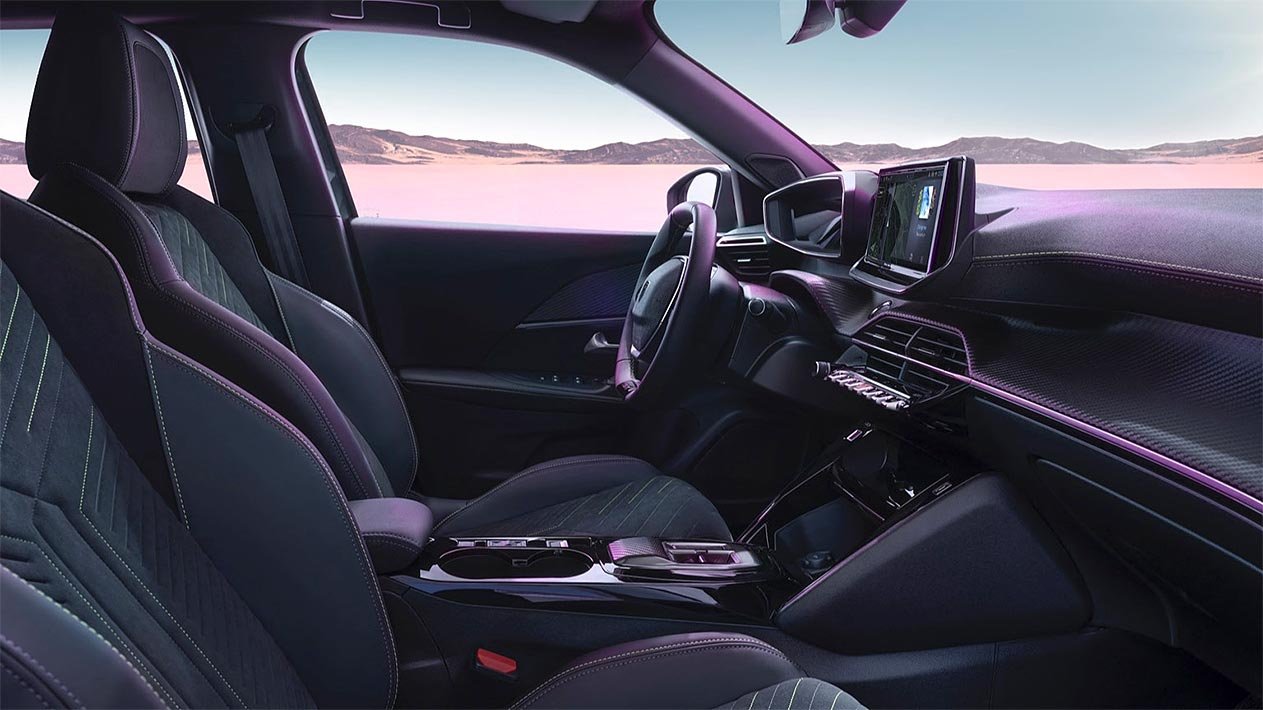
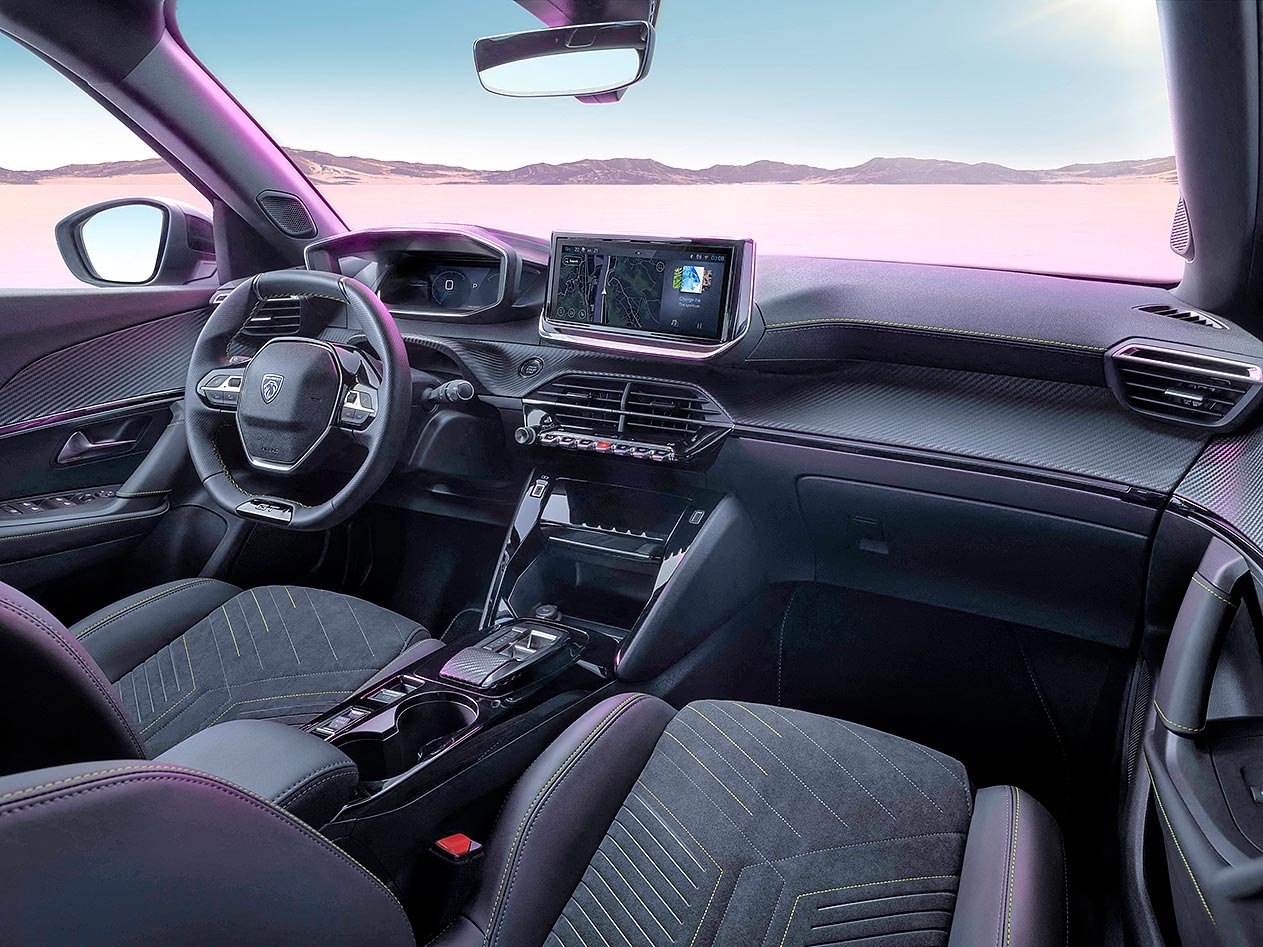
- Distinctive 3D i-Cockpit interior, unusual in this price bracket
- Compact-but-usable size — properly sized SUV without being bulky
CONS
- WLTP range trails most rivals at this price point
- Base trim only gets a 4-star Euro NCAP rating; 5 stars requires higher trims
Peugeot e-2008 SUV has never tried to win the range wars, and after spending time with its spec sheet, I think that’s the right call.
The current version, facelifted in 2023, carries a 54 kWh (gross) / 50.8 kWh (usable) battery — up from the original 50 kWh pack — paired with a 115 kW (156 hp) electric motor making 260 Nm of torque. Peugeot rates it at 406 km (252 miles) on the WLTP cycle. That’s a modest number next to some of the 500+ km crossovers now on sale, and it puts the e-2008 firmly in the “good enough for most people, most days” category rather than the “road trip machine” one.
Real-world range is where things get murkier. WLTP figures are a lab test, and owner reports on this platform (shared with the e-208 and e-3008’s smaller sibling) tend to land noticeably below the official number once you factor in motorway speeds or cold weather. Treat 252 miles as a ceiling, not an expectation.
Where the Peugeot e-2008 SUV actually earns its keep is charging speed relative to battery size. Max DC input tops out at 100 kW, which sounds unremarkable until you notice the battery is small enough that a 10–80% top-up takes around 28 minutes. A full 0–100% session runs closer to 55 minutes. Because there’s less energy to push in, the car spends less time waiting at the charger than the raw kW figure suggests — one of those cases where a smaller battery is a feature, not a compromise.
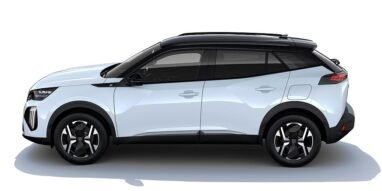
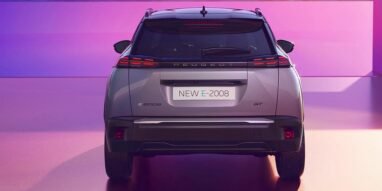
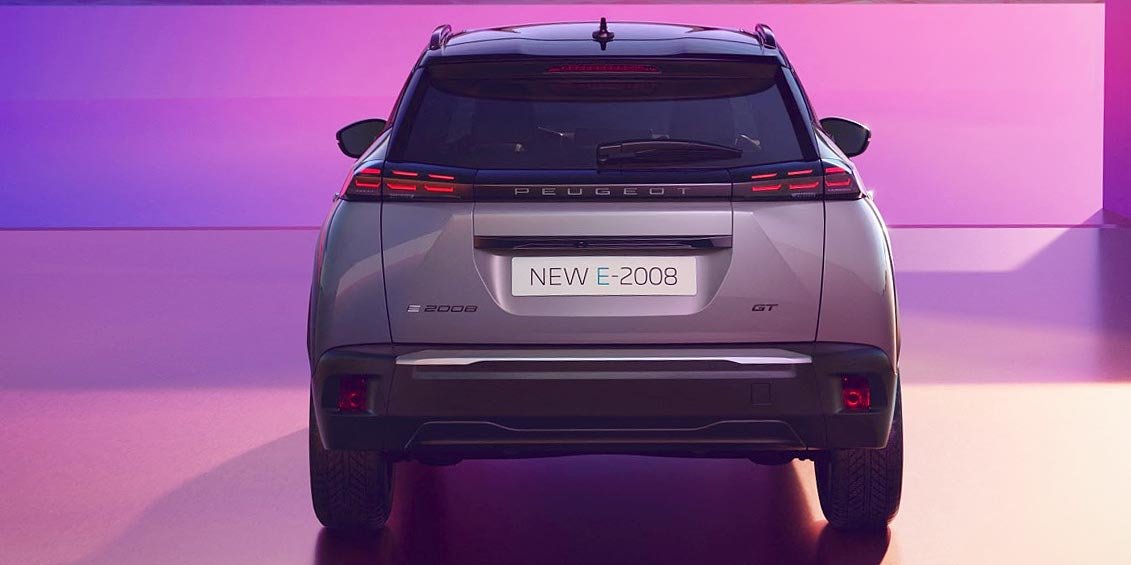
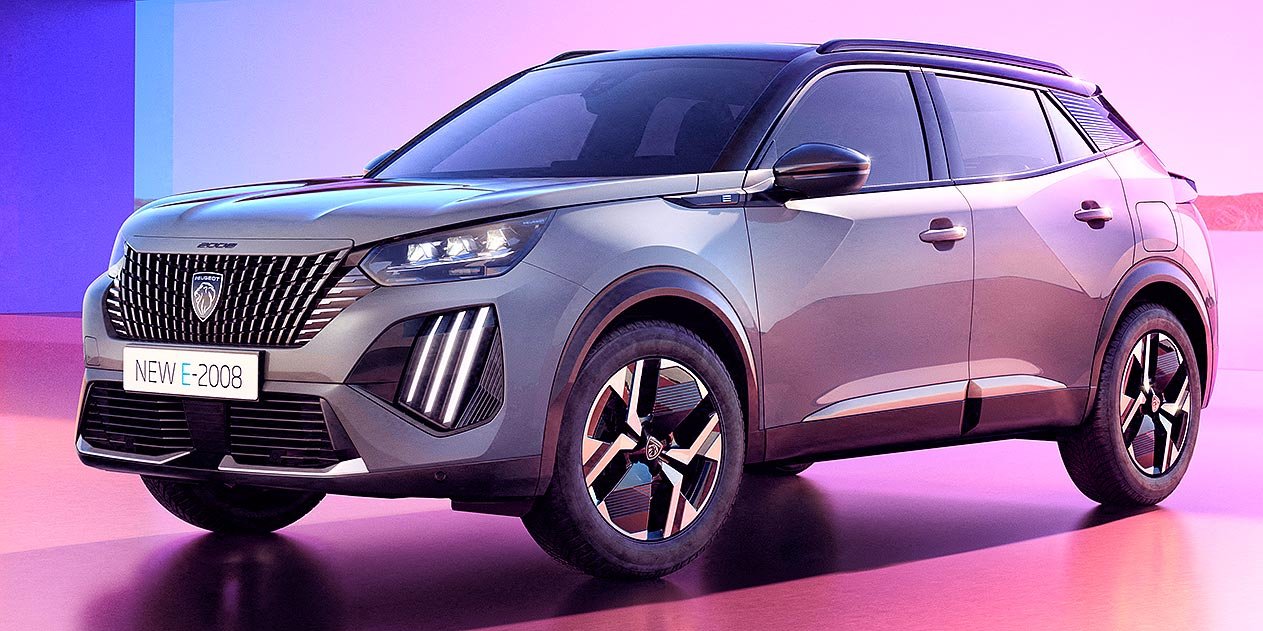
Dimensionally, this is a proper small SUV, not a hatchback wearing a trench coat. At 4,304 mm long with 434 litres of boot space behind the rear seats, it’s sized to compete with combustion-era compact crossovers, not city cars. The wheelbase is longer than Peugeot’s own e-208 and longer than rivals like the Vauxhall Mokka and Fiat Avenger it shares underpinnings with, which shows up as slightly more rear-seat room than the segment average.
Acceleration is unremarkable in the way most compact EVs in this class are unremarkable — 0-100 km/h in roughly 9 seconds, which is quick enough off the line at low speed but nothing that will bother a hot hatch. That’s fine. Nobody cross-shops the e-2008 against performance EVs, and Peugeot doesn’t pretend otherwise.
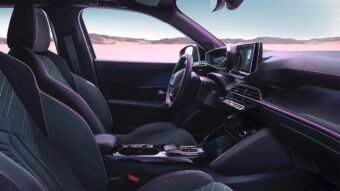
The interior is where the Peugeot e-2008 SUV tries to differentiate itself, with Peugeot’s compact “i-Cockpit” steering wheel and, on higher trims, a 3D instrument display that layers gauges for a sense of depth. It’s a genuine styling choice rather than a spec-sheet number, and reviewers have generally responded well to it — it makes the cabin feel less like a rebadged combustion car with batteries stuffed underneath, which is a fair criticism of some rivals in this segment.
Pricing and trim availability vary significantly by market and aren’t confirmed here — check regional Peugeot pricing directly rather than relying on any single figure.
None of this makes the Peugeot e-2008 SUV a headline-grabbing EV. It won’t win a spec sheet comparison against a Kia EV3 or a Volvo EX30 on range alone. But as a case study in matching battery size to charging speed and real usage patterns rather than chasing a bigger number for its own sake, it’s a more interesting car than its middling reputation suggests. Sometimes “good enough, faster than expected” beats “impressive on paper, slow to top up.”
Peugeot e-2008 SUV Photos
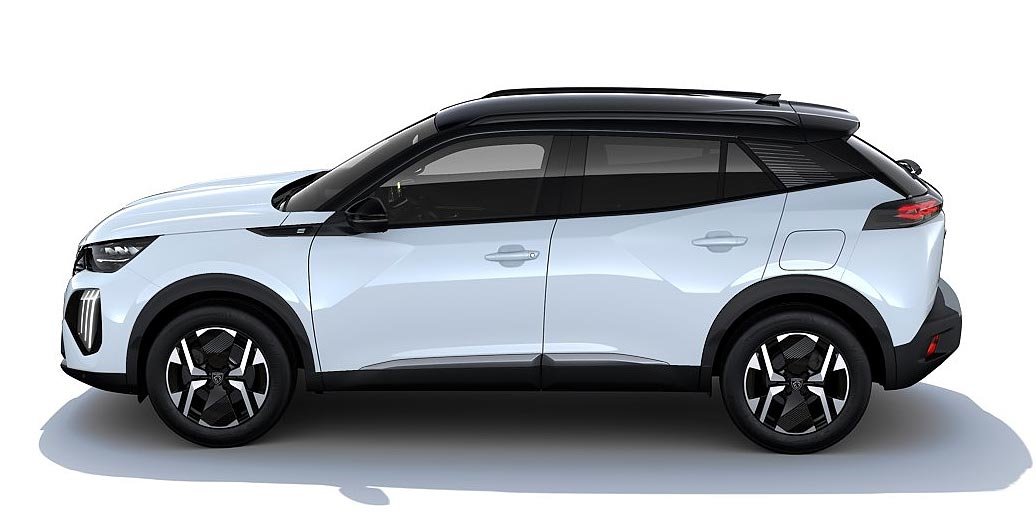
Full Electric Vehicle Specifications
MODEL
| Full Model Name | Peugeot e-2008 SUV |
| Segment / Class | Compact electric SUV/crossover |
| Available Trims / Variants | Active, Allure, GT |
| Powertrain Options | Single electric powertrain only (54 kWh battery / 115 kW motor) — no long-range or dual-motor variant |
PRICE & AVAILABILITY
| Base Price (USD) | Not confirmed here — varies significantly by market, check local Peugeot pricing |
| Availability Status | On sale (current facelifted generation, since 2023) |
| Markets Available | Europe; select Middle East, Africa, and Asia-Pacific markets. Not sold in North America or China |
| Brand / Manufacturer | Peugeot (Stellantis) |
BATTERY & CHARGING
| Battery Capacity | 54 kWh gross / 50.8 kWh usable |
| Range (WLTP/CLTC/EPA) | Up to 406 km (252 miles). No EPA or CLTC rating exists — not sold in those markets |
| DC Charging (Max kW) | 100 kW |
| Charging Time (10–80%) | 28 minutes |
| AC Charging (Max kW) | 7.4 kW |
| Battery Warranty | 8 years / 160,000 km |
| Energy Consumption | 12.5–14.7 kWh/100 km |
PERFORMANCE
| Power Output (kW / hp) | 115 kW / 156 hp |
| 0–100 km/h / 0-60 mph (seconds) The acceleration numbers are an easy way to compare car performance. We list either time from 0 to 100 km/h or time from 0 to 60mph, depending on which number(s) the manufacturers provide. The lower the acceleration time, the higher performance the car is. | 9.1 sec |
| Motor Configuration | Single front-mounted motor, FWD |
| Torque (Nm) | 260 Nm |
| Top Speed (km/h / mph) | 150 km/h (93 mph) |
BODY & DIMENSIONS
| Dimensions (L×W×H mm) | 4,304 × 1,770 × 1,550 mm |
| Trunk/Boot Capacity (L) | 434 L (rear seats up), up to ~1,467 L seats down |
| Body Style | 5-door compact SUV |
| Kerb Weight (kg) | 1,548 kg |
| Ground Clearance (mm) | 170 mm |
| Frunk/Bonnet Capacity (L) | None |
| Sunroof | Panoramic glass roof, optional on GT |
SAFETY & DRIVER ASSISTANCE
| ADAS Features | ADAS Features: AEB (pedestrian/cyclist detection), lane-keep assist, lane departure warning, adaptive cruise with stop & go (higher trims), blind-spot monitoring, traffic sign recognition, driver drowsiness monitoring, automated parking (higher trims) |
| Autonomous Driving Level | Level 2 (driver assistance, not self-driving) |
| Crash Test Ratings | Euro NCAP 4 stars on base trim, 5 stars with Safety Pack/higher trims |
| Over-the-Air (OTA) Safety Updates | OTA updates supported |
COMFORT & SEATING
| Seating Capacity | 5 |
| Seat Material | Fabric standard; part-Alcantara-style heated seats on GT |
| Wireless Charging | Available on GT trim |
DISPLAYS & CONNECTIVITY
| Centre Screen (inches) | 7-inch (base trims) or 10-inch (higher trims) |
| Mirror Link / Apple CarPlay / Android Auto | Wireless, standard across all trims |
| Driver's Display (inches) | 3D configurable digital cluster (widescreen) |
| Head-Up Display (HUD) | No traditional windshield HUD; the 3D i-Cockpit cluster serves a similar function |
TECHNOLOGY
| Vehicle-to-Load (V2L) | Not confirmed / not marketed as standard |
| Vehicle-to-Grid (V2G) | Not available |
| Over-the-Air Map Updates | Supported via connected navigation |
ADDITIONAL SPECS
| Headlight Type (LED/Matrix/Laser) | LED standard |
| Adaptive Headlights | Automatic high-beam on higher trims/Safety Pack |
| Sound System Brand | No confirmed premium audio partner (standard Peugeot system) |
| Speaker Count | Not confirmed |
| Navigation System | Built-in satnav with voice recognition (nav pack, higher trims) |
| Face Recognition | Not available |
| Fingerprint Sensor | Not available |
| Remote Parking | Automated parking assist on higher trims |
| Official Dealer Network | Peugeot dealer network, region-dependent |
| Service Interval | Varies by market |
| Roadside Assistance | Included with new vehicle warranty |
Note
| Data Source | Peugeot official specs, Top Gear, Carwow, DrivingElectric, Parkers, Euro NCAP, EVKX, Green Cars Compare |
| Last Updated | September 2026 |
| Additional Notes | Covers the current facelifted e-2008 SUV (2023–present); no next-gen model confirmed yet |
| Editor's Note | The headline numbers are unremarkable on purpose — this car trades range for a smaller, faster-charging battery, which suits most daily driving better than the spec sheet suggests |
User Reviews
Disclaimer Note
Specifications sourced from manufacturer data and may reflect WLTP, CLTC, or EPA test conditions. Import prices in your local are estimates based on grey-market landing costs and exclude duties, clearing fees, and local taxes. Figures are subject to change without notice. Always verify with your local importer before purchase. We can not guarantee that the information on this page is 100% correct