

- Electric Vehicles
- Roewe
- Roewe D6
Roewe D6
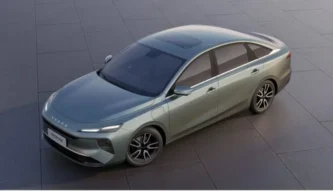
- Drive Type: FWD
- Type: 4-door compact sedan, 5 seats
- Self Driving: Level 2 driver assistance
- Airbags: Full Suite
PROS
- The D6's drag coefficient of 0.27Cd combined with its Guinness-verified efficiency record positions it as one of the most aerodynamically efficient mass-production sedans in its price class
- The long-range variant's 53.9 kWh LFP battery delivering 520 km CLTC offers a credible daily range buffer for city and inter-city use
- At a starting price of under USD 11,000 in China
CONS
- All published range figures are CLTC-rated, a test cycle known to overstate real-world performance by 20–30% under mixed or motorway conditions
- The D6 is currently a China-domestic model with no confirmed export rollout
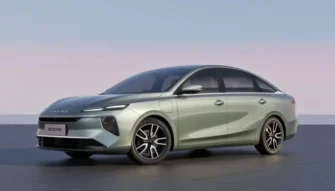
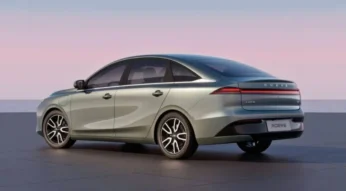
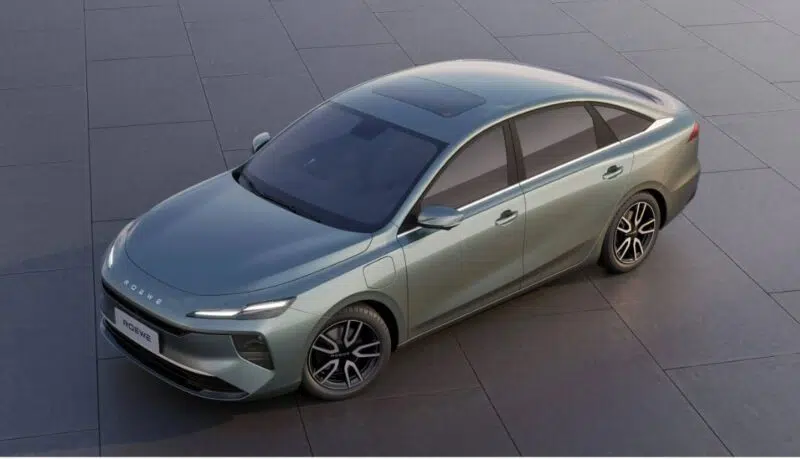
The Roewe D6 is a compact battery-electric sedan produced by SAIC Motor under the Roewe brand, positioned as an entry-to-mid-level offering in China’s increasingly crowded affordable EV segment. Built on SAIC’s new-generation pure electric architecture , it is a four-door, five-seater with a front-wheel-drive configuration. The D6 set a Guinness World Record for the lowest energy consumption by a mass-produced pure electric sedan on the Qinghai-Tibet Highway, recording 9.125 kWh/100km — a benchmark that shaped much of its pre-launch identity.
Two powertrain configurations are available: a base variant pairing a 95 kW (127 hp) motor with a 42.8 kWh battery rated at 450 km of range, and a long-range variant using a 105 kW (143 hp) motor with a 53.9 kWh battery rated at 520 km of range. Both figures are CLTC-rated — no WLTP or EPA equivalent has been published, and real-world range in non-Chinese test conditions will be lower. The drivetrain uses a single-speed fixed-ratio transmission with a front-mounted permanent magnet synchronous motor. On AC charging, the onboard rate has not been officially confirmed at time of writing. For DC fast charging, one third-party source claims a 30–80% charge in approximately 20 minutes, but this figure has not been verified against official SAIC documentation and should be treated as unconfirmed. A heat pump air conditioning system is included as standard, which supports cold-weather efficiency retention.
At launch, the Roewe D6 was priced between RMB 79,800 and RMB 119,800 — approximately USD 10,900 to USD 16,400 in the Chinese domestic market. No confirmed pricing exists for export markets including Africa, Southeast Asia, or Europe, and the vehicle is not currently listed for sale outside China. The D6 targets urban commuters and value-conscious buyers who need a practical, full-size sedan footprint without a crossover premium. Within the Roewe lineup, it sits below the Roewe D7 DMH (a plug-in hybrid sedan at a higher price point) and above entry-level city offerings, while competing directly against the Roewe i6 MAX EV in the brand’s own electric sedan portfolio. Externally, its closest rivals are the BYD Qin L EV and the Changan Deepal SL03, both of which overlap on price, body type, and CLTC range claims. For direct SEO comparison purposes, the BYD Qin L EV is the most defensible head-to-head match — near-identical segment, overlapping price band, and both built on purpose-made EV platforms.
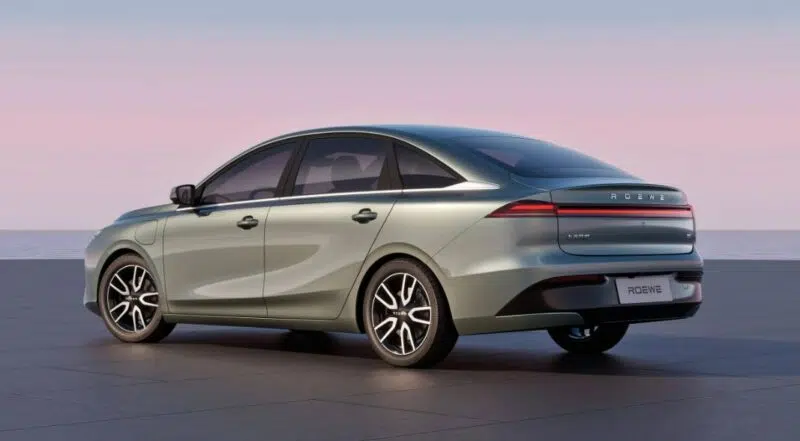
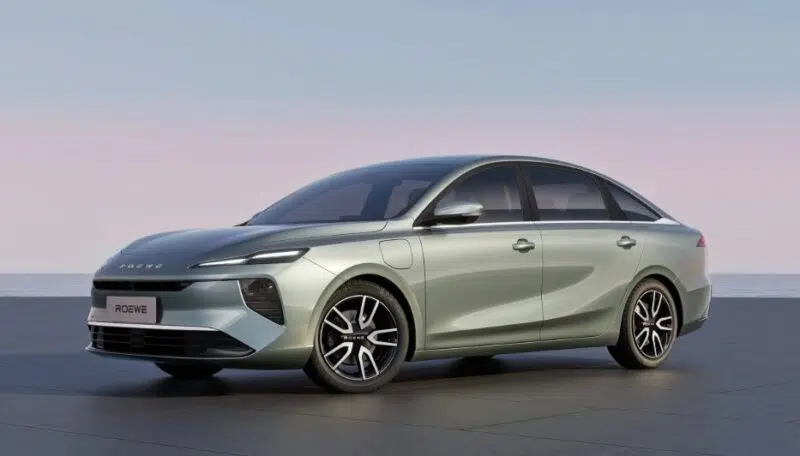
Roewe D6 Images
Full Electric Vehicle Specifications
MODEL
| Available Trims / Variants | D6 450 (Standard), D6 520 (Long Range) |
LAUNCH
| Reveal Date | April 2025 (Auto Shanghai) |
| Availability Status | On Sale |
| Country of origin | China |
| Base Price (USD) | $10,900 (RMB 79,800) — China only |
BATTERY
| Battery Capacity |
42.8 kWh - D6 450 53.9 kWh - D6 520 |
| Battery Chemistry | LFP (Lithium Iron Phosphate) CTB (Cell-to-Body) |
| Range (WLTP/CLTC/EPA) |
450 km / 280 mi (CLTC) - D6 450 520 km / 323 mi (CLTC) - D6 520 |
| Energy Consumption | 9.125 kWh/100km - D6 450 |
| Heat Pump | |
| DC Charging (Max kW) | 20 min (30–80%) |
PERFORMANCE
| Power Output (kW / hp) |
127 hp (95 kW) - D6 450 143 hp (105 kW) - D6 520 |
| Torque (Nm) | 201 Nm (confirmed) - D6 520 |
| Top Speed (km/h / mph) | 150 km/h |
| Transmission / Drive | Single-speed fixed ratio |
BODY
| Body Style | 4-door compact sedan, 5 seats |
| Platform / Architecture | SAIC Nebula 2nd-gen pure electric architecture |
| Dimensions (L×W×H mm) |
Length: 4,792 mm Width: 1,828 mm Height: 1,496 mm |
| Drag Coefficient (Cd) | 0.27 Cd |
| Wheelbase (mm) | 2,750 mm |
| Wheel Size (inches) | Alloy |
SAFETY
| Driver Assistance (ADAS) | L2 ADAS — adaptive cruise control, lane keep assist, auto lane change, highway assist |
| Autonomous Driving Level | L2 (not L3) |
COMFORT
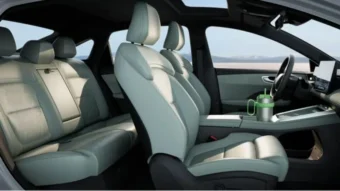
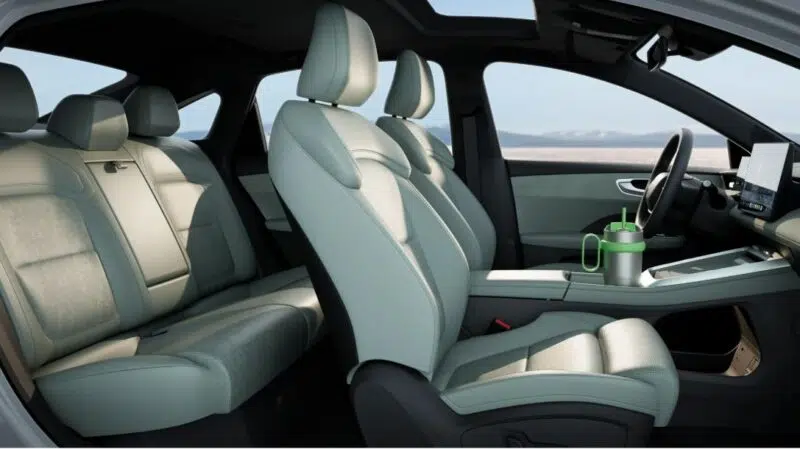
| Seating Capacity | Mosaic micro-perforated matrix seats |
| Bluetooth / Wi-Fi | Bluetooth key, remote app control (pre-conditioning, charging), USB/Type-C ports, keyless entry, push-button start |
| Additional Notes | Single-zone automatic, heat pump standard |
DISPLAYS
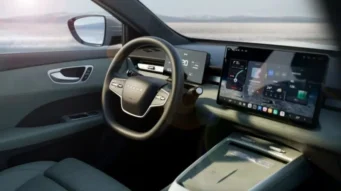
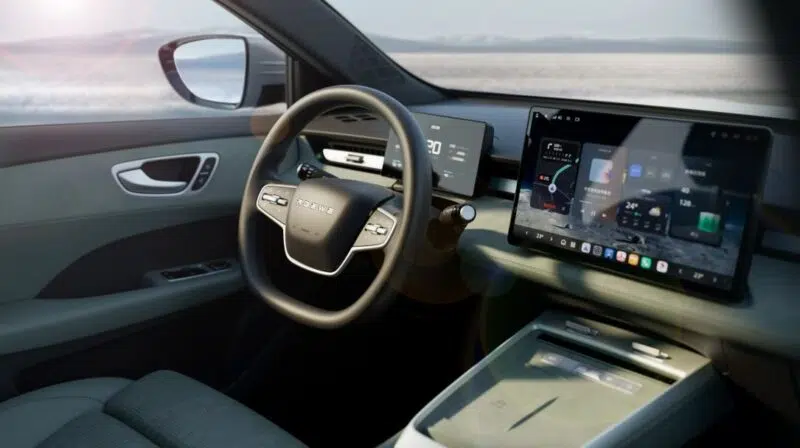
| Centre Screen (inches) | 12.8-inch floating touchscreen |
| Driver's Display (inches) | Full LCD instrument panel |
LIGHTING
INFOTAINMENT & AUDIO
TECHNOLOGY
OWNERSHIP
Note
User Reviews
Disclaimer Note
Specifications sourced from manufacturer data and may reflect WLTP, CLTC, or EPA test conditions. Import prices in your local are estimates based on grey-market landing costs and exclude duties, clearing fees, and local taxes. Figures are subject to change without notice. Always verify with your local importer before purchase. We can not guarantee that the information on this page is 100% correct